A simple morning routine for back pain relief can ease stiffness, improve spine alignment, reduce muscle tension, and help you move with less pain in 10 to 15 minutes. Gentle stretching, light walking, heat, and better sleeping support often work best when used together.
Back pain can make the start of the day feel harder than it should. You wake up stiff. You move slowly. Even getting out of bed can hurt. I’m Andrew Collins, a product researcher and content writer focused on practical solutions, and in this guide I’ll show you a simple routine that can help many people feel better fast.
What Is a Morning Routine for Back Pain Relief?
A morning routine for back pain relief is a short set of actions you do right after waking up to reduce stiffness, improve movement, and lower strain on your back. It usually includes gentle stretching, posture correction, light walking, and supportive tools like a pillow, lumbar cushion, or heating pad.
I like this approach because it is simple and realistic. You do not need a full gym workout. You just need a few targeted moves that help your spine and muscles wake up the right way.
It can be especially helpful if you:
- wake up with lower back pain
- have a desk job and sit for long hours
- sleep in a poor position
- deal with daily muscle tightness
- have ongoing back discomfort from posture problems
Why Your Back Pain Gets Worse in the Morning
Spine alignment changes during sleep
When you sleep, your spine stays in one position for hours. If your mattress, pillow, or sleeping posture does not support neutral spine alignment, your lower back can take on extra joint stress. That can leave you stiff and sore when you wake up.
Muscle tension, inflammation, and low blood circulation
During the night, your body is less active. Blood circulation slows compared to daytime movement. Tight muscles can become even tighter. If you already have inflammation in the muscles or joints, the area may feel more painful first thing in the morning.
Bad sleeping posture and weak lumbar support
If your hips twist, your shoulders sink unevenly, or your lower back is unsupported, pressure builds around the lumbar spine. That can increase muscle tension and sometimes irritate nearby nerves.
Long sitting, chronic pain, and poor posture carryover
For many people, morning pain does not start at night. It starts the day before. Long sitting, slouched posture, weak core support, and tight hip flexors can all carry over into the next morning. If you work at a desk, this is a common pattern.
For a broad medical overview of back pain causes and symptoms, Mayo Clinic has a useful guide: Mayo Clinic back pain overview.
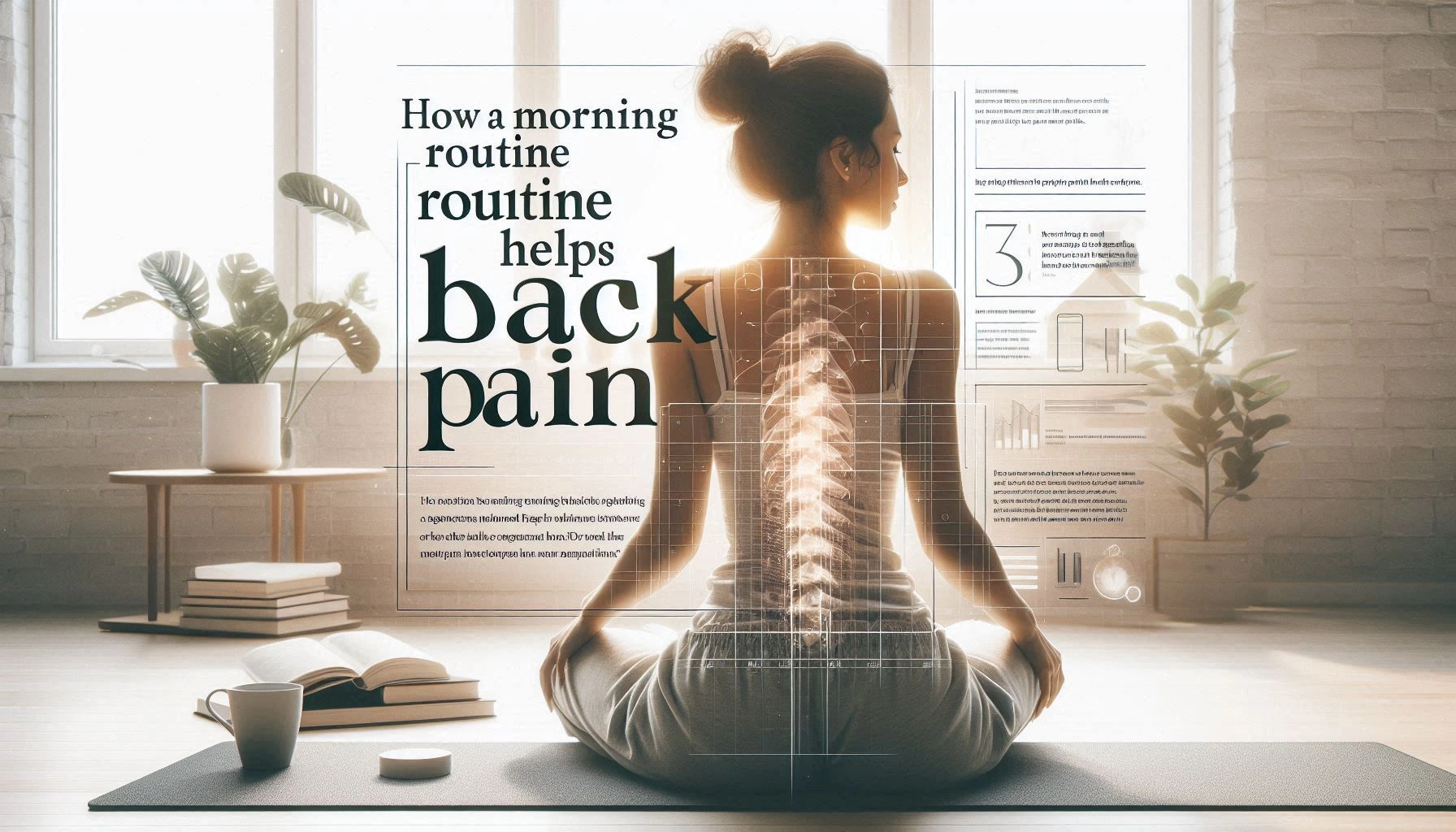
How a Morning Routine Helps Back Pain
Improves blood circulation
Gentle movement increases blood flow to tight muscles and joints. Better circulation helps tissues warm up and move more comfortably.
Reduces muscle tension
Slow stretching can relax muscles in the lower back, hips, hamstrings, and glutes. These areas often pull on the spine and make pain feel worse.
Supports posture correction
A good morning routine teaches your body to return to a more neutral position. That means less slouching, less strain on the lower back, and better support through the core and hips.
Lowers pressure on joints and nerves
When your body is stiff, the joints can feel compressed. In some cases, nearby nerves may also get irritated. Gentle mobility and proper support can reduce pressure and help ease nerve-related discomfort.
Helps with stiffness from inflammation and nerve compression
If your pain is linked to mild inflammation or pressure around the lower back, heat and careful movement can help calm the area. The goal is not to force big stretches. The goal is to create space, improve mobility, and reduce irritation.
How to Relieve Back Pain Fast at Home (Step-by-Step)
I recommend keeping this routine gentle and short. For most people, 10 to 15 minutes is enough to get started.
Step 1: Wake up slowly before getting out of bed
Do not jump up fast. Roll onto your side first. Bend your knees slightly. Use your arms to push yourself up. This reduces sudden pressure on your spine.
Step 2: Gentle breathing and pelvic tilts
Lie on your back with knees bent if that feels comfortable. Take 5 slow breaths. Then do 8 to 10 gentle pelvic tilts. This can loosen the lower back without aggressive stretching.
- Flatten your lower back slightly into the bed or floor
- Hold for 2 seconds
- Relax back to neutral
Step 3: Knee-to-chest stretch
Bring one knee toward your chest. Hold for 15 to 20 seconds. Switch sides. Then, if comfortable, bring both knees in together. This can reduce lower back tension and help decompress tight muscles.
Step 4: Cat-cow and spinal mobility
Move to hands and knees. Slowly round your back, then gently arch it. Repeat 8 to 10 times. Keep the motion easy. This improves spinal mobility and may reduce stiffness around the joints.
Step 5: Hip and hamstring stretch
Tight hips and hamstrings often pull on the pelvis and stress the lower back. Do a gentle hip flexor stretch and a light hamstring stretch for 20 seconds on each side. Avoid bouncing.
Step 6: Short walk and posture reset
Walk around your room or hallway for 2 to 5 minutes. Let your arms swing naturally. Then stand tall with your ears over your shoulders and your shoulders over your hips. This small posture correction can make a real difference before work.
Step 7: Heat, hydration, and workday setup
If you still feel stiff, use a heating pad for 10 to 15 minutes. Drink water. Then set up your chair, desk, and lumbar support before sitting down. Many people undo their progress within an hour by returning to poor posture.
Cleveland Clinic offers a helpful explanation of lower back stretches and why gentle movement matters: Cleveland Clinic lower back stretches.
Best Positions for Pain Relief Explained
| Position | How It Helps | Best For | Watch Out For |
|---|---|---|---|
| Back sleeping with pillow under knees | Supports spine alignment and lowers lumbar pressure | Lower back pain, morning stiffness | Neck strain if pillow is too high |
| Side sleeping with pillow between knees | Keeps hips level and reduces twisting | Lower back pain, pregnancy, joint stress | Shoulder pressure if mattress is too firm |
| Reclined resting position | Reduces pressure through the lower back | Flare-ups, short-term pain relief | Not ideal as an all-night sleeping position for everyone |
| Stomach sleeping | Usually not helpful for spine alignment | Rarely ideal for back pain | Can increase neck twist and lower back stress |
Common Sleeping Mistakes That Cause Back Pain
These are some of the biggest issues I see when people wake up with more pain than they had the night before.
Stomach sleeping
This often forces the neck to rotate and the lower back to arch. For many people, that creates extra pressure by morning.
Twisting the spine
Sleeping with one leg thrown far forward or the torso rotated can stress the hips and lower back. A knee pillow can help keep the body in better alignment.
Pillow too high or too flat
If the head is pushed too far forward or drops too low, the entire spine can shift. That tension may travel down the upper and lower back.
Mattress too soft or too firm
A mattress that sags can increase joint stress. One that is too firm can create pressure points at the shoulders and hips. Both can affect morning comfort.
Getting out of bed too fast
Even if your sleep position was fine, a sudden twisting movement first thing in the morning can trigger pain.
Common Problems and Quick Fixes
| Problem | Likely Cause | Quick Fix |
|---|---|---|
| Waking up with lower back pain | Poor sleep posture or weak lumbar support | Use side sleeping support and do pelvic tilts before standing |
| Sharp stiffness after sleeping | Low movement, muscle tension, mild inflammation | Apply heat and do a short mobility routine |
| Pain after long sitting | Poor posture and tight hips | Walk 2 to 5 minutes every hour and use lumbar support |
| Pain that spreads into the leg | Nerve irritation or compression | Avoid aggressive stretching and speak with a clinician if it continues |
| Back pain during pregnancy | Changing posture, joint stress, sleep discomfort | Use side support pillows and ask your provider about safe exercises |
| Ongoing daily discomfort | Chronic posture habits and weak support muscles | Stay consistent with a gentle routine and improve workstation setup |
Massage vs Stretching: Which Works Better?
Both can help, but they do different jobs. I usually think of massage as a way to relax tissue and stretching as a way to restore movement.
| Option | Best Use | Pros | Limits |
|---|---|---|---|
| Stretching | Morning stiffness and posture-related tightness | Improves mobility, supports alignment, easy to do at home | Can irritate pain if done too aggressively |
| Massage | Muscle tension and soreness | Feels soothing, may reduce muscle guarding | Usually short-term if posture issues are not fixed |
| Heat | Stiff muscles and low circulation | Fast comfort, simple to use | Does not correct movement problems by itself |
| Walking | General stiffness and sedentary days | Boosts circulation and reduces prolonged pressure | May need to be very short during flare-ups |
If you want quick relief, heat plus gentle stretching is often a strong combination. If you feel more muscle tightness than stiffness, light massage may help first.
Common Mistakes to Avoid
- Overstretching early: If your back is cold and stiff, big movements can make pain worse.
- Doing hard core exercises too soon: Save intense work for later in the day if needed.
- Ignoring sharp, shooting, or numb pain: That may suggest nerve irritation and needs more caution.
- Skipping posture changes: A good routine helps less if you slump at your desk for eight hours.
- Relying only on tools: Pillows and cushions help, but movement still matters.
Pro Tips and Best Practices
These tips make the routine work better in real life.
- Keep it short: Most people do best with 10 to 15 minutes.
- Be consistent: Daily practice usually matters more than intensity.
- Move before screens: If possible, do your routine before checking your phone or laptop.
- For office workers: Set a reminder to stand up every 30 to 60 minutes.
- For older adults: Use slower movements and hold onto a stable surface when needed.
- During pregnancy: Choose side sleeping support and get medical clearance before new exercises.
- For chronic pain: Think progress, not perfection. Gentle routines are easier to sustain.
WebMD also explains common back pain triggers and self-care options here: WebMD back pain guide.
Tools That Can Make Your Morning Easier
The right product will not fix every cause of back pain, but it can reduce pressure, improve posture, and make your routine easier to follow.
Orthopedic pillow
A supportive pillow can help keep your neck and upper spine in better alignment, which often reduces tension through the whole back.
Lumbar support cushion
If your pain gets worse after you sit down for work, this is often one of the most useful tools to try. It can help maintain the natural curve of your lower back.
Heating pad
This is one of my favorite tools for stiff mornings. Heat can relax tight muscles and make gentle stretching feel easier.
| Tool | Best For | Main Benefit | When to Use |
|---|---|---|---|
| Orthopedic pillow | Pain after sleeping | Better sleep posture and spine alignment | All night |
| Lumbar support cushion | Desk job back pain | Posture correction while sitting | Workday and driving |
| Heating pad | Morning stiffness and muscle tension | Fast comfort and muscle relaxation | 10 to 15 minutes after waking |
Orthopedic Knee or Leg Pillow
Helps reduce hip twist and supports side sleeping posture for lower back comfort.
Lumbar Support Cushion
Useful for office chairs, car seats, and long sitting days that trigger lower back pain.
Heating Pad for Back Pain Relief
A simple option for relaxing stiff muscles before stretching or starting your workday.
What Works Best for Quick Pain Relief?
| Method | Speed | Best For | My Take |
|---|---|---|---|
| Heating pad | Fast | Stiff, tight muscles | Great first step before movement |
| Gentle stretching | Fast to moderate | Morning stiffness and posture-related pain | Best long-term habit for many people |
| Short walk | Moderate | Pain from long sitting and poor circulation | Excellent after stretching |
| Massage tool | Fast | Muscle tightness | Helpful, but not a full fix by itself |
| Lumbar support | Moderate | Pain that returns during work | Very useful for desk jobs |
If I had to keep it simple, I would start with this order: heat, gentle mobility, short walk, then posture support for the rest of the day.
When Morning Back Pain May Need Medical Attention
Most mild stiffness improves with movement and support. But some symptoms should not be ignored.
- pain that shoots down the leg and does not improve
- numbness, tingling, or weakness
- loss of bladder or bowel control
- pain after a fall or injury
- fever, unexplained weight loss, or severe night pain
- pain that keeps getting worse despite rest and gentle care
If you notice any of those, it is smart to contact a doctor or physical therapist promptly.
FAQ
How do I relieve back pain fast in the morning?
Start with slow movement, pelvic tilts, a gentle knee-to-chest stretch, and a short walk. If your muscles feel stiff, a heating pad for 10 to 15 minutes can help before stretching.
Why is my lower back stiff when I wake up?
Common reasons include poor sleep posture, weak lumbar support, muscle tension, inflammation, and staying in one position for too long overnight.
What is the best sleeping position for back pain?
For many people, back sleeping with a pillow under the knees or side sleeping with a pillow between the knees works best. Both positions can improve spine alignment and reduce pressure.
Does walking help lower back pain?
Yes, gentle walking often helps by improving blood circulation, reducing stiffness, and breaking up long periods of pressure from sitting or lying down.
Can a pillow help morning back pain?
Yes. The right pillow can support better neck and spine alignment. A knee pillow or leg pillow can also reduce twisting if you sleep on your side.
How long should a morning routine for back pain relief take?
Most people can get good results with 10 to 15 minutes. The key is consistency, not doing a long or intense session.
When should I see a doctor for morning back pain?
See a doctor if you have numbness, weakness, pain that travels down the leg, severe night pain, or symptoms that keep getting worse instead of improving.
Conclusion
A good morning routine for back pain relief does not need to be complicated. Gentle movement, better support, and small posture fixes can go a long way. If you want the best results, stay consistent and make your sleep setup and work setup support your back instead of fighting it.
I’m Andrew Collins, and if your mornings have been rough, I hope this gives you a practical place to start.
“`