Side sleeping with a pillow between your knees or back sleeping with a pillow under your knees is usually the best sleeping position for lower back pain. These positions support spine alignment, reduce pressure on the lumbar area, and help tight muscles relax while you sleep.
Nighttime back pain can make sleep feel impossible. You lie down to rest, then your lower back starts aching more. I’m Andrew Collins, a product researcher and content writer focused on simple, practical solutions, and I’ve found that the right sleep position often changes how your back feels by morning.
What Is the Best Sleeping Position for Lower Back Pain?
For most people, the best sleeping position for lower back pain is side sleeping with a pillow between the knees. A close second is back sleeping with a pillow under the knees. Both options help keep the spine in a more neutral position, which means less strain on the lower back joints, muscles, and nerves.
If you sleep on your stomach, that may be part of the problem. Stomach sleeping often increases the arch in the lower back and turns the neck to one side for hours.
| Sleeping Position | Pain Relief Level | Best For | Watch Out For |
|---|---|---|---|
| Side sleeping with pillow between knees | High | General lower back pain, sciatica, pregnancy, long sitting stiffness | Shoulders need support too |
| Back sleeping with pillow under knees | High | Muscle tension, morning stiffness, pressure relief | Can bother some people with snoring or sleep apnea |
| Reclined sleeping | Moderate to high | Spinal stenosis, pressure-sensitive backs, post-injury comfort | Needs good pillow or wedge support |
| Gentle fetal position | Moderate | Some side sleepers who need a curled posture | Too much curling can tighten the spine |
| Stomach sleeping | Low | Rarely ideal for lower back pain | Often increases lumbar stress and neck strain |
Why Your Back Pain Gets Worse at Night
Spine alignment and posture correction
Your lower back works best when the spine stays close to neutral. If your hips twist, your pelvis tilts, or your mattress lets your body sink too far, the lumbar spine can fall out of alignment. That creates joint stress and makes posture correction harder while you sleep.
Muscle tension, inflammation, and pressure points
After a long day of sitting, lifting, driving, or bad posture, the muscles around the lower back can stay tight. When you lie in one painful position for hours, pressure points build up. That can increase inflammation and leave you waking up stiff and sore.
Nerve compression and blood circulation
If a sleep position puts extra pressure on the lower back, hips, or glutes, nearby nerves can get irritated. That matters even more if you already deal with sciatica or tingling down the leg. Better support can reduce nerve compression and improve blood circulation, which helps tissues settle down overnight.
How Sleeping Position Helps Lower Back Pain
I like to think of sleep position as a support system for recovery. A good position does four things at once: it keeps the spine aligned, relaxes tight muscles, reduces pressure on painful joints, and lowers the chance of nerve irritation.
Side sleeping works well because a pillow between the knees prevents the top leg from dropping forward and twisting the pelvis. Back sleeping helps because a pillow under the knees slightly bends the hips and takes pressure off the lumbar curve. In both cases, the goal is simple: less strain and better pressure relief.
Stomach sleeping usually does the opposite. It can overextend the lower back and force the neck to rotate. If you always wake up with pain after sleeping on your stomach, it is worth retraining your body into a different position.
How to Relieve Back Pain Fast at Home (Step-by-Step)
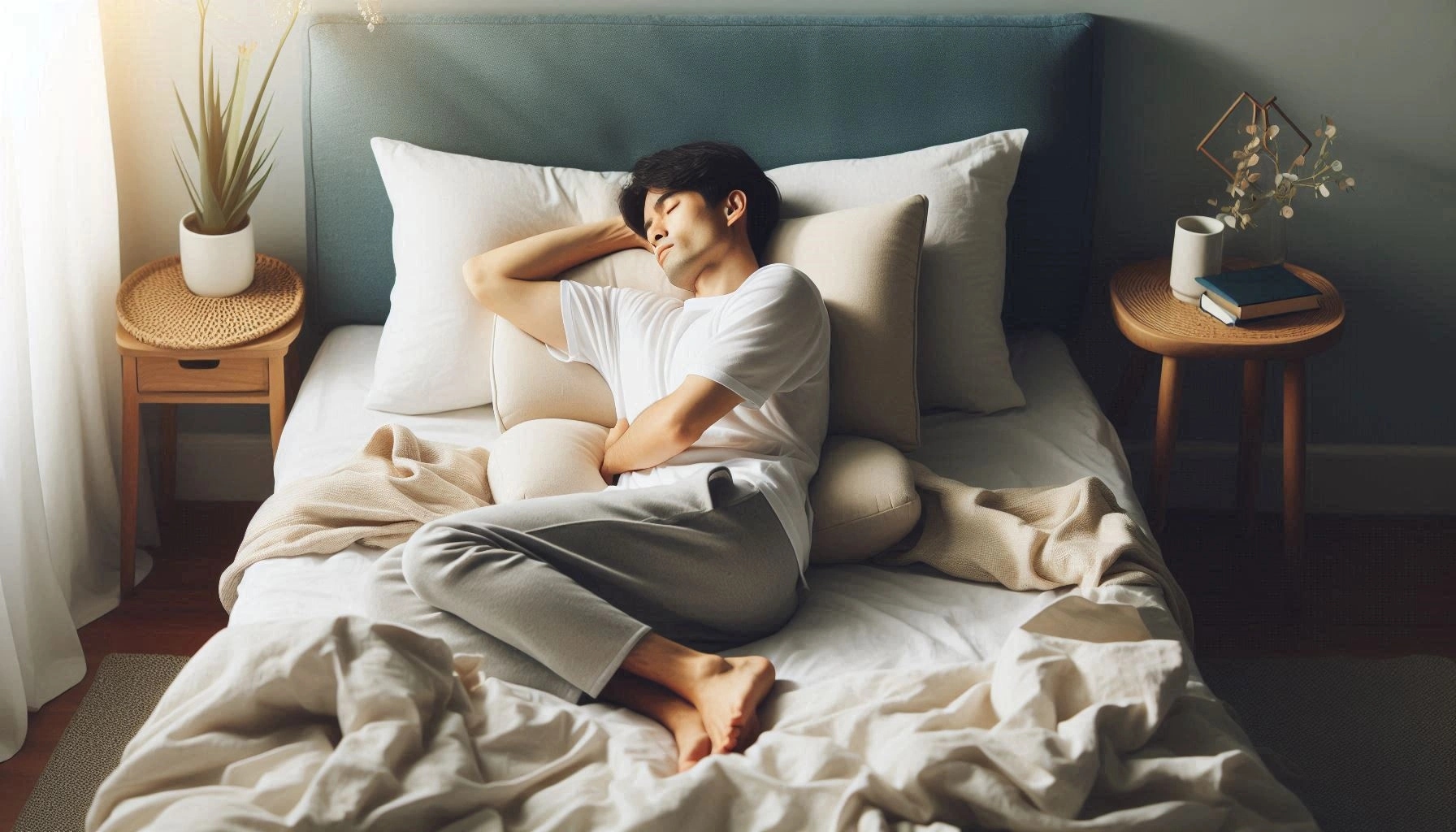
Step 1: Choose the position that reduces pressure
Start with side sleeping if you are not sure where to begin. If that feels awkward, try back sleeping with a pillow under your knees. Pick the option that makes your lower back feel looser within a few minutes.
Step 2: Add pillow support where your body collapses
Use a pillow between your knees when side sleeping. If you sleep on your back, place a pillow under your knees. If you are pregnant or your hips rotate easily, you may also benefit from a small pillow under the waist or belly area for extra support.
Step 3: Loosen tight muscles before bed
A warm shower, heating pad, or a few minutes of gentle stretching can calm muscle tension before you lie down. I usually suggest keeping it light. Aggressive stretching right before bed can irritate a sensitive back.
Step 4: Get in and out of bed without twisting
This part gets ignored a lot. Roll onto your side first, drop your legs off the bed, and then push yourself up with your arms. That move protects the lower back better than sitting straight up and twisting.
Step 5: Test your setup for 3 to 5 nights
One night is not always enough to judge. Give your body a few nights with the same position, pillow support, and bedtime routine. If your morning pain drops even a little, you are moving in the right direction.
| Quick Relief Option | Best For | How to Use It |
|---|---|---|
| Heating pad | Tight muscles and stiffness | Use for 15 to 20 minutes before bed |
| Gentle stretching | Hip tightness and long sitting discomfort | Do a short routine with slow movement |
| Pillow support | Pressure relief and spine alignment | Place between or under knees based on position |
| Short walk | Back stiffness after sitting all day | Walk for 5 to 10 minutes before bedtime |
Best Positions for Pain Relief Explained
Side sleeping with a pillow between your knees
This is the option I recommend most often because it is simple and effective. The pillow keeps the hips stacked and reduces twisting through the pelvis. That can ease lower back muscle tension and improve posture during sleep.
If you wake up with pain on one side of the lower back, this is often the first position to try.
Back sleeping with a pillow under your knees
This works well for people who feel better when the lower back is less arched. A pillow under the knees relaxes the hip flexors and takes pressure off the lumbar area. It also spreads body weight more evenly across the mattress, which helps with pressure points.
Reclined sleeping for pressure relief
Some people feel best with the upper body slightly elevated, especially if flat sleeping makes the back feel compressed. A wedge pillow or adjustable bed can create a reclined posture that reduces stress on the lower back.
Gentle fetal position for some side sleepers
A slight curl can feel comforting, especially if your back feels better flexed. The key word is gentle. Pulling your knees too far toward your chest can round the spine too much and create new stiffness by morning.
The one position to avoid most of the time
Stomach sleeping is usually the worst choice for lower back pain. It increases the arch in the lumbar spine and makes your neck turn for long periods. If you cannot stop stomach sleeping overnight, place a thin pillow under your lower abdomen to reduce some of the pressure while you transition to side sleeping.
| Position | How It Helps | Who Often Benefits |
|---|---|---|
| Side sleeping | Keeps hips aligned and lowers lumbar twisting | Desk workers, pregnant sleepers, people with sciatica |
| Back sleeping | Reduces lumbar arch and spreads pressure evenly | People with stiffness, muscle tension, morning pain |
| Reclined sleeping | Decreases compression and can ease pressure | People who feel worse lying flat |
| Stomach sleeping | Usually increases strain | Not ideal for most lower back pain cases |
Common Problems and Easy Fixes
Lower back pain at night is not always caused by one thing. In real life, it is often a mix of sleep position, daytime posture, muscle tightness, and poor support.
| Problem | Likely Cause | Easy Fix |
|---|---|---|
| Waking up with lower back pain | Poor spine alignment or mattress sag | Try side or back sleeping with knee support |
| Pain while sleeping on one side | Hip rotation and no knee support | Add a pillow between knees and ankles |
| Numbness or tingling down leg | Nerve compression | Use side sleeping with better hip support and avoid twisting |
| Pain after office work | Tight hip flexors and prolonged sitting | Walk, stretch gently, then sleep with knee support |
| Pain during pregnancy | Pelvic stress and pressure changes | Sleep on your side with pillows between knees and under belly |
| Pain in older adults | Joint stress and weak support surfaces | Use easier-entry bed height, firm support, and careful side rolling |
Common Sleeping Mistakes That Cause Back Pain
These mistakes show up again and again when people tell me they feel worse after sleeping.
- Sleeping on your stomach every night
- Using no support between the knees while side sleeping
- Stacking too many pillows under the head and bending the spine out of line
- Letting the top leg drop forward and twist the pelvis
- Using a mattress that is too soft and sags at the hips
- Ignoring daytime posture and then expecting sleep alone to fix the problem
- Getting out of bed with a fast twisting motion
| Do | Don’t |
|---|---|
| Keep the spine and hips aligned | Sleep twisted at the waist |
| Use a pillow for knee support | Let the knees pull the pelvis out of line |
| Use steady, moderate mattress support | Sleep on a deep sagging surface |
| Roll to your side before getting up | Sit up and twist quickly |
What Works Best for Quick Pain Relief Before Bed?
If your back feels tight before sleep, I usually look at heat, light stretching, and gentle massage first. The best choice depends on the kind of pain you feel.
Heat vs stretching vs massage
| Method | Works Best For | Limitations |
|---|---|---|
| Heating pad | Muscle tightness, stiffness, stress-related tension | Short-term comfort, not a full fix by itself |
| Gentle stretching | Tight hips, long sitting, mild mobility issues | Too much intensity can flare pain |
| Massage | Muscle knots and localized tension | May not help if nerve irritation is the main issue |
If your pain feels muscular, heat and gentle stretching often work well together. If it feels sharp, burning, or travels down the leg, be more careful and focus on pressure relief and neutral positioning first.
Pro Tips and Best Practices for Better Recovery
- If you sit at a desk all day, stand up more often. Long sitting tightens the hips and adds stress to the lower back by bedtime.
- If pain shows up after workouts, cool down properly and do not collapse into a poor sleep position afterward.
- If you are pregnant, side sleeping with support pillows is usually the most comfortable and practical choice.
- If you are older and movement is harder, choose a position you can safely get into and out of without twisting.
- If your pain is chronic, keep your routine consistent. Small nightly habits often matter more than one perfect product.
- If you try a new mattress topper or pillow, test it for several nights instead of judging it after one sleep.
Tool Recommendations That Can Make Sleep More Comfortable
Products do not replace good body mechanics, but the right support tool can make the best sleeping position much easier to maintain.
Orthopedic Knee Pillow
Helps keep your hips, knees, and lower back aligned while side sleeping.
Lumbar Support Cushion
Useful for office work and long sitting, which often makes nighttime lower back pain worse.
Heating Pad
A simple option for relaxing tight lower back muscles before bed.
| Product | Best Use | Main Benefit |
|---|---|---|
| Orthopedic knee pillow | Side sleeping | Better hip and spine alignment |
| Lumbar support cushion | Office chair or car seat | Helps reduce daytime strain that carries into the night |
| Heating pad | Before bed | Relaxes muscles and improves comfort |
Side Sleeping vs Back Sleeping: Which Works Better?
Both are solid choices, but they help in slightly different ways.
| Comparison | Side Sleeping | Back Sleeping |
|---|---|---|
| Best for general lower back pain | Excellent | Excellent |
| Best for sciatica or nerve irritation | Often better | Can help, depending on support |
| Best for muscle stiffness | Good | Very good |
| Best for pregnancy | Best choice | Usually less practical |
| Ease of maintaining alignment | Needs knee pillow | Needs knee pillow but simpler for some people |
If you already sleep on your side, I would improve that setup first with knee support and a pillow that keeps your head level. If you naturally prefer sleeping on your back, try a pillow under your knees and check whether your lower back feels less tight when you wake up.
In my experience, side sleeping wins for people whose pelvis rotates easily or who spend all day sitting. Back sleeping often wins for people who feel compressed, stiff, or sore through the middle of the lower back.
When Lower Back Pain at Night May Need Medical Care
Not every case of lower back pain is just a sleep-position problem. If your pain is severe, keeps getting worse, follows a fall or injury, or comes with weakness, numbness, fever, or bladder or bowel changes, it is time to get medical advice quickly.
For reliable symptom guidance, you can review Mayo Clinic’s back pain overview, Cleveland Clinic’s lower back pain guide, and WebMD’s back pain resource.
FAQ
What is the best sleeping position for lower back pain?
For most people, side sleeping with a pillow between the knees is the best option. Back sleeping with a pillow under the knees is also very effective.
Is it better to sleep on your back or side with lower back pain?
Both can help. Side sleeping is often better for hip and pelvic alignment, while back sleeping can be better for reducing pressure and morning stiffness.
Why does my lower back hurt more when I wake up?
Common reasons include poor spine alignment, a sagging mattress, muscle tension, or sleeping in a twisted position for too long.
Can a pillow help lower back pain while sleeping?
Yes. A pillow between the knees or under the knees can improve alignment and reduce stress on the lower back.
Is sleeping on the stomach bad for lower back pain?
Usually yes. Stomach sleeping often increases the arch in the lower back and can make both back and neck pain worse.
When should I see a doctor for lower back pain at night?
See a doctor if the pain is severe, keeps getting worse, spreads down the leg with weakness, follows an injury, or comes with fever, numbness, or bladder or bowel problems.
Conclusion
The best sleeping position for lower back pain is usually side sleeping with a pillow between your knees or back sleeping with a pillow under your knees. Focus on spine alignment, pressure relief, and muscle relaxation first. If your sleep setup has been working against you, tonight is a good time to change it.