A tight knee often comes from swelling, overworked muscles, stiffness after sitting, or reduced mobility in the tissues around the joint. In many cases, gentle movement, light stretching, compression, and short-term ice or heat may help, but sudden swelling, warmth, instability, or trouble bearing weight should be checked promptly.
I’m Ethan Carter, and I’ve spent years testing massage tools, recovery products, and pain relief methods. A tight knee can feel strange even when the pain is mild. It can show up after sitting all day, after a hard workout, or when the joint is irritated. In this guide, I’ll walk you through what usually causes that tight feeling, what may help at home, which tools are worth considering, and when it’s smart to get checked.
Quick Answer
A tight knee usually means something around the joint is not moving smoothly. Common reasons include swelling, stiffness, muscle tension, overuse, and arthritis-related irritation. The best first step is to figure out whether the knee feels hot and swollen or mostly stiff and restricted, because that changes what usually helps most.
What a Tight Knee Usually Means
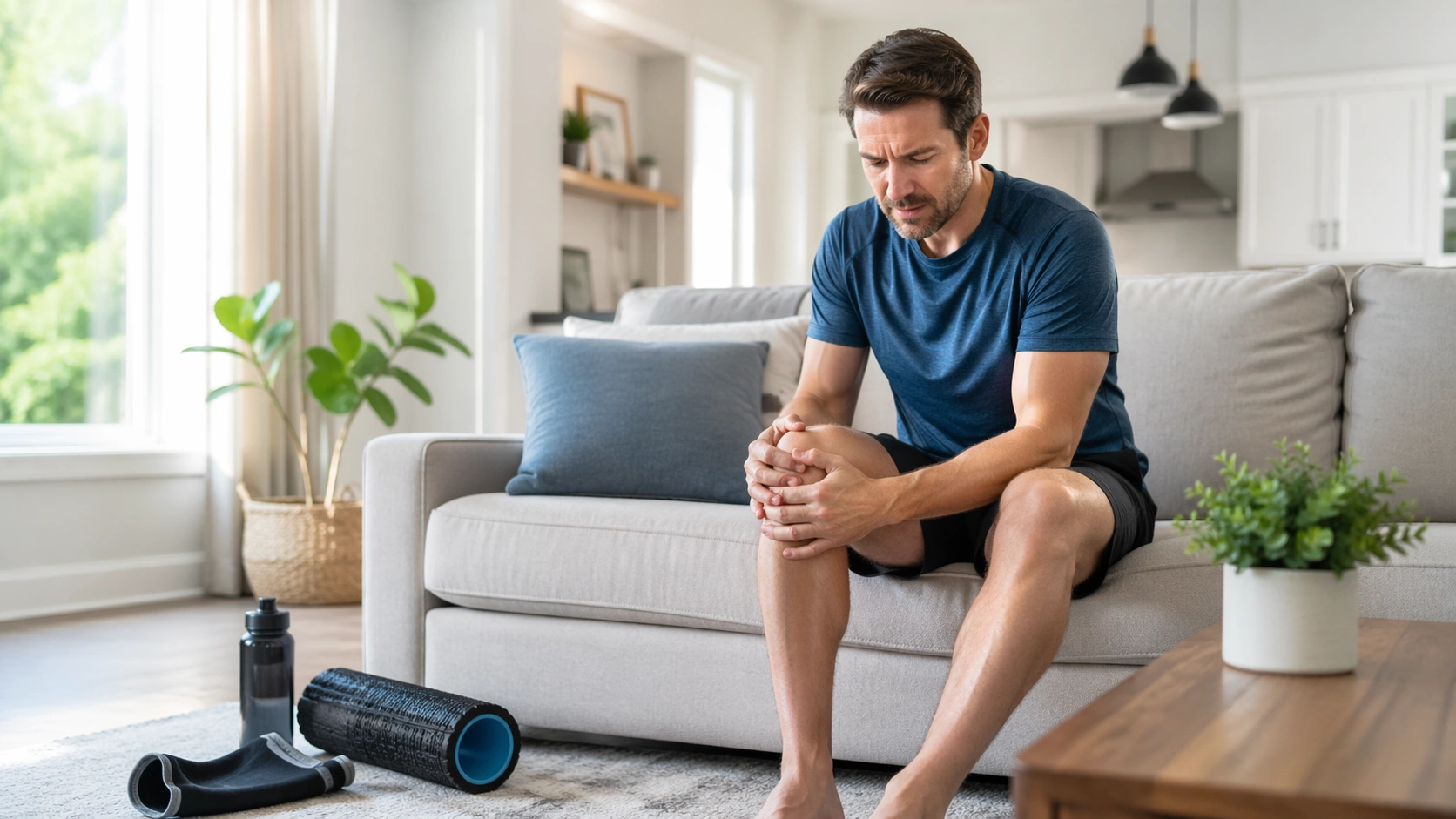
Knee tightness is not one single problem. Sometimes it is a mild recovery issue from exercise or long periods of sitting. Other times it is linked to swelling, reduced flexibility, or an older injury that makes the joint feel stiff. Arthritis can also cause pain, swelling, and stiffness in the knee, especially over time.
What matters most is the pattern. A knee that feels tight after a flight or a desk day usually needs a different approach than a knee that is swollen, red, warm, or hard to bend. For a deeper medical overview, I like the plain-English guidance in Cleveland Clinic’s knee pain overview and Mayo Clinic’s knee pain guide.
How Knee Tightness Happens
Swelling and inflammation can limit movement
When the knee is irritated, swelling can make the joint feel full, stiff, or hard to fully bend and straighten. That is one reason a knee may feel tight even if the pain is not sharp. Swelling, warmth, redness, and trouble fully moving the knee are signs to take more care with it.
Tight muscles above and below the knee can change how it feels
Your knee depends on the muscles around it for support. The quadriceps, hamstrings, calves, and hip muscles all affect how smoothly the knee moves. AAOS notes that strengthening the muscles that support your knee can reduce stress on the joint, and gentle flexibility work helps keep tissues from getting overly tight.
Too much sitting can make the joint feel stiff
One of the most common patterns I see is the desk-job knee. You sit for hours, stand up, and the knee feels tight, rusty, or slow to open up. That usually responds better to light movement, short walks, and mobility work than to total rest.
Hard workouts and overuse can leave the area sore and guarded
After leg day, running, hiking, or sports, the tissues around the knee may feel sore and protective. If the joint is not seriously injured, a gradual conditioning approach often helps people return to normal activity. That is why recovery routines that include gentle movement, mobility work, and progressive strengthening usually beat doing nothing at all.
Past injuries and arthritis can create recurring stiffness
If you have had a knee injury before, or you notice more morning stiffness, cracking, swelling, or reduced motion as time goes on, arthritis can be part of the picture. Cleveland Clinic notes that knee arthritis commonly causes pain, swelling, and stiffness, and osteoarthritis is the most common type.
Common Reasons Your Knee Feels Tight
Tight after sitting all day: This usually points toward stiffness, reduced blood flow from inactivity, and tight soft tissue around the joint rather than a major injury.
Tight after exercise: Often tied to soreness, overuse strain, or muscles around the knee feeling overworked.
Tight with swelling or warmth: More often linked to irritation inside the joint, inflammation, or an injury flare-up.
Tight with limited bending or straightening: This deserves more caution, especially if it is sudden, severe, or linked to injury. Mayo Clinic specifically lists inability to fully extend or flex the knee as a reason to seek care.
Tight first thing in the morning: This can happen when the joint is irritated, recovery is poor, or arthritis is starting to show up more consistently.
How to Relieve Knee Tightness at Home Step by Step
Step 1: Back off the activity that is clearly aggravating it. If the knee flared after a workout, long walk, or sport session, reduce the load for a day or two. Mayo Clinic recommends limiting weight-bearing activity when the knee is swollen.
Step 2: Use gentle movement instead of complete shutdown. Short walks, easy range-of-motion work, and light mobility often feel better than sitting still all day. In my experience, the stiff desk-job knee usually loosens up with small movement breaks. AAOS also emphasizes conditioning and exercise to support return to normal activity.
Step 3: Pick ice or heat based on what the knee is doing. If the knee is swollen, freshly irritated, or warm, cold usually makes more sense. If it mostly feels stiff and achy without much swelling, heat often feels better before mobility work. Cleveland Clinic notes that heat can soothe stiff joints while cold can help with pain and acute irritation.
Step 4: Try light self massage on the muscles around the knee, not aggressive pressure on the kneecap itself. I usually focus on the quads, hamstrings, calves, and sometimes the outer thigh. A massage stick, foam roller, or a gentle massage gun setting can support soft tissue work, especially when the knee feels tight because the surrounding muscles are tense.
Step 5: Add compression and elevation if swelling is part of the problem. A light knee sleeve or elastic wrap may help control mild swelling and give the area a more supported feel. Mayo Clinic notes compression can help control swelling, but it should not be so tight that it causes pain or swelling elsewhere in the leg.
Step 6: Build back strength gradually. Once the knee is calmer, light strengthening matters. AAOS explains that stronger muscles help reduce stress on the knee and absorb shock better. Think controlled sit-to-stands, gentle step-ups, and basic quad and hamstring work if they are comfortable.
Step 7: Watch the response over the next few days. If the knee is steadily loosening up, that is a good sign. If it is getting more swollen, unstable, red, or harder to move, it is time to stop pushing and get it checked.
Benefits and Best Uses of At-Home Relief
At-home knee relief works best when the issue is mild to moderate stiffness, post-workout soreness, desk-job tightness, or a temporary flare from overuse. In those cases, gentle movement, compression, heat or ice, and simple self massage often support comfort and help you move more normally again.
I especially find these approaches useful for office workers who sit too long, active people who need post-workout recovery, older adults who want gentle support, and travelers who stiffen up after long car rides or flights. The key is keeping the routine calm and consistent instead of trying to force the knee loose in one session.
Symptom vs Solution
| Symptom | Likely Trigger | What May Help | When to Get Help |
|---|---|---|---|
| Tight after sitting | Stiffness, low movement, tight soft tissue | Short walks, gentle bending and straightening, light quad and calf work | If it keeps worsening or starts limiting daily movement |
| Tight after workouts | Soreness, overuse strain, recovery delay | Reduced load, easy mobility, light massage around the muscles, gradual return | If swelling, instability, or sharp pain shows up |
| Tight and swollen | Joint irritation, inflammation, flare-up | Ice, compression, elevation, less weight-bearing | If swelling is marked, hot, red, or linked to fever |
| Tight and hard to fully bend or straighten | More serious irritation, injury, or persistent stiffness | Stop pushing hard and monitor closely | If you cannot fully extend or flex the knee, or cannot bear weight |
This table follows the same general self-care and red-flag guidance used by Mayo Clinic and Cleveland Clinic for knee pain, swelling, and stiffness.
Common Problems and Fixes
Problem: My knee feels tight every time I stand up from my desk.
Fix: Set a timer to stand and walk every 30 to 60 minutes. Add a few controlled knee bends and calf raises. This usually works better than a long stretch only once a day.
Problem: My knee feels tight after leg day.
Fix: Cut back intensity for a day or two, use easy mobility, and massage the surrounding muscles instead of hammering the sore area.
Problem: My knee feels tight and puffy.
Fix: Prioritize cold, compression, elevation, and less load before you think about hard stretching.
Problem: My knee feels tight and a little unstable.
Fix: Be cautious. Mayo Clinic lists instability or the feeling that the knee gives out as a reason to get medical advice.
Common Mistakes to Avoid
Stretching too aggressively: If the knee is irritated, forcing deep bends can make it angrier.
Using heat on a freshly swollen knee: Heat often feels great for stiffness, but cold usually makes more sense when the joint is actively swollen or inflamed.
Massaging directly over a very sore or swollen kneecap: In my experience, most people do better working on the quads, hamstrings, calves, and outer thigh first.
Going back to full workouts too fast: AAOS supports gradual conditioning because the muscles around the knee need time to handle load again.
Wrapping compression too tight: A sleeve or bandage should feel supportive, not restrictive. If it causes more discomfort or swelling below the wrap, loosen it.
Safety Tips and Best Practices
Get prompt medical care if you cannot bear weight, the knee looks deformed, swelling is marked, the joint is hot and red, or you have fever with knee pain and swelling. Those are red flags Mayo Clinic specifically calls out.
If you had a recent injury, surgery, or a known knee condition, be more conservative with self-treatment. AAOS notes that exercise programs after injury or surgery should be done under a clinician’s supervision. A helpful place to start is the AAOS knee conditioning program.
If the knee is just mildly stiff, the safest approach is usually gentle movement, calm recovery work, and patience. If the knee is getting worse instead of better, stop trying to push through it.
Tool and Product Recommendations
For this keyword, I do not like to force products. But there are a few simple tools that often make a home routine easier and more comfortable.
| Tool | Best For | Why It May Help | Best For Who |
|---|---|---|---|
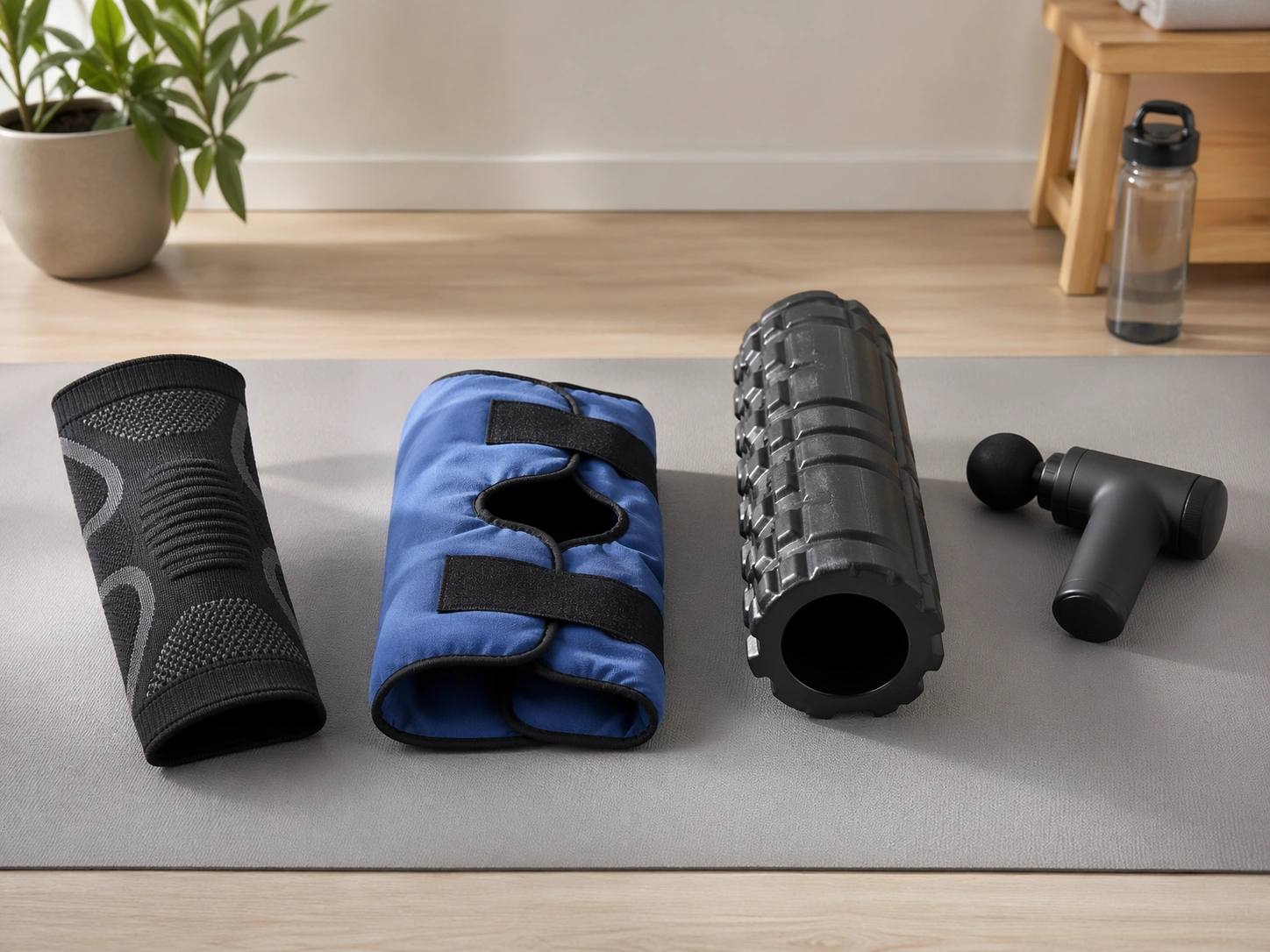
| Knee compression sleeve | Mild swelling, daily support, walking | Can provide a more supported feel and help manage light swelling | Office workers, walkers, travel use |
| Reusable hot or cold knee wrap | Hot or swollen flare-ups, stiff evenings | Cold can calm irritation, while heat can loosen stiffness | Home recovery routines, older adults |
| Foam roller or massage stick | Quad, hamstring, calf tightness | Targets surrounding muscles that can make the knee feel restricted | Post-workout recovery, runners |
| Mini massage gun | Fast muscle relief around the knee | Useful for light soft tissue work on the quads and calves | Athletes, active adults, home users |
Knee Compression Sleeve
May help with light swelling and give the joint a more supported feel during daily movement.
Reusable Hot and Cold Knee Wrap
Useful when you want one simple tool for stiffness on some days and cold support on swollen flare-up days.
Compression Sleeve vs Heat Wrap vs Foam Roller vs Massage Gun
| Option | Works Best For | Main Advantage | Main Limitation |
|---|---|---|---|
| Compression sleeve | Mild swelling and daily support | Easy to wear while walking or working | Will not fix tight muscles by itself |
| Heat wrap | Stiff, achy knees without much swelling | Comforting before mobility work | Not my first choice for a hot, swollen knee |
| Foam roller | Thigh and calf tightness | Great for broader muscle release | Can feel intense if used too aggressively |
| Massage gun | Quick soft tissue work around the knee | Fast and easy for post-workout recovery | Needs careful pressure and smart placement |
If your knee feels tight because the whole leg is stiff, I usually start with a foam roller or massage stick. If the issue is more swelling and support, a sleeve makes more sense. If the knee is just stiff and cranky at the end of the day, a warm wrap is often the easiest option.
FAQ
Why does my knee feel tight but not painful?
A knee can feel tight without much pain when the joint is stiff, the surrounding muscles are tense, or mild swelling is limiting motion. It can also happen after sitting too long or after a hard workout.
Is a tight knee a sign of swelling?
Sometimes, yes. Swelling often makes the knee feel full, stiff, and harder to bend or straighten. If the knee is warm, red, or clearly puffy, swelling is more likely.
Should I stretch a tight knee?
Gentle stretching and mobility work may help, but aggressive stretching is usually a mistake if the knee is swollen or sharply painful. Calm movement is usually the better starting point.
Is heat or ice better for a tight knee?
Ice is usually better when the knee is swollen, warm, or freshly irritated. Heat often feels better when the knee is mainly stiff and achy without much swelling.
Can massage help a tight knee?
Many people find massage helpful when the tight feeling comes from the muscles around the knee. I usually prefer working on the quads, hamstrings, and calves instead of pressing hard on the kneecap itself.
When should I worry about knee tightness?
Get medical help if you cannot bear weight, the knee feels unstable, swelling is marked, the joint looks deformed, or you have redness, warmth, and fever with knee pain.
Conclusion
A tight knee is often a recovery or mobility problem, not always a major injury. Start by figuring out whether the joint is swollen and irritated or mostly stiff. Then use the right mix of gentle movement, smart recovery, and simple tools. If the knee is unstable, badly swollen, or getting worse, get it checked instead of trying to tough it out.