
By Ryan Mitchell
Last updated: October 27, 2026
Quick Answer: A calming morning routine for anxiety works best when it is short, predictable, and focused on settling the body first. Start with light, water, slow breathing, and gentle movement before screens or big decisions. Consistency matters more than length.
Waking up with a tight chest, racing thoughts, or a sense of dread is more common than many people admit. A well-designed morning routine does not erase anxiety, but it can give your nervous system a clearer starting point and reduce the feeling that the day is already out of control.
This guide walks through practical steps you can adapt to real life—whether you have ten minutes or thirty. It focuses on habits that support regulation rather than productivity pressure.
Key Takeaways
- Keep the first 10–15 minutes screen-free and decision-light.
- Pair morning light, hydration, and longer exhales to help shift out of high-alert mode.
- Start smaller than you think you need; consistency beats intensity.
- This is supportive self-care, not a treatment for anxiety disorders—talk with a clinician if symptoms are intense or persistent.
Why Morning Anxiety Feels So Strong
Cortisol naturally rises in the early morning as part of waking. For some people that rise feels sharper, especially after poor sleep, late-night worry, or a day packed with demands. Checking the phone immediately can add another layer of stimulation before the body has settled.
A predictable sequence of simple actions gives the brain something familiar to follow. That predictability itself can feel safer than open-ended “what should I do first?” moments.
Core Building Blocks of a Calming Routine
Most effective routines share a few reliable elements. You do not need every one every day. Choose what fits your energy and schedule.
Gentle Wake-Up
Soft light or gradual alarm instead of a jarring sound. Stay in bed a moment longer and notice contact points with the mattress.
Morning Light
Open blinds or step near a window within the first 30 minutes. Outdoor light is ideal when possible.
Hydration First
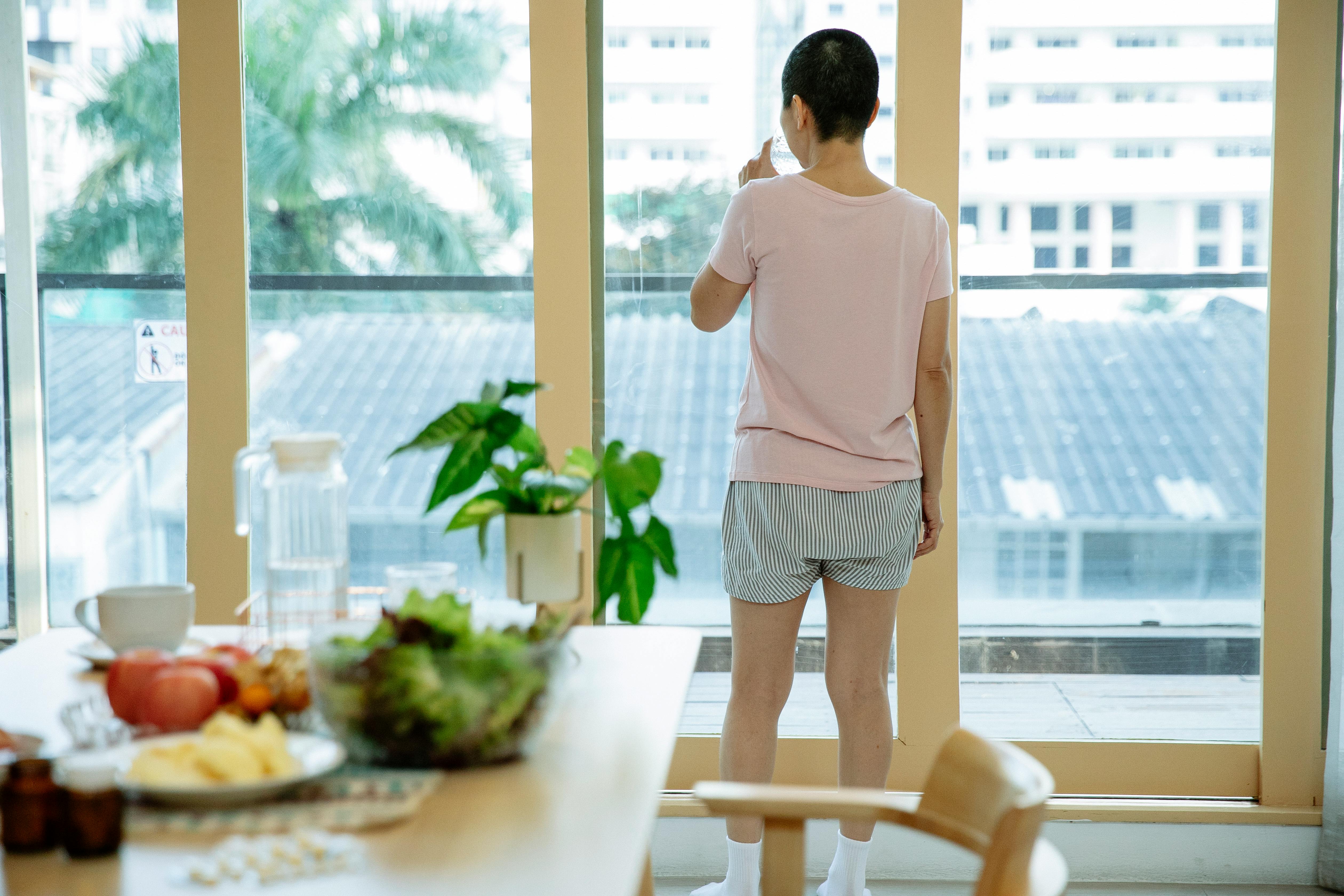
A full glass of water before coffee helps rehydrate after sleep and pairs easily with the next step.
Slow Breathing
Longer exhales (for example 4-in, 6-out) can support a shift toward calmer physiology for many people.
Sample 15-Minute Habit Stack
This sequence is designed so each step cues the next. Adjust times to what you can keep most days.
| Step | Action | Time |
|---|---|---|
| 1 | Open blinds or step into light; notice the room | 3–5 min |
| 2 | Drink a full glass of water | 1 min |
| 3 | Box breathing or longer-exhale breathing | 2–3 min |
| 4 | Gentle stretch or body scan | 3–4 min |
| 5 | One written line of intent or gratitude | 1–2 min |
Interpretation: The order reduces early decision-making. Light and water come first because they require almost no willpower.
Simple Breathing Options
Box Breathing
Inhale 4 · Hold 4 · Exhale 4 · Hold 4
Longer Exhale
Inhale 4 · Exhale 6 (or 4–7–8)
Belly Focus
Hand on belly; feel the rise and fall for 5 breaths
How to Build the Routine So It Sticks
Lists are easy. Making the sequence automatic is the harder part. Focus on friction reduction and one clear cue.
Night-Before Preparation Checklist
Reducing morning decisions is one of the highest-leverage moves for anxious mornings.
| Prep Item | Why It Helps |
|---|---|
| Water glass ready by the bed or sink | Removes the “where is a clean glass?” barrier |
| Blinds set for easy opening | Light becomes the first automatic action |
| Phone charging outside the bedroom or on Do Not Disturb | Protects the no-phone window |
| Journal or note card + pen nearby | Makes the final one-line step effortless |
Habit Anchors That Work
- Cue: “Feet on the floor” → start breathing
- Cue: Empty water glass → sit for body scan or stretch
- Keep the same order most days so the sequence becomes familiar

Matching the Routine to Different Needs
Not every anxious morning is the same. Adjust the emphasis based on how you typically feel.
| Morning Pattern | Emphasize | Go Easy On |
|---|---|---|
| Heavy dread / low energy | Morning light + hydration | Long body scans at first |
| Racing thoughts / high alert | Longer exhales + sensory grounding | Immediate planning or news |
| Physical tension | Gentle stretch or short walk | Intense exercise right away |
| Very limited time | Light + water + 3 breaths | Trying to do the full stack |
Suitable for most days
- Soft light exposure
- Water before caffeine
- Slow breathing
- One grounding sense check
Use extra care or skip
- Strong essential oils without checking tolerance
- Forced positive thinking when you feel low
- Long stillness if it increases distress
- Any practice that feels unsafe—stop and consult a professional
Common Mistakes and Gentle Fixes
| Common Mistake | What Often Happens | Gentler Alternative |
|---|---|---|
| Making the routine too long | It gets skipped on hard days | Protect a 5–7 minute core version |
| Checking the phone first | Alerts and news spike arousal | Keep a firm “after the stack” rule |
| Expecting instant calm | Disappointment undermines the habit | Treat it as a steady baseline builder over weeks |
| Skipping prep the night before | Friction wins in the morning | Spend two minutes setting water and light access |
Tip: Scale by Energy
On low-energy days, do only light + water + three slow breaths. That still counts. Returning to the full stack is easier when the minimum version never disappears.
Optional Supports and Product Types
Some people find certain tools helpful for consistency. These are optional supports, not requirements, and they do not treat anxiety.
| Support Type | How It May Fit | Notes |
|---|---|---|
| Sunrise-style alarm or smart bulb | Gentler wake-up signal | Check current options on Amazon |
| Simple journal or note cards | Makes the one-line intent easy | Any notebook works |
| Light therapy lamp (winter months) | Indoor light when daylight is limited | Follow manufacturer guidance |
You can browse current sunrise alarms and simple wellness tools here: sunrise alarm options on Amazon.
Related reading on the site: wellness massage at home routine and gentle stress-relief ideas during pregnancy. For broader context on the body’s calm response, see what the relaxation response is.
Safety Note
This article offers general wellness ideas only. It is not medical advice and is not a substitute for professional care. If morning anxiety is intense, interferes with daily life, or comes with panic symptoms, chest pain, or thoughts of self-harm, contact a qualified healthcare professional or local crisis resources promptly. People who are pregnant, postpartum, or managing other health conditions should check any new practices or products with their clinician.
Frequently Asked Questions
How long should a calming morning routine for anxiety be?
Should I avoid coffee completely?
What if I wake up already very anxious?
Can I do this routine if I have kids or a tight schedule?
Is this a replacement for therapy or medication?
How long until I notice a difference?
Final Thoughts
A calming morning routine for anxiety is less about doing more and more about doing a few helpful things in the same order. Light, water, slower breathing, and a short moment of presence give the nervous system a clearer starting signal.
Start smaller than you think you need. Protect the sequence on hard days. And remember that this is everyday self-care support—not a cure or a substitute for professional help when anxiety is significant.
If you take only one step from this guide, make it the night-before setup of water and light access. That single choice removes friction when mornings feel hardest.

