
By Alex Turner
Quick Answer: Yes, massage oil does absorb into the skin, but only into the outer layers. Most oils sit near the surface to reduce friction and soften skin rather than sinking in deeply. How much absorbs depends on oil type, skin temperature, and how long the oil stays on before it’s wiped off.
If you’ve ever finished a massage and wondered whether that slick layer of oil sank in or just sat on top, you’re asking a fair question. Does massage oil absorb into the skin, or does it mostly wash away in the shower afterward? The truth sits in between. Skin is built to keep most substances out, so massage oil absorbs only partially — enough to soften skin and ease glide, but not enough to reach deep tissue. Knowing how this works can help you pick the right oil, use it well, and avoid a few common mistakes.
Skin Absorption Oil Types Massage Routine Skin Safety Product Tips
This article is for general educational information only. It does not diagnose, treat, cure, or prevent any condition. It does not replace advice from a licensed healthcare professional. Readers should seek professional help for severe, worsening, unusual, or persistent symptoms.
What Massage Oil Does When It Touches Your Skin
Massage oil has one main job: reduce friction so hands glide smoothly over the skin. Most massage oils are carrier oils like sweet almond, jojoba, coconut, or grapeseed, sometimes blended with a light fragrance. These oils sit mainly in the outer skin layer, the stratum corneum, where they soften rough patches and help hold in some surface moisture. A small amount does move into deeper layers, but the skin’s outer barrier is built to resist full absorption — that’s its job. For most people, that means light, temporary softness rather than a deep effect from the oil itself.
How Does Massage Oil Absorb Into the Skin?
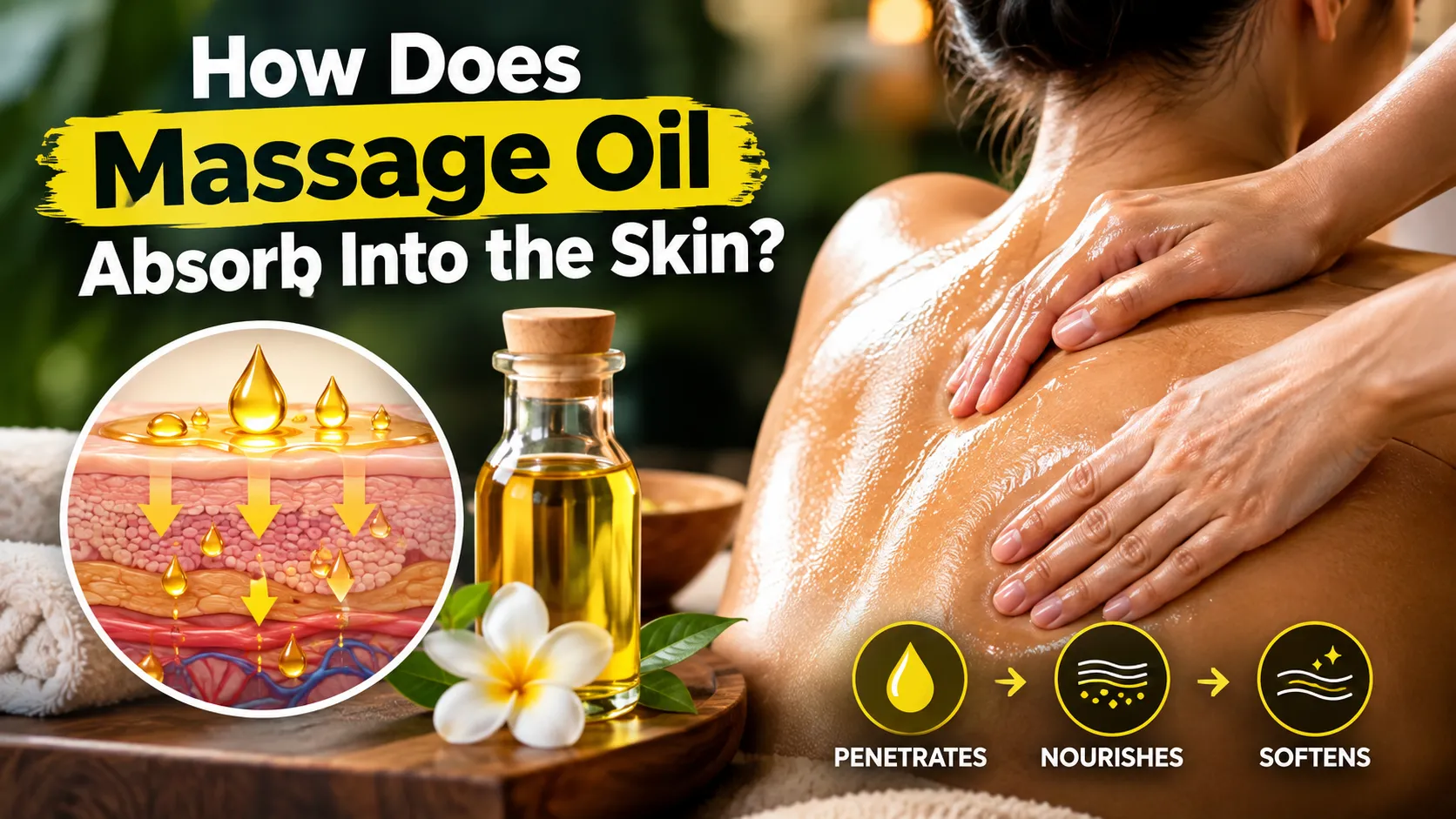
Several factors decide how much oil the skin actually takes in. Warmer skin has better surface blood flow, so oil tends to spread and partially absorb faster during a warm massage than on cold, dry skin. Oil weight matters too — lighter oils like grapeseed or jojoba often absorb into the surface layer more quickly than heavier oils like coconut, which tend to sit longer on top. Massage technique plays a role: longer, slower strokes give oil more contact time, while quick strokes leave more sitting on the surface. How long the oil stays on before wiping or dressing also changes the outcome. So when people ask does massage oil absorb into the skin, the honest answer is that it partially does, and the amount depends on all of these working together.
Note: Cold-pressed, minimally processed carrier oils tend to feel lighter on skin and may absorb a bit more evenly than heavily refined or wax-blended oils.
Benefits vs. Limitations of Massage Oil Absorption
Swipe left/right to see the full table →
| Benefit | Limitation |
|---|---|
| Softer skin surface | Doesn’t reach deep muscle tissue |
| Eases massage glide | Can feel greasy if overapplied |
| Temporary moisture lock | Effect fades within hours |
| Supports a relaxing routine | Doesn’t treat pain or injury |
Good Fit vs. Avoid-If: Choosing a Massage Oil
Swipe left/right to see the full table →
| Good Fit | Avoid If |
|---|---|
| Normal or dry skin | Skin is broken or irritated |
| No known nut or plant allergy | Known allergy to the oil’s source |
| Everyday relaxation routine | Active acne breakout in the area |
| Skin tolerates new products well | Open wound or fresh cut nearby |
A short routine also shapes how much oil settles in before it wipes off. The flow below shows a simple order that gives oil a fair chance to absorb without leaving skin overly greasy.
1
Warm a small amount of oil between your palms.
2
Apply in slow, even strokes over the area.
3
Let it sit a minute or two before deeper strokes.
4
Pat off extra oil rather than rubbing it away.
5
Add a thin extra layer only if skin still feels dry.
Practical guide only — timing can vary by skin type and oil used.
Factors That Affect Absorption
Skin Temperature
Warm skin has better surface blood flow. A heated towel or warm room can help oil spread and settle more evenly.
Oil Type & Weight
Lighter oils tend to feel less greasy and settle into the surface faster than thick, heavy oils.
Application Technique
Slow, even strokes give oil more contact time than quick, light passes over the skin.
Skin Barrier Condition
Dry, flaky, or damaged skin can absorb differently than smooth, well-hydrated skin.
How Long Different Massage Oils Take to Settle
Swipe left/right to see the full table →
| Oil Type | Typical Settling Time |
|---|---|
| Light (grapeseed, jojoba) | 5–10 minutes |
| Medium (sweet almond, sunflower) | 10–15 minutes |
| Heavy (coconut, mineral oil) | 20–30 minutes |
| Wax-blended oils | 30+ minutes, often stays on surface |
These are general, practical ranges — not lab measurements — and they can shift with skin type and room temperature.
Tip: Warm massage oil slightly between your palms before applying. It spreads more evenly and feels less greasy on contact.
Common Mistakes That Reduce Absorption

Even with the right oil, a few habits can work against you. Using too much at once, rubbing hard right away, or skipping a patch test are the most frequent issues people run into.
Mistake vs. Better Choice
Swipe left/right to see the full table →
| Mistake | Better Choice |
|---|---|
| Pouring on too much oil | Apply a thin layer, add more if needed |
| Rubbing hard right after applying | Let it sit 1–2 minutes first |
| Skipping a patch test on new oil | Test a small area 24 hours ahead |
| Using oil on broken skin | Avoid any open or irritated area |
A quick side-by-side of routine habits makes the pattern easier to spot at a glance.
Do
✓ Warm oil before applying
✓ Use a thin, even layer
✓ Patch test new oils
✓ Pat off extra oil gently
Don’t
✗ Pour on excess oil
✗ Rub hard immediately
✗ Skip label ingredient checks
✗ Apply on broken skin
Warning: Avoid applying massage oil to broken skin, fresh tattoos, sunburned areas, or active rashes. Oil can trap irritation and slow healing.
If your skin does react, spotting the signs early makes it easier to know when to stop and reassess.
Red-Flag Checklist
☐ Redness that spreads beyond the applied area
☐ Itching that gets worse, not better
☐ Swelling, bumps, or hives
☐ Warmth or pain at the application site
☐ Symptoms lasting more than a day
If any of these apply, stop using the oil and consider professional guidance.
Reading a Massage Oil Label
Swipe left/right to see the full table →
| Do | Don’t |
|---|---|
| Check the carrier oil listed first | Ignore added fragrance if skin is sensitive |
| Look for a short ingredient list | Assume “natural” means allergy-safe |
| Patch test scented or new blends | Use expired or rancid-smelling oil |
When to Contact a Professional: Most mild redness or oiliness fades within a few hours. Contact a healthcare provider or dermatologist if you notice spreading redness, hives, swelling, blistering, or skin pain that doesn’t improve within a day, or if you accidentally use an oil containing a known allergen.
Not every factor matters equally. This is a practical guide to where your attention pays off most.
Relative Priority Guide
Skin barrier health
Time left on skin
Oil type & weight
Application technique
Skin temperature
Practical routine priority guide, not scientific measurement.
Grouping what commonly slows absorption can help you troubleshoot a greasy or slow-settling result.
What Slows Down Absorption
Oil-related: heavy oils, added wax, synthetic fragrance
Skin-related: dry or damaged barrier, cold skin, thick calluses
Technique-related: rubbing too fast, wiping oil off immediately, applying too much at once
This article may contain affiliate links. If you buy through these links, we may earn a small commission at no extra cost to you. We only mention products that fit the topic and do not replace professional medical advice.
Unscented Sweet Almond Massage Oil
A medium-weight, fragrance-free option that may support smooth glide and light surface softness for everyday massage routines.
Lightweight Jojoba Massage Oil Blend
A lighter oil that may help skin feel less greasy while still supporting massage glide and daily routine consistency.
Frequently Asked Questions
Does massage oil absorb into the skin completely?
No. Most oil stays in the outer skin layer for softness and glide, while a smaller portion moves slightly deeper. Full absorption isn’t typical for any carrier oil.
Which massage oils absorb the fastest?
Lighter oils like grapeseed and jojoba tend to settle into the skin’s surface faster than heavier oils such as coconut or mineral oil.
Is it bad if massage oil stays greasy for a while?
Not usually. Some oils naturally take longer to settle. If skin still feels greasy after 30 minutes, a lighter oil or thinner layer may work better.
Can massage oil clog pores?
Heavier oils can feel occlusive on acne-prone skin. Choosing a lighter oil and avoiding active breakout areas can help reduce this risk.
Should I wash off massage oil afterward?
It’s a personal preference. Some people rinse off excess oil after 20–30 minutes, while others leave a light layer on for extra softness overnight.
Can massage oil cause a skin reaction?
Yes, especially with added fragrance or a known allergy. Patch testing a small area 24 hours before full use can help catch reactions early.
Does warming the oil first help it absorb better?
Warming oil between your palms before applying can help it spread more evenly and feel less greasy against the skin.
So, does massage oil absorb into the skin? Partly — enough to soften and ease glide, not enough to reach deep tissue. Choosing a lighter oil, applying a thin layer, and giving it a minute or two to settle usually gives the best everyday result. If you notice spreading redness, swelling, or discomfort that doesn’t improve within a day, check in with a healthcare professional rather than waiting it out.
Author
-

I’m Alex Turner, a massage product reviewer and wellness writer at RemedyTip. I specialize in researching, evaluating, and comparing massage and recovery products to help readers make informed purchasing decisions. My focus is on practical, evidence-informed product guidance covering muscle recovery, relaxation, everyday comfort, and wellness.
I take a research-driven approach to every product I review. I examine product specifications, features, materials, performance claims, user feedback, durability, comfort, ease of use, and overall value. When appropriate, I also consult trusted industry and health-related sources to verify important information and provide readers with a more complete and balanced view.
I cover a wide range of products, including massage guns, handheld massagers, neck and shoulder massagers, foot massagers, massage chairs, foam rollers, and other recovery tools. Rather than focusing only on marketing claims, I look at how products compare in real-world use and who they are actually suitable for. I also consider different budgets, use cases, and user needs when making recommendations.
At RemedyTip, I’m committed to accuracy, transparency, and unbiased product information. I clearly distinguish between manufacturer claims, available evidence, and my own product analysis so readers can understand the basis of each recommendation. I continuously research new products, technologies, and developments in the massage and recovery space to keep my content current and useful.
My goal is simple: to provide trustworthy, easy-to-understand information that helps readers choose massage and recovery products with greater confidence.

