
Written by Alex Turner
Quick Answer: Human massage oils are not automatically safe for dogs. Fragrance, essential oils, medications, and other ingredients can create risks if they touch the skin or are licked. A veterinarian-approved pet product is a safer starting point, especially if your dog has skin problems or medical conditions.
Pet-care safety guide
The ingredient matters more than the word “oil.”
Dogs can lick products from their coats, and some substances that are suitable for people can irritate or harm pets. The safest approach is to check the complete ingredient list before putting anything on your dog.
Essential oils Skin exposure Licking risk Ingredient checks
Safety note: This article is for general educational information only. It does not diagnose, treat, cure, or prevent any condition. It does not replace advice from a licensed healthcare professional. Readers should seek professional help for severe, worsening, unusual, or persistent symptoms.
Why massage oil can be different for dogs
A dog’s skin and habits are not the same as a person’s. A product designed for human massage may contain fragrance, essential oils, botanical extracts, warming ingredients, pain-relief ingredients, or other substances that were not formulated for animals.
There is another important issue: dogs groom themselves. Anything left on the coat may eventually reach the mouth through licking. Veterinary sources warn that some essential oils can be harmful through skin exposure or ingestion, and concentrated products should not be directly applied to pets. ASPCA guidance on essential oils around pets and VCA’s veterinary safety information both emphasize this exposure concern.
So the useful question is not simply whether oil is “natural.” The better question is: What exactly is in the product, where will it be applied, and could the dog lick it?
A practical ingredient check
Before using any topical oil, read the entire label. If the product does not clearly identify its ingredients or is marketed for people rather than pets, avoid assuming that it is appropriate for your dog.
Safety decision path
This is a practical screening process, not a guarantee of safety. When the ingredient list is unclear or your dog has an existing health concern, veterinary advice is the safer decision.
Ingredients that deserve extra caution
Essential oils are a major concern. ASPCA guidance says concentrated essential oils can be dangerous to pets and recommends avoiding direct application because toxicity can vary by oil, concentration, formulation, and exposure. VCA also lists several oils that can be poisonous to dogs, including tea tree, peppermint, citrus, pine, wintergreen, cinnamon, and ylang-ylang. See VCA’s ingredient and exposure guidance.
Ingredient and product screening table
Swipe left/right to see the full table →
| Product feature | Why it matters | Practical response |
|---|---|---|
| Essential oils | Some can be toxic | Avoid direct use |
| Strong fragrance | May irritate or encourage licking | Choose fragrance-free when possible |
| Pain-relief ingredients | Human formulas may be unsafe | Do not improvise |
| Unclear ingredient list | Safety cannot be assessed well | Skip it |
Warning: Never assume that “natural,” “organic,” “herbal,” or “aromatherapy” means pet-safe. Concentration and formulation matter, and some natural oils can be harmful to dogs.
Human massage oil vs a dog-specific product
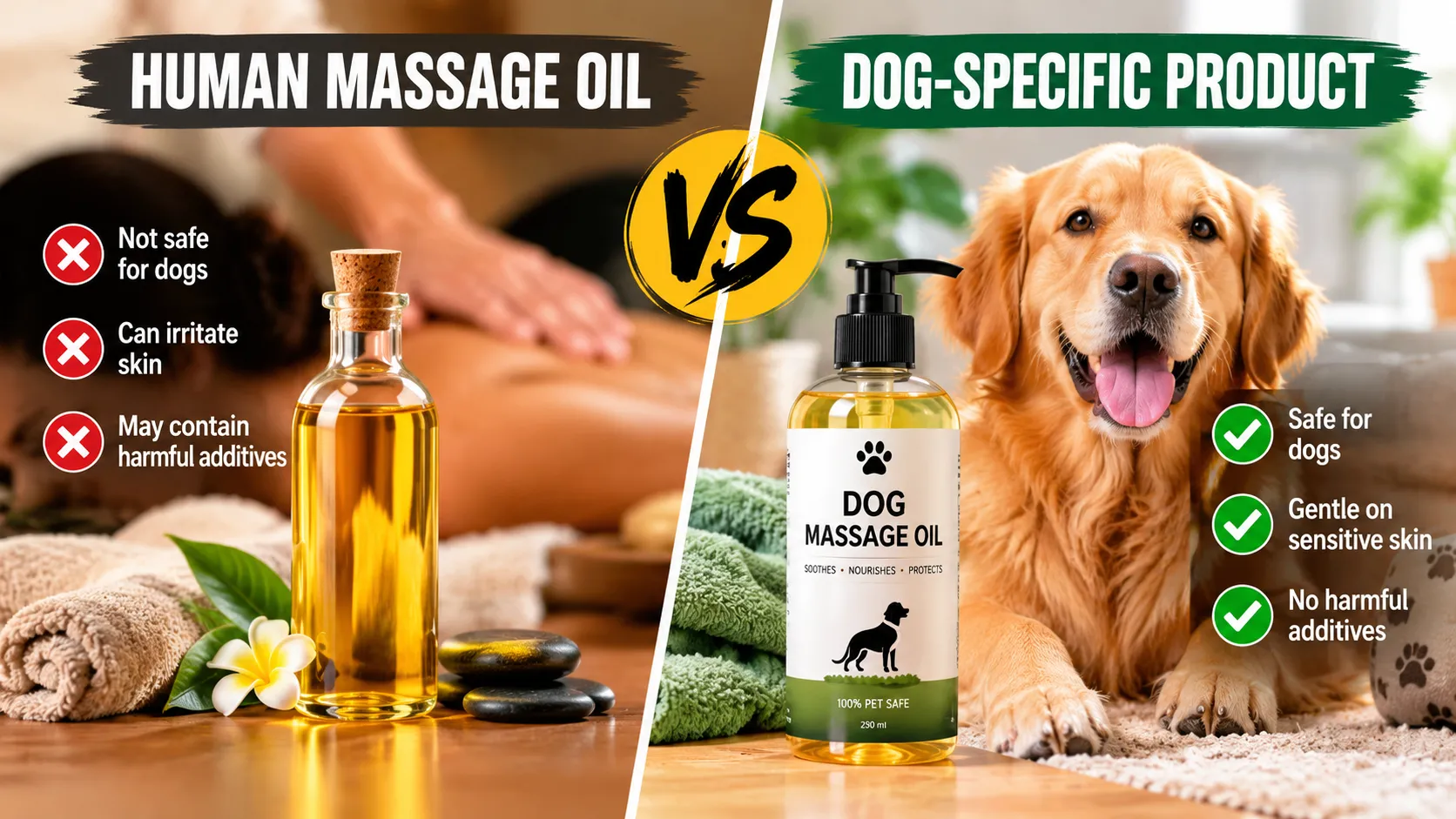
A product made for people is not automatically appropriate for a dog. Human products may contain ingredients selected for human skin, scent preferences, or therapeutic marketing rather than canine exposure and grooming behavior.
A pet-specific topical product may be formulated with dogs in mind, but the label still matters. “For dogs” is not a reason to ignore instructions, and a dog-specific product may still be inappropriate for a particular pet. If your dog has skin disease, allergies, a chronic illness, or takes medication, ask your veterinarian before trying a new topical product.
What the label tells you
Swipe left/right to see the full table →
| Label detail | Look for | Avoid assuming |
|---|---|---|
| Intended species | Dogs or veterinary guidance | Human use equals dog use |
| Full ingredients | Clear ingredient names | “Proprietary blend” is automatically safe |
| Directions | Species-specific instructions | More product means more benefit |
Practical safety priorities
These bars are a practical guide rather than scientific measurements. The main goal is to reduce unnecessary exposure and avoid products whose ingredients are difficult to assess.
What can happen after an unsafe exposure?
Signs depend on the substance, concentration, amount, and route of exposure. Veterinary sources describe possible signs after harmful oil exposure including drooling, vomiting, weakness, lethargy, tremors, unsteadiness, skin irritation, and breathing difficulty. VCA’s veterinary guidance provides additional detail.
Do not wait for a dramatic reaction before taking a suspected poisoning seriously. A small amount can matter depending on the substance, and dogs may ingest residue by licking their coat.
Exposure signs and the next step
Swipe left/right to see the full table →
| Possible sign | Why it matters | Action |
|---|---|---|
| Drooling or vomiting | Can follow ingestion | Contact a veterinarian |
| Weakness or wobbling | May indicate systemic effects | Seek veterinary help promptly |
| Tremors | Can occur with some toxic exposures | Seek urgent veterinary advice |
| Breathing difficulty | Potentially serious sign | Seek urgent veterinary care |
Red-flag checklist
If any serious sign appears after exposure, contact a veterinarian or an animal poison service promptly. The ASPCA Animal Poison Control Center can be reached at (888) 426-4435; a consultation fee may apply. ASPCA Animal Poison Control information is also available online.
What to do if oil gets on your dog
If an unfamiliar product gets onto your dog’s coat or skin, prevent additional licking and identify the product if possible. Keep the bottle or packaging available so your veterinarian can see the ingredients and concentration.
For some essential-oil exposures, VCA advises promptly washing contaminated skin or fur with liquid dishwashing detergent and seeking veterinary guidance. The correct response can depend on the product, so do not improvise by inducing vomiting or giving home remedies. Review the VCA exposure guidance.
Exposure response table
Swipe left/right to see the full table →
| Situation | First priority | Avoid |
|---|---|---|
| Small skin exposure | Identify product | Let the dog lick it |
| Unknown essential-oil exposure | Call veterinarian or poison service | Induce vomiting |
| Symptoms after exposure | Seek veterinary advice | Wait for symptoms to worsen |
Tip: Keep the original bottle, label, or a clear photo of the ingredients. Having the exact product name and ingredient list can make it easier for a veterinarian or poison-control professional to assess the exposure.
Safer choices for a dog massage routine
If your goal is simply gentle contact and bonding, oil may not be necessary. A calm environment and slow, gentle hands can provide physical contact without introducing an unfamiliar topical ingredient.
If your veterinarian has specifically recommended massage for your dog, ask whether you need a topical product at all. If an oil or lotion is appropriate, ask which product, ingredients, amount, and application method fit your dog.
Safer routine versus risky routine
Swipe left/right to see the full table →
| Safer approach | Riskier approach | Why |
|---|---|---|
| Gentle contact without oil | Using a random human oil | Avoids unknown ingredients |
| Vet-approved product | Essential-oil blend | Ingredient risk can differ |
| Follow label directions | Applying more for stronger effect | More exposure is not automatically better |
A simple four-part safer routine
The routine is intentionally conservative. Dogs cannot tell you that a product feels irritating, and they may ingest residue during grooming.
Common mistakes pet owners make
One mistake is choosing a product because it works well for the owner. Another is assuming that dilution automatically removes risk. ASPCA notes that essential-oil safety varies with concentration and formulation, which is one reason direct application should be approached cautiously.
Another common mistake is overlooking what happens after application. Even if the skin appears normal, licking can turn a topical exposure into an ingestion exposure. Keeping a dog from licking an applied product is therefore an important part of any topical routine.
Mistake versus better choice
Swipe left/right to see the full table →
| Mistake | Better choice | Reason |
|---|---|---|
| Using scented human oil | Ask your vet first | Ingredients may differ |
| Ignoring the ingredient list | Check every ingredient | Labels provide key safety information |
| Allowing immediate licking | Prevent ingestion | Topical exposure can become oral exposure |
| Waiting after a known toxic exposure | Contact a professional promptly | Early advice can matter |
Note: Plain plant oils and essential oils are not interchangeable. “Oil” describes a broad group of substances, so safety depends on the specific product and exposure rather than the word itself.
When to contact a veterinarian
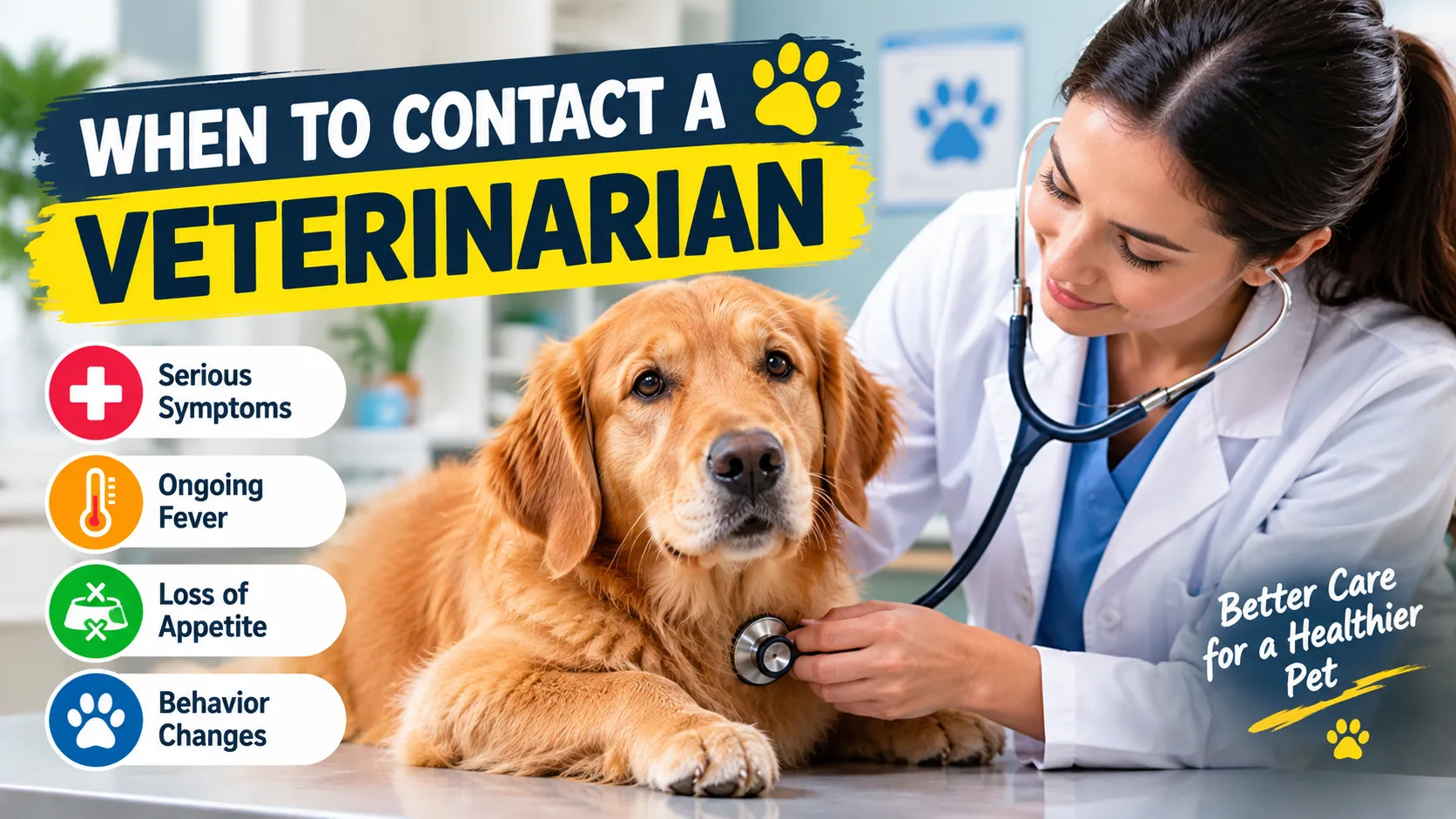
Professional advice is especially important when your dog has already been exposed to an essential oil, fragrance oil, medicated topical product, or an ingredient you cannot identify. It is also sensible to ask before applying anything if your dog has an existing skin problem, chronic medical condition, or medication regimen.
Do not rely on appearance alone. Some toxic exposures can cause neurological, gastrointestinal, respiratory, or skin signs, and the severity depends on the substance and amount.
Self-care versus professional help
Swipe left/right to see the full table →
| Situation | Appropriate next step | Urgency |
|---|---|---|
| Considering a new topical product | Check label and ask vet if uncertain | Routine |
| Known questionable oil exposure | Contact veterinarian or poison service | Prompt |
| Breathing trouble or severe weakness | Seek urgent veterinary care | Urgent |
When to contact a professional: Contact a veterinarian promptly after a known potentially harmful exposure, especially if your dog is drooling, vomiting, weak, unsteady, trembling, unusually sleepy, having trouble breathing, or showing significant skin irritation. If breathing difficulty or severe neurological signs occur, seek urgent veterinary care.
General risk guide
Lower concern
No product applied; gentle contact only.
Uncertain
Unknown ingredient or human topical product.
Higher concern
Known toxic ingredient or symptoms after exposure.
General practical guide only; actual risk depends on the substance, concentration, amount, and route of exposure.
For broader pet-safety information, the ASPCA Animal Poison Control Center is a useful reference. Veterinary advice remains important when a specific dog has been exposed.
Frequently asked questions
Is massage oil safe for dogs?
Not automatically. Human oils can contain fragrances, essential oils, medications, or other ingredients that may be unsafe for dogs, so check the full label and ask a veterinarian when unsure.
Can I use essential oils in massage oil for my dog?
Direct application of concentrated essential oils should be avoided. Some essential oils can be toxic to dogs through skin exposure or ingestion.
What if my dog licks massage oil?
The response depends on the exact ingredients and amount. Keep the product container and contact your veterinarian or an animal poison service if the product may be harmful.
Are scented oils safe for dogs?
Scented products are not automatically safe. Fragrance and essential-oil ingredients can create skin, ingestion, or other exposure concerns.
Can I use coconut or olive oil on my dog?
Do not assume a kitchen oil is appropriate for topical use. Ask your veterinarian whether a particular oil is suitable for your dog and intended use, especially because licking can lead to ingestion.
What should I do if oil causes skin irritation?
Stop further exposure and contact your veterinarian for guidance, particularly if the irritation is significant, spreading, persistent, or accompanied by other symptoms.
Should I use massage oil if my dog has a medical condition?
Ask your veterinarian first. A medical condition, skin problem, or medication regimen can change whether a topical product is appropriate.
Final Thoughts
The safest answer is to avoid assuming that a human massage product belongs on a dog. Check ingredients carefully, avoid concentrated essential oils, prevent licking, and ask your veterinarian about products intended for your particular pet.
If an exposure has already happened and your dog develops unusual, worsening, persistent, or serious symptoms, seek veterinary help promptly.
Author
-

I’m Alex Turner, a massage product reviewer and wellness writer at RemedyTip. I specialize in researching, evaluating, and comparing massage and recovery products to help readers make informed purchasing decisions. My focus is on practical, evidence-informed product guidance covering muscle recovery, relaxation, everyday comfort, and wellness.
I take a research-driven approach to every product I review. I examine product specifications, features, materials, performance claims, user feedback, durability, comfort, ease of use, and overall value. When appropriate, I also consult trusted industry and health-related sources to verify important information and provide readers with a more complete and balanced view.
I cover a wide range of products, including massage guns, handheld massagers, neck and shoulder massagers, foot massagers, massage chairs, foam rollers, and other recovery tools. Rather than focusing only on marketing claims, I look at how products compare in real-world use and who they are actually suitable for. I also consider different budgets, use cases, and user needs when making recommendations.
At RemedyTip, I’m committed to accuracy, transparency, and unbiased product information. I clearly distinguish between manufacturer claims, available evidence, and my own product analysis so readers can understand the basis of each recommendation. I continuously research new products, technologies, and developments in the massage and recovery space to keep my content current and useful.
My goal is simple: to provide trustworthy, easy-to-understand information that helps readers choose massage and recovery products with greater confidence.

