Written by Alex Turner
Quick Answer: Massage cream may burn or sting because of irritating ingredients, fragrance, a damaged skin barrier, friction, or application to recently shaved or broken skin. A mild brief sensation is different from persistent burning, swelling, blistering, or a worsening rash, which calls for stopping the product and getting professional advice.
Why can a massage cream feel surprisingly hot?
Massage creams are designed for skin contact and glide, but formulas can contain ingredients that create warmth, cooling, fragrance, or other noticeable sensations. If your skin is sensitive, dry, freshly shaved, scratched, or already irritated, the same formula may feel much stronger.
This guide focuses on practical ways to tell a temporary sensation from a reaction that means you should stop using the product.
Safety note: This article is for general educational information only. It does not diagnose, treat, cure, or prevent any condition. It does not replace advice from a licensed healthcare professional. Readers should seek professional help for severe, worsening, unusual, or persistent symptoms.
Why Does Massage Cream Burn or Sting?
There is not one single reason. A burning or stinging sensation can come from the formula itself, the condition of your skin, or the way the cream is being applied. Massage also adds friction and pressure, which can make an already sensitive area feel more uncomfortable.
Some ingredients are deliberately noticeable. Others may irritate skin without being intended to create a warming sensation. Fragrance is another possible trigger for people who react to personal-care products. The American Academy of Dermatology notes that contact dermatitis can cause burning or stinging, along with redness, itching, tenderness, swelling, or blisters. :contentReference[oaicite:0]{index=0}
The timing matters too. If the sensation starts immediately and disappears quickly after the product is removed, the experience may be different from a reaction that continues for hours or develops into a rash.
Common causes to consider
The table below is a practical way to narrow down what may be happening without assuming a specific diagnosis.
Swipe left/right to see the full table →
| Possible reason | Typical clue | Practical response |
|---|---|---|
| Irritating formula | Burning soon after application | Stop and rinse if uncomfortable |
| Fragrance sensitivity | Stinging plus redness or itching | Consider fragrance-free options |
| Compromised skin barrier | Dry, raw, cracked, or recently shaved skin | Avoid the product until skin settles |
| Friction or pressure | Sensation increases during massage | Use less pressure and stop if irritation rises |
Trigger Map — Practical Guide
Fragrance or other noticeable ingredients
Dry, raw, shaved, cracked, or irritated
Pressure and repeated rubbing
Burning, itching, redness, or swelling
This visual is a narrowing tool, not a diagnosis. Look at the product ingredients, the condition of the skin, and what happens after you stop using the cream.
Note: A sensation that feels warm is not automatically the same as skin injury. What matters is the intensity, duration, visible skin changes, and whether symptoms continue after the product is removed.
Which Ingredients Can Make Massage Cream Sting?
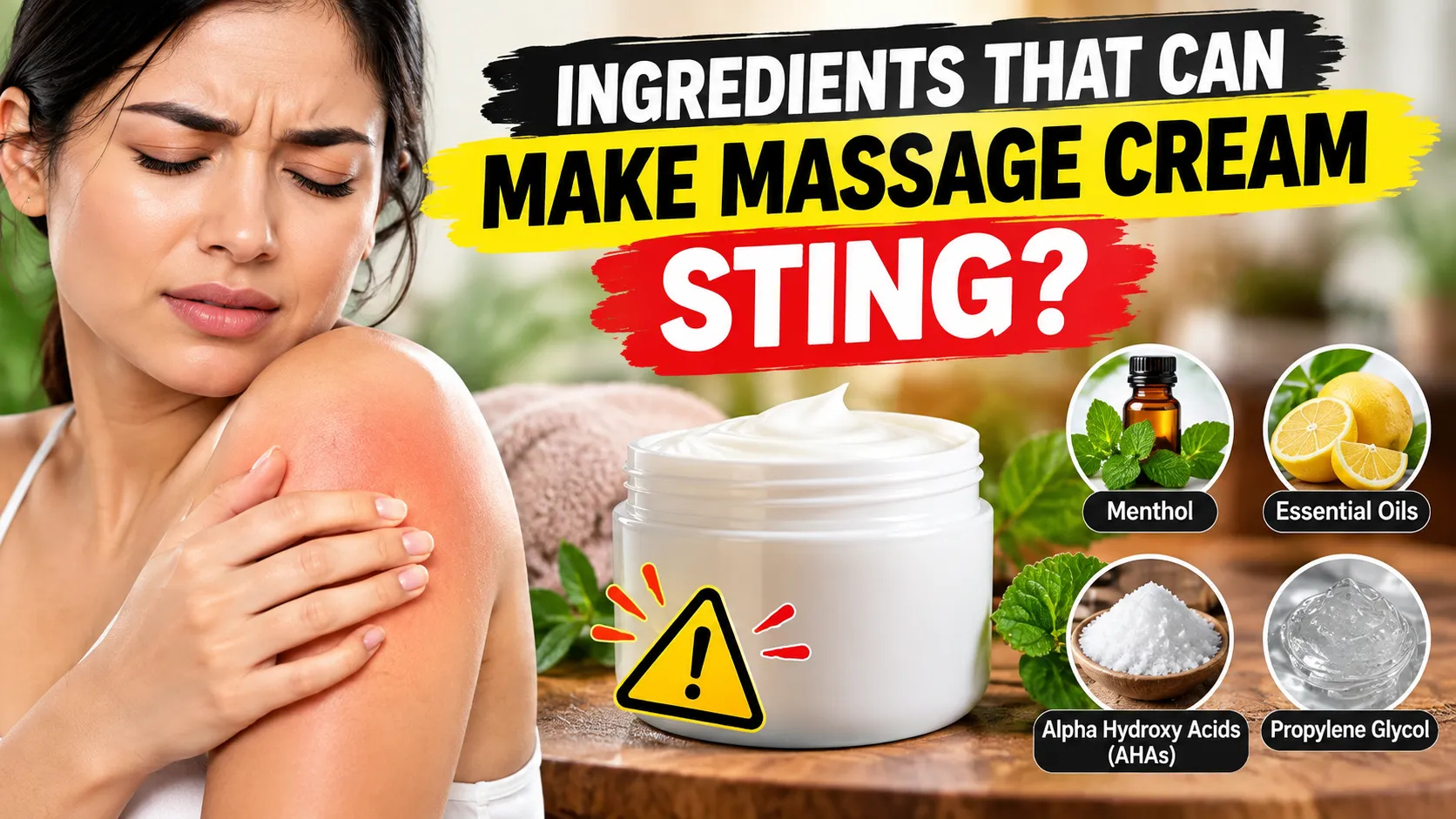
Read the full ingredient list instead of relying only on words such as “natural,” “clean,” or “hypoallergenic.” The FDA advises consumers to read cosmetic labels, including ingredient lists and warnings, and notes that “hypoallergenic” does not guarantee that a product will not cause an allergic reaction. :contentReference[oaicite:1]{index=1}
Fragrance is one ingredient category worth noticing when a product repeatedly causes irritation. A formula can also contain ingredients intended to create a warming, cooling, tingling, or sensory effect. These effects may be acceptable to some users but unpleasant to others.
How to read the label
Do not assume that one ingredient is definitely responsible just because it sounds strong. Instead, compare the product with a simpler product you already tolerate and look for patterns.
Swipe left/right to see the full table →
| Label clue | Why notice it? | Safer approach |
|---|---|---|
| Fragrance / parfum | Can be a contact-dermatitis trigger | Try fragrance-free |
| Warming or cooling ingredients | May create noticeable sensations | Avoid if sensation is uncomfortable |
| Botanical extracts | “Natural” does not mean reaction-proof | Patch-test before wider use |
| Multiple active-feeling ingredients | Harder to identify the trigger | Choose a simpler formula |
Ingredient Priority — Practical Guide
Fragrance-free label
Typical routine priority: high when fragrance seems to trigger irritation
Shorter ingredient list
Practical guide: easier to compare products
Clear warning directions
Practical guide: important before first use
These bars are practical priorities, not scientific measurements. The goal is to make label reading easier when several products seem similar.
Could Your Skin Be More Sensitive Than Usual?
Yes. A product can feel different when the skin barrier is already stressed. Dryness, shaving, scratching, friction, sun exposure, or another irritating product may leave the surface more reactive.
This is one reason to avoid testing a new massage cream immediately after shaving or on skin that is visibly cracked, raw, inflamed, or otherwise damaged. Massage itself adds repeated rubbing, so irritation can become more noticeable during a session.
When the same cream suddenly starts stinging
A reaction does not necessarily mean the product was previously unsuitable. The AAD notes that people can develop contact dermatitis after using a product for years, including when a formula has changed or a new sensitivity develops. :contentReference[oaicite:2]{index=2}
Red-Flag Dashboard
Burning continues after the cream is removed.
Redness, itching, swelling, or tenderness develops.
Blisters, severe pain, spreading symptoms, or significant swelling occurs.
Breathing difficulty or major facial swelling needs urgent medical attention.
The dashboard is a practical safety guide rather than a diagnostic tool. A visible reaction that is severe, persistent, or worsening deserves more attention than a brief sensation that disappears promptly.
Warning: Do not keep massaging through strong burning just to see whether it improves. More rubbing can add friction to already irritated skin. If the product causes an unexpected burn, rash, or significant discomfort, stop using it.
What Should You Do If Massage Cream Burns?
The safest first step is simple: stop applying the cream. If it is still on the skin and causing discomfort, gently remove it according to the product’s directions rather than continuing the massage.
The FDA advises consumers to stop using a cosmetic product after an unexpected reaction and contact a healthcare provider for guidance. :contentReference[oaicite:3]{index=3}
A simple response routine
Safety Decision Path — Practical Guide
This flow keeps the focus on reducing further exposure. It does not assume that every burning sensation has the same cause.
Safe routine vs. risky routine
Swipe left/right to see the full table →
| Safer choice | Riskier choice | Why it matters |
|---|---|---|
| Patch-test as directed | Applying a large amount first | Limits unnecessary exposure |
| Use on intact skin | Using on broken or raw skin | Irritated skin may sting more |
| Follow label directions | Using extra product | More is not automatically better |
| Stop if irritation rises | Massaging through strong burning | Friction may add irritation |
Tip: If you are trying a new personal-care product, test it according to the manufacturer’s directions before using it over a large area. The AAD recommends testing skin-care products on small areas first and stopping use if a reaction develops. :contentReference[oaicite:4]{index=4}
Common Mistakes That Can Make Stinging Worse
Many people focus only on the cream and overlook what happened immediately before the massage. Shaving, exfoliating, vigorous rubbing, hot water, or another strongly scented product can change how comfortable the skin feels.
Swipe left/right to see the full table →
| Mistake | Better choice | Simple rule |
|---|---|---|
| Assuming burning means effectiveness | Treat discomfort as a reason to reassess | Comfort matters |
| Using it on damaged skin | Wait until skin is intact | Avoid raw areas |
| Adding other products | Simplify the routine | Change one thing at a time |
| Ignoring repeated reactions | Discuss recurring reactions with a professional | Patterns are useful clues |
How Can You Choose a Gentler Massage Cream?
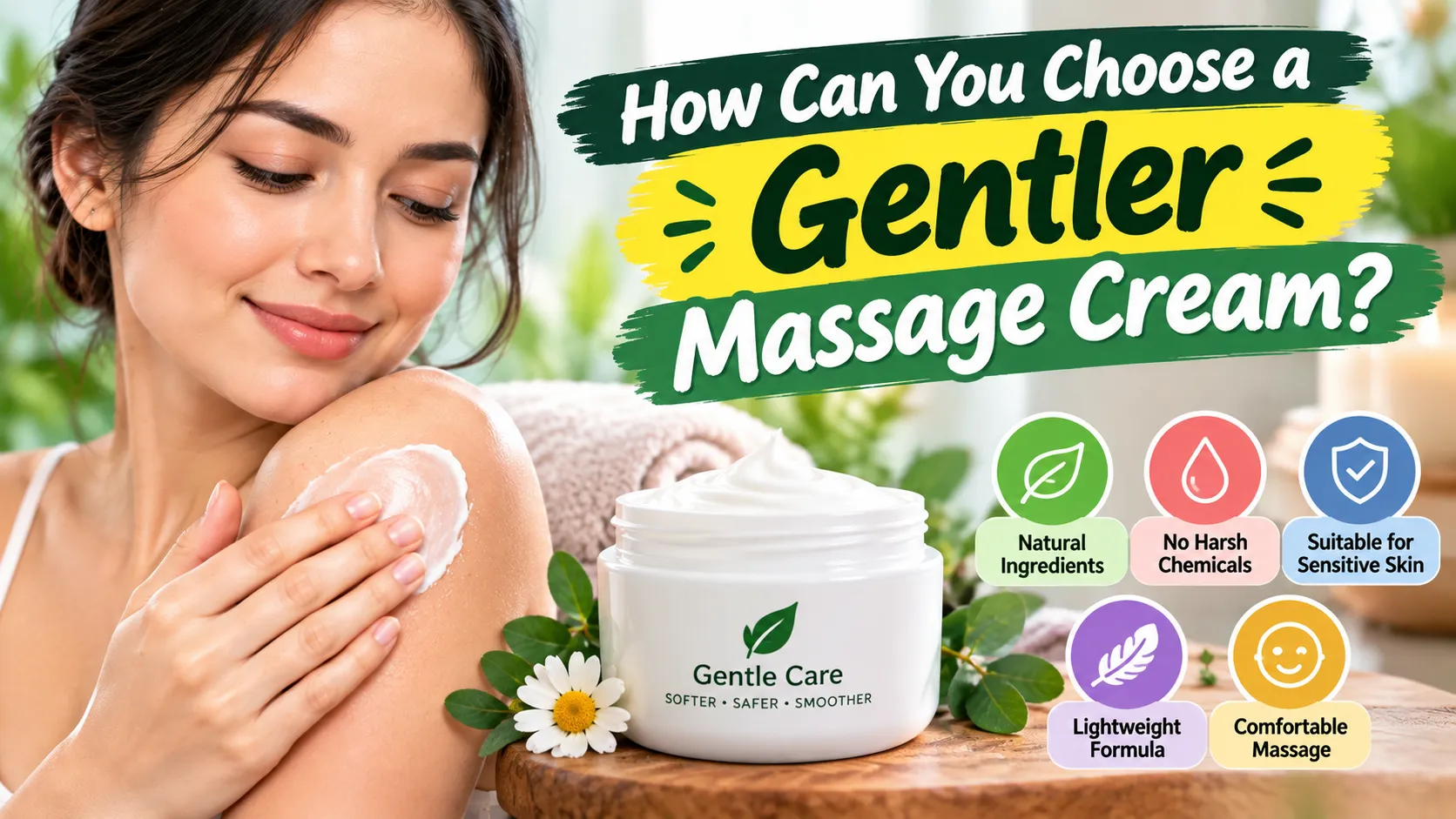
If you decide to try a different product later, focus on fit rather than assuming the most expensive or most “active” formula will be best. A simpler, fragrance-free option may be easier to evaluate when you are trying to determine whether a product is causing irritation.
Follow the package directions and pay attention to any warnings. If your skin has reacted repeatedly to personal-care products, a dermatologist can help investigate possible contact dermatitis and may recommend patch testing when appropriate. :contentReference[oaicite:5]{index=5}
A practical selection checklist
Gentler-Choice Checklist
Think of this checklist as a screening tool, not a guarantee that a product will be comfortable. Even products marketed for sensitive skin can cause reactions in some people.
When to self-care and when to seek help
Swipe left/right to see the full table →
| Situation | Reasonable next step | Decision |
|---|---|---|
| Brief mild sensation that settles | Do not reapply until comfortable | Monitor |
| Repeated burning with the same product | Stop using it and review ingredients | Discuss if recurring |
| Persistent or worsening rash | Contact a healthcare professional | Seek advice |
| Severe reaction or breathing difficulty | Seek urgent medical help | Urgent |
When to contact a professional: Get medical advice if burning is severe, persistent, worsening, or accompanied by significant swelling, blistering, a spreading rash, severe pain, or other unusual symptoms. Seek urgent medical help for breathing difficulty or major facial swelling.
Frequently Asked Questions
Why does massage cream burn or sting right away?
The formula may contain ingredients that create a warming or cooling sensation, or your skin may be irritated or sensitive. Strong or persistent burning is a reason to stop using the product.
Can fragrance cause massage cream to sting?
Yes. Fragrance can trigger irritation or allergic contact dermatitis in some people. A fragrance-free product may be worth considering if scented products repeatedly cause reactions.
Is a warming sensation from massage cream normal?
Some formulas are designed to create a noticeable sensation. However, significant burning, swelling, rash, blistering, or worsening discomfort should not be treated as something you simply need to tolerate.
Why does massage cream sting more after shaving?
Recently shaved skin can be more sensitive, and massage adds rubbing. If the product stings after shaving, wait until the skin feels comfortable before using it again.
Should I keep massaging if the cream burns?
No. Stop the massage and remove the product if the burning is strong or uncomfortable. Continuing to rub irritated skin can add friction.
Can you suddenly react to a massage cream you used before?
Yes. Skin reactions can develop after repeated exposure, and a formula may also change. Recurring reactions are worth discussing with a healthcare professional.
What should I do if a massage cream causes a rash?
Stop using the product and avoid reapplying it. If the rash is severe, persistent, spreading, blistering, or worsening, contact a healthcare professional.
Final Thoughts
A burning or stinging sensation from massage cream can have several explanations, including formula ingredients, fragrance, sensitive skin, or added friction during massage. The safest approach is to stop when the sensation is strong, remove the product, and avoid using it again until you understand how your skin responds.
If symptoms are severe, worsening, unusual, persistent, or not improving after stopping the product, seek professional medical advice rather than continuing to experiment with different creams.
Author
-

I’m Alex Turner, a massage product reviewer and wellness writer at RemedyTip. I specialize in researching, evaluating, and comparing massage and recovery products to help readers make informed purchasing decisions. My focus is on practical, evidence-informed product guidance covering muscle recovery, relaxation, everyday comfort, and wellness.
I take a research-driven approach to every product I review. I examine product specifications, features, materials, performance claims, user feedback, durability, comfort, ease of use, and overall value. When appropriate, I also consult trusted industry and health-related sources to verify important information and provide readers with a more complete and balanced view.
I cover a wide range of products, including massage guns, handheld massagers, neck and shoulder massagers, foot massagers, massage chairs, foam rollers, and other recovery tools. Rather than focusing only on marketing claims, I look at how products compare in real-world use and who they are actually suitable for. I also consider different budgets, use cases, and user needs when making recommendations.
At RemedyTip, I’m committed to accuracy, transparency, and unbiased product information. I clearly distinguish between manufacturer claims, available evidence, and my own product analysis so readers can understand the basis of each recommendation. I continuously research new products, technologies, and developments in the massage and recovery space to keep my content current and useful.
My goal is simple: to provide trustworthy, easy-to-understand information that helps readers choose massage and recovery products with greater confidence.