
Massage guns use rapid pulses to relax tight muscles and support recovery after exercise or long periods of repetitive movement. Smaller models can target the arms, forearms, and hands, where bulky devices may feel awkward or too intense.
The best massage gun for these areas should be light, easy to control, and gentle enough for smaller muscles and sensitive joints. Buyers should also check the lowest speed setting, attachment shape, battery life, grip, noise level, and whether the device can reach narrow areas without pressing too hard. A massage gun should not replace medical care for severe pain, numbness, swelling, or an injury.
I tested and compared massage guns to find options that make arm, forearm, and hand massage comfortable, controlled, and practical for daily use.
Best Massage Guns for Arms, Forearms & Hands
I selected the best massage guns for easing muscle tension in the arms, forearms, and hands. My picks include options with useful attachments, adjustable speeds, and designs that make them easy to handle.
Medcursor Massage Gun
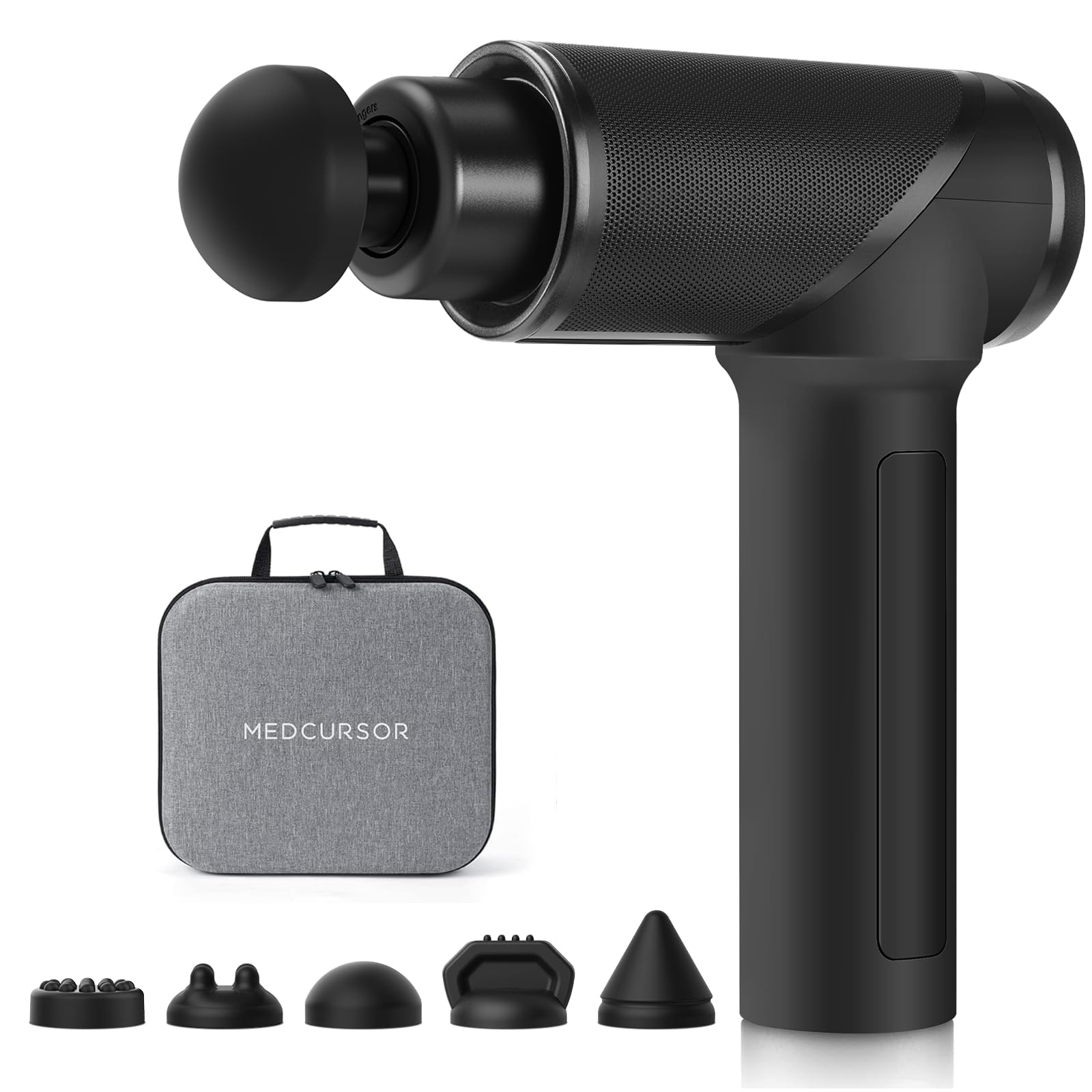
I recommend this massage gun for arms, forearms, and hands because it offers strong, quiet treatment with simple controls and useful attachments.
Pros
- Strong pressure with five speed levels
- Quiet motor and long battery life
- Easy one-button operation
Cons
- Its 1.5-pound weight may tire smaller hands
- Not water resistant
- The deepest setting can feel too intense on hands
I found the Medcursor easy to hold and quick to start. One long press powers it on, while short presses change the speed. That simple layout worked well when I used it on my forearms after work or exercise.
The smaller massage heads helped me target tight areas. I preferred the ball head for my arms and the bullet head for focused pressure near the forearm muscles. For hands, I used lighter pressure and shorter sessions because the 11 mm reach can feel strong on small, sensitive areas.
The motor stayed fairly quiet during use, especially at lower speeds. Its five settings gave me enough control for gentle warmups and firmer work on larger arm muscles. The 10-minute timer also helped me avoid spending too long on one area.
Battery life is a strong point. The rechargeable battery can last several days with normal use, though Medcursor says pressure and speed affect runtime. The included heads add flexibility, but the unit is heavier than some compact models, which may matter during longer hand or forearm sessions.
TOLOCO Massage Gun
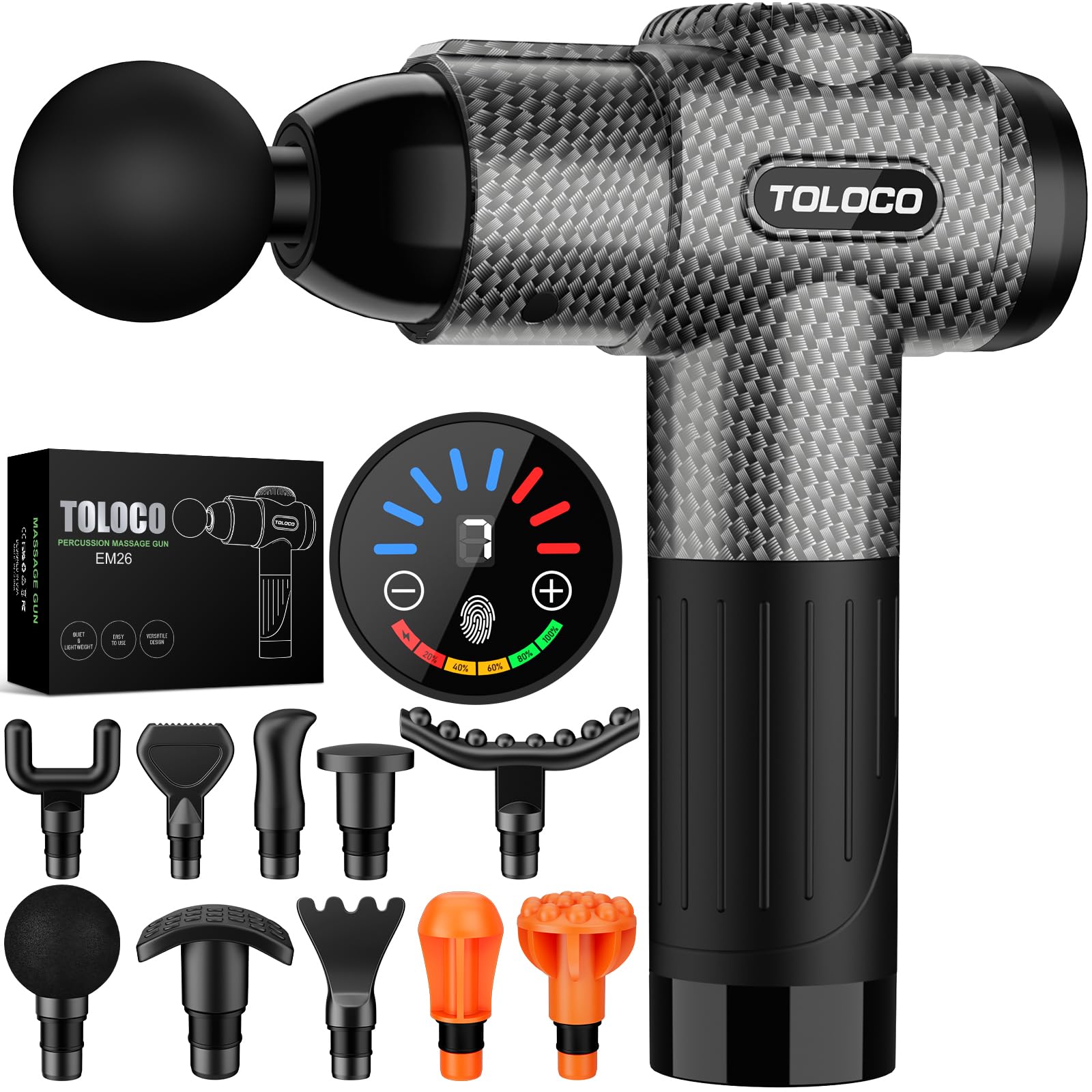
I recommend the TOLOCO Massage Gun for anyone who wants adjustable pressure, several attachments, and a long-lasting battery for arm, forearm, and hand relief.
Pros
- Strong pressure with adjustable speed settings
- Ten heads for different muscle areas
- Quiet motor and useful battery display
Cons
- The handle may feel heavy during longer sessions
- The charging plug does not come included
- It is not water resistant
I found the lower speed levels useful for my forearms and hands, where strong pressure can feel uncomfortable. The smaller attachments helped me work around tight muscles without pressing directly on joints or bones.
For larger areas of the arm, the TOLOCO delivered firmer pressure and helped loosen muscles after exercise. Its ten heads gave me several options, although I mainly used only a few for arm work.
The touch screen made speed changes simple, and the battery display helped me track charging. The motor stayed fairly quiet, which worked well when I used it at home or near other people.
The gun feels solid, but its 2.1-pound weight can become tiring when I hold it at an awkward angle. I also needed to provide my own charging plug, since the package includes only a USB cable.
| Feature | Experience |
|---|---|
| Best for | Arms, forearms, hands, and larger muscle groups |
| Pressure | Adjustable, with up to 12 mm of movement |
| Attachments | 10 massage heads |
| Battery | Up to 6 hours, depending on use |
| Noise | Quiet enough for home or office use |
Overall, I think this model offers good value for general muscle relief, but people with weak grip strength may prefer a lighter massage gun.
Mebak 3 Massage Gun
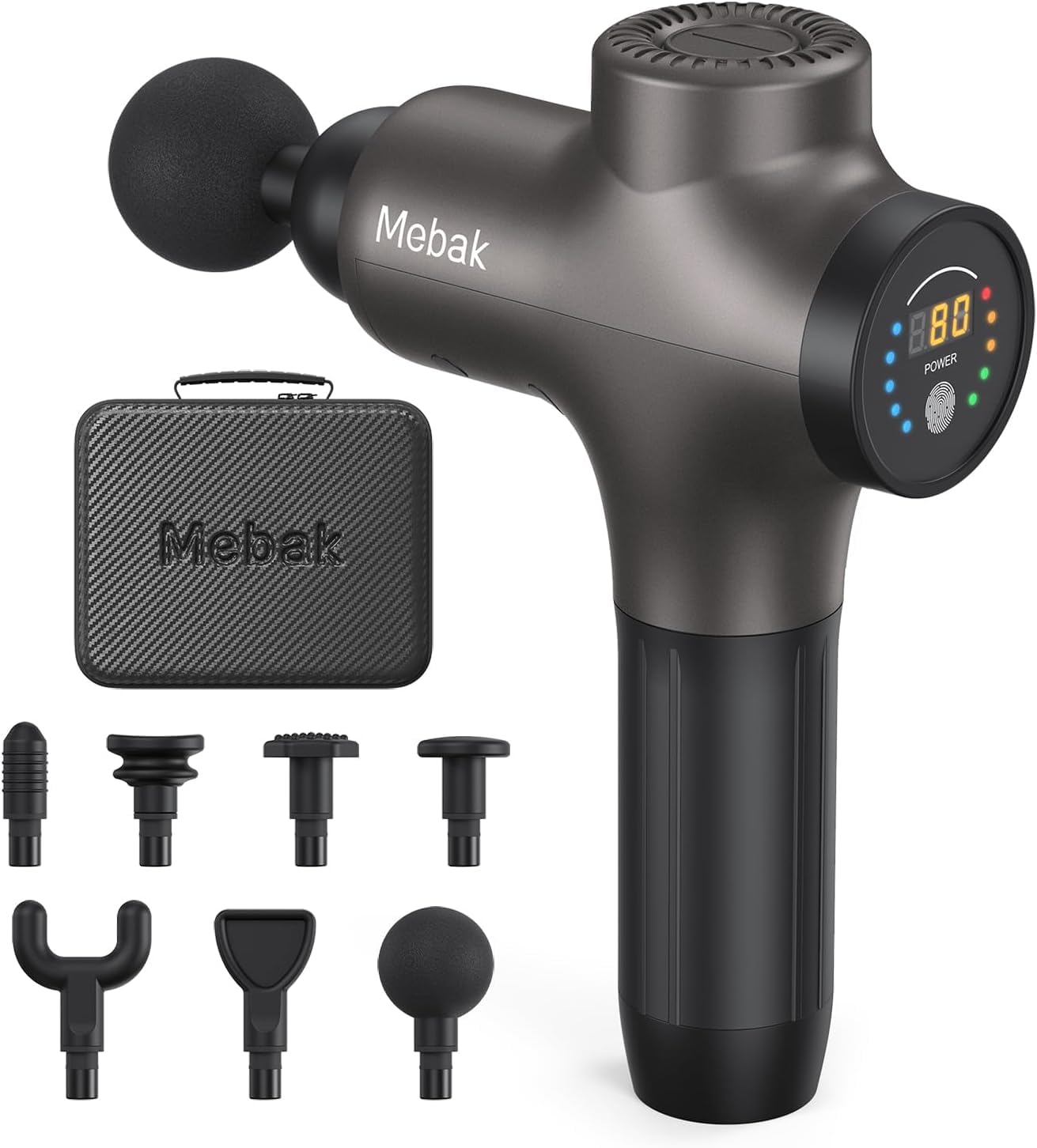
I recommend the Mebak 3 if you want a quiet, adjustable massage gun for easing tight arms, forearms, and hands after work or exercise.
Pros
- Strong pressure with five speed levels
- Seven heads support different muscle areas
- Quiet and easy to carry
Cons
- Charging adapter is not included
- The larger body can feel awkward on small areas
- Battery performance may vary over time
I found the Mebak 3 comfortable to use on my forearms and upper arms. The lower speeds worked well for gentle warmups, while the stronger settings helped loosen deeper tightness without needing much force from me.
The smaller attachments made it easier to work around my forearms and the base of my hands. I used extra care near joints and avoided pressing directly on bones. The pressure lights also helped me keep the treatment comfortable instead of pushing too hard.
This gun stayed quiet enough for use while watching television or working nearby. Its weight felt manageable during short sessions, though my hand became tired when I held it for a long time or reached awkward areas.
The carrying case kept the attachments organized and made storage simple. I needed to provide my own compatible 5V/2A power adapter, which added one small setup step. Overall, the Mebak 3 offers useful power and flexibility for its price, but users with smaller hands may prefer a more compact design.
TOLOCO Massage Gun

I recommend this massage gun for buyers who want strong, adjustable relief for tight arms, forearms, and hands at a reasonable price.
Pros
- Seven speed levels make it easy to control the pressure.
- The smaller massage heads work well around the forearms and palms.
- The handle stays secure during longer sessions.
Cons
- Its larger body feels heavy when I use it on my hands.
- The many attachments can feel unnecessary.
- Charging takes several hours.
I found the TOLOCO easy to adjust while working across my arms. I started on a low setting for my forearms, then increased the speed on larger, tighter muscles. The display helped me track the speed, battery, and pressure as I moved.
The smaller heads gave me better control around my hands and wrists. I avoided bony areas and used short sessions, since the gun has enough power to feel intense on smaller muscles.
The motor stayed fairly quiet in my home, though the unit felt heavier than compact massage guns. Its non-slip grip helped, especially after exercise, but my hand became tired during longer treatments.
| Feature | My experience |
|---|---|
| Speed control | Seven levels for light to firm pressure |
| Attachments | Ten heads for different muscle areas |
| Battery | Long use between charges, but charging takes time |
| Best use | Forearms, arms, shoulders, and general muscle tension |
This model suits people who value power and attachment choices more than a lightweight design. I would choose it for regular muscle recovery, but buyers with hand pain may prefer a smaller device.
APHERMA Massage Gun

I recommend this massage gun for arms, forearms, and hands because it offers many speed settings and attachments at a reasonable price.
Pros
- Comfortable grip for either hand
- Many speed levels and massage heads
- Long battery life for regular use
Cons
- The body may feel heavy during longer sessions
- Some attachments feel too firm for sensitive areas
- A few users reported heat or battery problems
I found the handle easy to control when working along my forearms and upper arms. Its shape helped me reach one arm with the other hand without losing my grip.
The lower speeds worked best around my hands and wrists. For tighter forearm muscles, I increased the intensity slowly and used a softer attachment to avoid too much pressure.
The APHERMA offers 30 speed levels, so I could make small changes instead of jumping from gentle to strong. The nine heads also gave me useful options, though some felt too hard for delicate areas.
The motor stayed fairly quiet during use, and the battery lasted through several short sessions. At about two pounds, it was manageable but started to feel tiring when I held it in one position for too long.
Overall, this is a flexible choice for home recovery and daily muscle tension. I would use light pressure around the hands and avoid direct contact with bones or joints.
Buying Guide
I look for a massage gun that feels comfortable and easy to control. For arms, forearms, and hands, a compact design and light weight can reduce strain during use.
I compare these key features:
| Feature | What I look for |
|---|---|
| Speed settings | Several levels for gentle and stronger massage |
| Stall force | Enough power for muscles without needing heavy pressure |
| Attachments | Small, soft heads for hands and narrow areas |
| Battery life | Enough use between charges |
| Noise level | Quiet operation for a more comfortable experience |
| Grip | A secure handle that does not slip |
| Size | A portable shape that fits easily in my hand or bag |
I choose adjustable speed settings because sensitive areas may need a slower setting. A softer attachment can suit the hands, while a firmer head may work better on larger arm muscles.
I also check the controls and charging method. Simple buttons, clear settings, and a battery indicator make the device easier to use.
I avoid models that feel too heavy or difficult to hold. I check the return policy and warranty, especially when product comfort and battery performance are hard to judge before purchase.
FAQS
How often should I use a massage gun on my arms?
I usually recommend starting with 30–60 seconds per muscle group. I use it once a day or after exercise, then adjust based on how my body feels.
Can I use a massage gun on my forearms?
Yes. I keep the setting low and move the device slowly over the larger forearm muscles. I avoid pressing directly on my wrist, elbow, or any tender spot.
Is a massage gun safe for hands?
I use a massage gun carefully on the palm and the fleshy area below the thumb. I avoid the fingers, joints, bones, and areas with numbness or swelling.
Which speed should I choose?
I start with the lowest speed and light pressure. If the area feels comfortable, I may increase the speed slightly, but I stop if I feel sharp pain, tingling, or increased soreness.
Which attachment works best for arms and hands?
I prefer a soft, round attachment for general use. A smaller attachment can help target tight forearm muscles, but I use extra care near joints and thin areas.
When should I avoid using one?
I avoid massage guns over cuts, bruises, rashes, swollen areas, or suspected injuries. I also check with a medical professional first if I have a blood clotting condition, nerve problems, or a recent injury.
Conclusion
I look for a massage gun that feels comfortable in my hand, offers several speed settings, and includes a small attachment for narrow areas. For arms and forearms, a compact design often gives me better control than a large, powerful model.
I use gentle pressure on my hands and forearms, especially around muscles that feel tender. I avoid bones, joints, open wounds, and irritated skin. Short sessions help me test how my body responds without overdoing it.
My key buying points are:
- Comfortable grip and light weight
- Adjustable speed levels
- A soft, small attachment
- Quiet operation
- Easy charging and storage
I choose the model that matches my routine, comfort level, and budget. A massage gun can support warm-ups and muscle relaxation, but I stop using it if I feel sharp pain, numbness, or increased discomfort.

