You sit a lot, and sciatica can make that feel impossible. Ethan Carter from RemedyTip.com often says small changes in how you sit can cut pressure on the nerve and ease pain fast. Sit with a neutral spine, hips and knees at about 90 degrees, feet flat, and use a firm lumbar support to reduce sciatica pain while seated.
This post shows simple, practical steps you can use at work, home, or on the go. It covers posture adjustments, cushions and chair tweaks, quick movement tips, and easy habits that stop flare-ups before they start.
Key Takeaways
- Use a neutral spine, steady lumbar support, and feet flat to lower nerve pressure.
- Change position and move often to prevent stiffness and flare-ups.
- Set up a simple ergonomic seat and use small home changes for long-term relief.
Understanding Sciatica
Sciatica happens when the sciatic nerve is pinched, irritated, or inflamed. It usually affects one side of the body and causes pain, numbness, or weakness that follows a path from the low back down the leg.
What Causes Sciatica
Sciatica most often comes from a herniated disc pressing on nerve roots in the lower spine. Degenerative disc disease and spinal stenosis can narrow the space around nerves and cause similar pressure. Spondylolisthesis, where one vertebra slips over another, also risks nerve irritation.
Less common causes include spinal tumors, infections, or injury from accidents. Piriformis syndrome can trap the nerve in the buttock muscles, producing similar symptoms without spine damage. Risk factors that increase chance of sciatica include age-related spine changes, heavy lifting with poor form, prolonged sitting, obesity, and smoking.
Primary Symptoms
Pain usually starts in the lower back or buttock and travels down the back of the thigh to the calf or foot. The pain can be sharp, burning, or electric-like and often worsens with coughing, sneezing, or sitting.
Patients commonly report numbness or tingling in parts of the leg or foot. Muscle weakness in the leg or foot can appear, causing difficulty lifting the foot (foot drop) or climbing stairs. Symptoms most often affect just one side of the body.
How Sciatica Affects Sitting
Sitting increases pressure on the lower spine and can compress the sciatic nerve more than standing. Long periods of sitting—especially in a slumped posture—often make pain worse within minutes to hours.
Specific positions alter nerve tension: slouching and forward-leaning increase disc pressure, while a straight-backed, slightly reclined position reduces it. Hard, unsupportive chairs concentrate pressure at the pelvis and lower discs. Frequent short breaks to stand, gentle walking, or simple back stretches can reduce nerve irritation and lower pain during the day.
Why Sitting Correctly Matters
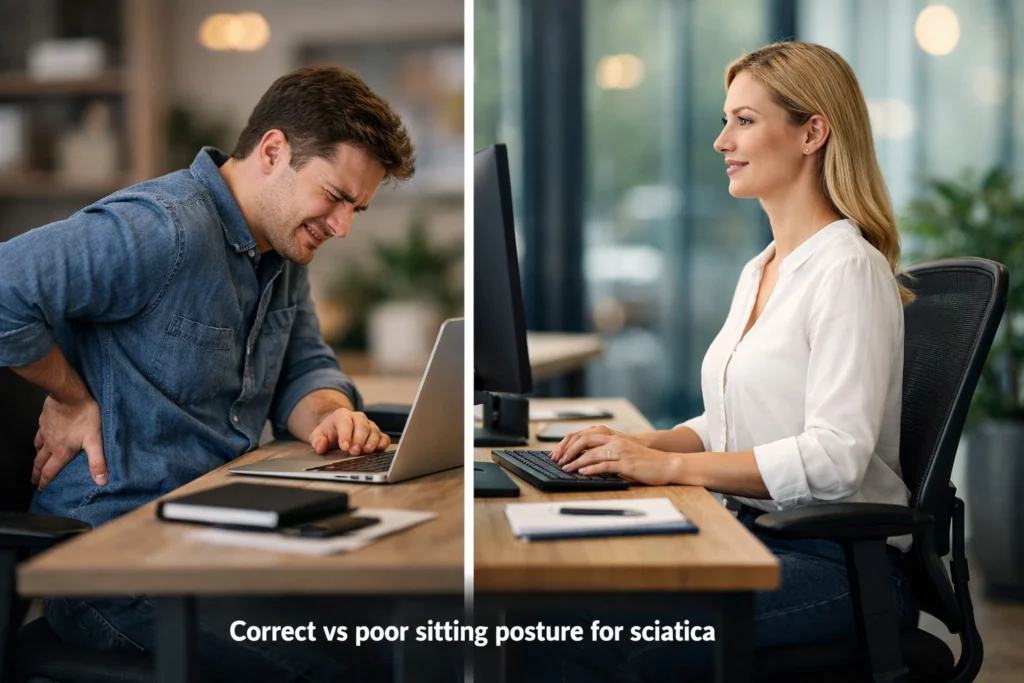
Sitting the right way lowers pressure on the lower back and helps the nerve move freely. Small changes in seat height, back support, and leg position can cut pain and stop flare-ups.
Impact on Sciatic Nerve Pain
Sitting with the spine aligned keeps spinal discs and joints in a neutral place. That reduces direct pressure on the nerve roots that form the sciatic nerve. When the pelvis tilts forward or the lower back rounds, nerve irritation can increase and pain can radiate down the leg.
Even small shifts matter. Raising the seat so knees sit level with hips reduces disc load. Using a lumbar support keeps the lower curve of the spine and lowers nerve stretch. Standing or walking for a few minutes every 20–30 minutes eases nerve tension and improves circulation.
Consequences of Poor Posture
Poor posture raises pressure inside the spinal discs and narrows spaces where nerves pass. Over time, that can worsen disc bulges or lead to chronic nerve compression. The result is more frequent pain, numbness, or weakness in the leg.
Poor habits also change muscle balance. Tight hip flexors and weak glutes make the pelvis sit forward, increasing stress on the lower spine. Desk workers who sit without breaks often report longer flare-ups and slower recovery compared with those who use ergonomic seating and regular movement.
| Posture Problem | Immediate Effect | Long-term Risk |
|---|---|---|
| Rounded lower back | Increases disc pressure | Disc degeneration, nerve irritation |
| Forward pelvis | Stretches sciatic nerve | Chronic pain, muscle imbalance |
| Uneven weight | One-sided nerve load | Asymmetrical wear, persistent symptoms |
Best Sitting Techniques for Sciatica
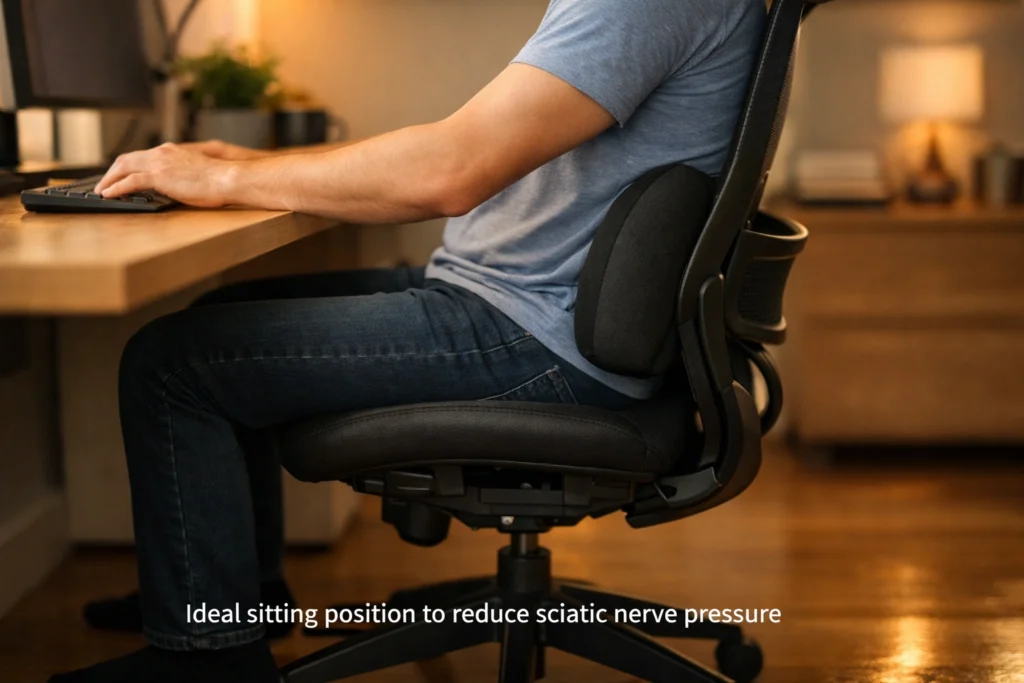
Keep the pelvis level, support the low back, and set the seat so feet rest flat on the floor. Use a cushion or lumbar roll when needed and avoid slumping or twisting the torso.
Maintaining Neutral Spine Alignment
A neutral spine keeps three small curves in gentle alignment: lower back, mid-back, and neck. The person should sit with hips slightly higher than knees when possible, which reduces pressure on the sciatic nerve roots.
They should tuck a small lumbar roll or rolled towel into the lower back crease to preserve the natural lumbar curve. This prevents the pelvis from tilting backward and flattening the spine.
Feet must stay flat on the floor or on a footrest to keep the pelvis stable. Knees should be about hip-width apart and roughly level with the hips.
If pain spikes, standing up and walking for 1–2 minutes often eases nerve irritation before returning to the neutral position.
Choosing the Right Chair
A chair with firm seat padding and a defined lumbar support helps maintain posture. Soft, sinking seats let the pelvis slide backward and increase nerve pressure.
Look for a chair that supports the lower back without forcing an exaggerated arch.
Armrests should allow the shoulders to relax and forearms to rest so the upper body stays aligned. A seat with a slightly forward-tilting option or a wedge cushion can help hips remain open and reduce pressure on the sciatic nerve.
If using a cushion, choose one that keeps the spine aligned rather than raising one hip higher than the other.
Adjusting Seat Height
Seat height controls hip and knee angles and affects spinal loading. The person should set the seat so the feet rest flat on the floor and the knees sit at or just below hip level.
If feet dangle, use a footrest; if knees sit much higher than hips, lower the seat or use a firmer cushion.
Proper height also keeps the thighs parallel to the floor and spreads weight evenly across the sit bones. This reduces local pressure points that can worsen sciatica.
Make small adjustments and test them for 10–15 minutes to confirm reduced pain and steady posture.
Supportive Posture Adjustments
Use a firm lumbar roll or small pillow to keep the lower back’s natural curve. Keep feet flat and knees level with or slightly higher than hips to reduce nerve strain.
Using Lumbar Support
They should place a lumbar roll or small cushion behind the lower back to fill the gap between the spine and the chair. The roll should sit at the inward curve just above the belt line to maintain the spine’s natural lordosis.
Adjust the thickness so the lower back feels supported but not pushed forward. A cushion 2–4 inches thick works for most people; firmer materials hold shape better during long sitting periods.
If using an office chair, they should move the built-in lumbar support to match the curve of their spine. For soft or worn chairs, add a separate cushion and check support every 30–60 minutes to prevent slouching.
Foot Positioning
They must keep both feet flat on the floor or on a footrest to distribute weight evenly through the hips. Flat feet reduce twisting or tilting that can increase pressure on the sciatic nerve.
If the chair is too high, use a footrest so knees stay level or slightly above hips. Avoid sitting with one ankle crossed over the other, because that shifts pelvic alignment and can worsen symptoms.
Wear low-heeled, supportive shoes while sitting and standing. On long sits, have them shift foot placement every 10–15 minutes to change pressure points and keep blood flow moving.
Knee Placement Strategies
They should aim to keep knees at about hip level or a little higher to avoid extra force through the lower spine. Slightly higher knees open the hip angle and reduce disc pressure in many people with sciatica.
Use a seat cushion or adjust chair height to achieve this knee position. If knees drop below hips, add a firm cushion under the hips or raise the chair and use a footrest so feet remain flat.
Encourage small, frequent movements: brief knee lifts, ankle pumps, or standing breaks every 20–30 minutes. These simple changes lower stiffness and prevent a fixed posture that can irritate the sciatic nerve.
Movement and Position Changes
Small, regular changes in posture and short movement breaks reduce pressure on the sciatic nerve and lower back. Shifting weight, adjusting seat height, and doing gentle stretches can cut pain and prevent flare-ups.
Incorporating Breaks
He should stand up at least every 20–30 minutes for 30–60 seconds to let spinal discs rehydrate and to relieve nerve compression. Use a timer or phone reminder and walk to a water cooler or around the room.
During each break, do 2–3 simple movements: pelvic tilts (10 reps), standing knee hugs (5 per side), and gentle hamstring stretches (20–30 seconds per leg). These moves open the hips and reduce pressure on the sciatic nerve.
If sitting for long drives or meetings, he should stop every 45–60 minutes to walk and do 1–2 minutes of light marching or calf raises. These brief activities improve circulation and lower stiffness.
Active Sitting Solutions
They should choose a chair with firm lumbar support and adjustable seat tilt to keep the pelvis slightly forward and the spine neutral. A small lumbar roll or cushion works well if the chair lacks built-in support.
Consider a seat cushion that redistributes pressure, such as a wedge or contoured foam, to reduce tailbone and buttock pressure while keeping knees level with hips. Alternate cushions if one feels sore.
Active sitting options include a stability ball for short periods, a wobble stool, or a chair with a dynamic seat that encourages micro-movements. Start with 10–15 minutes and increase time as tolerated.
For more background on posture mechanics, see posture. For cushion types and materials, a coffee research resource outlines common foam and gel uses in seating and may help when choosing support products: World Coffee Research.
Ergonomic Workspace Setup
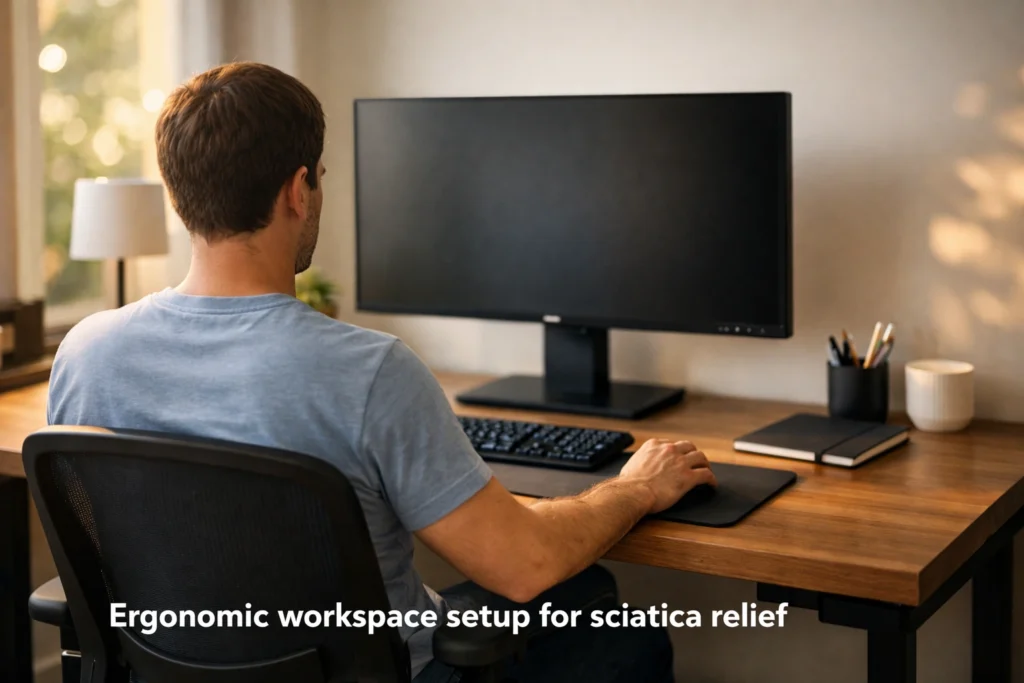
A well-arranged workspace reduces strain on the lower back and limits pressure on the sciatic nerve. Key changes include monitor height, desk depth, and where the keyboard and mouse sit to keep the spine neutral and shoulders relaxed.
Desk and Monitor Placement
Place the monitor so the top of the screen sits at eye level when seated. This keeps the neck aligned with the spine and prevents forward head posture that can alter pelvic position.
Set the monitor about an arm’s length away (roughly 20–30 inches). If multiple monitors are used, keep the primary screen centered and secondary screens angled toward the user to avoid twisting the torso.
Adjust desk height so forearms rest parallel to the floor when typing. If the desk is fixed and too high, use a height-adjustable chair and footrest so hips are slightly higher than knees, which eases lower back pressure.
Keep frequently used items within 12–18 inches. Reaching or twisting for a phone or papers forces shifts in posture that can irritate the sciatic nerve.
Keyboard and Mouse Arrangement
Place the keyboard directly in front of the user with about 2–3 inches of space at the front of the desk for wrist support. This prevents reaching and keeps the shoulders relaxed.
Use a split or low-profile keyboard if wrist or shoulder strain occurs. Adjust the keyboard tilt so wrists stay neutral; avoid upward tilt that bends the wrists.
Keep the mouse close to the keyboard and at the same height. Use a mouse pad with a small wrist rest to maintain a straight wrist.
For frequent precision tasks, consider a vertical or trackball mouse to reduce forearm rotation. Use short, regular breaks and light stretches for hands and shoulders to prevent compensatory tension that can affect the lower back.
Lifestyle and Home Modifications
Make small changes at home and in daily routines to cut pressure on the sciatic nerve and reduce flare-ups. Focus on regular gentle movement, better sitting surfaces, and workstation setup to keep the low back and hips aligned.
Stretching and Mobility Exercises
They should do daily gentle stretches that target the piriformis, hamstrings, and hip flexors. A simple piriformis stretch: lie on the back, cross the affected leg over the opposite thigh, and pull the uncrossed knee toward the chest. Hold 20–30 seconds and repeat 2–3 times.
Add hamstring mobility by sitting on a chair, extending one leg with heel on the floor, and leaning forward with a straight back until a mild stretch is felt. Hold 20–30 seconds and repeat twice per side.
Include low‑impact movement like walking 10–20 minutes once or twice per day to prevent stiffness. Perform pelvic tilts (lying on the back with knees bent and gently flattening the lower back) 8–12 reps to improve core support. Stop any exercise that increases sharp leg pain and consult a clinician if symptoms worsen.
Alternative Seating Options
Choose a chair with firm lumbar support that keeps the natural curve of the lower back. Adjust seat height so hips are level or slightly above knees and feet rest flat on the floor.
Use a wedge cushion or lumbar roll to reduce posterior pelvic tilt and open the hip angle. A memory‑foam seat cushion with a cutout for the tailbone can help when sitting long periods. Swap to a high stool or standing desk for part of the day; alternate sitting and standing every 20–30 minutes.
For car travel, place a small pillow behind the lower back and stop every 45–60 minutes to walk and stretch. Ensure armrests allow relaxed shoulders to avoid adding neck or upper‑back strain.
FAQS
What causes sciatica pain when sitting?
Sciatica often worsens when sitting because the hips and lower spine bend, which can press on the sciatic nerve. Poor posture and long sitting sessions raise pressure on the nerve and surrounding tissues.
How long should someone sit at a time?
They should aim to stand or walk for 3–5 minutes every 30–60 minutes. Short, regular breaks reduce nerve stress and improve circulation.
Which sitting positions help most?
They should sit with a neutral spine, hips slightly higher than knees, and feet flat on the floor. Using a lumbar support or firm cushion behind the lower back can keep the spine aligned.
What should they avoid while sitting?
Avoid crossing legs, slouching, and sinking deep into soft chairs. These habits change spinal alignment and increase pressure on the nerve.
Can cushions or chairs make a difference?
Yes. A chair with good lumbar support and adjustable seat height helps. A wedge cushion or firm lumbar roll can provide immediate improvement.
Do stretches or movement help?
Gentle stretching and short walks usually ease symptoms. They should follow exercises shown by a physical therapist and stop if pain increases.
When should they see a clinician?
If numbness, weakness, or bowel/bladder changes occur, they should seek medical attention right away. Persistent severe pain that limits daily life also needs a clinician’s evaluation.
Quick tips:
- Change position often.
- Use lumbar support.
- Keep feet flat and hips slightly raised.
Conclusion
They can reduce sciatic pain by changing how they sit and by using simple tools like lumbar supports and a firm seat cushion. Small posture fixes and regular breaks cut pressure on the nerve and help movement become less painful.
He or she should keep feet flat, hips slightly higher than knees, and the spine aligned with support under the lower back. They should avoid slouching, forward-leaning, and crossing the legs for long periods.
If pain worsens or does not improve, they should seek medical advice. A physical therapist can teach targeted stretches, strengthen core muscles, and suggest ergonomic changes for work or home.
They can track what helps and what makes pain worse. A quick checklist can guide daily choices:
- Adjust chair height and backrest.
- Use a lumbar roll or cushion.
- Stand and walk every 20–30 minutes.
- Try gentle stretches as recommended by a clinician.
These steps make sitting with sciatica more manageable and support safer recovery. Consistent habits and timely medical guidance give the best chance of long-term relief.