Shoulder stiffness can stem from various causes, including injury, poor posture, and medical conditions. In this guide, you will learn about these causes and explore practical ways to relieve stiffness, regain mobility, and improve your overall shoulder health.
Key Takeaways
- Understanding Causes: Shoulder stiffness can result from injuries, arthritis, or rotator cuff issues.
- Importance of Posture: Poor posture can lead to muscle tightness and stiffness in the shoulder area.
- Stretching and Strengthening: Regular stretching and strengthening exercises can help alleviate stiffness.
- Heat and Cold Therapy: Applying heat or cold packs can provide immediate relief from shoulder stiffness.
- Consulting Professionals: Seeking advice from healthcare professionals can help identify serious underlying issues.
- Consistency is Key: Consistent care and exercises are essential for long-term relief.
Discover What Causes Shoulder Stiffness and How to Relieve It
Shoulder stiffness is a common issue affecting many people. It can limit your range of motion and make daily activities more challenging. In this guide, we will explore the various causes of shoulder stiffness and provide you with effective strategies to relieve it.
Understanding Shoulder Stiffness
Shoulder stiffness occurs when the muscles, tendons, or ligaments around the shoulder joint become tight or inflamed. This condition can result from numerous factors, including injuries, inactivity, or medical conditions. Understanding what causes this stiffness is crucial for effective treatment.

Visual guide about Discover What Causes Shoulder Stiffness and How to Relieve It
Image source: medshun.com
Common Causes of Shoulder Stiffness
1. Injuries
Injuries are one of the most common causes of shoulder stiffness. Sprains, strains, and dislocations can lead to inflammation and tightness in the shoulder. If you’ve had a recent fall or accident, this could be the reason for your discomfort.

Visual guide about Discover What Causes Shoulder Stiffness and How to Relieve It
Image source: i.pinimg.com
2. Rotator Cuff Issues
The rotator cuff comprises muscles and tendons that stabilize the shoulder. Injuries or tears in this area can cause significant stiffness and pain. A rotator cuff injury often results from repetitive overhead activities.
3. Arthritis
Osteoarthritis and rheumatoid arthritis can both lead to shoulder stiffness. These conditions cause inflammation and damage to the joint, resulting in decreased mobility. If you are experiencing stiffness along with swelling or pain, arthritis might be a contributing factor.
4. Adhesive Capsulitis (Frozen Shoulder)
Frozen shoulder is a condition where the shoulder joint becomes stiff, leading to restricted movement. This often develops gradually and is more common in people who have had shoulder injuries or surgeries.
5. Poor Posture
Poor posture can contribute to shoulder stiffness. Sitting or standing with your shoulders hunched forward can cause the muscles in your shoulder to tighten over time, leading to discomfort.
How to Relieve Shoulder Stiffness
Now that you understand the common causes of shoulder stiffness, let’s explore effective ways to relieve it.
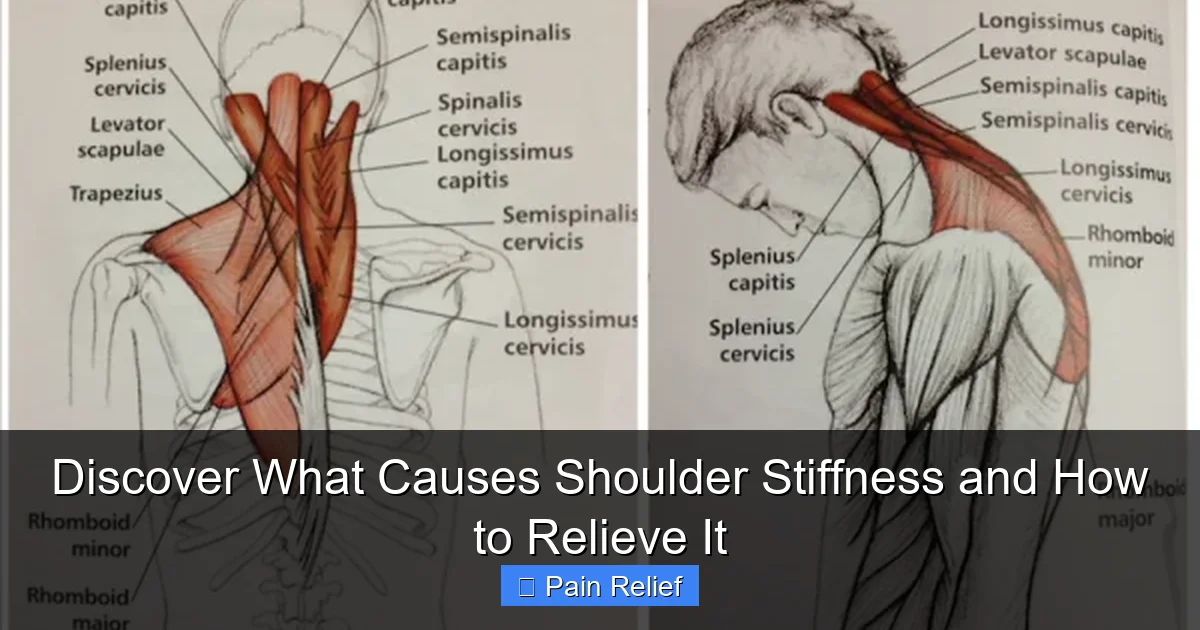
Visual guide about Discover What Causes Shoulder Stiffness and How to Relieve It
Image source: fitnessbypatty.com
1. Stretching Exercises
Incorporating stretching exercises into your routine can significantly improve flexibility and reduce stiffness.
Example Stretch:
- Cross-Body Arm Stretch: Bring one arm across your body and hold it with the opposite arm. Hold for 15-30 seconds and switch sides.
- Doorway Stretch: Stand in a doorway with your arms at a 90-degree angle. Lean forward gently to stretch the front of your shoulders.
2. Strengthening Exercises
Strengthening the muscles around your shoulder can help provide better support and reduce stiffness.
Example Exercise:
- Shoulder External Rotation: Use a resistance band. Keep your elbow at your side and rotate your forearm outward. Repeat 10-15 times.
- Wall Angels: Stand against a wall with your arms raised. Slowly slide your arms up and down while keeping contact with the wall.
3. Heat and Cold Therapy
Applying heat or cold to the shoulder can relieve stiffness and reduce pain.
- Heat Therapy: Use a heating pad or warm towel for 15-20 minutes to relax tight muscles.
- Cold Therapy: Apply an ice pack wrapped in a cloth for 15-20 minutes to reduce inflammation.
4. Maintain Good Posture
Maintaining good posture is essential for shoulder health. Ensure your workstation is ergonomically set up, and practice sitting and standing tall.
5. Regular Movement
Avoid prolonged periods of inactivity. Regular movement helps keep your shoulder joints lubricated and flexible. Simple activities like walking or gentle arm movements can make a difference.
6. Consult a Professional
If your stiffness persists, it’s wise to consult a healthcare professional. They can provide tailored advice, physical therapy, or medication to help manage your condition.
Troubleshooting Common Issues
Sometimes, despite your best efforts, shoulder stiffness may persist. Here are some troubleshooting tips:
- Persistent Pain: If your pain worsens or does not improve with home remedies, seek medical advice.
- Limited Range of Motion: If you notice significant limitations in movement, consider physical therapy for targeted exercises.
Conclusion
Shoulder stiffness can be a frustrating issue, but understanding its causes and knowing how to relieve it can empower you to take control of your shoulder health. Regular stretching, strengthening exercises, and good posture are key components in alleviating discomfort. Remember to consult a healthcare professional if you experience persistent stiffness or pain. With the right approach, you can reduce stiffness, regain mobility, and enjoy a more active lifestyle.
🎥 Related Video: #147 Discover 8 Causes of Shoulder Pain
📺 Dr. Andrea Furlan
In this video, we will talk about 8 common causes of shoulder pain. We’ll cover everything from impingement to arthritis to frozen …