Quick Answer
To relieve sore shoulders, rest from the movement that irritated them, use heat for stiffness or ice for fresh irritation, then add gentle stretches and light self-massage. Better posture, short movement breaks, and simple tools like a heating pad or massage ball can also help.
Sore shoulders can make normal life annoying fast. Reaching, typing, driving, lifting, and even sleeping can feel harder than they should.
I’m Ethan Carter, and I’ve spent years testing massage tools, recovery products, and pain relief methods. I focus on simple, practical advice that helps people feel better and recover faster at home.
In this guide, I’ll show you what usually causes sore shoulders, what actually helps, which mistakes to avoid, and which tools may make relief easier.
What Sore Shoulders Usually Mean
Most sore shoulders are not about one single problem. In my experience, they usually come from a mix of muscle tension, stiffness, posture strain, overuse, or poor recovery.
Common triggers include sitting at a desk too long, upper body workouts, carrying a heavy bag on one side, sleeping with the arm overhead, stress tension, and repetitive movements. Many people also feel soreness around the upper traps, rear shoulder, and shoulder blade area at the same time.
When the muscles stay tight, small trigger points can build up. Blood flow may feel reduced. Your range of motion can shrink. Then simple tasks start feeling stiff, achy, or heavy.
That is why shoulder soreness often feels worse at the end of the day, after exercise, or after sleeping in one bad position.
How Shoulder Relief Works
Good shoulder relief usually comes from doing three things together. First, calm the irritated area. Second, restore movement. Third, reduce the tension that keeps coming back.
Heat can help when the shoulder feels tight, stiff, or knotted. It may support blood flow and help the muscles relax before stretching. Ice is often more useful when the area feels freshly irritated, tender, or mildly swollen after a workout or awkward movement. If you want a simple refresher on when to use each one, Mayo Clinic has a helpful guide: Mayo Clinic’s guide to heat and cold.
Massage and self-massage can help reduce tight spots in the shoulder, upper trap, and shoulder blade area. Gentle pressure may help soften trigger points and make movement feel easier.
Mobility work helps because sore shoulders do not just need rubbing. They usually need better motion too. A few easy drills can improve how the shoulder blade and upper back move together.
Posture matters because the shoulder does not work alone. If your upper back is rounded and your neck stays forward all day, the muscles around the shoulders have to work harder. That often leads to chronic tension. For a deeper look at shoulder symptoms and when they need extra attention, Cleveland Clinic has a useful overview: Cleveland Clinic’s overview of shoulder pain.
How to Relieve Sore Shoulders at Home Step by Step
Step 1: Stop the movement that keeps irritating the area
If one movement clearly makes the soreness worse, back off for a day or two. That does not mean full bed rest. It just means stop pushing through overhead lifting, hard pressing, or repetitive reaching until the shoulder calms down.
Step 2: Use heat for stiffness or ice for fresh irritation
If your shoulders feel tight and locked up, use gentle heat for 10 to 15 minutes. A heating pad often works well before mobility drills or self-massage.
If the shoulder feels freshly irritated after a workout or awkward lift, use ice for 10 minutes at a time. Do not put ice directly on bare skin.
Step 3: Do gentle shoulder mobility drills
My favorite starting drills are simple and low stress:
Shoulder rolls: Roll both shoulders slowly forward and backward for 10 reps each way.
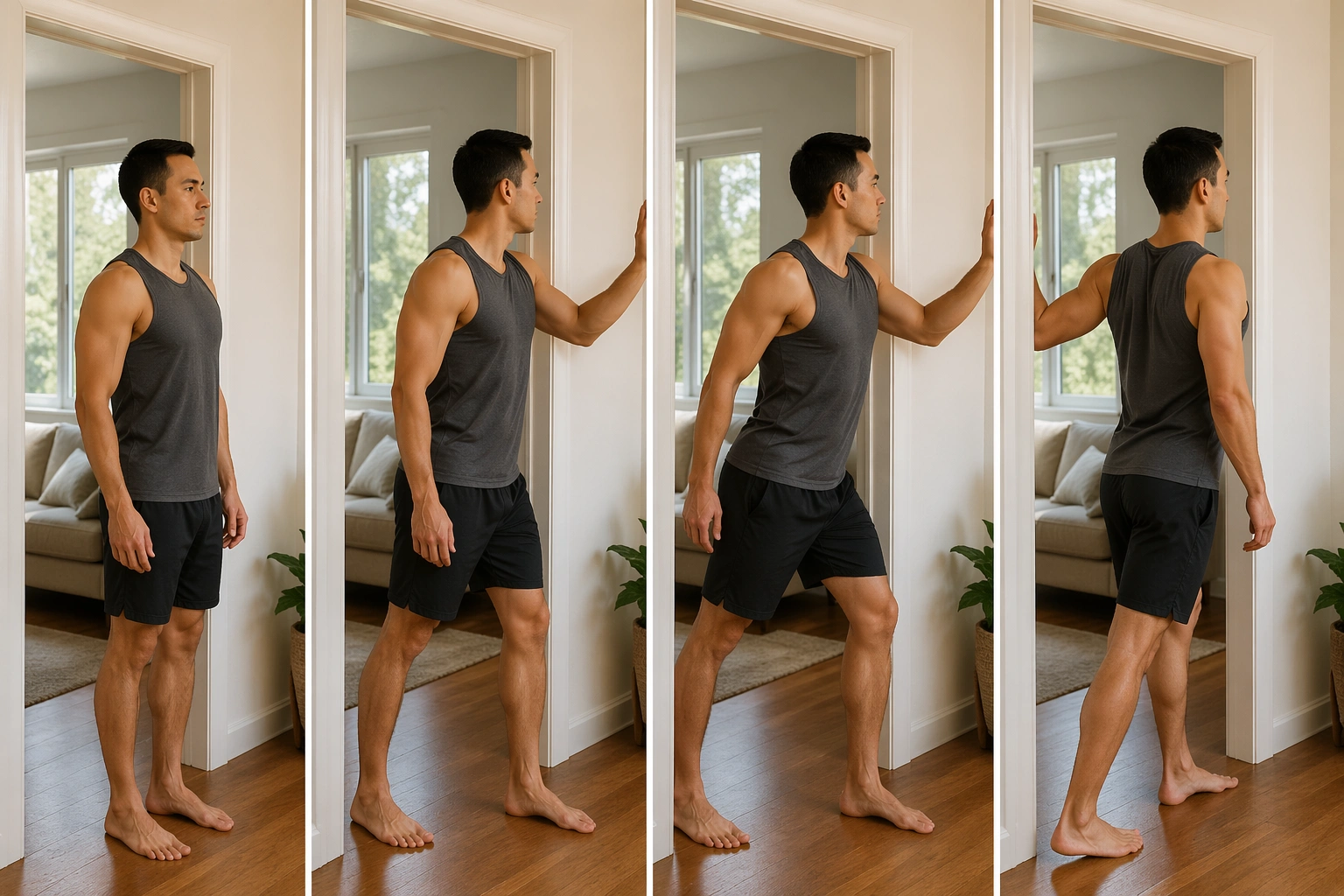
Doorway chest stretch: Put your forearm on a door frame, step through gently, and hold for 20 to 30 seconds on each side.
Wall slides: Stand with your back near a wall and slide your arms up slowly as far as feels comfortable.
Scapular squeezes: Gently pull your shoulder blades back and down, hold for 3 seconds, then relax.
These drills often help office workers, drivers, and anyone whose shoulders feel sore from sitting all day.
Step 4: Use self-massage for tight spots and trigger points
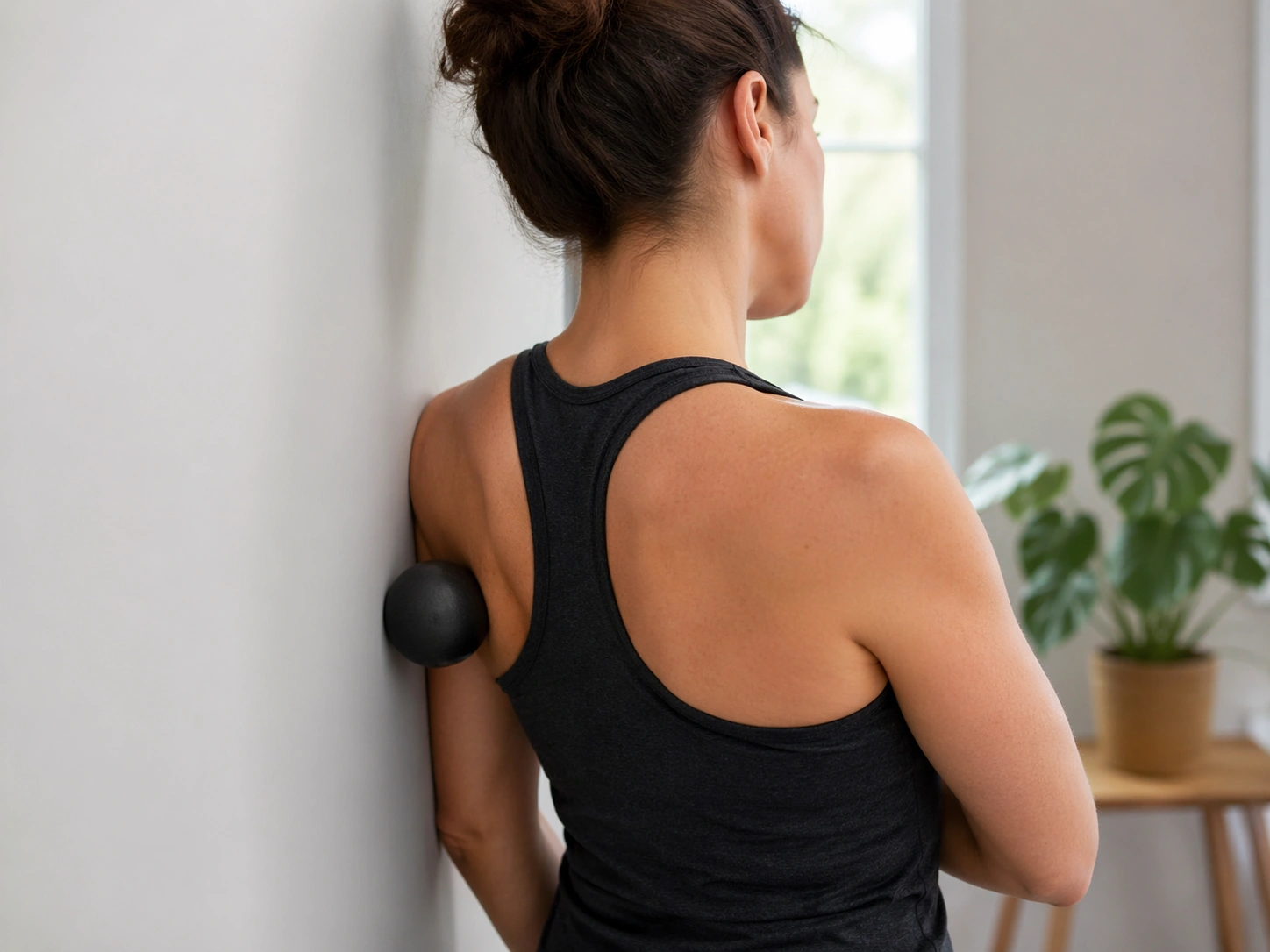
A tennis ball, massage ball, or trigger point cane can work very well here. Place the ball between your upper back or rear shoulder and a wall. Lean in gently and pause on a tight spot for 20 to 30 seconds. Then move a little and repeat.
Do not grind hard into the front of the shoulder joint. Stay on the muscles around the shoulder blade, upper trap, and rear shoulder instead.
If you use a massage gun, keep the speed low to medium. Work around the muscle, not straight into bone, the top of the shoulder joint, or the front of the neck.
Step 5: Reset your posture and workspace
If your shoulders get sore during desk work, your setup may be part of the problem. Bring the screen closer to eye level. Keep your elbows supported. Let your shoulders stay relaxed instead of shrugged up all day.
I also like the 30 to 60 rule. Every 30 to 60 minutes, stand up, move your arms, and reset your posture for one minute. That small habit helps more than most people expect.
Step 6: Add light strengthening when the soreness eases
Once the shoulder feels less irritated, add easy strength work. This can support recovery and help the soreness return less often.
Good starting options are light band pull-aparts, external rotation with a light band, and slow rows with very easy resistance. The goal is not to train hard. The goal is to help the shoulder move and support itself better.
Benefits and Best Uses
A simple shoulder relief routine often works best for everyday problems, not just workouts. Here is where I see it help most often.
Office workers: Heat, posture resets, and chest-opening stretches often help the most when soreness comes from sitting, typing, and rounded shoulders.
Post-workout recovery: Ice for fresh irritation, followed by light mobility and gentle percussion therapy, may help reduce soreness after upper body training.
Older adults: Gentle heat, light range-of-motion work, and very soft self-massage are often more comfortable than aggressive stretching.
Nighttime stress tension: A heating pad, slow breathing, and a short self-massage routine can be a good way to relax before sleep when the shoulders feel tight from stress.
Travel and home use: A massage ball or trigger point cane is easy to use at home, in a hotel, or after a long drive.
Common Shoulder Problems and What Actually Helps
| What you feel | What it often points to | What may help |
|---|---|---|
| Soreness after desk work | Posture strain, tight chest, upper trap tension | Heat, doorway stretch, scapular squeezes, frequent movement breaks |
| Sore shoulders after workouts | Muscle fatigue, overuse, delayed recovery | Ice for fresh irritation, gentle mobility, light massage gun use, rest from heavy pressing |
| Tight knots near the shoulder blade | Trigger points in the rear shoulder or upper back | Massage ball against wall, trigger point cane, slow breathing, short mobility session |
| Stiffness after sleep | Sleeping position, compressed muscles, reduced movement overnight | Heat, shoulder rolls, wall slides, avoid sleeping on the sore side |
| Stress-related shoulder tightness | Chronic muscle tension and shrugging posture | Heating pad, light self-massage, breathing work, posture resets during the day |
| Limited mobility overhead | Stiff muscles, guarded movement, poor shoulder blade motion | Gentle wall slides, chest stretch, light strengthening when pain settles |
Common Mistakes to Avoid
Going too hard on stretches: A gentle stretch can help. A hard, forced stretch usually makes sore shoulders angrier.
Using a massage gun directly on the joint: Target the muscles around the area, not the bony parts of the shoulder.
Using heat when the area feels hot or swollen: Heat is usually best for stiffness. Fresh irritation often responds better to ice first.
Only chasing pain and ignoring the cause: If your desk setup, sleep position, or workout form is the real problem, the soreness often comes back fast.
Trying to fix everything in one session: Short daily work usually beats one aggressive session.
Sleeping on the sore side all night: This is one of the most common reasons morning stiffness hangs around.
Safety Tips and Best Practices
Start with light pressure. Shoulder muscles can be sensitive, especially when they are already tight.
Keep self-massage sessions short at first. One to two minutes per area is enough for many people.
Avoid pressing hard on the front of the shoulder joint, the collarbone area, the side of the neck, or anywhere you feel sharp pain, numbness, or tingling.
Be extra careful with massage guns if you bruise easily, if the area feels inflamed, or if even light pressure feels too intense.
Do not keep pushing through severe pain. Home care is usually best for basic soreness, mild tightness, and everyday stiffness.
It is smart to get medical help sooner if the pain started after a fall, you cannot lift the arm, the shoulder looks deformed, you have chest pain, or the area is very red, hot, swollen, or getting worse instead of better.
Best Tools That Can Make Shoulder Relief Easier
You do not need a lot of gear. But the right tool can make the routine easier and more consistent.
| Tool | Best for | Who it is best for | What to watch out for |
|---|---|---|---|
| Shoulder heating pad | Stiffness, stress tension, bedtime relief | Office workers, older adults, anyone who feels tight more than swollen | Do not use over hot or freshly swollen areas |
| Massage gun | Post-workout soreness, tight upper traps, muscle recovery | Active people, gym users, athletes | Use low pressure first and avoid the joint itself |
| Trigger point cane | Hard-to-reach knots near the shoulder blade | Home users who want precise self-massage without much effort | Do not dig in too hard or hold pressure too long |
Shoulder Heating Pad
Gentle warmth can help loosen stiff shoulders before stretching or bedtime relaxation.
Massage Gun
A good massage gun can support post-workout recovery and help ease tight shoulder muscles when used with light pressure.
Trigger Point Cane
This is one of my favorite tools for reaching stubborn knots around the upper back and shoulder blade area.
Massage Gun vs Heating Pad vs Trigger Point Cane
If you only want one tool, choose based on the kind of soreness you feel most often.
| Option | Best use | Pressure level | Convenience | Best value for |
|---|---|---|---|---|
| Massage gun | Post-workout soreness and deeper muscle tension | Medium to high | Fast and easy once you learn how to use it | Active people who want one tool for several muscle groups |
| Heating pad | Daily stiffness, stress tension, and bedtime relief | Very gentle | Very easy and relaxing | Desk workers and anyone with tight shoulders at night |
| Trigger point cane | Precise knots around the shoulder blade and upper trap | Medium and easy to control | Great for targeted home use | People who want focused self-massage without electricity |
My simple rule is this: choose a heating pad if your shoulders feel stiff and stress-loaded, a massage gun if soreness shows up after training, and a trigger point cane if you keep getting the same knot in the same hard-to-reach spot.
Frequently Asked Questions
What is the fastest way to relieve sore shoulders at home?
The fastest simple routine is gentle heat, light shoulder rolls, a doorway stretch, and 30 to 60 seconds of self-massage on tight spots. Skip anything that causes sharp pain.
Should I use heat or ice for sore shoulders?
Use heat when the shoulders feel stiff, tight, or knotted. Use ice when the soreness feels fresh, irritated, or mildly swollen after activity.
Can a massage gun help sore shoulders?
Yes, a massage gun may help sore shoulders when you use it lightly on the surrounding muscles. Do not press directly into the shoulder joint or bony areas.
How often should I stretch sore shoulders?
Gentle stretching once or twice a day is enough for many people. Short daily sessions usually work better than one long, aggressive session.
Why do my shoulders feel sore after sitting at a desk all day?
Long sitting can lead to rounded posture, tight chest muscles, and overworked upper traps. That mix often creates shoulder soreness and stiffness by the end of the day.
When should I stop home care and get medical help?
Stop home care and get checked if the pain started after an injury, you cannot lift the arm, the shoulder looks deformed, or you feel numbness, severe swelling, chest pain, or worsening symptoms.
Conclusion
Relieving sore shoulders usually comes down to simple basics done well. Calm the area, restore movement, reduce tension, and fix the habits that keep causing the problem.
In my experience, the best results come from a short daily routine you can actually stick with. If a heating pad, massage gun, or trigger point cane helps you stay consistent, that can be a smart next step.