Quick Answer: Most sore knees come from overuse, tight muscles, hard workouts, long periods of sitting, or extra stress from stairs, walking, and posture. Gentle movement, rest, ice or heat, and light massage often help, but swelling, locking, or a sudden injury should be checked promptly.
Knee soreness can sneak up on you. Sometimes it starts after a workout. Sometimes it shows up after sitting too long or climbing stairs all day.
I’m Ethan Carter, and I’ve spent years testing massage tools, recovery products, and pain relief methods. I focus on simple, practical advice that helps people feel better and recover faster at home. In this guide, I’ll show you what may be causing sore knees, what usually helps, what mistakes to avoid, and which tools may be worth using.
Why Your Knees Feel Sore
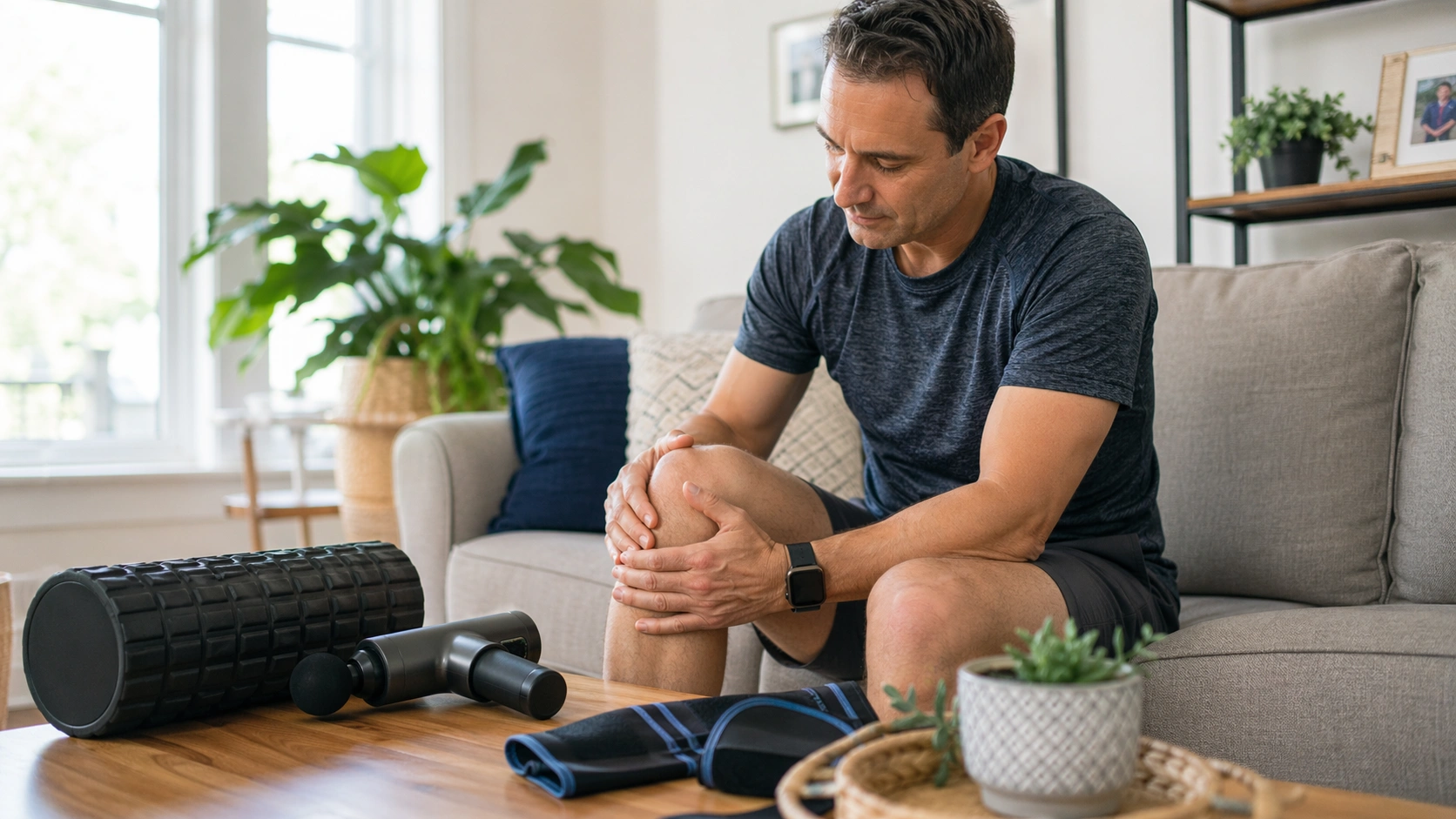
Sore knees do not always mean a serious injury. In a lot of everyday cases, the problem is more about stress, irritation, and recovery than one dramatic event.
Overuse, hard workouts, and daily strain
If you recently started exercising harder, walked more than usual, did lots of squats or lunges, or spent hours on your feet, your knees can feel sore simply because the tissues around them are overloaded. That includes your quads, hamstrings, calves, tendons, and the joint itself.
Tight muscles, poor posture, and sitting too long
This is a big one. Tight quads and hip flexors can pull on the knee area. Weak glutes can change how your legs track when you walk or squat. Sitting too long can leave the knee stiff, and when you stand up, it feels achy until you move around.
Joint irritation, swelling, and age-related wear
Sometimes the soreness feels deeper and more joint-based. That can happen when the knee is mildly irritated from repetitive use, swelling, or age-related wear and tear. The knee may not like stairs, kneeling, or getting up from low chairs.
How Knee Soreness Builds Up in Muscles, Tendons, and the Joint
Your knee is basically a busy middle point between your hips and ankles. If anything above or below it is tight, weak, or moving poorly, the knee often pays the price.
Muscle tension and trigger points around the knee
Many people massage the knee itself and forget the surrounding muscles. In my experience, sore knees often come with tight trigger points in the quads, calves, and sometimes the outer thigh. Those areas can increase tension and make the knee feel more sensitive.
How circulation, mobility, and recovery affect soreness
When you are stiff, inactive, or recovering poorly, blood flow and normal movement can feel sluggish. Gentle mobility work, light walking, and soft tissue work may help the area feel less stuck. This is one reason many people feel better after a short warm-up, light stretching, or a careful massage session.
Why stairs, squats, and standing all day can make it worse
These activities increase load through the knee. If your legs are already tired or tight, that extra load can make soreness more obvious. Office workers often feel it after getting up from a desk. Athletes often notice it after leg day. Older adults may feel it more after a full day of errands or long standing.
How to Relieve Sore Knees at Home Step by Step
If your soreness seems mild and feels more like strain or stiffness than a major injury, this is the simple routine I usually recommend.
1. Reduce the aggravating activity for a day or two.
-
- Back off deep squats, jumping, long stair sessions, or anything that clearly flares it up.
2. Use ice if the area feels hot or puffy.
-
- A cold wrap may help after workouts or flare-ups. Use heat if the knee feels stiff rather than swollen.
3. Keep the knee moving gently.
-
- Easy walking, gentle bends, and light range-of-motion work usually feel better than complete bed rest.
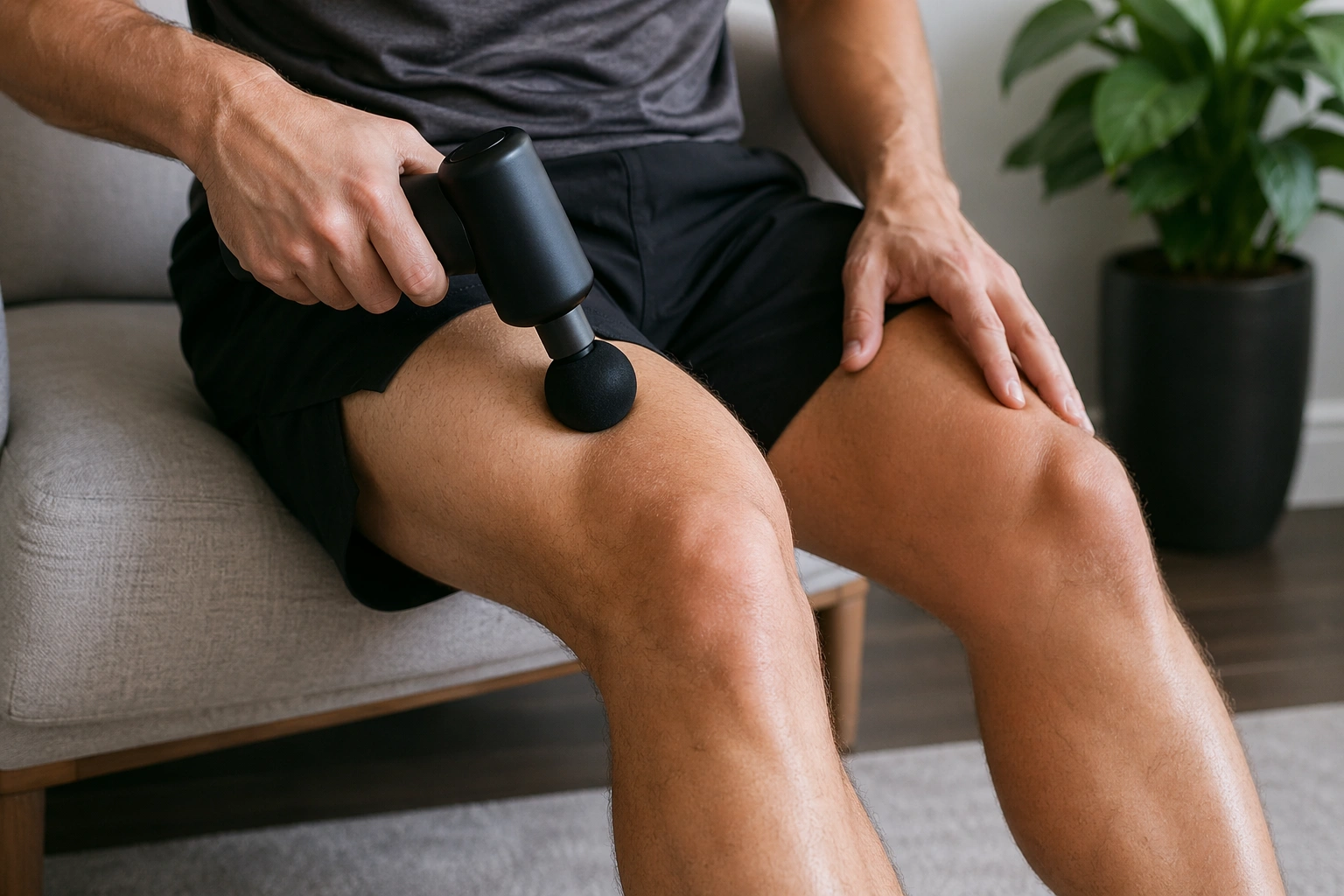
4. Massage the muscles around the knee, not the kneecap itself.
-
- Focus on quads, calves, hamstrings, and the outer thigh with light pressure.
5. Add simple stretching.
-
- Calf stretches, quad stretches, and hip flexor stretches often help reduce pulling around the knee.
6. Support recovery.
-
- Good sleep, hydration, comfortable shoes, and better desk posture all matter more than people think.
7. Ease back into exercise.
- If the knee calms down, return gradually instead of jumping straight back into intense sessions.
Benefits and Best Uses of Home Relief Methods
Home relief works best when the soreness is mild, recent, or linked to common lifestyle triggers.
- For office workers: Gentle movement, calf and quad massage, and short walking breaks often work well.
- For post-workout recovery: Ice, compression, foam rolling around the leg, and lighter training days can support recovery.
- For older adults: Gentle heat, light stretching, and supportive wraps may feel more comfortable than intense pressure.
- For travel or long commutes: Compression, easy leg movement, and short mobility breaks can help with stiffness.
Common Knee Soreness Problems and What Actually Helps
Why your knees hurt after sitting
This often points to stiffness, tight surrounding muscles, or a knee that does not like staying bent for long periods. A few minutes of walking and gentle leg movement may help more than sitting longer.
Why your knees hurt after stairs
Stairs load the knee more than flat walking. If your quads are tired, your glutes are weak, or the joint is irritated, stairs usually make it more obvious. Light strengthening and reducing flare-up activities for a short time can help.
Why your knees feel sore after workouts
Hard leg days, running, sports, and sudden training increases can leave the knee area feeling overworked. In those cases, recovery habits matter. That means lighter movement, rest, and working on tight muscles around the joint.
Symptom vs Solution Table
| Symptom | Common Pattern | What May Help | Best For |
|---|---|---|---|
| Sore knees after workouts | Overuse, heavy leg training, recovery delay | Ice, lighter activity, quad and calf massage, better recovery | Gym-goers, runners, athletes |
| Knees sore after sitting | Stiffness, poor circulation, tight hips and quads | Short walks, mobility breaks, desk posture changes, gentle heat | Office workers, drivers, travelers |
| Knees sore on stairs | Joint irritation, muscle weakness, fatigue | Reduce volume, strengthen glutes and quads, use a support wrap | Active adults, older adults |
| Sore knees with swelling | Inflammation or irritation | Rest, ice, compression, avoid deep pressure | Recent flare-ups |
| Deep achy knee discomfort | Joint stress or age-related wear | Gentle movement, heat for stiffness, low-impact exercise | Seniors, people with chronic stiffness |
Common Mistakes to Avoid
- Resting too much: Complete inactivity can make the knee feel stiffer.
- Massaging the kneecap directly: It is usually better to work on the surrounding muscles instead.
- Using too much pressure too soon: Aggressive percussion or deep tissue work can irritate a sore area.
- Ignoring hips, glutes, and calves: The knee often hurts because of what the rest of the leg is doing.
- Going right back to full workouts: Gradual return is usually smarter than testing the knee too soon.
- Wearing unsupportive shoes all day: Footwear can change how stress travels into the knee.
Safety Tips and Best Practices
In many mild cases, simple self-care is enough to settle things down. But you should be careful if the knee is very swollen, keeps locking, feels unstable, looks deformed, or hurts after a clear injury. Fever, severe redness, and trouble bearing weight are also signs to stop home treatment and get checked.
For a general overview of knee pain causes, self-care, and warning signs, I recommend reading Cleveland Clinic, Mayo Clinic, and Healthline.
Best Tools That May Help Sore Knees
This keyword is mostly informational, so I would not overdo the gear. But a few tools can be genuinely useful when knee soreness is tied to swelling, stiffness, or tight muscles around the joint.
Adjustable Knee Ice Pack Wrap
A simple choice for post-workout soreness, mild swelling, and flare-ups after long days on your feet.
Quiet Mini Massage Gun
Best for quads, calves, and hamstrings when tight leg muscles are making the knee feel more stressed.
Medium Density Foam Roller
A practical option for home recovery if your thighs and calves feel tight after sitting, training, or standing all day.
Massage Gun vs Knee Wrap vs Foam Roller
These tools do different jobs. Picking the right one depends on why your knees feel sore.
| Tool | Best For | Main Benefit | Limit | Who It Fits Best |
|---|---|---|---|---|
| Massage Gun | Tight quads, calves, hamstrings | Fast soft tissue relief around the knee | Not ideal directly on the kneecap or swollen areas | Active adults, gym users |
| Knee Ice Pack Wrap | Mild swelling, post-workout soreness | Simple cooling and compression support | Does not address muscle tightness | Anyone with flare-ups after activity |
| Foam Roller | General leg stiffness and mobility work | Good for routine recovery at home | Can feel awkward if you are very sore | Office workers, runners, home users |
Which tool works best for your situation
If your knee feels puffy or irritated, I would start with the wrap. If your legs feel tight and overworked, I would use a massage gun or foam roller on the muscles around the knee. If you sit all day, the foam roller plus short walking breaks usually gives better long-term value than any single quick fix.
FAQ
Why are my knees sore when I walk up stairs?
Stairs put more load through the knee. If your quads are tired, your glutes are weak, or the joint is irritated, stair climbing often makes soreness more noticeable.
Can tight muscles make my knees sore?
Yes. Tight quads, calves, hamstrings, and hips can change how force moves through the leg and make the knee feel more stressed.
Should I massage a sore knee?
Usually, it is better to massage the muscles around the knee rather than pressing directly on the kneecap. Light pressure often works better than aggressive pressure.
Is heat or ice better for sore knees?
Ice is often more helpful when the knee feels swollen or hot. Heat is usually better when the main problem is stiffness.
Why do my knees feel sore after sitting?
Long sitting can make the knee stiff and leave the surrounding muscles tight. A short walk and gentle movement often help.
When should I worry about sore knees?
You should get checked if the knee is very swollen, locks, gives out, looks deformed, or hurts after a sudden injury. Fever and trouble bearing weight also need attention.
Do knee massagers actually help?
They may help some people with comfort and circulation, but they are not a cure. They work best as part of a bigger routine that includes movement, recovery, and good technique.
Conclusion
Sore knees are often more about overload, tight muscles, stiffness, and recovery habits than anything mysterious. Start with simple steps: reduce flare-ups, keep the knee moving gently, work on the muscles around it, and use the right tool for the job. If your soreness keeps returning, it is worth looking at your workouts, posture, and daily movement patterns more closely.