Quick answer: Sore knees are often caused by overuse, tight muscles, poor movement habits, stiffness, or mild inflammation rather than one major injury. In many cases, gentle rest, mobility work, self-massage around the knee, and the right recovery tools may help reduce soreness and improve comfort.
Sore knees can sneak up on you.
Sometimes it starts after a workout. Sometimes it shows up after sitting too long, climbing stairs, or standing all day. I’m Ethan Carter, and I’ve spent years testing massage tools, recovery products, and pain relief methods. I focus on simple, practical advice that helps people feel better and recover faster at home.
In this guide, I’ll walk you through what often causes sore knees, what usually helps, which mistakes make things worse, and which recovery tools may be worth using.
Quick Answer
What usually causes sore knees?
Most sore knees come from everyday strain. Common causes include overuse, tight quads or calves, weak hips, poor posture, limited mobility, and mild inflammation after activity. The knee often feels sore because the muscles and soft tissues around it are not supporting movement well.
Why Sore Knees Happen More Often Than People Think
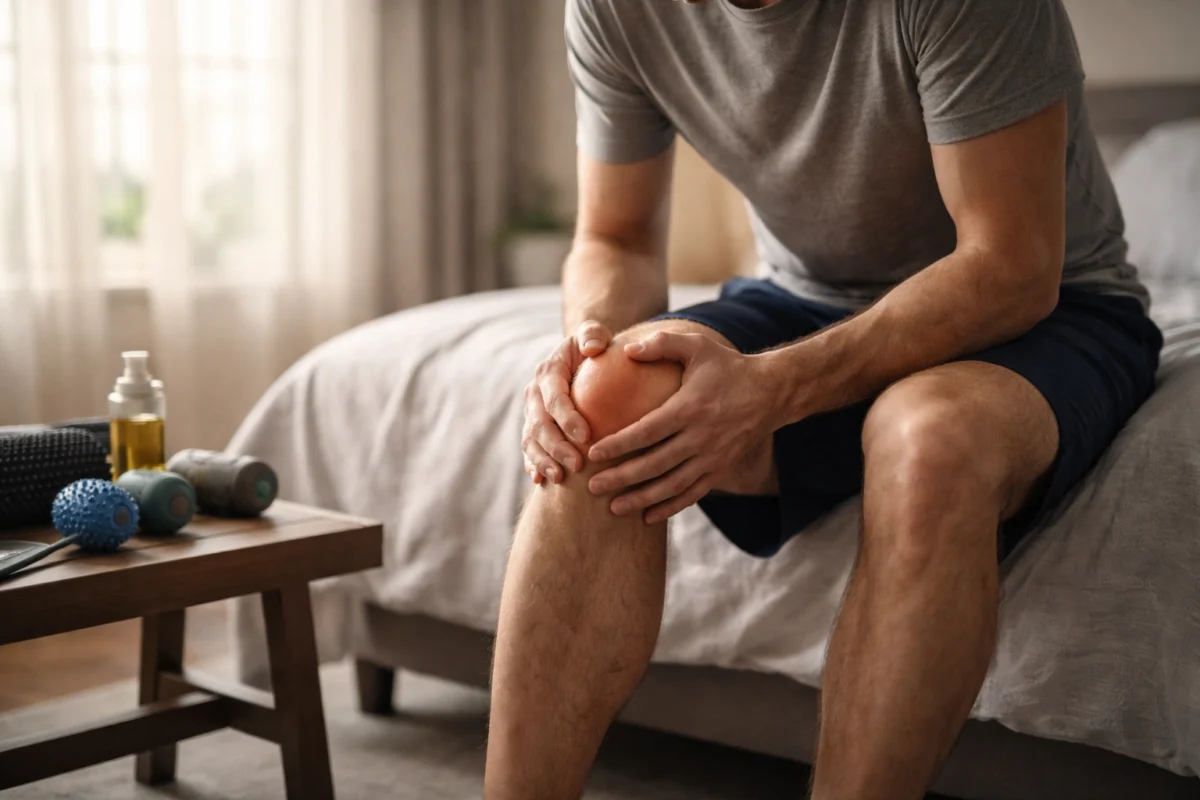
Everyday movements that can irritate the knees
Your knees work hard all day. They help with walking, standing, sitting, squatting, climbing stairs, and getting in and out of bed or a car.
That means small issues can build up fast. Long desk hours, hard workouts, poor exercise form, old shoes, or stiff hips and ankles can all increase stress on the knees.
Why soreness is different from sharp pain
Soreness usually feels dull, achy, tight, or stiff. It may come and go. It often shows up more after activity or after being in one position too long.
Sharp pain, sudden instability, major swelling, or trouble putting weight on the leg can be a different situation. That is where it makes sense to stop home treatment and get checked by a qualified medical professional.
What Causes Sore Knees? The Most Common Reasons Explained
Overuse from workouts, walking, running, or stairs
This is one of the biggest reasons knees get sore. If you recently increased your workouts, started running again, did a lot of squats, or spent extra time on stairs, your knees may simply be reacting to more load than usual.
Many people notice this after leg day, long hikes, sports, or even a busy weekend of errands.
Tight muscles around the knee
The knee is heavily affected by nearby muscles. Tight quads, hamstrings, calves, and even hip muscles can pull on the structures around the knee and change how it moves.
That can leave the area feeling sore, stiff, or irritated. In my experience, a lot of “knee soreness” is really a muscle tension and mobility problem above or below the joint.
Poor posture and movement mechanics
If your knees cave inward during squats, your feet flatten too much, or you sit with poor posture for long periods, your movement pattern may place extra stress on the knees.
This is common in office workers who sit most of the day and then try to be active at night without loosening up first.
Weak hips and glutes
Weak hips and glutes often mean the knee has to do more work than it should. That can make the joint feel overworked, especially when climbing stairs, getting up from a chair, or doing lunges and squats.
Stiff joints and limited mobility
If your ankles do not move well, or your hips are stiff, the knee may end up compensating. That compensation can lead to soreness over time.
This is one reason mobility work can be so helpful. Better movement at the ankle and hip often makes the knee feel less stressed.
Inflammation and mild swelling
After hard activity or repetitive use, the knee may feel warm, puffy, or tender. Mild inflammation can be part of that response. It does not always mean a serious problem, but it is a sign to reduce aggravating activity and focus on recovery.
Age-related wear and daily strain
As people get older, daily wear, joint stiffness, and reduced muscle support can make sore knees more common. That does not mean you have to stop moving. It usually means your knees may do better with gentler exercise, regular stretching, supportive shoes, and smart recovery habits.
How Knee Soreness Works in the Body
How muscles, tendons, and soft tissue affect the knee
The knee is not just one simple hinge. It relies on surrounding muscles, tendons, fascia, and soft tissue to move smoothly.
When those tissues are tight, weak, or overworked, the knee can feel the effects. That is why massage, mobility work, and light strengthening often support recovery better than just resting and hoping for the best.
How circulation, recovery time, and mobility play a role
Good circulation supports recovery. Gentle movement can help keep the joint from getting stiff. Too much rest can sometimes leave the knee feeling tighter, while too much activity can keep it irritated.
The sweet spot is usually controlled movement, enough recovery time, and gradual return to normal activity.
Why the source of soreness is not always the knee itself
This is important. You may feel soreness in the knee, but the real issue may be tight quads, stiff calves, weak glutes, poor squat form, or limited ankle mobility.
That is why smart knee relief usually includes the entire lower body, not just the joint itself.
How to Relieve Sore Knees at Home Step by Step
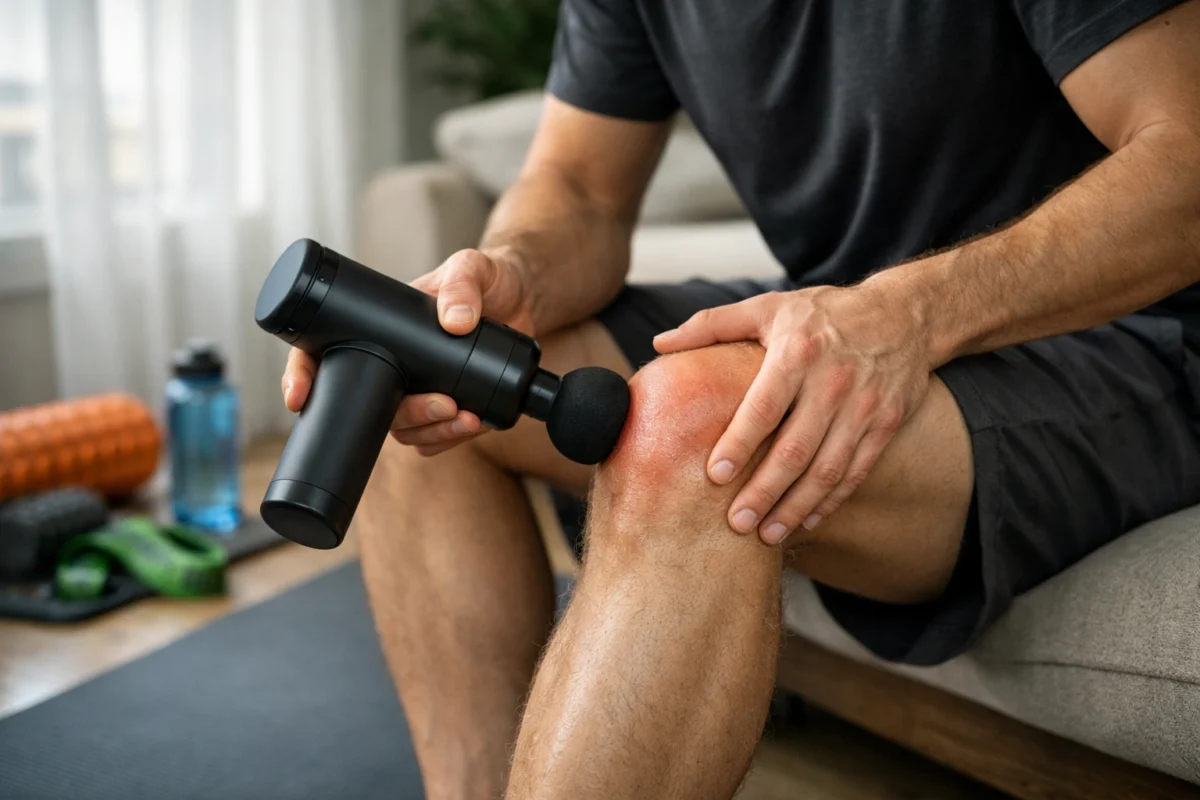
Step 1: Reduce the activity that keeps aggravating it
If a certain movement keeps making your knee angrier, back off for a few days. That could mean reducing deep squats, long runs, jumping, or repeated stair use.
You do not always need complete rest. You just need less irritation.
Step 2: Use ice or heat the right way
Ice often feels better when the knee is puffy, warm, or irritated after activity. Heat often feels better when the knee is stiff, achy, or tight, especially before movement.
For a simple overview of when each may help, Cleveland Clinic has a helpful guide here: ice vs heat.
Step 3: Try gentle stretching and mobility work
Focus on the muscles around the knee.
- Gentle quad stretch
- Calf stretch
- Hamstring stretch
- Hip flexor stretch
- Easy ankle mobility drills
Keep it light. The goal is to reduce tension, not force range of motion.
Step 4: Use self-massage around the knee, not directly on it
I usually tell people to massage the muscles that affect the knee rather than pressing hard right on the sore joint itself.
That often means:
- Quads
- Hamstrings
- Calves
- Outer thigh
- Glutes
A massage gun, foam roller, or even a tennis ball may help loosen those areas when used gently.
Step 5: Add light strengthening when soreness settles
Once the knee feels calmer, simple strength work may help support it better.
- Glute bridges
- Bodyweight sit-to-stands
- Straight leg raises
- Mini squats with good form
- Side-lying leg lifts
Start easy. Smooth movement matters more than intensity.
What Usually Helps Most Based on the Cause
| Cause | Common Signs | What Often Helps |
|---|---|---|
| Overuse | Soreness after workouts, long walks, stairs, or sports | Reduce load, ice after activity, gentle mobility, gradual return |
| Tight muscles | Stiffness, pulling feeling, limited motion | Self-massage, stretching, foam rolling, heat before movement |
| Poor posture or movement mechanics | Soreness during squats, sitting, or standing | Improve form, mobility work, supportive footwear, strength training |
| Weak hips and glutes | Knee strain with stairs or getting up from a chair | Glute and hip strengthening, better alignment |
| Mild inflammation | Puffy, warm, tender knee after activity | Ice, compression, rest from aggravating movements |
| Age-related stiffness | Morning stiffness or soreness after inactivity | Heat, light movement, gentle stretching, supportive tools |
Best Self-Massage and Recovery Methods for Sore Knees
Massage gun for quads and calves
A massage gun may help if your knee soreness is tied to tight thigh or calf muscles. I do not recommend hammering directly over the knee joint. Instead, use low to moderate pressure on the muscles above and below it.
This often works best for post-workout soreness, overuse tension, and stiff legs from sitting.
Foam rolling for thigh and hip tightness
A foam roller is a solid low-tech option. It is especially useful if you feel tight through the quads, outer thigh, or glutes. It takes a little more effort than a massage gun, but many people like the control.
Heat therapy for stiffness
If the knee feels stiff more than swollen, heat may help you loosen up before walking, stretching, or mobility work. Mayo Clinic also has a basic overview of knee pain self-care and recovery habits here: knee pain self-care.
Compression for mild swelling and support
A compression sleeve may help if your knee feels mildly swollen, tired, or unsupported during everyday movement. It will not fix the underlying cause, but it can make activity feel more manageable.
Best Tools for Sore Knees at Home
Who benefits most from each tool
| Tool | Best For | Main Benefit | Watch Out For |
|---|---|---|---|
| Massage gun | Muscle tightness in quads, calves, and glutes | Quick soft tissue relief | Avoid aggressive use directly on the joint |
| Foam roller | General leg tightness and mobility work | Great for larger muscle groups | Can feel intense for beginners |
| Compression sleeve | Daily support and mild swelling | Comfort and light stability | Not a fix for major pain or injury |
| Heating pad | Morning stiffness or post-sitting tightness | Helps loosen the area before movement | Not ideal for a hot, swollen knee |
TOLOCO Massage Gun
A beginner-friendly percussion massager that may help loosen tight quads and calves that contribute to knee soreness.
321 STRONG Foam Roller
A simple recovery tool for thigh, calf, and hip tightness when you want a low-cost option for home use.
Copper Compression Knee Sleeve
A practical choice for people who want light support during walking, errands, or long hours on their feet.
Massage Gun vs Foam Roller vs Knee Compression Sleeve
Which works best for muscle tightness, stiffness, and daily support?
| Option | Best For | Pros | Cons |
|---|---|---|---|
| Massage Gun | Tight muscles causing knee soreness | Fast, easy to target, good after workouts | Can be overused if pressure is too high |
| Foam Roller | Full-leg recovery and mobility work | No batteries, great for larger areas, budget-friendly | Takes more effort and body positioning |
| Knee Compression Sleeve | Daily comfort and mild support | Easy to wear, helpful during movement | Does not directly address muscle tightness |
If I had to simplify it:
- Use a massage gun when tight muscles are the main issue.
- Use a foam roller when you want mobility work and broader leg recovery.
- Use a compression sleeve when you want comfort and light support during the day.
Common Problems and Fixes When Your Knees Stay Sore
Sore knees after squats
This often comes down to load, depth, form, or poor ankle and hip mobility. Reduce intensity, improve alignment, and work on mobility before your next session.
Sore knees after sitting all day
This is common with desk work. The knee gets stiff, and the muscles around it tighten up. Short walking breaks, calf stretches, quad massage, and heat before activity often help.
Sore knees after walking or running
Look at footwear, terrain, volume, and leg tightness. Too much distance too soon is a common problem. Cut back a little, recover well, then build slowly.
Sore knees in older adults
Gentler tools usually work better here. Light compression, easy movement, short walks, and heat for stiffness can be more comfortable than aggressive massage or hard rolling.
Common Mistakes to Avoid With Sore Knees
Pushing through pain too early
A little movement is good. Forcing your normal routine too soon is not. Give the knee time to calm down.
Massaging directly over irritated joints
This is one of the most common mistakes I see. Work on the muscles around the knee first. Pressing hard on an already irritated joint may make it feel worse.
Skipping hip and ankle mobility
If you only focus on the knee, you may miss the real problem. Better ankle and hip movement can take stress off the knee.
Using the wrong recovery tool too aggressively
More pressure is not always better. Whether you use a massage gun, roller, or stretching routine, start light and see how the knee responds.
Safety Tips and Best Practices
When self-care may be enough
Home care may be enough when the soreness is mild, tied to activity, and slowly improving with rest, gentle movement, and recovery work.
When to stop and get professional medical advice
It is smart to get medical advice if you notice:
- Significant swelling
- Sudden sharp pain
- Locking or catching
- The knee giving out
- Inability to bear weight
- Soreness that keeps getting worse instead of better
For a broad look at possible knee pain causes and warning signs, Healthline has a useful overview here: knee pain overview.
FAQ
Why are my knees sore even if I did not injure them?
Many sore knees come from overuse, tight muscles, poor movement habits, stiffness, or mild inflammation rather than a clear injury.
Can tight muscles cause sore knees?
Yes. Tight quads, hamstrings, calves, and hips can change how the knee moves and may increase soreness.
Is walking good for sore knees?
Gentle walking often helps if it does not make symptoms worse. It can support circulation and reduce stiffness.
Should I use heat or ice for sore knees?
Ice often feels better for a warm or puffy knee after activity. Heat often feels better for stiffness and tightness before movement.
Does massage help sore knees?
Massage may help when the soreness is linked to tight muscles around the knee. It usually works best on the quads, calves, hamstrings, and glutes rather than directly on the joint.
Can a massage gun help knee soreness?
It can support relief when tight leg muscles are part of the problem. Use low to moderate pressure and avoid pounding directly over the knee joint.
When should I worry about sore knees?
You should get medical advice if the knee is very swollen, unstable, sharply painful, locked, or too painful to bear weight on.
Conclusion
Sore knees are often a recovery and movement problem, not just a knee problem. In many cases, the biggest wins come from reducing irritation, improving mobility, loosening tight muscles, and using simple tools the right way.
If your soreness is mild, a smart home routine may help you feel better faster. And if a recovery tool makes that routine easier to stick with, it may be worth adding.