If your knee is swollen, the best first steps are usually rest, short icing sessions, light compression, and elevation. Once the knee settles a bit, gentle movement may help reduce stiffness. If the knee is very hot, unstable, severely painful, or hard to put weight on, it is smart to get medical help.
A swollen knee can make every step feel awkward. It can feel tight, puffy, stiff, and weak all at once. I’m Ethan Carter, and I’ve spent years testing massage tools, recovery products, and pain relief methods. In this guide, I’ll walk you through what often helps at home, what to avoid, when massage fits in, and which tools may actually be worth using.
Quick Answer
If you are wondering what to do for swollen knee symptoms at home, I usually start with four basics: stop the activity that irritated it, use cold therapy for short sessions, add a light compression wrap or sleeve, and elevate the leg. After the worst swelling eases, gentle range-of-motion work and careful walking often feel better than complete inactivity.
Why a Knee Swells and Why the First Response Matters
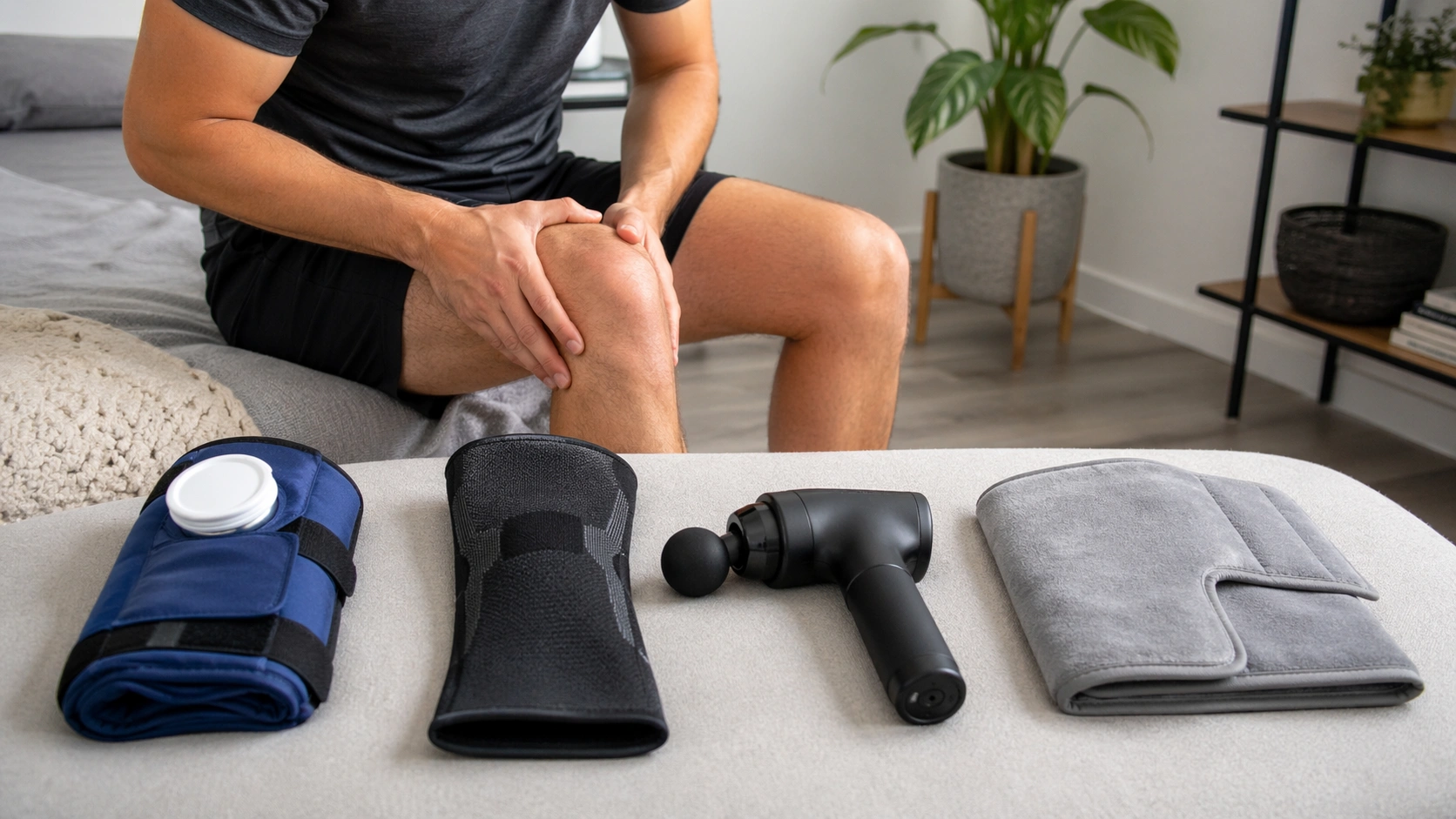
A knee often swells because extra fluid builds up in or around the joint. That can happen after overuse, a workout flare, a minor twist, long hours on your feet, or joint irritation from arthritis. When fluid and inflammation rise, the knee feels tight and harder to bend, and the surrounding muscles can start guarding too.
That early response matters. If you keep pushing through pain, keep loading the knee, or use the wrong tool too aggressively, the swelling can hang around longer. In many mild cases, simple self-care works best at first: reduce irritation, calm the area down, and then slowly bring movement back in.
Common reasons your knee may swell
- Overuse after walking, running, squatting, or sports
- A mild twist, strain, or awkward landing
- Post-workout soreness with joint irritation
- Long periods of standing, kneeling, or stair use
- Arthritis-related flare-ups
- Tight quads, calves, and hamstrings adding pressure around the joint
How Swelling Affects the Joint, Muscles, and Recovery
When your knee swells, the joint feels crowded. That pressure can limit your range of motion and make simple tasks like sitting down, standing up, or using stairs feel harder. The muscles around the knee, especially the quads and calves, may tighten up as a protective response. That is why a swollen knee can also come with stiffness, soreness, and a heavy feeling.
Cold therapy may help calm fresh irritation. Compression may help control fluid buildup. Elevation can support drainage. Then, once the knee starts calming down, gentle motion may help keep the joint from getting even stiffer. That combination usually works better than doing nothing for days and hoping it fixes itself.
What to Do for Swollen Knee Step by Step
1. Stop the activity that irritated it
The first thing I do is back off the trigger. That might mean pausing a workout, skipping deep squats, cutting down stair trips, or taking a break from a long walk. You do not need to panic, but you do want to stop feeding the irritation.
2. Ice the knee the right way
For fresh swelling, ice usually makes more sense than heat. Use a cold pack for about 15 to 20 minutes at a time, then give the area a break. I prefer a wrap-style ice pack because it stays in place better than balancing a loose pack on the kneecap.
3. Use light compression
A soft knee sleeve or elastic wrap can help the knee feel more supported and may help control swelling. The key is light compression, not a super tight wrap. If your lower leg feels numb, cold, tingly, or more swollen below the wrap, it is too tight.
4. Elevate above heart level
When you are resting, prop the leg up so the knee sits above the level of your heart if possible. I usually use pillows under the calf and lower leg instead of jamming a pillow directly under the knee. That setup often feels more comfortable and keeps the knee from staying stuck in one bent position.
5. Add gentle range-of-motion work when the pain settles
Once the knee is less angry, gentle movement often helps more than total rest. Try slow knee bends within a comfortable range, heel slides on the bed, ankle pumps, or short easy walks around the house. The goal is smooth movement, not pushing into sharp pain.
6. Return to normal activity gradually
If walking feels smoother and swelling is not bouncing back, slowly return to your regular routine. I keep it simple: increase activity in small steps and pay attention to how the knee responds later that day and the next morning.
What Often Helps Most Based on Your Situation
| Situation | What May Help First | What to Avoid Early |
|---|---|---|
| Swollen knee after exercise | Rest, cold pack, compression sleeve, easy walking later | Heavy leg day, jumping, deep knee bends |
| Swollen knee after a long day standing | Elevation, cold therapy, lighter activity, supportive shoes | More standing without breaks |
| Swollen knee after a minor twist | Pause activity, ice, compression, careful weight bearing | Testing the knee with pivots or lunges |
| Mild arthritis-type flare | Cold for obvious swelling, then gentle movement and later heat for stiffness | Staying still all day or using heat on a very hot, puffy joint |
Benefits and Best Uses of At-Home Relief Methods
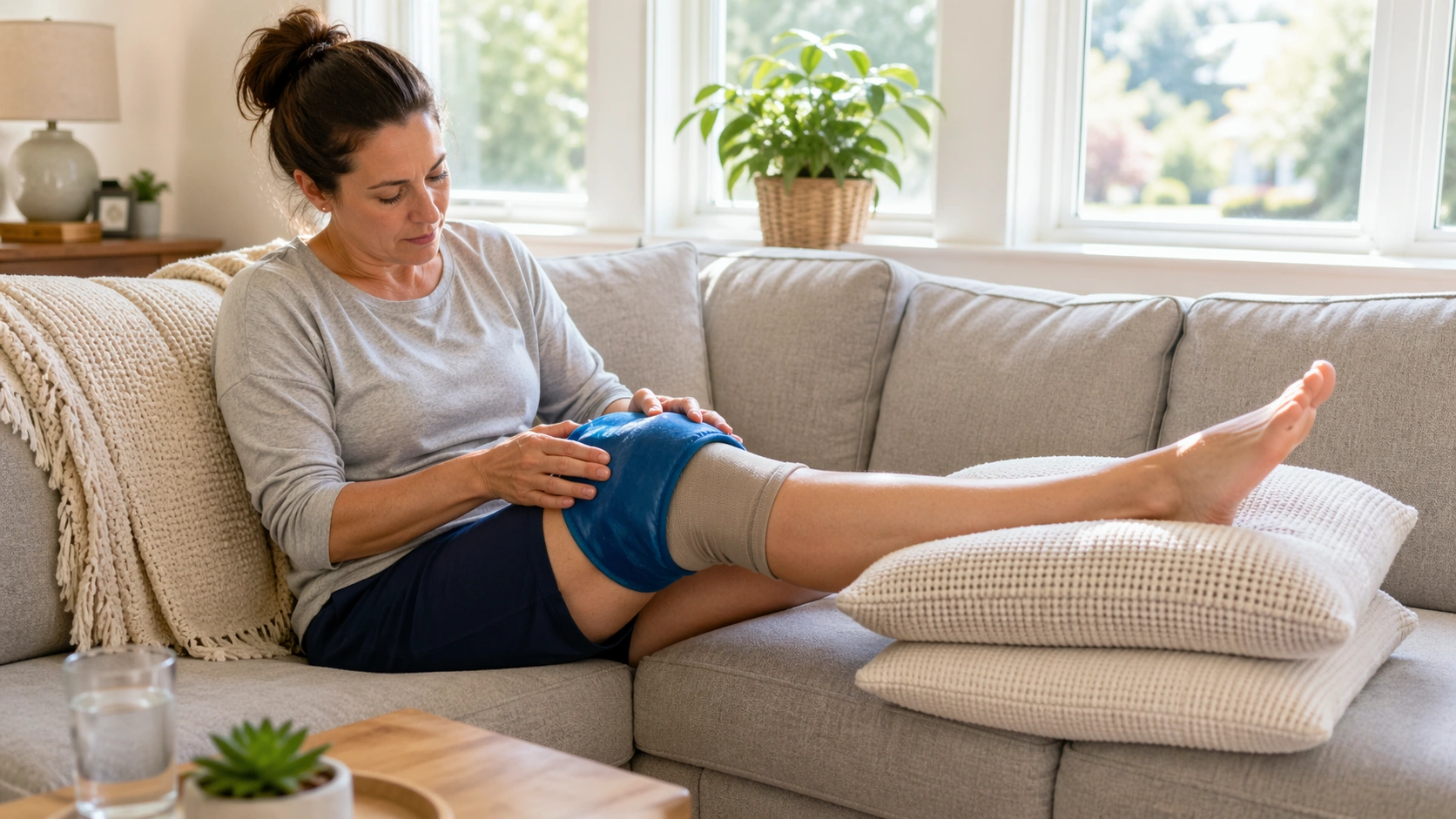
The nice thing about basic recovery steps is that they are simple, low-cost, and easy to repeat. A good cold pack may help reduce that throbbing, puffy feeling. A compression sleeve may help the knee feel more secure during light daily activity. Elevation can be especially helpful at the end of the day when the joint feels heavy and achy.
Gentle self-massage can have a place too, but timing matters. I do not like aggressive massage directly on a hot, swollen knee. What often feels better later is light work on the muscles around the knee, such as the quads, calves, and hamstrings. When those muscles loosen up, the knee sometimes feels less stiff during walking and stair use.
- Good for mild swelling after overuse or exercise
- Good for puffiness after long periods of standing or walking
- Good for easing stiffness as the knee starts settling down
- Often useful for home recovery routines and travel-friendly relief
- Not a replacement for medical care if the injury is severe or the knee is red and hot
Common Problems and Fixes
| Problem | Likely Cause | What to Change |
|---|---|---|
| Swelling gets worse at night | Too much standing or walking during the day | Add elevation, reduce activity spikes, use a cold pack in the evening |
| Compression feels uncomfortable | Sleeve or wrap is too tight | Use lighter compression or a better-fitting sleeve |
| Knee feels stiff after resting | Too much complete rest | Add short, gentle movement breaks through the day |
| Massage makes it more sore | Too much pressure too soon | Avoid direct pressure on the joint and keep work light around surrounding muscles |
| Heat feels good but swelling stays high | Using heat too early | Use cold first for obvious swelling, then try heat later for stiffness |
Common Mistakes to Avoid
- Leaving an ice pack on for too long instead of using short sessions
- Wrapping the knee so tight that it causes tingling or lower-leg swelling
- Using heat right away on a freshly swollen knee
- Staying completely inactive for too many days
- Going back to squats, running, or sports too fast
- Using a massage gun directly on a hot, irritated knee joint
- Ignoring red-flag symptoms because you hope it will just pass
Safety Tips and When to Get Medical Help
Most mild swelling from overuse can be handled with smart self-care, but some signs deserve more attention. If your knee is red, hot, or warm compared with the other side, if you have a fever, if you cannot put weight on it, or if the knee locks, gives way, or swells badly after an injury, it is a good idea to get checked. Those patterns can point to something more serious than a simple flare.
For reliable general guidance on cold therapy and early self-care, I recommend reading Cleveland Clinic’s RICE method guide. For swollen-knee warning signs and common causes, Mayo Clinic’s swollen knee overview is useful. If you suspect a more significant injury, AAOS guidance on common knee injuries is worth checking.
Helpful Tools and Product Recommendations
I do not think you need a huge recovery kit for a swollen knee. In most cases, two simple tools cover the basics: a reusable knee ice wrap and a soft compression sleeve. They are easy to use at home, while traveling, or after a workout flare.
Reusable Knee Ice Wrap
A good first pick for fresh swelling because it stays in place better than a loose ice pack.
Compression Knee Sleeve
Useful for light support, mild swelling control, and easier movement during the day.
| Tool | Best For | Main Benefit | Limit | Best User |
|---|---|---|---|---|
| Knee ice wrap | Fresh swelling, post-workout flare, end-of-day puffiness | Cold therapy without needing to hold the pack | Not ideal if you want to keep moving around | Home users, athletes, office workers |
| Compression knee sleeve | Mild swelling during daily activity | Support and light compression | Should not be overly tight | Seniors, walkers, people on their feet a lot |
| Massage gun | Tight quads, calves, and hamstrings after swelling starts settling | May reduce muscle tension around the knee | Not my first choice for a hot, swollen joint | Active users with muscle tightness |
| Heat wrap | Later-stage stiffness | May loosen tight tissues before easy movement | Usually not ideal for fresh swelling | Arthritis-type stiffness, older adults |
Cold Therapy vs Compression Sleeve vs Massage Gun vs Heat
If your knee is freshly swollen, cold therapy usually comes first. It is the most practical option for calming irritation and helping the knee feel less puffy. Compression is a close second because it can help support the joint during light activity and may keep swelling from pooling as much during the day.
Heat has a different role. I think of it as a stiffness tool, not a fresh-swelling tool. Once the obvious puffiness settles and the bigger issue becomes tightness, heat may feel better before a short walk or mobility session.
Massage guns can be helpful too, but I use them around the knee, not on the sore joint itself. A light setting on the quads or calves may help if those muscles are guarding. Direct, aggressive percussion on a hot, swollen kneecap area is usually not the move.
FAQ
Should I use ice or heat on a swollen knee?
For fresh swelling, I would start with ice. Heat usually makes more sense later when the swelling has eased and stiffness is the bigger issue.
Is walking good for a swollen knee?
Gentle walking can help once sharp pain and obvious swelling start to calm down. If walking makes the knee throb, limp, or swell more, back off.
How long does knee swelling take to go down?
Mild swelling from overuse may improve within a few days. Bigger swelling or swelling after a twist or fall can take longer and may need medical evaluation.
Should I wear a brace or sleeve for knee swelling?
A light compression sleeve can be helpful for support and swelling control. It should feel snug, not tight enough to cause numbness or extra swelling below it.
Can I massage a swollen knee?
I avoid deep massage directly on a hot, puffy knee. Later, gentle work on the quads, hamstrings, and calves often makes more sense than pressing on the joint itself.
When should I see a doctor for a swollen knee?
Get checked if you cannot bear weight, the knee locks or gives way, swelling is severe after an injury, or the joint is red, hot, or paired with fever.
How should I sleep with a swollen knee?
I usually recommend resting the leg slightly elevated with pillows under the lower leg or calf so the knee feels supported without being jammed into a bent position.
Conclusion
If you want a simple answer to what to do for swollen knee issues, start by calming the area down first: rest, cold therapy, light compression, and elevation. Then bring back gentle movement as the knee settles. Keep it simple, avoid overdoing massage or heat too early, and use a basic ice wrap or compression sleeve if you want extra support at home.