Quick Answer
What helps arthritic knees most is a mix of gentle daily movement, heat before activity, cold after flare-ups, thigh and calf strengthening, supportive footwear, and the right brace or sleeve. Many people also find massage around the surrounding muscles, better sleep positions, and simple home tools helpful for reducing stiffness and improving comfort.
I’m Ethan Carter, and I’ve spent years testing massage tools, recovery products, and pain relief methods. When knees feel stiff, sore, or swollen, everyday things like walking, standing up, sleeping, and climbing stairs can get frustrating fast. In this guide, I’ll walk you through what actually helps arthritic knees at home, what tends to make them worse, and which tools may be worth using.
Why Your Arthritic Knees Feel Stiff and Sore
Arthritic knees usually do not hurt for just one reason. There is often a mix of joint irritation, inflammation, stiffness, reduced range of motion, and weak or overworked muscles around the knee. That is why one single fix rarely does everything.
In real life, I see a few patterns over and over. The knee gets stiff after sitting too long. It feels achy after walking farther than usual. It gets more irritated when shoes are unsupportive, when stairs pile up, or when the quads and hips are not doing their share of the work.
The muscles above and below the knee matter a lot. Tight quads, calves, and hip muscles can change how the knee tracks and how much pressure the joint feels. Gentle soft tissue work, strength training, and smart load management often help because they improve support instead of forcing the knee to handle everything on its own.
If you want a broad medical overview of osteoarthritis and self-care basics, these are useful starting points: Cleveland Clinic overview of osteoarthritis and Mayo Clinic overview of osteoarthritis.
How Relief Works for Arthritic Knees
Heat, cold, and circulation
Heat often works best when the knee feels stiff, tight, and hard to get moving. A heated wrap or warm compress may help loosen the area, increase comfort, and make it easier to start walking or exercising. Cold usually works better after activity if the knee feels puffy, irritated, or warmer than usual.
Strength creates better support
One of the biggest changes people can make is improving support from the quads, glutes, calves, and hips. When those muscles are stronger, the knee often feels more stable during walking, standing up, and stairs. The goal is not intense workouts. It is steady, low-impact support work.
Massage, trigger points, and soft tissue work
Massage can be useful, but where you do it matters. I usually get the best results by working on the quads, calves, hips, and the soft tissue around the knee instead of pressing hard directly on the kneecap or a swollen joint line. Trigger points in the thighs and tight fascia in the lower body can make the whole leg feel more guarded.
Footwear, posture, and daily load management
Bad shoes, long sitting sessions, and sudden spikes in activity can all make arthritic knees feel worse. Supportive footwear, shorter walking bursts, and small posture resets during the day often help more than people expect. For office workers, simply standing up every hour and doing a short leg reset can reduce stiffness before it builds.
How to Relieve Arthritic Knees at Home Step by Step
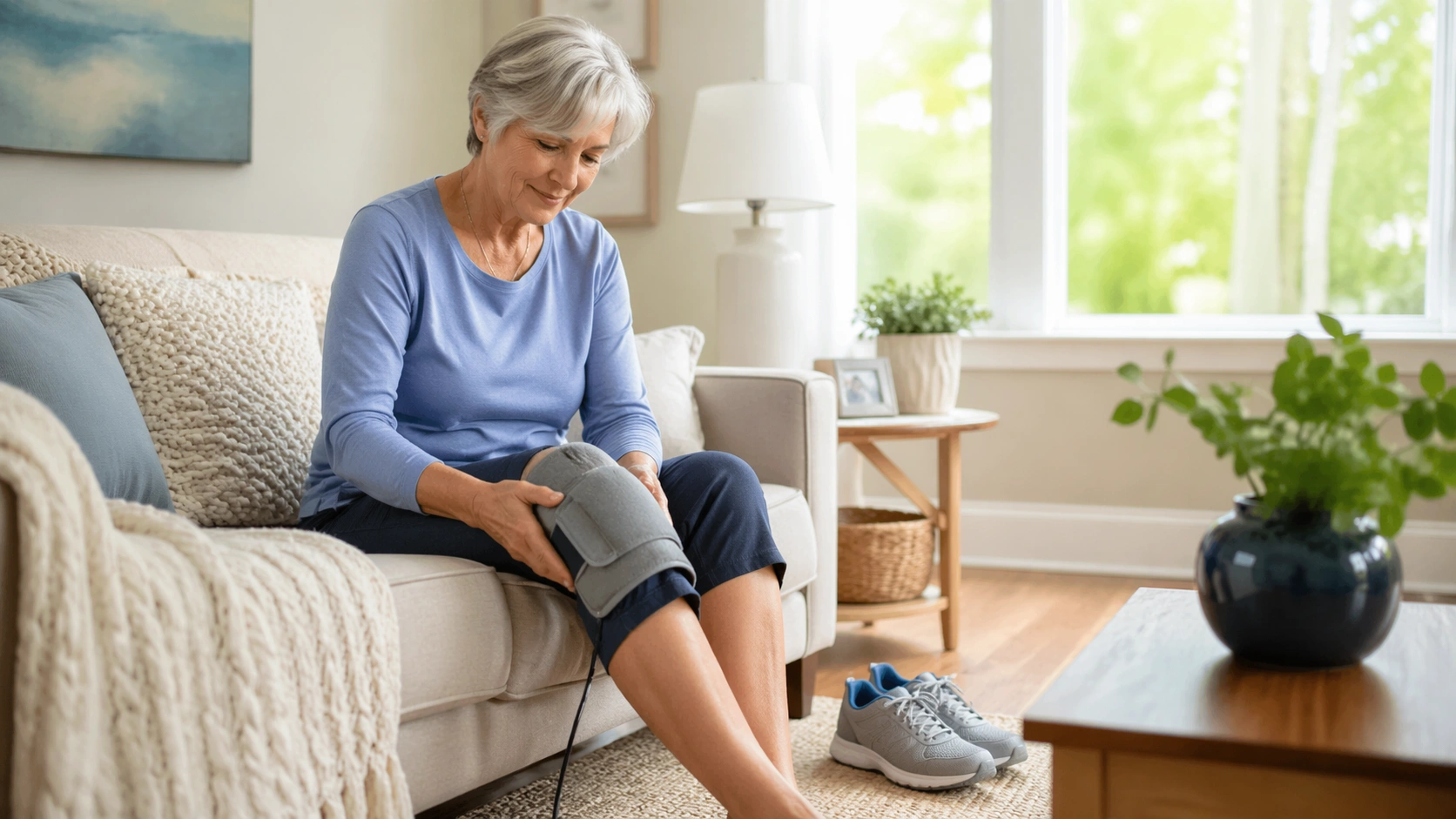
This is the kind of simple routine I like because it is realistic, repeatable, and easy to adjust based on how the knee feels that day.
- Start with heat for 10 to 15 minutes if the knee feels stiff. A heated knee wrap or warm compress usually works well before movement.
- Do a gentle mobility warm-up. Try ankle pumps, seated knee extensions, and a few slow sit-to-stands.
- Take a short walk or use a stationary bike for 5 to 10 minutes at an easy pace. Smooth movement is the goal, not intensity.
- Do a few simple strength moves such as straight-leg raises, sit-to-stands, wall-supported mini squats, or step-ups if they feel comfortable.
- Massage the quads and calves for a few minutes. Use your hands, a foam roller, or a massage gun on a low setting. Avoid hard pressure right on the kneecap.
- Use a compression sleeve or brace for longer walks, errands, or travel if the knee feels better with support.
- If the knee feels more swollen or irritated after activity, switch to ice for 10 minutes and reduce the next session slightly.
- At night, adjust your sleep position. A pillow under the knees when lying on your back or between the knees when side sleeping often helps reduce strain.
Benefits and Best Uses
- Morning stiffness: Heat plus a short movement routine can help the knee loosen up faster.
- Pain after sitting: A quick mobility reset is often more helpful than forcing a long walk right away.
- Walking discomfort: Compression, supportive shoes, and better pacing can make daily movement easier.
- After light exercise: Gentle recovery work can help calm soreness before it turns into a bigger flare-up.
- Older adults: Low-impact strength work and warmth often feel more manageable than aggressive stretching.
- Home and travel use: Sleeves, wraps, and simple massage tools are easy to use without a full rehab setup.
Common Problems With Arthritic Knees and Easy Fixes
| Problem | What Often Helps | Best Time to Use It |
|---|---|---|
| Morning stiffness | Heat, ankle pumps, seated knee extensions, slow walking | Right after waking up |
| Knee feels puffy after walking | Ice, shorter walking sessions, compression sleeve, more rest between outings | After activity |
| Pain after sitting too long | Stand up every hour, short walk, gentle quad and calf massage | During desk work or long travel |
| Pain on stairs | Quad and glute strengthening, slower pace, handrail support, supportive shoes | Daily movement and rehab sessions |
| Sleep discomfort | Pillow support, gentle heat before bed, less evening overuse | Before sleep |
| Tight legs making the knee feel worse | Massage the quads, calves, and hips, light stretching, low-setting massage gun | After a warm-up or after activity |
Common Mistakes to Avoid
- Resting too much: Total rest can make stiffness worse. Most arthritic knees do better with regular, gentle movement.
- Doing too much on good days: A sudden jump in walking, yard work, or workouts often leads to a flare-up later.
- Using deep pressure right on the joint: Massage may help, but strong pressure on a swollen knee can backfire.
- Ignoring the hips and calves: The knee does not work alone. Tight or weak areas above and below it matter.
- Using a brace all day without a plan: Support tools can help, but they work best when paired with movement and strength work.
- Wearing unsupportive shoes: Flat, worn-out shoes can increase daily irritation, especially on hard floors.
Safety Tips and Best Practices
- Use heat when the knee feels stiff, tight, or slow to get moving.
- Use ice after activity if the knee feels more swollen, warm, or irritated.
- Keep massage pressure moderate. Work around the muscles, not aggressively on the joint itself.
- If you use a massage gun, stay on a low setting and use it on the quads, calves, and hips rather than directly on the kneecap.
- Stop or scale back if you feel sharp pain, rising swelling, or a lingering flare-up that lasts well beyond the activity.
- Get checked promptly if the knee locks, gives out, becomes very hot and red, or you cannot put weight on it.
Tools and Products That May Help at Home
I do not think everyone needs a pile of gear. But the right tool can make a home routine easier to stick with. For arthritic knees, I usually look for comfort, ease of use, and whether the tool supports the type of relief the person actually needs.
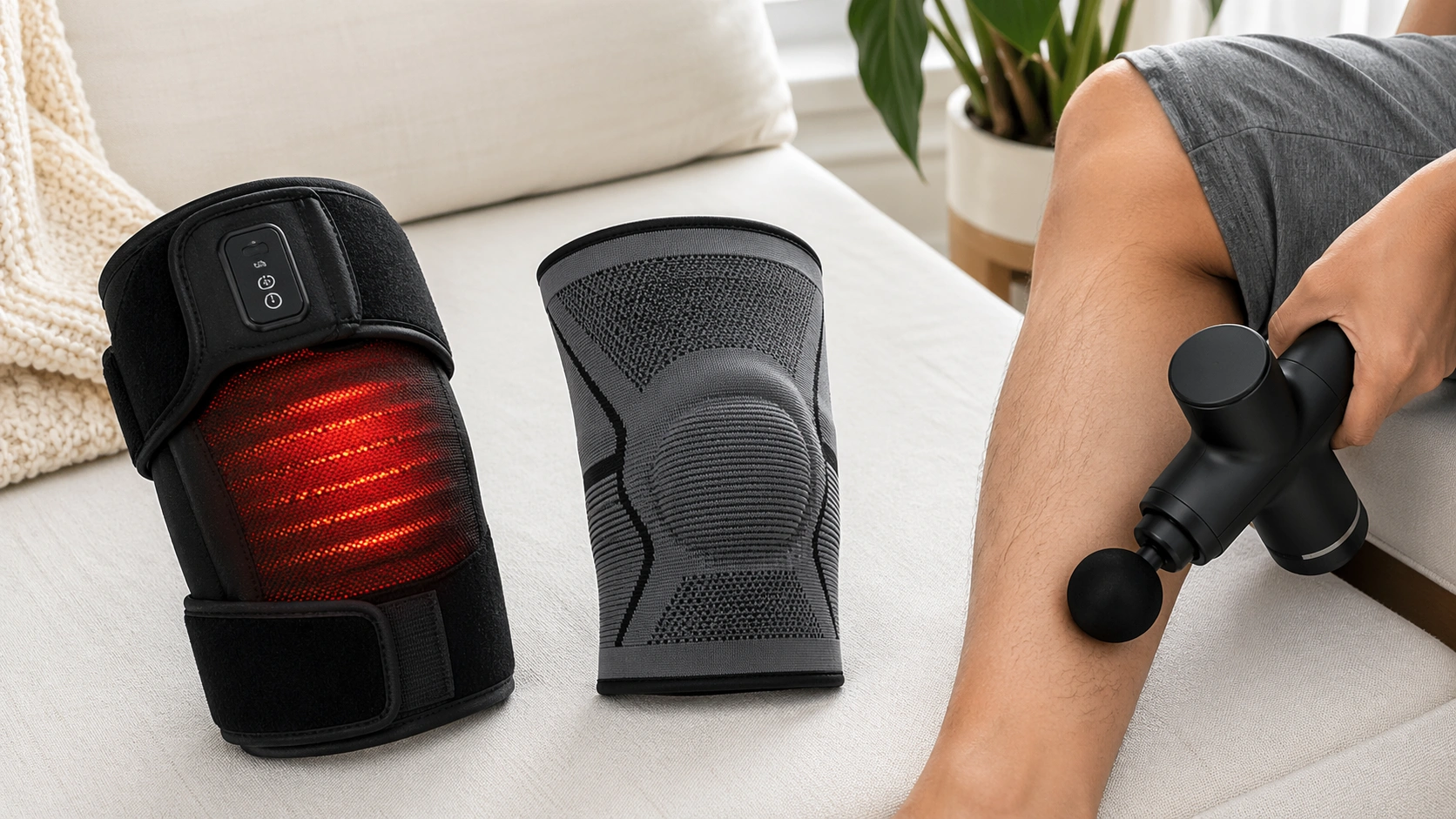
Adjustable Heated Knee Wrap
Great for morning stiffness and for warming the joint before walking, stretching, or simple strength work.
Compression Knee Sleeve
A simple choice for light support, warmth, and daily comfort during errands, walks, and travel.
Handheld Massage Gun for Quads and Calves
Useful when tight thigh and calf muscles are making the knee feel more guarded, especially after activity.
Heated Wrap vs Compression Sleeve vs Massage Gun: Full Comparison
| Tool | Best For | Main Advantage | Main Limitation | Best User |
|---|---|---|---|---|
| Heated knee wrap | Stiffness and slow starts | Makes movement feel easier before activity | Not ideal when the knee is already hot and swollen | People with morning stiffness |
| Compression sleeve | Daily support and light swelling | Easy to use for errands, walking, and travel | Too much compression can feel uncomfortable | People who want simple all-day comfort |
| Massage gun | Tight quads, calves, and hips | Helps surrounding muscles relax and recover | Should not be used aggressively on the joint itself | People with muscle tightness around the knee |
If I had to keep it simple, I would use heat for stiffness, compression for daily support, and massage for the tight muscles that often make arthritic knees feel worse. That combination tends to cover the most common real-world problems without overcomplicating the routine.
Frequently Asked Questions
What is the best thing to do for arthritic knees at home?
The best starting point is gentle daily movement, heat before activity, simple quad and glute strengthening, and ice after a flare-up. Many people also do well with a compression sleeve, supportive shoes, and light massage around the thigh and calf muscles.
Is walking good for arthritic knees?
Yes, walking is often helpful when it is comfortable and kept moderate. Short, steady walks usually work better than long, hard sessions, especially if you pair them with supportive shoes and rest when the knee becomes more swollen or irritated.
Should you use heat or ice for knee arthritis?
Heat is usually best for stiffness and getting the knee ready to move, while ice is usually better after activity when the joint feels hot, puffy, or more irritated than usual.
Can massage help arthritic knees?
Massage can help the muscles around an arthritic knee feel looser and less protective, which may improve comfort and movement. It is usually better to work on the quads, calves, and hips than to press hard directly on a swollen joint.
Do knee braces or sleeves really help?
A sleeve may help with warmth, light compression, and daily comfort, while a sturdier brace may feel better for longer walks or extra support. The right choice depends on how unstable, swollen, or irritated your knee feels.
What exercises help arthritic knees most?
The most helpful exercises are usually low-impact movements and basic strength work, such as sit-to-stands, straight-leg raises, step-ups, and glute work. The goal is to support the knee without creating a big flare-up.
Conclusion
What helps arthritic knees most is rarely one magic fix. In my experience, the biggest difference comes from stacking a few simple habits: warm the knee before movement, keep the muscles around it strong, manage swelling early, and use support tools that fit your daily life. If you are building a home routine, start simple, stay consistent, and choose tools that make movement easier rather than more complicated.