
Quick Answer


Choose washable, tightly woven pads in cotton, bamboo-derived fiber, or microfiber, sized to suit your face and your remover. Rinse them after use, launder them regularly, dry them fully, and keep a spare set. Patch-test first and stop if your skin or eyes feel irritated.
A disposable cotton round does its job in one swipe and then goes in the trash. A reusable pad does the same job, but it comes back to you in the laundry basket.
That trade is worth making for some routines and not for others. This guide helps you pick a material, use the pads without smearing makeup around, and keep them clean enough to be worth the switch.
Key Takeaways


- Your remover does the dissolving. The pad only holds it and lifts the residue.
- Material, weave, and size matter more than a fancy shape or a pretty color.
- Laundry habits decide whether reusable pads stay fresh or turn musty.
- Waterproof and long-wear makeup may stain pads, so a darker pad can be a practical choice.
What reusable pads can and can’t do
Reusable makeup remover pads are small washable rounds, ovals, or squares made from cotton, bamboo-derived fiber, microfiber, or a blend. You load them with micellar water, cleansing balm, oil, or toner, then wipe. Many people also use them to apply toner.
They are not a skincare treatment, and they will not make a weak remover work better. Heavy waterproof mascara still needs the right product and a patient hand. They also add a task to your week, because someone has to wash them.
Pad materials compared
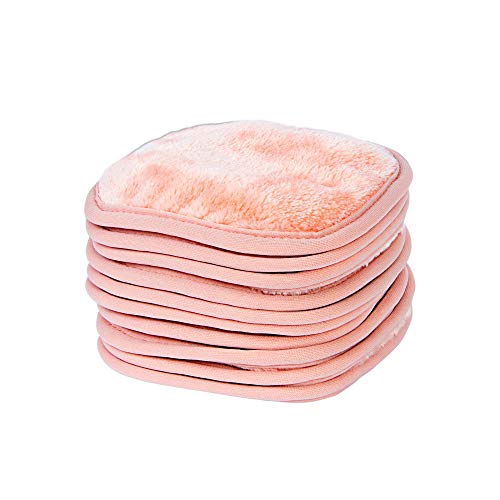


Cotton, bamboo, and microfiber at a glance
Feel and performance vary by brand and weave, so treat this as a general guide and read the listing’s fiber content.
| Material | Typical feel | Possible strengths | Trade-offs |
|---|---|---|---|
| Cotton (terry, flannel, or velour) | Familiar, soft, absorbent | Natural fiber that holds liquid remover well | Can dry slowly and show makeup stains |
| Bamboo-derived fiber | Smooth, often drapey | Gentle texture many people find comfortable | Fiber processing varies, so check the label |
| Microfiber | Fine, grippy, slightly textured | Often chosen for grabbing makeup residue | Synthetic material, and some people find it less soft |
| Blends | Depends on the mix | May balance softness and durability | Care needs can differ, so follow the label |
Decision path: match the pad to your routine


Path 1: Light, everyday makeup
Soft cotton or bamboo-derived pads with micellar water or a gentle cleanser usually fit.
Path 2: Heavy or long-wear makeup
Textured microfiber or a darker pad plus an oil or balm remover. Expect some staining.
Path 3: Easily irritated skin or eyes
Smooth, tightly woven, low-lint pads. Patch-test first and keep your routine simple.
What to look for before you buy
Features and what they mean
Product pages love vague words. This table translates the details that actually affect daily use.
| Feature | Why it matters | What to check |
|---|---|---|
| Size and shape | Small pads reach the lash line, and larger ones cover cheeks faster | Listed dimensions and whether sizes are mixed |
| Layers or backing | A textured side and a soft side suit different tasks | Which side is meant for which job |
| Edge stitching | Loose edges fray and can shed fibers near the eyes | Reinforced, even stitching in photos and reviews |
| Fiber content | Drives feel, drying time, and care rules | Exact fiber percentages, not just “eco” wording |
| Laundry bag included | Keeps small pads from disappearing in the machine | A mesh bag with a secure closure |
| Set size | A bigger set means longer between laundry loads | Enough pads for your routine plus a spare |
Pre-buy checklist
☐ Fiber content is clearly listed
☐ Care instructions are stated
☐ Edges look finished, not raw
☐ Size suits eyes and cheeks
☐ You can launder them weekly
Pad types worth browsing on Amazon
We have not verified individual listings for this guide, so the links below are Amazon searches for each type rather than endorsements of a specific product. Check the current fiber content, care instructions, set size, and recent reviews before you buy.
Organic cotton pads
A good starting point if you like the feel of traditional cotton rounds.
Trade-off: can dry slowly and show stains.
Bamboo-derived pads
Often smooth and soft, which suits people who want a gentle feel.
Trade-off: fiber processing and quality vary by brand.
Microfiber pads
Worth a look if you wear long-wear makeup and want extra grip on residue.
Trade-off: synthetic, and the texture may feel less soft.
Sets with a laundry bag
Convenient if you plan to wash the pads with regular laundry.
Trade-off: a bag does not make up for weak stitching, so check the pads too.
Who should be careful
Reusable pads suit many people, but a few situations call for extra thought.
| Situation | Why to take care | Sensible step |
|---|---|---|
| Reactive or sensitive skin | Rough fabric or detergent residue may bother you | Choose smooth pads, rinse well, and patch-test |
| Contact lens wearers | Stray fibers near the eye can be annoying | Remove lenses first and pick low-lint pads |
| Eye or skin conditions, or recent procedures | Your skin and eyes may need a specific routine | Ask your clinician or eye professional first |
| Shared bathrooms | Pads can get mixed up or shared | Use separate sets and mark them |
| Little laundry access | Pads can turn musty if washing slips | Disposables may be more realistic |
How to use reusable pads
The technique is the same as with disposable rounds, with one habit that helps: put the remover on the pad rather than on your face. That keeps product away from your eyes and makes it easier to control how much you use.
Step timeline: a simple removal routine
Step 1: Prepare
Wash your hands and take out contact lenses. Check that the pad is clean and dry.
Step 2: Load
Saturate the pad with your remover. A damp pad lifts better than a dry one.
Step 3: Hold, then wipe
Rest the pad on closed eyes for a few seconds, then wipe softly. Avoid rubbing.
Step 4: Rinse and follow up
Rinse the pad, then continue with your usual cleanser or skincare.
Matching the pad approach to your makeup
Different makeup behaves differently, so one approach will not fit everything.
| Makeup | Pad approach | Heads-up |
|---|---|---|
| Everyday foundation or powder | Soft pad with micellar water or cleanser | Use a fresh area of the pad as you go |
| Mascara and eyeliner | Smaller pad, held in place before wiping | Waterproof formulas may need an eye-safe remover made for them |
| Lipstick and lip tint | Dedicated, darker pad | Pigments can stain light pads |
| Long-wear or heavy coverage | Balm or oil remover first, then a second pad | Oils can leave residue in fabric, so wash thoroughly |
Washing and care
Care is what makes or breaks the whole idea. A pad that holds old makeup and moisture is no better than a dirty washcloth. Always follow the manufacturer’s care label, since fabrics differ.
Care habits versus common mistakes
These are general practices, and your pad’s label takes priority.
| Care step | Better habit | Common mistake |
|---|---|---|
| After use | Rinse out the worst of the makeup | Leaving damp pads in a heap |
| Collecting | Keep used pads in a breathable mesh bag | Sealing damp pads in a closed container |
| Laundering | Wash in a mesh bag with detergent, as the label allows | Tossing loose pads in with heavy items |
| Products to avoid | Skip fabric softener unless the label allows it, since it can coat fibers | Using bleach on a pad that does not permit it |
| Drying | Dry fully before storing | Stacking pads that are still damp |
Care loop: use, rinse, wash, dry, repeat
Right after use
Rinse, wring gently, and drop the pad into a mesh bag.
At laundry time
Wash the whole bag. Many people do this weekly, or sooner if pads smell stale.
After washing
Dry completely, then store somewhere clean, dry, and airy.
Safety Note
Stop using a pad or remover if you notice burning, stinging, redness, swelling, or other irritation. Do not use a frayed or damaged pad near your eyes, and do not share pads with anyone, since shared items can pass germs around.
If you have an eye or skin condition, have recently had eye or facial surgery, or have had a reaction to a product, check with your clinician or eye professional before choosing a routine.
Troubleshooting common problems
Problem, likely cause, and next step
Most issues come down to laundry habits or a mismatch between pad and remover.
| Problem | Likely cause | Next step |
|---|---|---|
| Stains that won’t lift | Pigment in the fabric | Treat as normal, or move to a darker pad |
| Pad feels stiff or repels liquid | Softener or oil residue | Skip softener and re-wash with detergent |
| Musty smell | Trapped moisture | Wash again, dry fully, and replace if it persists |
| Lint on the skin | New pad or worn fibers | Pre-wash new pads and retire fraying ones |
| Makeup smears instead of lifting | Too little remover or a loaded pad | Use more remover and switch to a clean pad section |
| Skin feels irritated | Rough fabric, detergent residue, or the remover itself | Stop, change one thing at a time, and ask a clinician if it continues |
Good fit versus maybe skip
Good fit if you…
- Already do laundry weekly
- Use removal pads daily
- Want less single-use waste
Maybe skip if you…
- Rarely have time to wash them
- Share a bathroom casually
- Wear a lot of waterproof makeup
Keep or replace: a quick check
Keep using
Edges intact, fabric still absorbs, and a fresh scent after washing. Light staining alone is not a reason to retire a pad.
Time to replace
Frayed edges, thin patches, a smell that survives washing, or irritation you can trace to that pad.
Frequently asked questions
How many reusable pads do I need?
Enough to cover the days between washes, plus a spare so you never reuse a damp pad. If you remove makeup twice a day or use separate pads for eyes and face, plan for a larger set.
Can I use reusable pads with oil-based removers?
Many people do, but oils can leave residue and stain fabric. Wash with detergent as the care label allows, and skip fabric softener so the fibers stay absorbent.
Are reusable pads better than disposable cotton rounds?
They are a different trade-off, not a clear winner. Reusables cut single-use waste but need regular laundry, while disposables are simpler and skip the washing step.
Can I use them around my eyes?
Many people do. Choose smooth, low-lint pads, keep them clean, and stop if your eyes feel irritated. If you have an eye condition or have had eye surgery, check with your eye professional first.
Can I wash them with my regular laundry?
Often yes, inside a mesh bag, but follow the manufacturer’s label. Avoid fabric softener and bleach unless the label says they are fine.
How long do reusable pads last?
It depends on the fabric, stitching, and how often you wash them. Replace a pad when it frays, thins, keeps a stale smell after washing, or seems linked to irritation.
Final Thoughts
The best reusable cotton pads for makeup removal are the ones you will actually wash. Match the material to your makeup, pick tightly stitched pads, and build laundry into your routine before you buy a big set.
Reusables will not suit every skin type, schedule, or makeup style, and they are no substitute for a remover that suits you. Patch-test, stop if anything irritates your skin or eyes, and check with a healthcare professional if you have a skin or eye concern.