Shiatsu is a Japanese bodywork therapy where a trained practitioner applies sustained, perpendicular pressure to specific points along the body's meridians using thumbs, palms, elbows, knees, and sometimes feet. If you've ever wondered how is shiatsu massage performed in a real clinic setting, the short answer is this: fully clothed, on a futon mat on the floor, with no oils, working the receiver's breath and body weight rather than rubbing or kneading muscle.
The practice was formally codified in Japan and has been recognised by the Japanese Ministry of Health, Labour and Welfare since 1955, with licensed practitioners completing a minimum of 2,200 training hours as of 2026. In our research across clinical shiatsu schools and the Shiatsu Society UK, the sequence and technique stay remarkably consistent across styles. Here's what actually happens, from the floor mat to the final stretch.
What Shiatsu Massage Actually Is (and Where It Comes From)
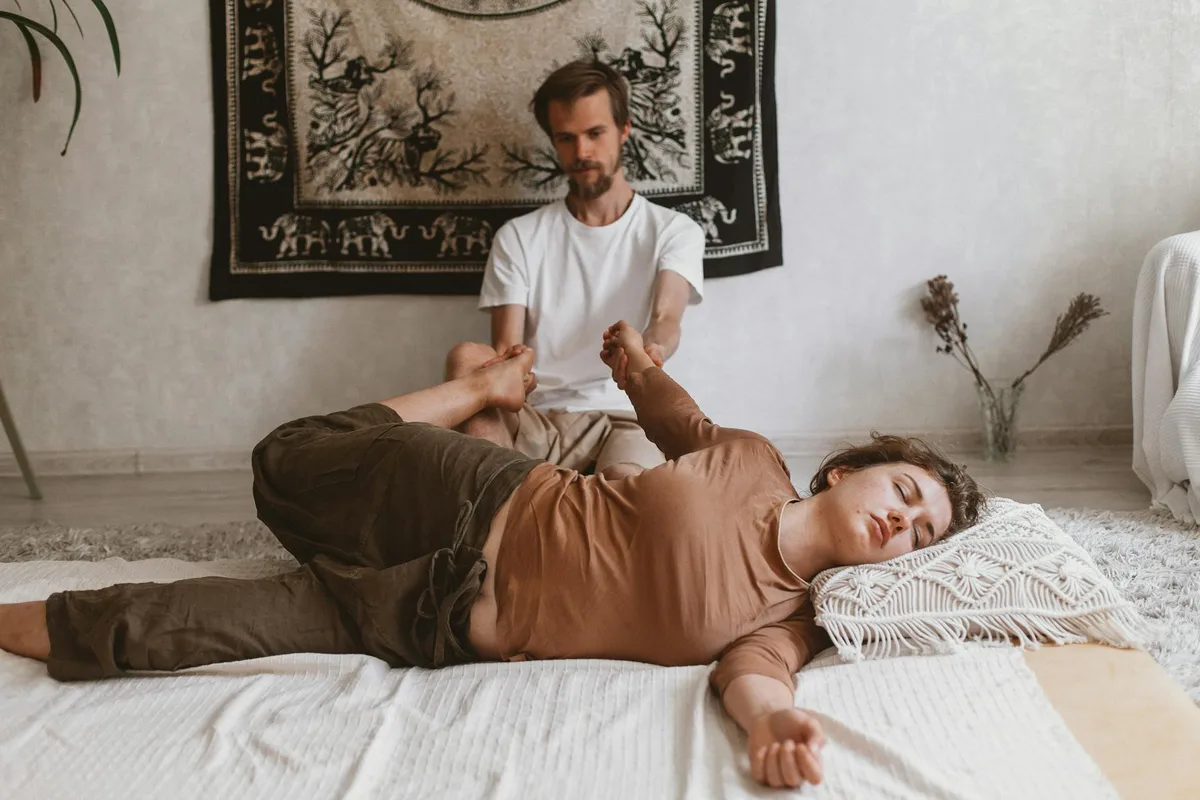
Image source: Pexels / Diana Light (Pexels License)
Shiatsu (指圧) literally translates to "finger pressure," and the modern form was developed by Tokujiro Namikoshi in the early 1900s, drawing on the older Japanese tradition of anma. A second major lineage, Zen Shiatsu, was shaped by Shizuto Masunaga in the 1970s and added deeper diagnostic work through the hara (abdomen) and extended meridian theory.
What makes shiatsu distinct from generic massage is the intention behind the touch. The practitioner isn't trying to break up muscle tissue or flush lactic acid. They're applying steady, perpendicular pressure to tsubo (acupressure points) along the body's 12 main meridians to influence the flow of ki (vital energy), regulate the nervous system, and release holding patterns in the fascia.
Three lineages dominate the field today:
- Namikoshi Shiatsu, focused on anatomy, neuromuscular points, and clinical application.
- Zen Shiatsu (Masunaga), focused on meridian theory, kyo/jitsu assessment, and energetic balance.
- Clinical or medical shiatsu, blended with Western anatomy and used inside integrative health clinics.
You'll see all three practiced across Japan, the UK, Italy, Germany, and North America, with subtle variations in sequence but the same core technique.
Why Shiatsu Has to Be Seen, Not Just Described
Reading about shiatsu without seeing it leaves most people picturing the wrong thing. The hand shape, the angle of the practitioner's spine, and the way pressure transfers through stacked joints aren't things words can fully convey. A still photograph of a thumb pressed perpendicular to the spine, with the practitioner's shoulders directly above their hand, communicates more in two seconds than three paragraphs of description.
Visuals matter for four specific reasons:
- Hand position. The thumb stays straight, the pad (not the tip) makes contact, and the other fingers rest passively on the body.
- Body alignment. The practitioner's centre of gravity sits directly over the contact point, so pressure comes from bodyweight, not arm strength.
- Meridian pathways. Lines like the Bladder meridian run along the back in two parallel channels, and getting the placement wrong by even a couple of centimetres changes which point you're stimulating.
- Receiver positioning. Supine, prone, side-lying, and seated postures each unlock different meridians, and the transitions are part of the choreography.
When you watch a session, the rhythm reveals itself. Pressure goes in slowly, holds, releases slowly. Nothing is rushed.
The Setup Before a Single Point Is Pressed
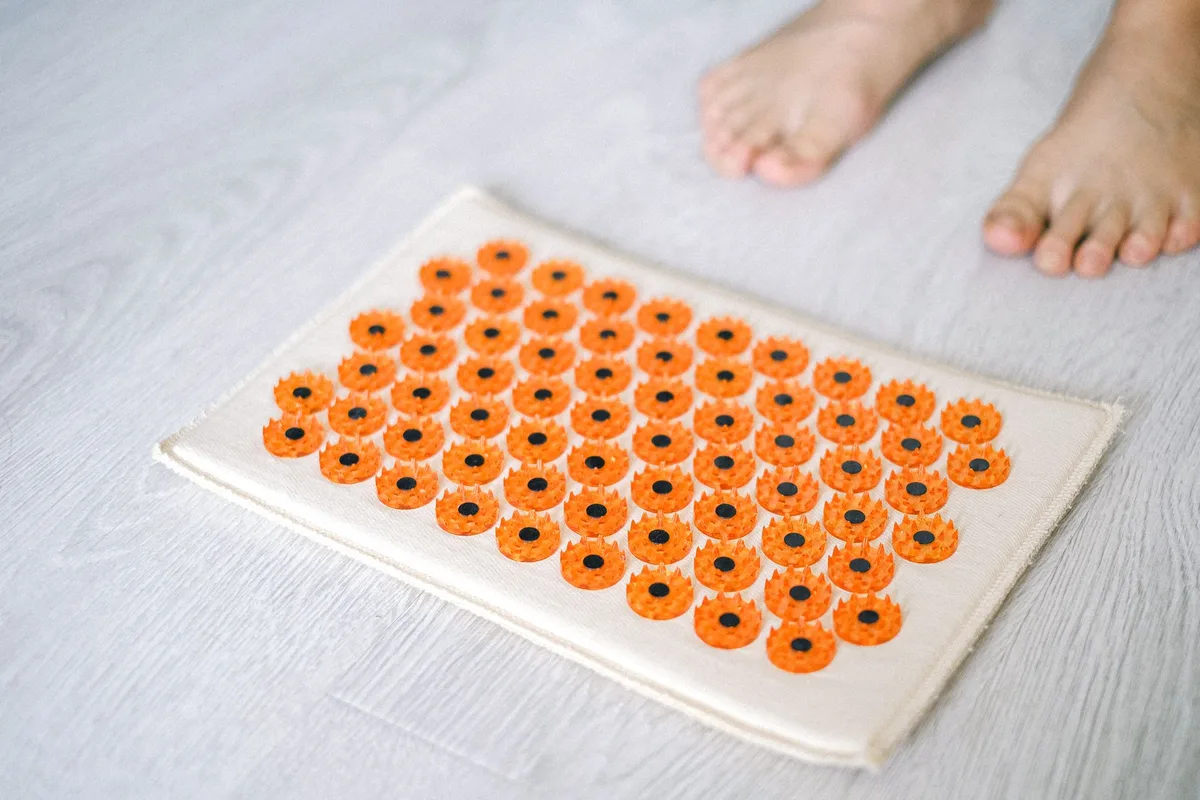
Image source: Pexels / Anna Shvets (Pexels License)
A traditional shiatsu session begins long before the first contact. The room is quiet, warm, and usually dim. There's a futon mat on the floor (tatami in classical settings), a small pillow or bolster, and a clean cotton sheet. No massage oil, no table, no draping required.
Clothing, Floor Mat, and Room Conditions
The receiver stays fully clothed throughout. Loose cotton is ideal because it lets the practitioner feel underlying tissue and apply pressure without slip. Tight jeans, zippers, belts, and underwire fight against the work and create pressure points where you don't want them. Many clinics provide loose pyjama-style clothing on arrival.
Room temperature matters more than people expect. A cold room makes muscles guard, and shiatsu depends on the receiver letting go between holds. Most practitioners aim for around 22 to 24°C.
The Intake and Hara Assessment
Before bodywork begins, the practitioner runs an intake covering sleep, digestion, stress, injuries, medications, and the chief complaint. In Zen Shiatsu, this is followed by a hara assessment, where the practitioner gently palpates eight zones on the abdomen to read which meridians are kyo (empty or under-energised) and which are jitsu (full or over-energised). Namikoshi-trained practitioners may assess through the back instead, scanning paraspinal tone and reflex points.
Either way, this reading shapes the session. It tells the practitioner which meridians to tonify, which to sedate, and which areas to spend extra time on.
How a Practitioner Uses Their Body, Not Their Strength
This is the part most people get wrong when they imagine shiatsu. Good shiatsu is almost effortless to watch. The practitioner leans, the pressure happens. There's no straining, no pushing, no flexing of forearm muscles.
Thumb, Palm, Elbow, Knee, and Foot Techniques
Different tools suit different areas of the body.
| Tool | Best Used On | Why It Works |
|---|---|---|
| Thumb pad (oyayubi) | Small, precise points, neck, hands, face | Accurate placement on tsubo |
| Palm (tenohira) | Back, abdomen, large limbs | Diffuse, calming pressure |
| Elbow | Buttocks, deep paraspinal tissue | Concentrated deep pressure |
| Knee | Hamstrings, glutes (side-lying) | Heavy, stable, hands-free |
| Foot (barefoot shiatsu) | Back, legs, large muscle groups | Maximum bodyweight transfer |
The "Mother Hand and Messenger Hand" Principle
One of the most beautiful concepts in shiatsu is the two-hand relationship. One hand (the mother hand) rests still on the body, listening, providing reassurance and a sense of containment. The other hand (the messenger hand) does the active pressing.
The mother hand never leaves the body during a sequence. It keeps the receiver's nervous system grounded, so the messenger hand's pressure lands on a relaxed system instead of a braced one. Strip this out and shiatsu becomes mechanical poking. Keep it in and it becomes a conversation.
Perpendicular Pressure and the Bodyweight Lean
Pressure must go in at 90 degrees to the body surface at the contact point. Angled pressure slips off the tsubo, bruises tissue, and tells the body to defend rather than open.
The practitioner achieves this by stacking joints. Shoulders over elbow, elbow over wrist, wrist over thumb. Then they lean. Bodyweight does the work, often transferring the equivalent of 5 to 15 kg of pressure through a single thumb.
Arm strength is barely used, which is why a well-trained shiatsushi can work for hours without fatigue.
The Meridian Map: Where Pressure Actually Goes
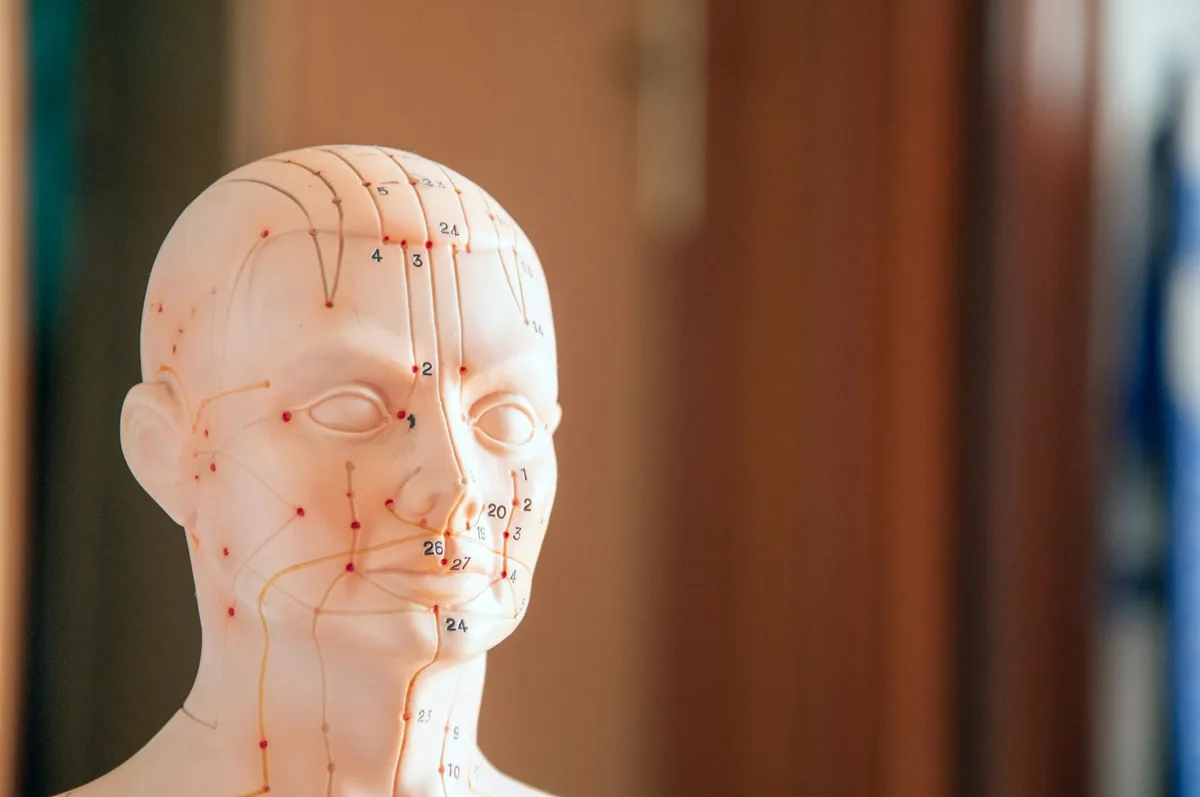
Image source: Pexels / Juan Antonio García-Filoso Rodríguez (Pexels License)
Pressure in shiatsu isn't random. It follows the meridian system inherited from traditional East Asian medicine, the same network used in acupuncture.
The 12 Main Meridians and Key Tsubo
The 12 main meridians are paired (left and right) and named after organ systems: Lung, Large Intestine, Stomach, Spleen, Heart, Small Intestine, Bladder, Kidney, Pericardium, Triple Heater, Gallbladder, and Liver. Each runs a specific pathway through the body, surfacing at hundreds of tsubo where the practitioner can influence the flow.
A handful of points appear in almost every session:
- GB21 (Jianjing) at the top of the trapezius, for shoulder tension.
- BL23 (Shenshu) along the lower back, for kidney support and lumbar holding.
- ST36 (Zusanli) below the knee, for digestion and overall vitality.
- LI4 (Hegu) in the webbing of the hand, for headaches (avoided in pregnancy).
- CV12 (Zhongwan), mid-abdomen, for digestive balance.
Kyo and Jitsu, Reading Empty and Full Energy
This is where Zen Shiatsu adds its signature layer. Kyo regions feel hollow, cold, or unresponsive under the hand. Jitsu regions feel tight, hot, or reactive. The practitioner tonifies kyo with slow, deep, sustained holds and sedates jitsu with lighter, dispersing pressure.
The choice of where to spend session time comes directly from this reading. A back that looks tense to an outside observer might actually have a kyo lower back compensated by a jitsu upper back, and treating only the visible tension would miss the cause.
Step-by-Step: What a Full Shiatsu Session Looks Like
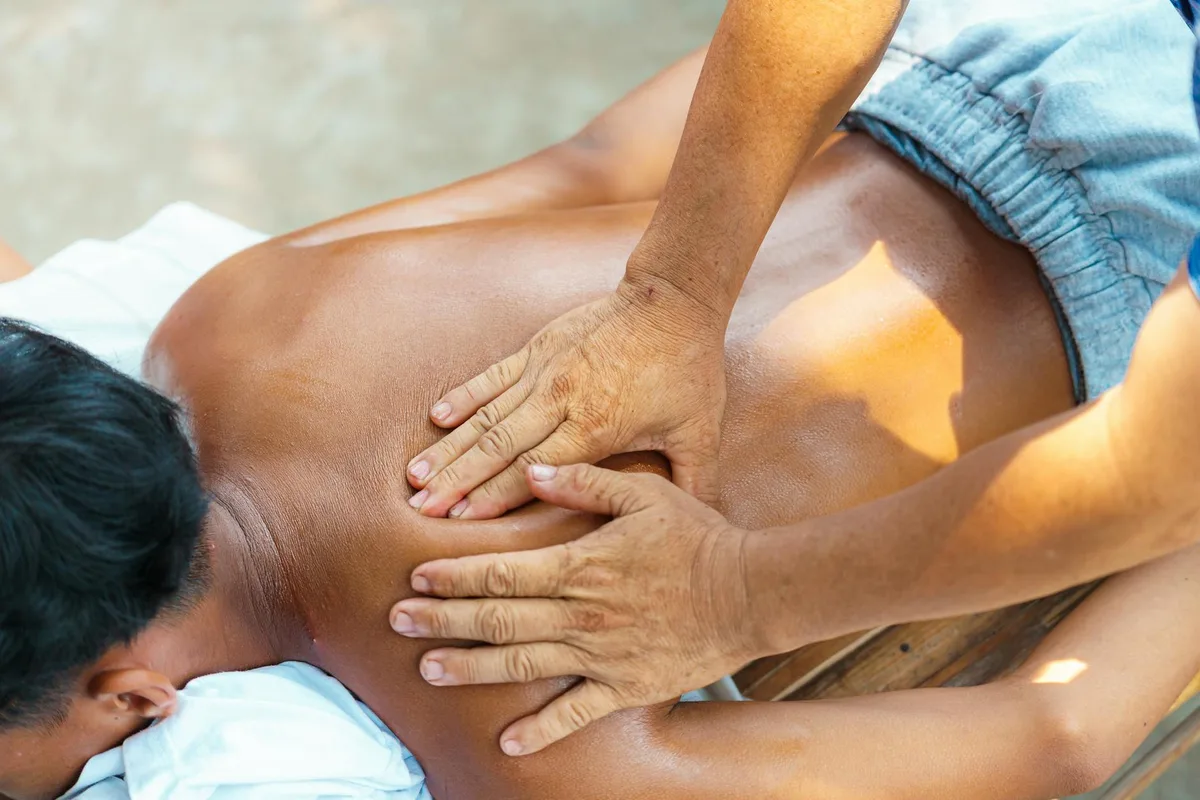
Image source: Pexels / Nothing Ahead (Pexels License)
A standard session runs 45, 60, or 90 minutes, and the practitioner moves through the body in a deliberate order. The sequence shifts the receiver between four positions: supine (face up), prone (face down), side-lying, and seated. Each position opens a different set of meridians.
Opening on the Legs and Hips
Most practitioners start with the receiver lying supine. Palm pressure runs down the front of both legs along the Stomach and Spleen meridians, followed by gentle rotations of the hip joints and knees. This warms the system and signals the body that the work has begun.
Side-lying then opens the Gallbladder meridian along the outer leg and hip. Elbow work along the iliotibial band and glutes lands here, when it's needed.
Working the Back, Shoulders, and Neck
The receiver turns prone, and the practitioner moves to the back. Palm pressure travels down either side of the spine along the Bladder meridian, followed by thumb work into the paraspinal points and shoulder blade region. Thumb walking along BL13 to BL52 hits the back-shu points that correspond to each internal organ.
The neck is worked carefully. Most practitioners turn the head gently to one side, support it with a mother hand, and press along the trapezius and sub-occipital region with the messenger thumb.
Arms, Hands, and Head Sequence
Back to supine. The arm is lifted, rotated, and worked from shoulder to fingertip along the Lung, Heart, Pericardium, Large Intestine, Small Intestine, and Triple Heater meridians. Each finger gets a small traction and rotation.
The head finishes with pressure along the Gallbladder line around the temples, ending at GV20 at the crown.
Returning to the Hara to Close
The session closes where it began: at the abdomen. Slow, deep palm circles over the hara settle the nervous system, and a final stillness of 30 to 60 seconds gives the receiver time to integrate before sitting up.
How Long Points Are Held and How Deep the Pressure Goes
Holding time and pressure depth are the two variables a practitioner adjusts on the fly. They aren't fixed numbers in a textbook. They're a response to what the tissue is telling the hand.
Standard holding times by intention:
| Intention | Holding Time | Pressure Quality |
|---|---|---|
| General sequence | 3 to 5 seconds per point | Medium, steady |
| Tonification (kyo) | 5 to 30 seconds | Slow in, deep, sustained |
| Sedation (jitsu) | 1 to 3 seconds | Lighter, dispersing |
| Diagnostic palpation | 1 to 2 seconds | Listening, no commitment |
Depth is calibrated by the receiver's tissue tone, not by force. A trained practitioner waits at the surface, feels the muscle accept the pressure, then sinks in only as far as the tissue allows. Pushing past that line creates guarding and bruising, which defeats the purpose.
In aggregate, around 5 to 15 kg of bodyweight transfers through a single thumb during a moderate hold on the back. That number drops sharply on the neck, face, and abdomen, where pressure is measured in ounces rather than kilograms.
The breath sets the rhythm. Pressure goes in on the receiver's exhale and releases as they inhale. This pairing is what makes shiatsu feel like breathing with another person rather than being worked on.
Styles You'll Encounter: Namikoshi, Zen, and Clinical Shiatsu
Three lineages cover the majority of what's practiced worldwide as of 2026. The technique looks similar from the outside, but the philosophy underneath shapes which points get worked and why.
Namikoshi Shiatsu is the most widely taught style in Japan and the only one explicitly licensed by the Ministry of Health. It emphasises anatomy, neuromuscular reflex points, and clinical reasoning, and tends to feel firmer and more structured. If you book a session in a Tokyo clinic, this is usually what you'll get.
Zen Shiatsu (Masunaga lineage) is more widely practiced in Europe and North America. It uses the hara as the primary diagnostic tool, works extended meridian pathways, and emphasises the energetic quality of touch. Sessions feel slower, more meditative, and often more intuitive.
Clinical or medical shiatsu is a Western adaptation that integrates orthopaedic assessment, joint mobilisation, and rehabilitation goals. It's common inside integrative pain clinics and physiotherapy practices, and sessions may be shorter and more targeted to a specific complaint.
Other branches you may run into include barefoot shiatsu (the practitioner uses their feet for large-area pressure), Watsu (shiatsu performed in warm water), and Sotai (paired stretching and movement therapy). All trace back to the same finger-pressure root.
Shiatsu vs Acupressure, Thai Massage, and Swedish Massage
These bodywork styles get blurred together constantly, and the differences matter when you're booking a session.
| Modality | Position | Clothing | Oil | Technique Core |
|---|---|---|---|---|
| Shiatsu | Floor mat | Loose, fully clothed | None | Sustained perpendicular pressure on meridians |
| Acupressure | Table or chair | Clothed | None | Targeted point pressure, often self-applied |
| Thai Massage | Floor mat | Clothed | None | Deep stretching, rocking, sen line pressure |
| Swedish Massage | Table | Undressed, draped | Yes | Effleurage, petrissage, gliding strokes |
| Deep Tissue | Table | Undressed, draped | Yes | Slow strokes into deeper muscle layers |
| Tui Na | Table | Clothed | Sometimes | Pressing, rolling, joint manipulation |
Shiatsu vs acupressure. Acupressure is essentially the point-pressing component of shiatsu lifted out and used on its own, often by the receiver themselves. Shiatsu is the full system: assessment, sequence, stretching, breath synchronisation, and meridian work.
Shiatsu vs Thai massage (Nuad Boran). Both happen on a mat with the receiver clothed. Thai work centres on long passive stretches and pressure along sen lines, with a lot of dynamic movement. Shiatsu uses stretches, but the heart of the work is stillness on tsubo.
Shiatsu vs Swedish. These two share almost nothing in common except the word "massage." Swedish uses oil, flowing strokes, and bare skin to move blood and lymph. Shiatsu uses sustained pressure through clothing to influence meridian flow and the nervous system.
Who Shiatsu Works Best For
Shiatsu isn't a niche modality. It serves a surprisingly broad range of people, and aggregate clinical reports point to a few groups who tend to respond particularly well.
Strong candidates for shiatsu:
- Office workers carrying neck, shoulder, and lower back tension from prolonged sitting.
- People with chronic stress, anxiety, or trouble winding down at night.
- Sleep-disrupted clients, including those with mild insomnia patterns.
- Athletes wanting recovery work that improves range of motion without the soreness of deep tissue.
- Elderly clients who need gentle, non-strenuous bodywork.
- Pregnant women in the second and third trimester, working with a perinatal-trained shiatsushi.
- Anyone uncomfortable with undressing or with oil-based massage.
- People with digestive sluggishness, IBS-pattern symptoms, or low-grade fatigue.
Less suitable, or contraindicated entirely:
- Acute fever, infection, or recent surgery.
- Deep vein thrombosis, uncontrolled hypertension, severe osteoporosis.
- Active flare-ups of inflammatory conditions on the area to be worked.
- First-trimester pregnancy without a specifically perinatal-trained practitioner.
- Cancer patients outside of oncology-trained bodywork settings.
The practical filter is simple. If you want to feel calmer, sleep better, and move easier without taking your clothes off or being slathered in oil, shiatsu is probably the right room to walk into. If you want deep muscle stripping or a sports rub, look elsewhere.
Mistakes That Ruin a Shiatsu Session
Even with a trained practitioner, a few habits on either side of the work can flatten the results. Most are simple to fix once you know what to watch for.
On the practitioner side:
- Using arm strength instead of bodyweight. Pressure feels sharp, the practitioner fatigues, and depth is inconsistent.
- Non-perpendicular contact. Angled pressure slides off the tsubo and can bruise surface tissue.
- Skipping the mother hand. Pressure delivered without a grounding contact reads as poking rather than treatment.
- Rushing the breath. Pressing on an inhale or releasing too quickly breaks the parasympathetic rhythm.
- Misidentifying tsubo location. A point a few centimetres off the mark stimulates the wrong meridian.
On the receiver side:
- Wearing jeans, leggings with thick waistbands, or zippered tops.
- Eating a heavy meal in the 90 minutes before treatment, which makes hara work uncomfortable.
- Talking through the entire session, which keeps the nervous system in alert mode.
- Booking a single session and expecting cumulative results that take 4 to 8 visits to land.
- Drinking caffeine or alcohol immediately before treatment.
The most common booking mistake is assuming shiatsu will feel like deep tissue. It doesn't. If you finish a session feeling lighter rather than worked over, that's the point.
Safety Rules, Contraindications, and When to Skip a Session
Shiatsu is generally low-risk, but it isn't risk-free. There are clear situations where the work should be modified, delayed, or skipped entirely.
Absolute contraindications (do not book):
- Acute fever or active infectious illness.
- Deep vein thrombosis (DVT) or recent blood clots.
- Recent surgery in the area to be worked.
- Active bleeding disorders or anticoagulation that creates bruising risk.
- Unstable cardiovascular conditions.
Relative contraindications (book only with a specialised practitioner):
- First-trimester pregnancy. Specific points such as SP6 (Sanyinjiao) and LI4 (Hegu) are avoided throughout pregnancy because of their association with uterine activity.
- Cancer treatment. Work should be done only by a practitioner with oncology massage training.
- Severe osteoporosis. Deep paraspinal pressure and elbow work need to be replaced with palm-only contact.
- Uncontrolled hypertension. Sedating sequences are preferred, with the receiver monitored.
- Recent fractures or joint replacements within the past 12 months.
Side effects are usually mild. Some receivers feel sleepy, lightly sore, or emotionally tender for a day after treatment, which most schools consider a normal release response. If pain, bruising, or symptoms intensify beyond 48 hours, follow up with a GP and inform the practitioner.
Always book with someone properly trained. In Japan, look for the national anma-massage-shiatsu-shi license. In the UK, check the Shiatsu Society UK register. Across Europe, the European Shiatsu Federation maintains member-school listings.
What Happens After the Session Ends
The hour after a shiatsu session is part of the treatment. How you handle it shapes how much of the work actually sticks.
Most practitioners give the same short list of aftercare guidance:
- Drink water. Pressure and stretching mobilise fluid through the fascia and lymph, and rehydration helps clear it.
- Skip alcohol for the rest of the day. It blunts the nervous system reset and can amplify next-day soreness.
- Don't schedule anything intense for an hour or two. No heavy workouts, no high-stress meetings, no driving long distances if you feel drowsy.
- Eat lightly. A small, warm meal sits better on a freshly worked hara than something heavy and greasy.
- Sleep a little earlier that night. Many receivers report unusually deep sleep on shiatsu nights, especially after a stress-focused session.
A short course of treatment usually goes further than single sessions. For chronic neck and shoulder patterns, aggregate clinic data points to 4 to 8 weekly sessions, then a monthly maintenance rhythm. Acute strain may resolve in 1 to 3 sessions. Stress and sleep work tend to compound over 6 to 12 weeks.
Track changes between sessions. Sleep quality, digestion, afternoon energy, and how easily you fall asleep are the markers most practitioners use, not just whether a sore spot still hurts.
Common Questions About How Shiatsu Is Performed
Do you take your clothes off for shiatsu?
No. Shiatsu is performed fully clothed, and most practitioners ask you to wear loose cotton with no zippers, belts, or thick waistbands. No oil is used, so there's nothing to wash off afterwards.
How long does a shiatsu session last?
Standard sessions run 60 minutes, with 45-minute and 90-minute formats commonly offered. First sessions usually include extra intake time, so book around 75 minutes for an initial visit.
Does shiatsu hurt?
It shouldn't. Well-applied perpendicular pressure feels deep and sustained but not sharp or bruising. Some tsubo on tight areas like the shoulders may feel intense for a few seconds, but pain that makes you brace means the pressure is too much or angled wrong.
Is shiatsu the same as acupressure?
No. Acupressure is the act of pressing specific points and can be self-applied or built into other therapies. Shiatsu is a complete system that includes assessment, a full body sequence, stretching, breath synchronisation, and meridian theory.
How often should you get shiatsu?
For a specific complaint, weekly sessions over 4 to 8 weeks tend to produce the clearest results. For general maintenance, monthly is the most common cadence. Athletes and high-stress workers sometimes book fortnightly.
Can you do shiatsu on yourself?
Yes, through a practice called Do-in, which combines self-applied pressure with stretching and breath work. It's useful between sessions but doesn't replace receiving treatment from a trained shiatsushi, partly because you can't fully relax while delivering pressure to your own body.
Is shiatsu safe during pregnancy?
It can be, but only with a practitioner specifically trained in perinatal shiatsu. The first trimester is treated cautiously, and points such as SP6 and LI4 are avoided throughout pregnancy because of their association with uterine activity.
Why is shiatsu done on the floor?
Floor work lets the practitioner stack their joints directly over the contact point and lean their full bodyweight through the pressure. That's hard to do at table height. The futon mat also makes side-lying and seated transitions easier, and supports the receiver's weight evenly so they can fully relax.