An LED or red light neck massager combines gentle massage with low-level red or near-infrared light. It may support temporary muscle comfort and improve the appearance of fine lines, but results vary and require regular use.
To use one safely, clean the neck, apply a light serum if the device allows it, choose the recommended light setting, and glide it slowly upward for about 5–10 minutes. This guide explains how to select settings, prepare the skin, use the device correctly, and build a practical routine.
Key Takeaways
- Use clean skin and follow the device instructions.
- Apply slow, gentle upward strokes for each session.
- Stop using it if irritation occurs and seek medical advice when needed.
How LED Red Light Therapy and Massage Work
LED light delivers controlled wavelengths to the skin, while massage uses gentle movement or vibration across the treatment area. Light may support collagen activity over time, and massage can improve comfort while helping the device move evenly across the neck.
Red and Near-Infrared Light Basics
Red light commonly uses wavelengths around 630–660 nanometers. Near-infrared light usually falls near 810–850 nanometers and can reach deeper than visible red light. These wavelengths may support cellular activity and collagen production, but they do not instantly tighten loose skin or remove wrinkles.
| Light type | Typical range | Common purpose |
|---|---|---|
| Red light | 630–660 nm | Surface skin support and fine-line care |
| Near-infrared light | 810–850 nm | Deeper tissue exposure and cellular support |
The user should follow the device’s instructions for treatment time and frequency. Many home devices recommend sessions lasting about 5–10 minutes, several times per week. Results vary, and consistent use matters more than longer sessions.
The user should apply the device to clean, dry skin unless the manufacturer gives different instructions. Eye protection may be needed, especially with bright devices. Anyone taking light-sensitive medication or managing a condition affected by light should ask a health professional before use.
Massage Functions and Benefits
A neck massager may use vibration, rolling heads, warming surfaces, or gentle electrical stimulation. These features can help the device glide across the skin, reduce the feeling of muscle tightness, and make a short skincare routine more comfortable. Massage does not replace medical treatment or permanently reshape the neck.
The user should apply a light serum or moisturizer if the product allows it. They should then move the massager slowly upward, starting near the collarbone and moving toward the jaw. Light pressure works best because hard pressing can cause redness, soreness, or skin irritation.
The user should avoid the front-center area of the neck if the device manual warns against it. They should also avoid broken skin, rashes, active infections, and painful areas. Stop the session if burning, swelling, unusual pain, or lasting redness develops.
Choosing the Right Device Settings
The correct settings depend on the device, skin sensitivity, and treatment goal. Lower intensity, gentle massage, moderate heat, and short sessions help users test comfort before increasing treatment time or strength.
Selecting Light Intensity
Users should begin with the lowest red-light intensity listed in the manual, especially during the first few sessions. Stronger light does not always provide better results, and excessive exposure may cause warmth, redness, or irritation.
Red light usually targets surface skin concerns, while near-infrared light reaches deeper tissue. Users should select only wavelengths supported by the device and avoid changing settings beyond the manufacturer’s instructions.
| Need | Recommended starting choice |
|---|---|
| Sensitive skin | Lowest intensity |
| Skin care | Red-light mode |
| Muscle comfort | Red or near-infrared mode |
| First use | Short session at low intensity |
The device should rest evenly against the neck without pressing hard. Users should stop if they notice pain, burning, swelling, or lasting redness. People who take light-sensitive medicines or have a condition affected by light should seek medical advice before use.
Adjusting Heat and Massage Modes
Heat should start at the lowest comfortable level. A mild, even warmth can feel relaxing, but the neck has delicate skin and important structures. Users should not use a setting that feels hot, painful, or causes marked redness.
Vibration or massage should also begin on its lowest setting. The device should glide gently over the sides and front of the neck, without pressing directly on the throat, spine, or areas with swelling. Users should avoid holding the device over one spot for too long.
People with sensitive skin may use light therapy without heat or massage at first. Once the skin responds well, they can add one feature at a time. This makes it easier to identify which setting causes irritation or discomfort.
Setting Session Duration
Users should follow the device manual because session limits differ by model. If the manual gives a range, a first session of 5 to 10 minutes provides a cautious starting point. The user can increase the duration only when the skin remains comfortable.
Most people should avoid using the device more often than the instructions allow. Longer or more frequent sessions may increase irritation without improving results.
The device should be used on clean, dry skin unless the manual permits a product underneath it. After each session, users should check the neck for persistent redness, unusual warmth, or discomfort. They should stop treatment and seek medical advice if these symptoms continue.
Preparing for a Treatment Session
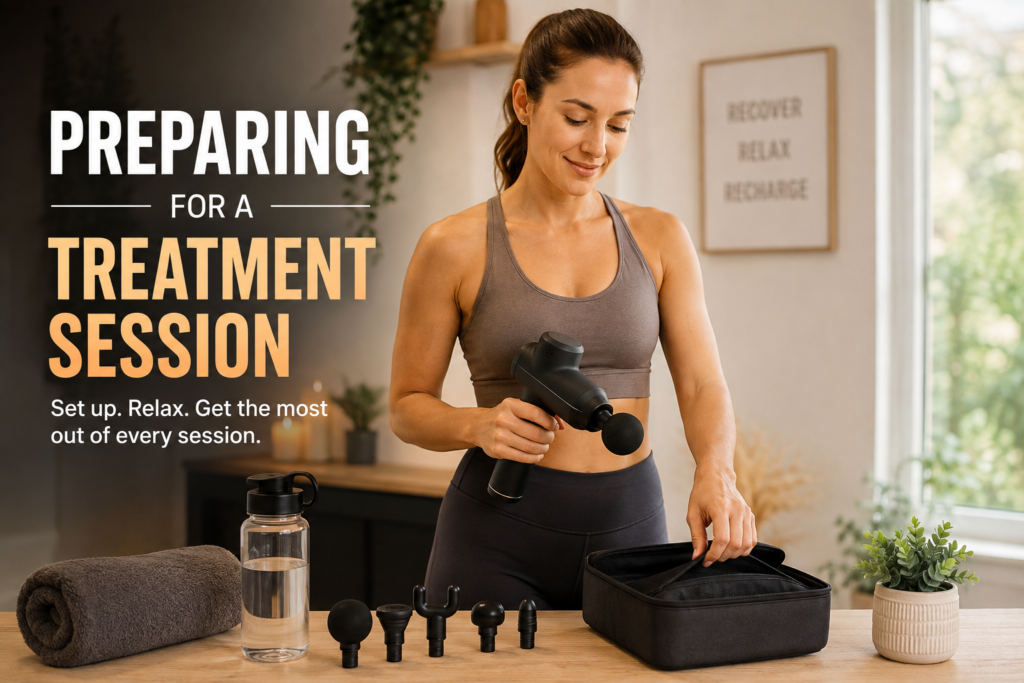
A safe session starts with a working device, clean skin, and a comfortable position. The user should follow the device manual, protect sensitive areas, and avoid applying products that the manufacturer does not approve before treatment.
Checking Device Safety
The user should inspect the massager before each session. They should check the casing, LED panel, charging port, cable, and controls for cracks, loose parts, exposed wires, or unusual heat. A damaged device should not touch the skin.
The user should confirm that the device is designed for the neck and review its recommended session length, light settings, and contact method. Red and near-infrared modes are commonly used for skin care, but the manual should determine the correct setting and distance.
They should not use the device over the front of the throat, thyroid area, open wounds, active rashes, or infected skin unless a health professional approves it. People with light-sensitive conditions, those taking photosensitizing medicine, or those with implanted medical devices should seek medical advice first.
Positioning the Massager
The user should sit upright in a supported position, such as in a chair with the shoulders relaxed. Good lighting helps the user see the device and keep it in the intended treatment area.
For a handheld massager, they should place the LED surface flat against the side or back of the neck, following the manual’s placement instructions. Slow upward strokes may help distribute contact evenly, but the user should avoid pressing hard or moving across the throat.
A wearable device should fit securely without feeling tight. The LEDs should face the skin, and the user should keep the device away from the eyes unless it includes suitable eye protection. The following checks can help:
| Check | Safe position |
|---|---|
| Shoulders | Relaxed and supported |
| Device | Firm contact without painful pressure |
| Neck area | Side and back of the neck, as directed |
Cleaning the Skin and Device
The user should wash the neck with a mild cleanser and pat it dry. Clean, dry skin helps the light reach the surface and reduces the chance that oil, makeup, or dirt will transfer onto the device.
Unless the manufacturer gives different instructions, the user should avoid applying creams, oils, makeup, or strong treatment products before an LED session. Some devices require a water-based serum, while others work only on bare skin, so the manual should control this choice.
After use, the user should turn off and unplug the massager before cleaning it. A soft, slightly damp cloth can remove residue from the LED surface. The device should not be soaked, sprayed directly, or cleaned with harsh chemicals unless the manufacturer permits them. The user should let it dry fully before storage.
Using the Massager Correctly
Clean, dry skin helps the device glide smoothly and keeps dirt from collecting on the treatment head. Slow upward movements, light pressure, and short sessions help reduce irritation while allowing the LED light to reach the skin.
Starting With Gentle Settings
The user should begin with the lowest vibration, massage, or heat setting. If the device offers several light colors, red or near-infrared light usually suits skin-care routines, but the user should follow the device manual for approved settings and timing.
The user should apply a thin, water-based serum if the manual allows it. Thick oils can make the device harder to control, while some products may irritate skin when combined with light or heat.
A session often lasts 5–10 minutes, unless the manufacturer gives different instructions. The user should start with two or three sessions per week and increase frequency only if the skin remains comfortable. Redness, burning, swelling, or lasting tenderness means the user should stop.
Targeting the Neck and Upper Shoulders
The user should keep the device on the fleshy sides and front of the neck, using slow strokes that move upward toward the jaw. Gentle passes can also cover the upper shoulder muscles, where tension often collects.
The device should not press directly on the throat, windpipe, or the bony front of the neck. It should also stay away from open cuts, rashes, infected skin, and swollen areas.
| Area | Recommended movement | Caution |
|---|---|---|
| Side of the neck | Move upward toward the jaw | Use light pressure |
| Front of the neck | Follow the device manual | Avoid the throat and windpipe |
| Upper shoulders | Use slow passes over muscle | Stop if pain increases |
The user should avoid holding the massager in one spot for a long time. Moving it steadily helps limit heat and pressure in a single area.
Maintaining Comfortable Contact
The treatment head should remain flat against the skin without squeezing or dragging it. The user should use enough contact for the device to work, but not enough to cause pain, pulling, numbness, or strong heat.
A mirror can help the user keep the device in the correct position. The user should check the skin during and after treatment, especially during the first few sessions.
The device should be cleaned according to its instructions after each use. The user should keep the charging port dry and avoid using the device while it is plugged in unless the manual specifically permits it. People with light-sensitive conditions, implanted electronic devices, or medicines that increase light sensitivity should seek medical advice before use.
Creating a Consistent Routine
A regular schedule helps users track how their skin and neck muscles respond to treatment. Short sessions, safe device settings, and gentle stretching can support a practical routine without overworking the skin or muscles.
Recommended Treatment Frequency
Most users can begin with 3–4 sessions per week, following the device maker’s time limit. Many LED neck massagers work for about 5–10 minutes per session, but the manual should take priority. More frequent use does not guarantee faster results and may cause skin irritation, dryness, or muscle soreness.
Before each session, the user should cleanse the neck and check the skin for cuts, rashes, or irritation. A light, water-based serum may improve glide if the device allows skincare products. The user should move the massager slowly upward and avoid pressing over the front of the throat, thyroid area, or painful spots.
Red or near-infrared modes commonly support skin-focused routines, while heat or vibration settings may help relax tight muscles. Users with light-sensitive conditions, implanted medical devices, or medicines that increase light sensitivity should ask a healthcare professional before use.
Combining Sessions With Stretching
Gentle stretching can complement a neck massager by improving comfort and reducing stiffness. The user should massage first, then wait briefly before stretching while the muscles feel warm. Each movement should remain slow and comfortable, without bouncing or forcing the neck into a deep position.
A simple routine may include:
- Chin tucks: Draw the chin slightly backward and hold for 5 seconds. Repeat 5 times.
- Side bends: Lower one ear toward the shoulder without lifting the shoulder. Hold for 10–15 seconds per side.
- Neck turns: Turn the head gently toward each shoulder. Hold for 5–10 seconds per side.
The user should stop if stretching causes sharp pain, numbness, dizziness, or tingling. The massager should not replace medical care for ongoing pain, weakness, or pain that spreads into the arm.
Safety Precautions and Contraindications
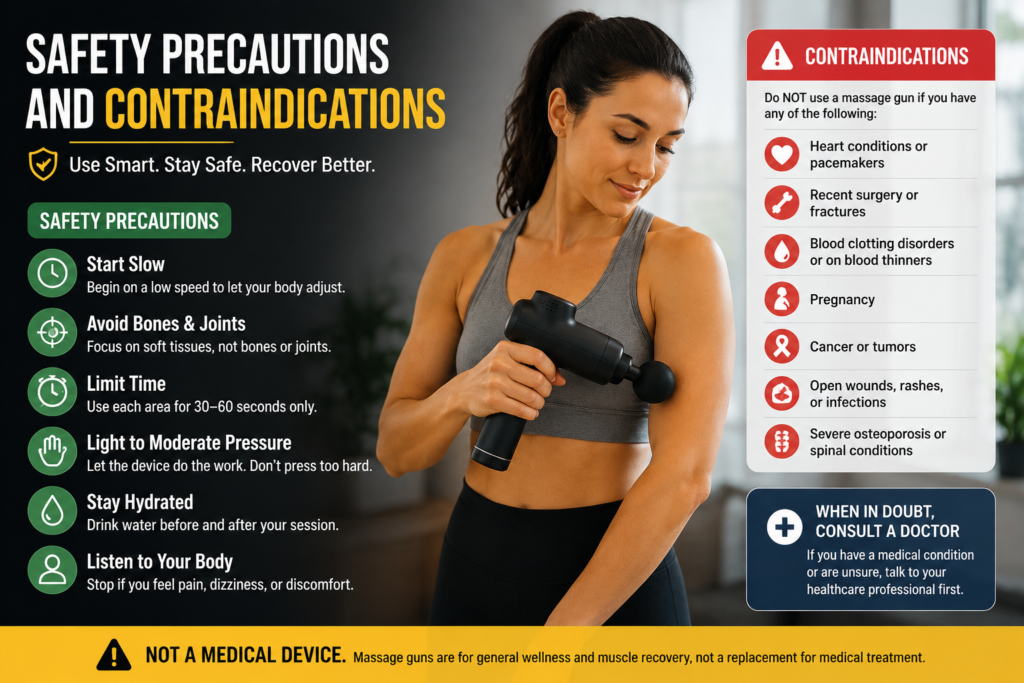
Safe use requires following the device manual, protecting the eyes, and watching for skin reactions. Certain medicines, health conditions, and neck symptoms may make red light, heat, or massage unsuitable.
When to Avoid Red Light Exposure
A person should avoid using the device over open wounds, burns, active rashes, infections, or severely irritated skin. The device should not be placed over swollen areas, unexplained lumps, or recent surgical sites unless a clinician approves it.
Some medicines can increase light sensitivity. Examples include certain antibiotics, acne medicines such as isotretinoin, and some drugs used for psoriasis or other skin conditions. Anyone taking a medication that carries a photosensitivity warning should ask a pharmacist or doctor before use.
The device should not be used over the front of the throat, especially directly across the thyroid, unless the manufacturer or a clinician confirms that placement is appropriate. People with light-sensitive disorders, a history of skin cancer in the treatment area, or eye conditions should seek medical advice first. They should follow the device’s eye-protection instructions and never stare into the LEDs.
Recognizing Skin Sensitivity
Before the first full session, the user should test the device on a small area of clean skin. The user should follow the manual’s lowest setting and shortest recommended time, then monitor the area for several hours.
Mild warmth may occur, but burning, sharp stinging, marked redness, swelling, blistering, itching, or pain signals that the session should stop. The user should remove the device and avoid further treatment until the skin returns to normal. Persistent or worsening symptoms require medical care.
Heat and massage can increase irritation, especially after shaving, exfoliation, chemical peels, or use of retinoids. The user should avoid applying strong active products immediately before treatment unless the product instructions allow it. A clean device, light pressure, and the recommended session length can reduce irritation.
Seeking Medical Advice
A clinician should review use before treatment if the person is pregnant, has a photosensitive condition, takes light-sensitizing medicine, or has a history of skin cancer or eye disease. Medical guidance also matters for people with implanted electronic devices, reduced sensation, bleeding disorders, or recent neck surgery.
The user should avoid massaging the neck when it causes dizziness, numbness, weakness, severe pain, trouble swallowing, breathing difficulty, or a new severe headache. These symptoms need prompt medical assessment rather than home treatment.
A doctor or pharmacist can check medicine warnings and help identify safe settings. The device manual should guide treatment time, intensity, eye protection, and approved treatment areas because designs and light output differ.
Cleaning, Charging, and Storage
Proper cleaning limits skin oil and product buildup, while careful charging helps protect the device and its battery. The user should follow the manufacturer’s manual first, especially for cleaning products, charging time, and storage conditions.
Cleaning After Each Use
The user should turn off and unplug the massager before cleaning it. A soft, slightly damp cloth can remove sweat, oil, and skincare residue from the light panel, massage surface, and straps. The user should avoid soaking the device or allowing liquid to enter charging ports, buttons, seams, or vents.
For stubborn residue, the user can follow the manual’s cleaning instructions. Unless the manufacturer approves them, strong alcohol, bleach, abrasive pads, essential oils, and household cleaners may damage the surface or seals. The user should not use the device on broken or irritated skin and should clean any surface that touches the skin before the next session.
After wiping, the device should air-dry completely. It should not be placed near a heater, in direct sunlight, or in a damp bathroom while it dries. Clean hands and a clean storage area also help prevent dirt from transferring back onto the device.
Battery and Charging Care
The user should charge the massager with the supplied cable or a charger that matches the manual’s voltage and power requirements. The charging port must remain dry, and the cable should be checked for cuts, exposed wires, bent connectors, or loose connections before use.
The device should charge on a hard, stable surface with clear airflow. It should not charge under bedding, inside a case, or near heat. When charging finishes, the user should disconnect it if the manual does not recommend keeping it plugged in. The user should stop using the device if it becomes unusually hot, swells, smells like chemicals, or shows other damage.
For storage, the user should switch the device off, let it dry, and keep it in a cool, dry place away from sharp objects and direct sunlight. The cable should be stored without tight bends, and the massager should not rest under heavy items. If it will remain unused for several months, the user should follow the manual’s guidance for battery level and recharge intervals.
FAQs
How often can someone use an LED or red light neck massager?
Most devices work best when used according to the manufacturer’s schedule, often for 5–10 minutes per session several times a week. More time does not necessarily produce better results.
Should the neck be clean before use?
Yes. The user should cleanse the skin, dry it, and apply a light, water-based serum if the device instructions allow it. Oils or thick creams may interfere with contact or light exposure.
Which light setting should they choose?
Red or near-infrared light is commonly used for skin-care purposes. Near-infrared light may reach deeper tissue, but the device’s instructions should determine the correct setting and session length.
How should the massager move across the neck?
The user should glide it slowly upward along the sides and front of the neck without pressing hard. They should avoid the throat, the center of the neck, and any painful or swollen area unless a health professional gives different advice.
Can it treat neck pain?
It may provide comfort for mild muscle tension, but results vary. Neck pain can have many causes, so persistent, severe, or worsening pain requires medical evaluation.
Who should use caution?
Anyone with light sensitivity, a condition affected by light, or medication that increases light sensitivity should ask a clinician before use. The user should stop if the skin develops burning, severe redness, rash, dizziness, or unusual pain.
Conclusion
An LED or red light neck massager works best when used consistently and carefully. The user should cleanse the skin, apply a light serum if needed, and follow the device’s instructions for treatment time and distance.
For cosmetic use, red or near-infrared light may support the skin’s appearance over time, but results vary. It should not replace sunscreen, medical care, or proven treatments for neck pain or skin conditions.
Safe use depends on the device. The user should:
- Begin with the lowest suitable setting.
- Use slow, gentle upward strokes when massage is included.
- Avoid the front and sides of the neck if the manual warns against those areas.
- Stop if they feel pain, burning, dizziness, or skin irritation.
- Clean the device after each use.
People with light-sensitive conditions, implanted medical devices, or medicines that increase light sensitivity should ask a health professional before using one. They should also follow the manufacturer’s guidance rather than extending sessions to seek faster results.