Most travelers can bring a neck massager on a plane, but the device’s battery, size, and design affect how it should be packed. A neck massager is generally allowed in both carry-on and checked baggage, but spare lithium batteries must stay in carry-on luggage.
Packing the device in a carry-on bag keeps it accessible if security staff need to inspect it. Travelers should protect the power button, follow airline size limits, and check international rules before departure. The article explains how to pack and use a neck massager safely during air travel.
Key Takeaways
- Neck massagers usually qualify for carry-on or checked baggage.
- Spare lithium batteries belong in carry-on luggage.
- Airline and destination rules may add extra requirements.
Air Travel Rules for Neck Massagers
A neck massager usually passes through airport security when packed correctly. Travelers should protect lithium batteries, follow screening instructions, and check the operating airline’s baggage rules before departure.
TSA Screening Basics
In the United States, TSA generally permits handheld and heated neck massagers in both carry-on and checked baggage. Carry-on luggage is usually the better choice, especially when the device contains a lithium-ion battery. A passenger may need to remove the device during screening if an officer requests it.
Pack the massager so security officers can inspect it easily. Keep detachable parts together, prevent the power button from being pressed accidentally, and protect the device from damage. If the battery is removable, spare lithium batteries must stay in carry-on baggage with their terminals protected.
| Device feature | Packing guidance |
|---|---|
| Built-in lithium battery | Carry-on is preferred |
| Removable battery | Spare battery stays in carry-on |
| No battery | Carry-on or checked baggage |
| Damaged or swollen battery | Do not bring it |
TSA officers make the final decision at the checkpoint. Travelers should check the TSA What Can I Bring? tool for the specific model, particularly if it includes heat, a large motor, or unusual attachments.
Airline-Specific Restrictions
Airlines can apply stricter rules than TSA. Each carrier may set limits for lithium-battery capacity, the number of spare batteries, or the storage of electronic devices. The airline may also require a battery-powered massager to remain in carry-on baggage.
Travelers should check the airline’s baggage and battery policy before leaving for the airport. The device’s battery rating, measured in watt-hours (Wh), may appear on its label or manual. If the rating is unclear, the manufacturer or airline can provide guidance.
Passengers should not use a powered neck massager during the flight without considering nearby travelers. Noise, vibration, and heat may disturb others, and crew members can require the device to be turned off. The airline’s crew instructions take priority during boarding and the flight.
Carry-On and Checked Baggage Options
A neck massager can usually travel in either a carry-on bag or checked luggage. The best choice depends on battery type, access during the flight, and how well the device needs protection.
Benefits of Packing in Carry-On Luggage
A carry-on bag gives the traveler better control over the neck massager. Security officers can inspect the device quickly, and the traveler can remove it if requested. Keeping it nearby also helps prevent damage, loss, or delays caused by checked-bag handling.
A neck massager with a lithium-ion battery should usually stay in carry-on luggage. Spare lithium batteries and power banks must remain in the cabin, with their terminals protected from contact with metal objects. The traveler should switch off the massager and prevent its controls from activating during the flight.
The device should fit within the airline’s carry-on size and weight limits. A protective case or pouch can keep the massager from pressing against other electronics.
| Packing choice | Main benefit | Important point |
|---|---|---|
| Carry-on bag | Easy access and less risk of loss | Protect the battery and prevent accidental activation |
| Personal item | Convenient for smaller devices | It must fit under the seat or within airline limits |
When Checked Baggage Makes Sense
Checked baggage may suit a larger neck massager or a device the traveler will not use during the flight. It also frees space in the cabin bag, which can help when the airline limits carry-on weight or size.
Before checking the device, the traveler should review the battery rules. Many airlines and aviation authorities require lithium-ion devices to remain in the cabin, while devices with removable batteries may have separate requirements. If the battery can be removed, the traveler should carry it in the cabin and protect it against short circuits.
The massager should be turned off, placed in a sturdy case, and packed between soft clothing. The traveler should also check the airline’s rules before departure because airlines can apply stricter requirements than standard security guidance.
Battery and Power Requirements
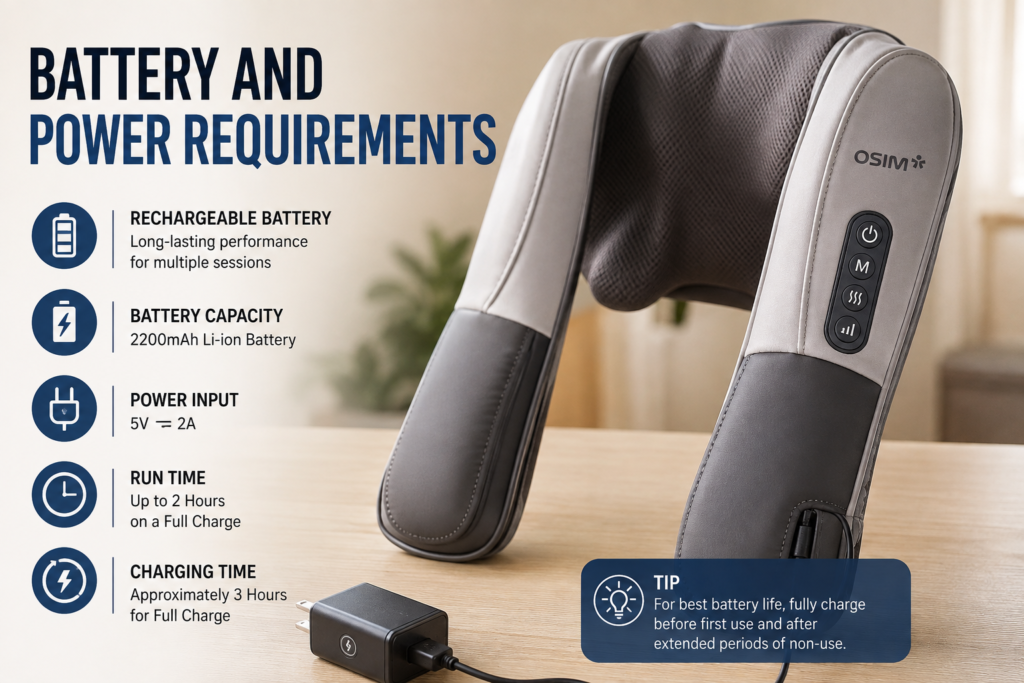
A neck massager’s battery type and watt-hour rating affect how it should be packed. Carry-on baggage usually offers the safest option for rechargeable models, while corded devices avoid most battery restrictions.
Lithium-Ion Battery Limits
Most rechargeable neck massagers use lithium-ion batteries. Airlines generally allow installed batteries rated 0–100 watt-hours (Wh) in carry-on baggage without special approval. The device should remain switched off and protected from accidental activation.
Spare lithium batteries and power banks must go in carry-on baggage. They cannot usually go in checked luggage because damaged or overheated batteries create a fire risk in the cargo hold. If the battery exceeds 100 Wh, the passenger should contact the airline before traveling; approval may be required, and larger batteries may not be allowed.
The battery’s Wh rating may appear on the device, battery, or manual. If only voltage and amp-hours appear, the rating can be calculated as:
Wh = volts × amp-hours
Airline rules can be stricter than federal limits, so the passenger should check the operating airline’s battery policy before departure.
Corded and Rechargeable Models
A corded neck massager has no built-in battery, so it avoids lithium-ion limits. It can usually travel in carry-on or checked baggage, but security officers may ask for an inspection if the device has a bulky shape or complex wiring.
A rechargeable model should stay in carry-on baggage when possible. The passenger should place it in a case or sleeve, remove detachable battery packs if the manufacturer allows it, and prevent buttons from being pressed during transit.
| Device type | Preferred packing method | Key point |
|---|---|---|
| Corded massager | Carry-on or checked bag | No battery limit |
| Rechargeable massager | Carry-on bag | Protect the installed battery |
| Spare lithium battery | Carry-on bag only | Cover terminals to prevent contact |
| Power bank | Carry-on bag only | Do not place it in checked baggage |
Size, Weight, and Design Considerations
A neck massager’s size and design can affect screening, storage, and airline baggage limits. Battery type, heating parts, and moving mechanisms also matter, especially when the device goes in checked baggage.
Compact Travel-Friendly Devices
A small, lightweight neck massager usually fits more easily in a personal item or carry-on bag. The device should fit without forcing the bag closed or exceeding the airline’s size and weight limits. TSA does not set a general size limit for ordinary massagers, but the airline controls cabin baggage dimensions.
| Device feature | Practical packing choice |
|---|---|
| Small, cordless design | Carry-on or personal item |
| Built-in lithium battery | Carry-on is the safer choice |
| Removable battery | Pack spare batteries in carry-on baggage |
| Large motor or rigid frame | Check airline baggage limits first |
The massager should be switched off and protected from accidental activation. A case or padded compartment can prevent damage and make the device easier to remove if security officers want to inspect it. Its shape may resemble a tool on an X-ray, so keeping it accessible can reduce delays.
Heated and Percussion Features
Heated neck massagers contain electrical heating parts that add weight and bulk. The device can usually travel when it meets the airline’s baggage rules, but the passenger should check the product’s battery rating and the airline’s current requirements.
Percussion models often have a heavy motor and may look like power tools during screening. A built-in lithium battery under 100 watt-hours generally can travel in carry-on baggage without airline approval, but the airline may apply stricter rules. Devices with removable lithium batteries should travel with the battery removed when possible, while spare batteries must stay in carry-on baggage with their terminals protected.
The passenger should not pack a damaged, swollen, or recalled battery. The airline can refuse any device that creates a safety concern, even when security rules normally allow that type of massager.
Packing Tips for Security Screening
A neck massager should stay easy to inspect and protected from damage. Battery placement, simple packing, and accessible accessories can help reduce delays at the checkpoint.
Protecting the Device During Transit
Place the neck massager in a protective case or wrap it in soft clothing to prevent damage. Keep controls from pressing against other items, especially if the device has a power button that can activate easily.
If it uses a lithium-ion battery, carrying it in the cabin is usually the safest choice. Spare batteries and power banks must stay in carry-on baggage, with their terminals protected from contact with metal objects. Check the airline’s battery limits before travel because larger batteries may need approval.
The massager can usually remain in a carry-on bag during screening, but security officers may ask for a closer inspection. Packing it near the top of the bag makes removal easier. The TSA’s permitted-items list provides current guidance, though the officer at the checkpoint makes the final decision.
Keeping Accessories Accessible
Store the charger, cable, remote, detachable heat pads, and user manual together in a small pouch. This prevents loose parts from cluttering the bag and lets the traveler identify each item quickly if an officer asks about it.
The device should be switched off before packing. If it has a removable battery, the battery should stay installed only if the manufacturer permits it; otherwise, the traveler should protect and pack it according to airline rules.
Avoid wrapping the massager in dense layers of clothing or placing it beneath liquids, electronics, or heavy items. A clear layout helps officers inspect the device without unpacking the entire bag. The traveler should also keep the model name or product details available, especially if the device has an unusual shape or built-in heating features.
International Travel Considerations
International travelers should check the massager’s power needs before departure and confirm the rules for both the departure and arrival countries. Battery limits, electrical standards, and customs policies can differ by destination.
Voltage and Plug Compatibility
A corded neck massager may not work safely abroad without the correct voltage and plug adapter. Travelers should check the label or manual for its input range, such as 100–240V, 50/60Hz. A dual-voltage device usually needs only a plug adapter. A device rated for one voltage may also need a voltage converter.
A plug adapter changes the plug shape but does not change voltage. Travelers should choose an adapter that matches the destination’s outlet type and confirm that its power rating supports the massager. A USB-powered model can offer more flexibility, but the charger still must support the local voltage.
For battery-powered models, the traveler should pack spare lithium batteries in carry-on baggage. The battery terminals should remain protected from contact with metal objects. Airline policies may impose stricter limits than standard aviation rules, so travelers should check the airline’s battery guidance before flying.
Destination-Specific Regulations
The TSA’s baggage guidance applies to flights departing from the United States, but it does not control security checks or customs rules in another country. A neck massager is generally permitted in carry-on and checked baggage, yet security officers can inspect any device.
Travelers should check the aviation authority and customs agency for the destination country. They should also review connecting-airport rules, since a transfer may require another security screening. Some countries may question devices with removable batteries, unusual designs, or wireless features.
The device should remain clean, switched off, and easy to remove from luggage. Keeping the manual, product label, and battery information available can help explain its purpose during inspection. A traveler should not use a noisy massager during the flight without the crew’s approval, since vibration and sound may disturb nearby passengers.
Using a Neck Massager During a Flight
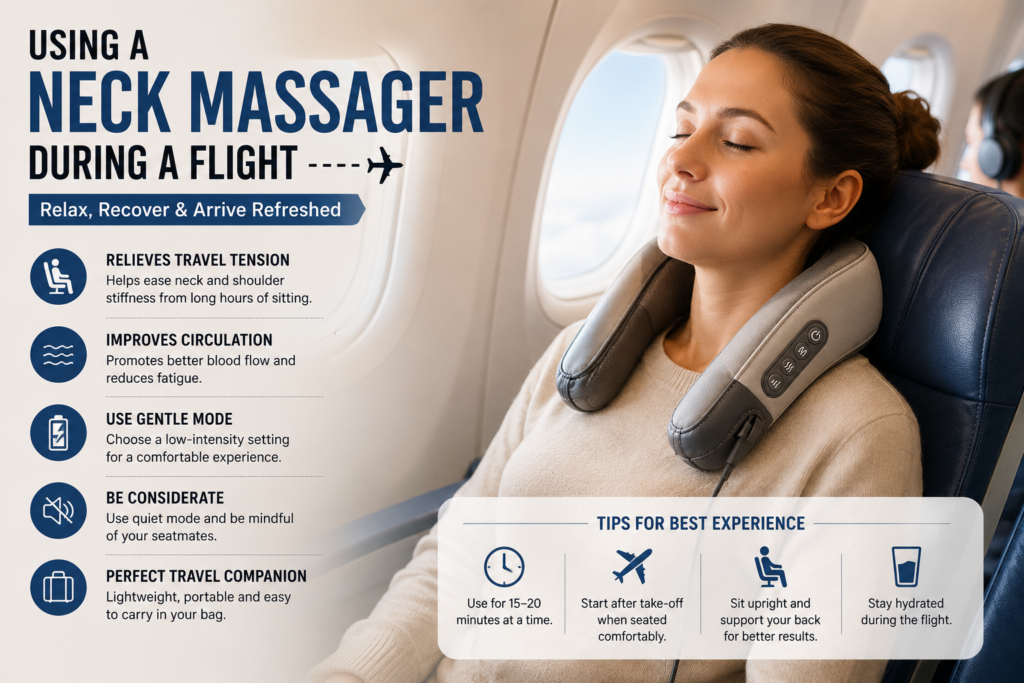
A traveler should check the device’s noise, keep it within their own seat area, and follow crew instructions. Battery-powered models may be usable during the flight, but airline rules and crew decisions control when and how passengers can use them.
Cabin Etiquette and Noise Levels
A neck massager should run quietly enough that nearby passengers cannot hear it. If the device makes a loud buzzing or vibrating sound, the traveler should use the lowest setting, place a cover between the device and their neck, or stop using it.
The traveler should keep the massager inside their seat space and avoid touching the person beside them. They should not stretch across the aisle or block the tray table, armrest, or seat-back pocket. Using the device with headphones, reading, or sleeping passengers nearby may disturb others, so short sessions at a low setting show better consideration.
The traveler should also secure the device when not in use. Loose parts, charging cables, and removable batteries should stay together in a small pouch. The massager should not interfere with the seat belt or emergency equipment.
When Crew Instructions Override Personal Use
Flight attendants can require a traveler to turn off or stow a neck massager at any time. Their instructions take priority during boarding, taxiing, takeoff, landing, turbulence, and other safety-related situations.
If a crew member says to stop using the device, the traveler should switch it off and store it promptly. The massager should fit under the seat or in an approved carry-on location without blocking the aisle or emergency exit.
Airlines may apply different rules to electronic devices, and international flights may follow additional requirements. A traveler should check the operating airline’s policy before departure and avoid using the massager if the crew gives unclear or conflicting instructions until they provide guidance.
FAQs
Can a passenger bring a neck massager on a plane?
Yes. A neck massager can usually travel in either carry-on or checked baggage. Carry-on packing lets security staff inspect the device more easily and keeps it accessible during the trip.
Where should a battery-powered massager go?
A massager with a built-in lithium battery should go in the carry-on bag. Spare lithium batteries and power banks must also stay in the cabin, not checked baggage. The passenger should protect the device from accidental activation.
Does the battery size matter?
Yes. Airlines commonly allow lithium-ion batteries up to 100 watt-hours (Wh) in carry-on bags without special approval. Batteries between 101 and 160 Wh may require airline approval, while larger batteries may not be accepted.
Can a passenger use it during the flight?
The airline and cabin crew decide whether passengers may use a massager onboard. The passenger should keep it off during safety instructions and follow crew directions.
What should a passenger do before flying?
The passenger should check the battery rating, pack removable batteries safely, and review the airline’s rules. The Transportation Security Administration (TSA) and the airline may apply different requirements.
Conclusion
Travelers can generally bring a neck massager on a plane in either carry-on or checked luggage. A carry-on bag often works best because it keeps the device accessible and reduces the risk of loss or damage.
If the massager contains a lithium-ion battery, the traveler should protect it from accidental activation. Spare batteries and power banks usually must stay in carry-on baggage, while airline rules may add stricter limits.
Before traveling, the passenger should:
- Check the device for loose or damaged batteries.
- Pack removable batteries safely.
- Confirm the airline’s size and battery rules.
- Review the latest TSA guidance for the departure airport.
- Keep the massager switched off during the flight.
Security officers have the final say about any item at the checkpoint. A traveler should be ready to remove the device from the bag for inspection if requested.