
Written by Michael Hayes
Quick Answer: CBD and THC massage oils are topical products used during massage. CBD and THC are different cannabinoids, and products can vary widely in ingredients and labeling. Check the full label, avoid broken or irritated skin, follow directions, and consider drug-testing or medication concerns before use.
A practical guide to choosing and using cannabinoid massage oils
Cannabinoid massage oils can look similar on a shelf, but CBD, THC, carrier oils, fragrances, and labeling can differ. The safest approach is to treat the product as a topical personal-care item first and evaluate the cannabinoid ingredients separately.
CBD vs THC Label Checks Skin Safety Drug-Test Awareness
Trust & Safety: This article is for general educational information only. It does not diagnose, treat, cure, or prevent any condition. It does not replace advice from a licensed healthcare professional. Readers should seek professional help for severe, worsening, unusual, or persistent symptoms.
What CBD and THC Massage Oil Actually Means
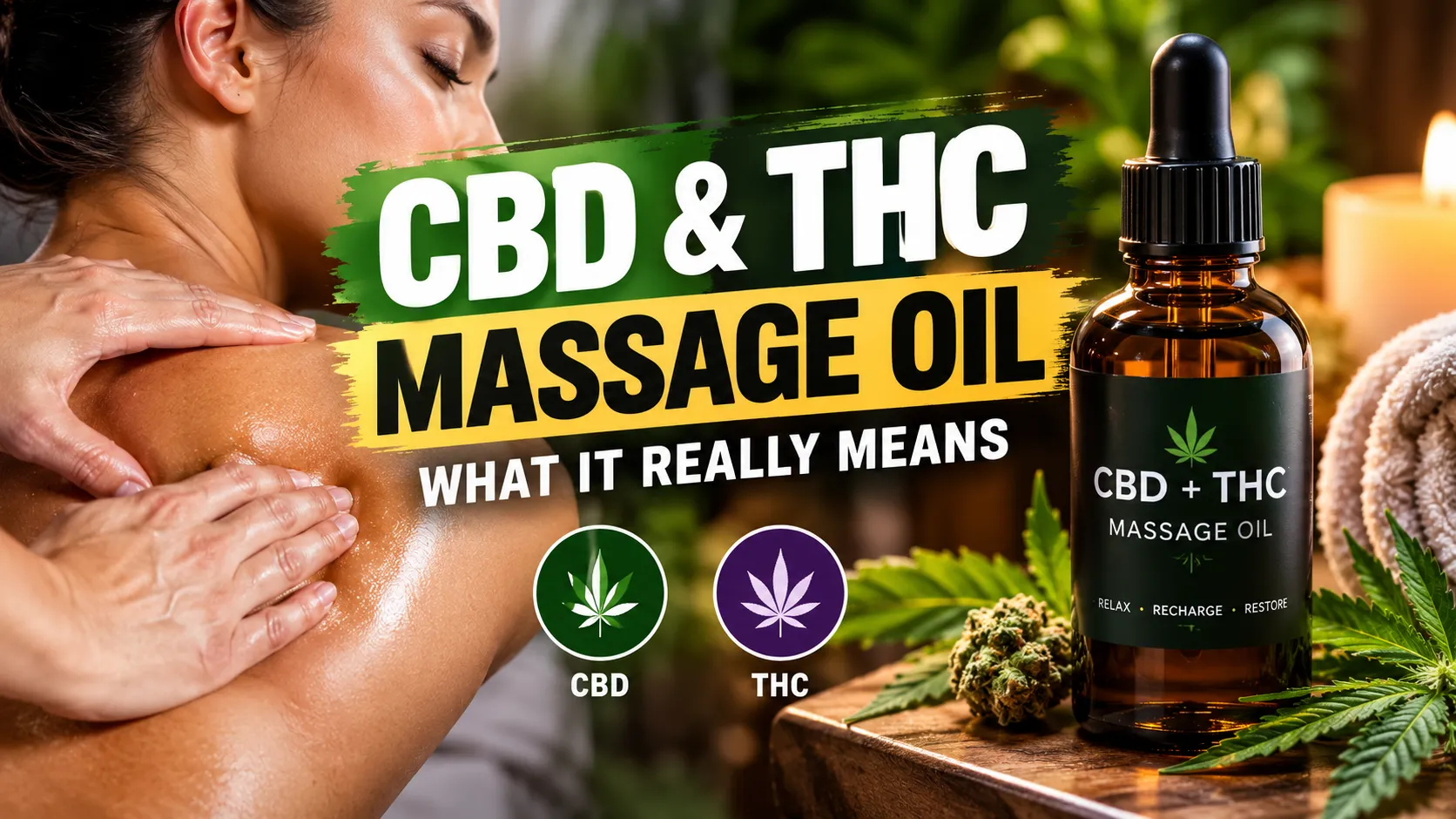
The phrase CBD and THC massage oil guide can describe several different products rather than one standard formula. A massage oil may contain CBD, THC, both cannabinoids, hemp-derived ingredients, or no cannabinoids at all. The base may be coconut, jojoba, grapeseed, sunflower, or another cosmetic oil.
CBD is cannabidiol, while THC refers to tetrahydrocannabinol. THC is the cannabinoid associated with the intoxicating “high” from cannabis. CBD does not produce that same intoxicating effect. However, a topical product containing THC still deserves extra attention because the product’s formulation, labeling, legal status, and intended use matter.
Do not assume that “hemp,” “hemp oil,” or “cannabis” on the front label tells you the amount of CBD or THC. Look for an ingredient list and a clear cannabinoid statement. If the label does not explain what is actually inside, choosing a different product is the simpler decision.
CBD, THC, and a Plain Massage Oil
Swipe left/right to see the full table →
| Product type | Main distinction | Best label check |
|---|---|---|
| CBD oil | Contains CBD | CBD amount |
| THC oil | Contains THC | THC amount |
| CBD + THC | Both cannabinoids | Separate amounts |
| Plain massage oil | No cannabinoid focus | Base ingredients |
Routine flow
This flow keeps the product choice separate from the massage itself. If the label or skin response raises a concern, stop before making the routine more complicated.
Why the Label Matters More Than the Front Panel
Topical cannabinoid products can differ in strength, added fragrance, essential oils, carrier oils, and other ingredients. Some labels may also use broad terms such as “hemp extract” without making the cannabinoid content easy to understand.
The FDA notes that many CBD products have not been evaluated as approved drugs for their claimed uses and has raised concerns about product quality, inaccurate cannabinoid amounts, contaminants, and unproven health claims. That makes transparent labeling an important part of choosing a product. :contentReference[oaicite:0]{index=0}
Note: “Natural” does not automatically mean low-risk. A botanical fragrance or essential oil can still irritate sensitive skin, and a cannabinoid product can have additional considerations.
What to Check Before Buying
Swipe left/right to see the full table →
| Check | Look for | Caution sign |
|---|---|---|
| Cannabinoids | Clear amounts | Vague blend |
| Ingredients | Full list | Missing list |
| Directions | Specific use | Medical promises |
| Testing | Recent documentation | No transparency |
Tip: Save a photo of the label before using a new product. It makes it easier to identify the ingredients if your skin reacts later.
How CBD and THC Massage Oil Fits Into a Routine
Massage oil mainly changes the feel and glide of the massage. A cannabinoid ingredient does not automatically make the massage safer or more effective. For a beginner, the most useful goal is a simple, controlled routine with a product you can identify clearly.
A Simple Four-Step Approach
1
Read the product directions and confirm whether it contains CBD, THC, or both.
2
Apply a small amount to intact skin and avoid eyes, mouth, and other sensitive areas.
3
Use gentle massage pressure that feels comfortable rather than trying to force deeper pressure.
4
Wash your hands afterward and monitor the skin for irritation or other unexpected reactions.
Safety decision path
The decision path is intentionally conservative. When product information is uncertain, the safest choice is not to guess about cannabinoid content.
Possible Skin Problems and What They May Suggest
Swipe left/right to see the full table →
| Problem | Possible reason | First response |
|---|---|---|
| Redness | Irritation | Stop use |
| Burning | Ingredient reaction | Rinse gently |
| Itching | Sensitivity | Stop use |
| Swelling | Possible significant reaction | Seek advice |
When CBD or THC Massage Oil May Not Be a Good Fit
A product can be inappropriate even when the oil itself feels pleasant. Avoid applying massage oil to broken, infected, severely irritated, or actively inflamed skin. Be cautious with areas affected by unexplained changes, and do not use a topical product to delay evaluation of a persistent problem.
Pregnancy and breastfeeding require particular caution. The FDA strongly advises against CBD, THC, and marijuana in any form during pregnancy or breastfeeding. If either applies to you, discuss cannabinoid exposure with a qualified healthcare professional rather than relying on a topical label. :contentReference[oaicite:1]{index=1}
Medication use is another reason to ask a pharmacist or clinician before using cannabinoid products. The FDA notes that CBD can affect how other medicines work. A topical product may not have the same exposure as an oral product, but the uncertainty is a reason to avoid assuming that every topical cannabinoid is risk-free. :contentReference[oaicite:2]{index=2}
Warning: Do not use a cannabinoid massage oil as a substitute for medical evaluation. Product claims about pain, inflammation, nerves, arthritis, or other conditions do not prove that the product is an appropriate treatment.
Red-flag checklist dashboard
Stop and seek medical advice.
Seek urgent medical help.
Do not continue using the product.
Arrange professional evaluation.
These are safety triggers, not diagnoses. A new or severe reaction deserves more attention than simply switching to another oil.
Safe Routine Versus Risky Routine
Swipe left/right to see the full table →
| Safer routine | Riskier routine | Why it matters |
|---|---|---|
| Read the label | Guess ingredients | Reduces uncertainty |
| Use intact skin | Apply over damaged skin | Limits irritation risk |
| Follow directions | Use excessive amounts | Keeps use controlled |
| Track reactions | Ignore worsening skin | Catches problems early |
Drug Testing and THC: A Frequently Missed Issue
One of the most important points in any CBD and THC massage oil guide is that “topical” does not mean “guaranteed drug-test safe.” Products can differ in cannabinoid content and labeling. If employment, sport, legal requirements, or another important situation depends on avoiding cannabinoid exposure, do not assume a topical product is risk-free.
A recent systematic review of CBD and hemp oils found that positive cannabinoid findings can depend on factors including product content, undeclared THC, contamination, the testing method, and the route of exposure. The evidence is not a guarantee that a particular topical product will or will not affect a test. :contentReference[oaicite:3]{index=3}
If a negative drug test is essential, the conservative decision is to avoid products containing THC and to discuss uncertain CBD products with the relevant testing authority or a qualified professional. Keep the original label and batch information when product identity matters.
Product and routine fit dashboard
Typical routine priority: high.
Typical routine priority: high.
Typical routine priority: medium-high.
Typical routine priority: avoid.
This dashboard is a practical decision aid, not scientific scoring. Product transparency should matter more than attractive packaging or aggressive marketing.
Common Mistakes and Better Choices
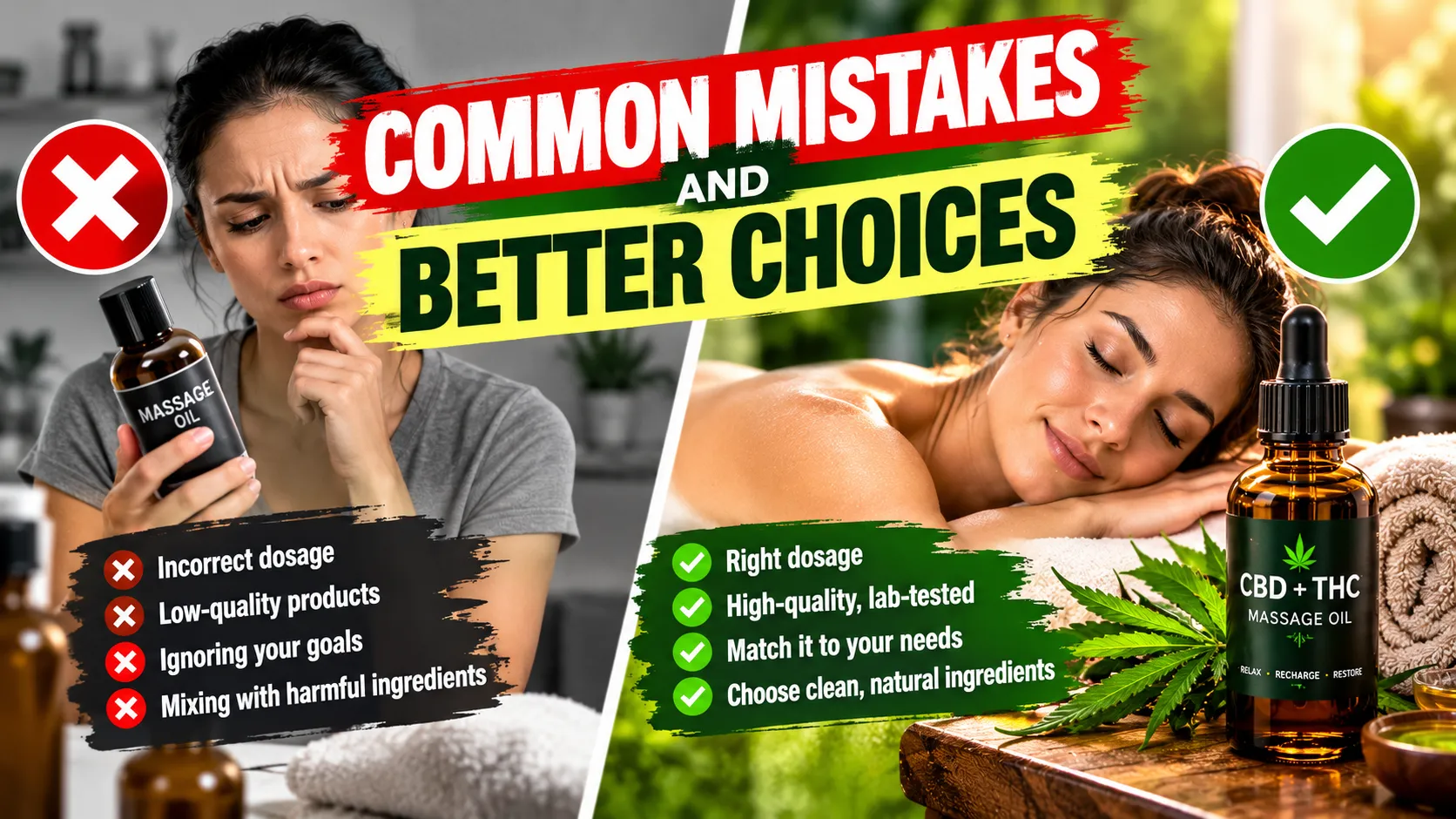
Many problems come from treating a cannabinoid massage oil like an ordinary cooking oil or assuming that more product means more benefit. Massage already involves friction and pressure, so adding a strong fragrance or unfamiliar active ingredient can make it harder to identify what caused irritation.
Mistakes to Avoid
Swipe left/right to see the full table →
| Mistake | Better choice | Reason |
|---|---|---|
| Trusting front-label claims | Read full label | More information |
| Applying to irritated skin | Wait and assess | Less irritation |
| Ignoring THC content | Check cannabinoid details | Avoid surprises |
| Using it for a serious symptom | Seek evaluation | Finds the cause |
Safety Note: If a product causes marked burning, swelling, breathing difficulty, or another significant reaction, stop using it and seek appropriate medical help. Do not keep testing the same product on larger areas.
What Experienced Buyers Notice
A more experienced reader usually looks beyond cannabinoid percentages. They check whether the label separates CBD and THC amounts, whether the complete ingredient list is available, whether directions are clear, whether the manufacturer provides meaningful batch or testing information, and whether the product makes exaggerated medical claims.
It is also worth checking the legal rules that apply where you live. Federal hemp rules do not remove FDA requirements for products marketed in the United States, and state rules can differ. FDA has specifically warned about cannabis-derived products marketed with unapproved therapeutic claims. :contentReference[oaicite:4]{index=4}
Relative priority meter
Clear cannabinoid labeling
Typical routine priority: very high
Full ingredient list
Typical routine priority: high
Simple fragrance profile
Typical routine priority: moderate
Marketing promises
Relative difficulty: low value
The bars are a practical guide, not research measurements. Put the most attention on information that helps you identify the product and use it safely.
When to Contact a Professional
A topical oil should not become a reason to postpone care. Seek professional advice for severe, worsening, unusual, persistent, or unexplained symptoms. For a reaction, seek prompt medical attention if there is substantial swelling, breathing difficulty, widespread symptoms, or rapid worsening.
For pain, professional evaluation is especially important when pain follows a significant injury or occurs with numbness, weakness, fever, chest pain, loss of bladder or bowel control, or other concerning symptoms. A massage oil can be part of a comfort routine, but it should not be used to explain away warning signs.
When to contact a professional: Ask a qualified healthcare professional before using cannabinoid products when you are pregnant or breastfeeding, take medicines with possible interactions, have a significant skin condition, face an important drug-testing requirement, or are unsure whether the product is appropriate for you.
Self-Care or Professional Help?
Swipe left/right to see the full table →
| Situation | Reasonable next step | Decision |
|---|---|---|
| Mild routine use | Follow label | Self-care may fit |
| Persistent pain | Arrange evaluation | Seek help |
| Severe reaction | Get medical help | Urgent attention |
| Drug-test requirement | Clarify exposure risk | Use caution |
Frequently Asked Questions
What is the difference between CBD and THC massage oil?
CBD and THC are different cannabinoids. THC is associated with intoxication, while CBD does not produce the same intoxicating effect.
Can CBD massage oil make you fail a drug test?
Do not assume any cannabinoid product is drug-test safe. Product content, possible THC, contamination, and testing methods can affect the risk.
Should I patch test a cannabinoid massage oil?
For a new topical product, testing a small area first can help you notice local irritation before broader use.
Can I use massage oil on broken or irritated skin?
It is better to avoid applying it to broken, infected, or significantly irritated skin unless a healthcare professional advises otherwise.
Is THC in massage oil the same as taking THC by mouth?
No. Routes of exposure can differ, and a topical product should not be assumed to have the same effects or risks as an oral product.
What should I check before buying cannabinoid massage oil?
Check the cannabinoid amounts, full ingredient list, directions, manufacturer information, and any available product-testing documentation.
When should I ask a healthcare professional before using it?
Ask before use if you are pregnant or breastfeeding, take medicines, have a significant skin problem, have a drug-testing requirement, or are unsure about product safety.
Final Thoughts
The smartest CBD and THC massage oil guide approach is simple: identify the cannabinoids, read the entire label, use the product only as directed, and pay attention to skin response. Avoid assuming that topical use eliminates THC, medication, pregnancy, or product-quality concerns. For severe, worsening, unusual, persistent, or unexplained symptoms, seek professional advice.
Author
-

I’m Alex Turner, a massage product reviewer and wellness writer at RemedyTip. I specialize in researching, evaluating, and comparing massage and recovery products to help readers make informed purchasing decisions. My focus is on practical, evidence-informed product guidance covering muscle recovery, relaxation, everyday comfort, and wellness.
I take a research-driven approach to every product I review. I examine product specifications, features, materials, performance claims, user feedback, durability, comfort, ease of use, and overall value. When appropriate, I also consult trusted industry and health-related sources to verify important information and provide readers with a more complete and balanced view.
I cover a wide range of products, including massage guns, handheld massagers, neck and shoulder massagers, foot massagers, massage chairs, foam rollers, and other recovery tools. Rather than focusing only on marketing claims, I look at how products compare in real-world use and who they are actually suitable for. I also consider different budgets, use cases, and user needs when making recommendations.
At RemedyTip, I’m committed to accuracy, transparency, and unbiased product information. I clearly distinguish between manufacturer claims, available evidence, and my own product analysis so readers can understand the basis of each recommendation. I continuously research new products, technologies, and developments in the massage and recovery space to keep my content current and useful.
My goal is simple: to provide trustworthy, easy-to-understand information that helps readers choose massage and recovery products with greater confidence.

