Written by Alex Turner · Health & Personal Care Content
Quick Answer:
Yes, you can sometimes use a massage cream on the skin as a moisturizer, but it depends on the ingredients and your skin type. Massage creams are designed for glide and may contain fragrances, warming agents, oils, or other ingredients that are not ideal for daily facial or body moisturizing.
Massage Cream vs. Everyday Moisturizer
It is easy to assume that any cream applied to the skin can work as a moisturizer. After all, massage creams often feel smooth, rich, and hydrating during use. However, their primary purpose is usually to reduce friction and help hands move comfortably over the body.
That does not always make them suitable replacements for products formulated specifically to support the skin barrier. If you are wondering, can I use massage cream as a moisturizer, the answer starts with checking what is inside the product rather than relying only on how soft your skin feels immediately afterward.
Important safety note
This article is for general educational information only. It does not diagnose, treat, cure, or prevent any condition. It does not replace advice from a licensed healthcare professional. Readers should seek professional help for severe, worsening, unusual, or persistent symptoms.
What Is Massage Cream Designed to Do?
Massage cream is generally made to create a smooth surface between the hands and skin. This allows massage movements to feel more comfortable and reduces pulling or friction. Some formulas are lightweight, while others are thick and oil-rich.
Depending on the product, massage cream may contain emollients, plant oils, mineral oil, waxes, humectants, fragrance, or ingredients intended to create a warming or cooling sensation. These ingredients can make the product pleasant during a massage, but they do not automatically make it a good everyday moisturizer.
A moisturizer, on the other hand, is usually formulated with a specific goal: helping reduce water loss from the skin and supporting its surface barrier. Common moisturizing ingredients include glycerin, ceramides, hyaluronic acid, petrolatum, and other emollients.
This difference matters because a product can feel moisturizing without providing the same long-term benefits as a dedicated skincare formula.
Why the label matters more than the texture
Two creams can have nearly identical textures but very different purposes. A massage cream may be heavily fragranced or contain essential oils because the manufacturer wants to create a pleasant sensory experience. Those same ingredients may bother someone with sensitive skin or a history of irritation.
Before using massage cream regularly, check the ingredient list and intended-use instructions. If the product is labeled only for massage and does not mention daily moisturizing or general body use, it is worth being cautious.
Can I Use Massage Cream as a Moisturizer on My Body?
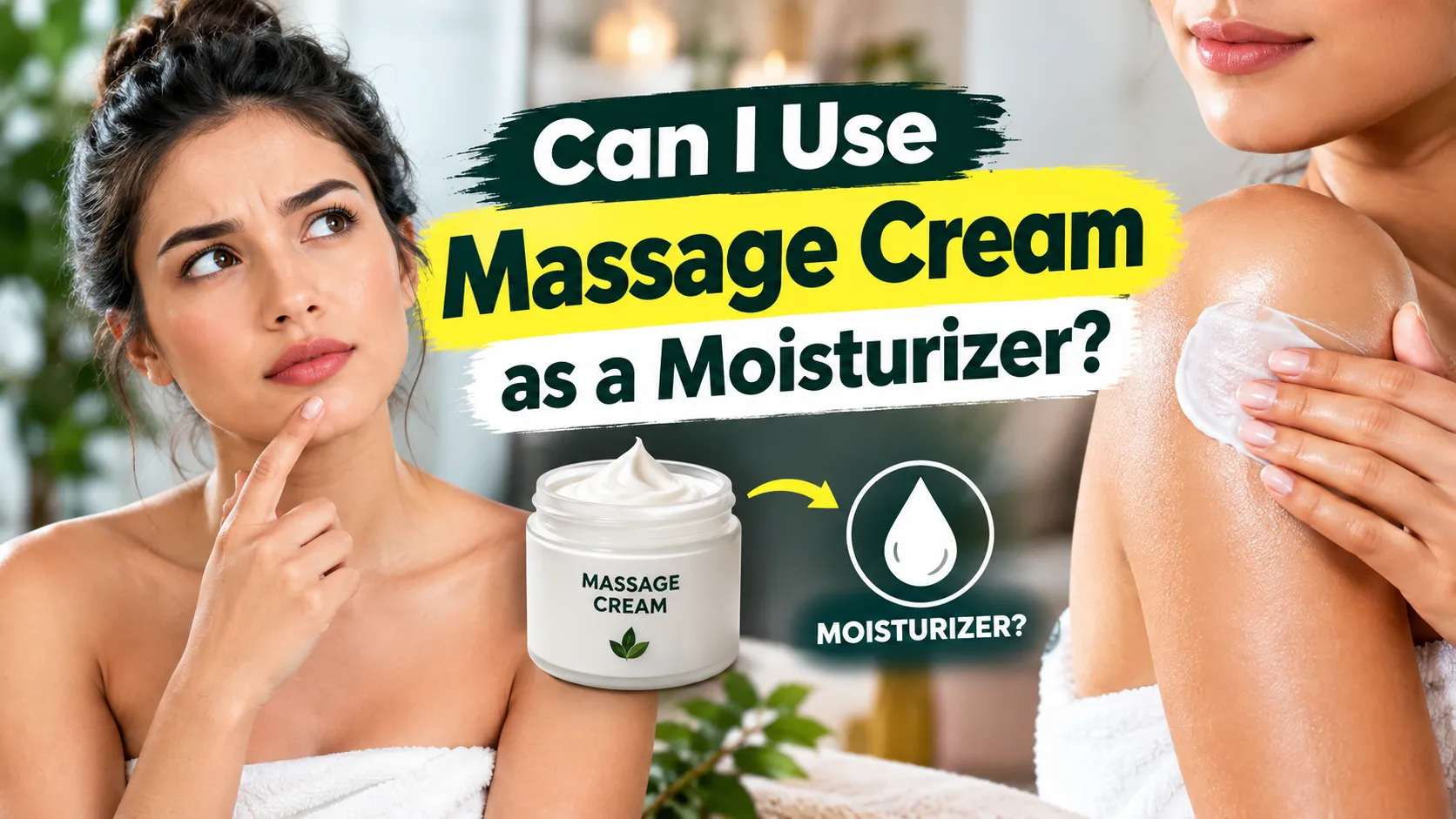
For many people, occasional use of a simple, fragrance-free massage cream on areas such as the arms or legs may be reasonable if the skin tolerates it. However, this depends on the formula.
If the cream contains basic moisturizing ingredients and does not include irritating additives, it may provide temporary softness and reduce dryness. But if it contains strong fragrance, menthol, camphor, warming compounds, or a high concentration of essential oils, it may not be appropriate for frequent everyday use.
Note:
Feeling smooth after application does not necessarily mean a product is improving your skin barrier. Surface softness and long-lasting moisturization are related but not identical.
When body use may be acceptable
- The product has a simple ingredient list.
- It does not cause burning, itching, or redness.
- The label allows use on the intended body area.
- Your skin is not currently irritated or broken.
- You use a small amount and observe how your skin responds.
When a regular body moisturizer makes more sense
A dedicated body moisturizer is usually the more predictable option for daily dryness. It is typically designed around hydration, barrier support, and repeated use rather than massage glide.
Look for products containing ingredients such as glycerin, ceramides, petrolatum, shea butter, or other well-tolerated emollients if your goal is routine body moisturization.
Ingredient and purpose comparison
Swipe left/right to see the full table →
| Product type | Main purpose | Daily moisturizing fit |
|---|---|---|
| Massage cream | Reduce friction | Depends on formula |
| Body lotion | Hydrate skin | Usually suitable |
| Body butter | Seal in moisture | Often useful for dry skin |
| Facial moisturizer | Face-specific hydration | Best for facial care |
The table shows why purpose and formulation matter. A massage cream may overlap with a moisturizer, but the two products are not automatically interchangeable.
Can Massage Cream Be Used on the Face?
Using massage cream on the face requires more caution than using it on the arms or legs. Facial skin can be more sensitive to fragrance, essential oils, heavy occlusive ingredients, and certain preservatives.
Some massage creams are designed specifically for facial massage, but a general-purpose body massage cream should not automatically be used as a facial moisturizer.
If you are asking, can I use massage cream as a moisturizer for your face, check whether the product specifically states that it is suitable for facial skin. Even then, perform a small patch test before applying it broadly.
Ingredients that deserve attention
Ingredient Check: Practical Guide
Generally familiar moisturizing ingredients
Typical routine priority: humectants and barrier-supporting ingredients
Ingredients needing extra caution for sensitive skin
Practical guide: fragrance, cooling agents, and warming compounds
Product-label importance
Typical routine priority: follow intended-use instructions
This visual is a practical guide rather than a scientific rating. The ingredient list and your personal skin tolerance are more useful than judging a product by texture alone.
Massage Cream Ingredients That May Cause Problems
Not every massage cream causes irritation, but certain ingredient categories deserve attention if you plan to use one regularly as a moisturizer.
Fragrance and essential oils
Fragrance can make a product smell pleasant, but it can also irritate sensitive skin. Essential oils may also cause discomfort or sensitivity in some individuals. A fragrance-free moisturizer is often a simpler choice for daily use if irritation is a concern.
Warming or cooling ingredients
Some massage products contain menthol, camphor, or warming compounds. These ingredients are included for sensory effects during massage. They may not be appropriate for routine moisturizing, especially on delicate, irritated, or broken skin.
Heavy oils and occlusive ingredients
Oils and occlusives can reduce water loss and leave skin feeling soft. However, some people may find heavier formulas uncomfortable, especially on the face or acne-prone areas. Personal tolerance and intended use should guide your decision.
Ingredient label guide
Swipe left/right to see the full table →
| Ingredient category | Why it may be included | What to consider |
|---|---|---|
| Glycerin | Humectant | Common in moisturizers |
| Fragrance | Scent | May irritate sensitive skin |
| Menthol | Cooling sensation | Not ideal for all skin types |
| Plant oils | Slip and emollience | Check individual tolerance |
Reading the label can help you decide whether a massage product is appropriate for occasional skin use or whether a dedicated moisturizer would be a better fit.
How to Safely Try Massage Cream as a Moisturizer
If you want to test whether a massage cream works for your skin, take a gradual approach rather than applying it everywhere immediately.
1
2
3
4
A simple application flow
Routine Flow
→
→
→
This routine helps reduce unnecessary exposure if the formula is not a good match. If your goal is simply to moisturize dry skin, a purpose-made moisturizer usually involves fewer compromises.
Massage Cream Mistakes vs. Better Choices
Many problems happen when people assume that a massage product can replace every other skincare product. The following comparison can help keep use practical.
Swipe left/right to see the full table →
| Common mistake | Better choice |
|---|---|
| Using a heavily fragranced cream daily | Choose a gentle, fragrance-free moisturizer |
| Applying warming cream to irritated skin | Avoid the product until the skin is calm |
| Using body massage cream on the face | Use a facial formula intended for facial skin |
| Ignoring a new rash or burning | Stop using it and seek advice if symptoms persist |
Who Should Be More Careful?
People with sensitive skin, recurring irritation, allergies to cosmetic ingredients, or existing skin conditions may need to be more selective. This does not mean massage cream is automatically unsafe, but it does mean a simpler formula may be preferable.
If your skin is already dry, cracked, inflamed, or reacting to another product, adding a fragranced massage cream can make it harder to identify what is causing discomfort.
Skin-type considerations
Swipe left/right to see the full table →
| Skin situation | Practical approach |
|---|---|
| Normal body skin | Check ingredients and test first |
| Very dry skin | Prefer a dedicated barrier-supporting moisturizer |
| Sensitive skin | Choose fragrance-free, simple formulas |
| Irritated or broken skin | Avoid experimenting without professional guidance |
What to Do If Massage Cream Causes Irritation
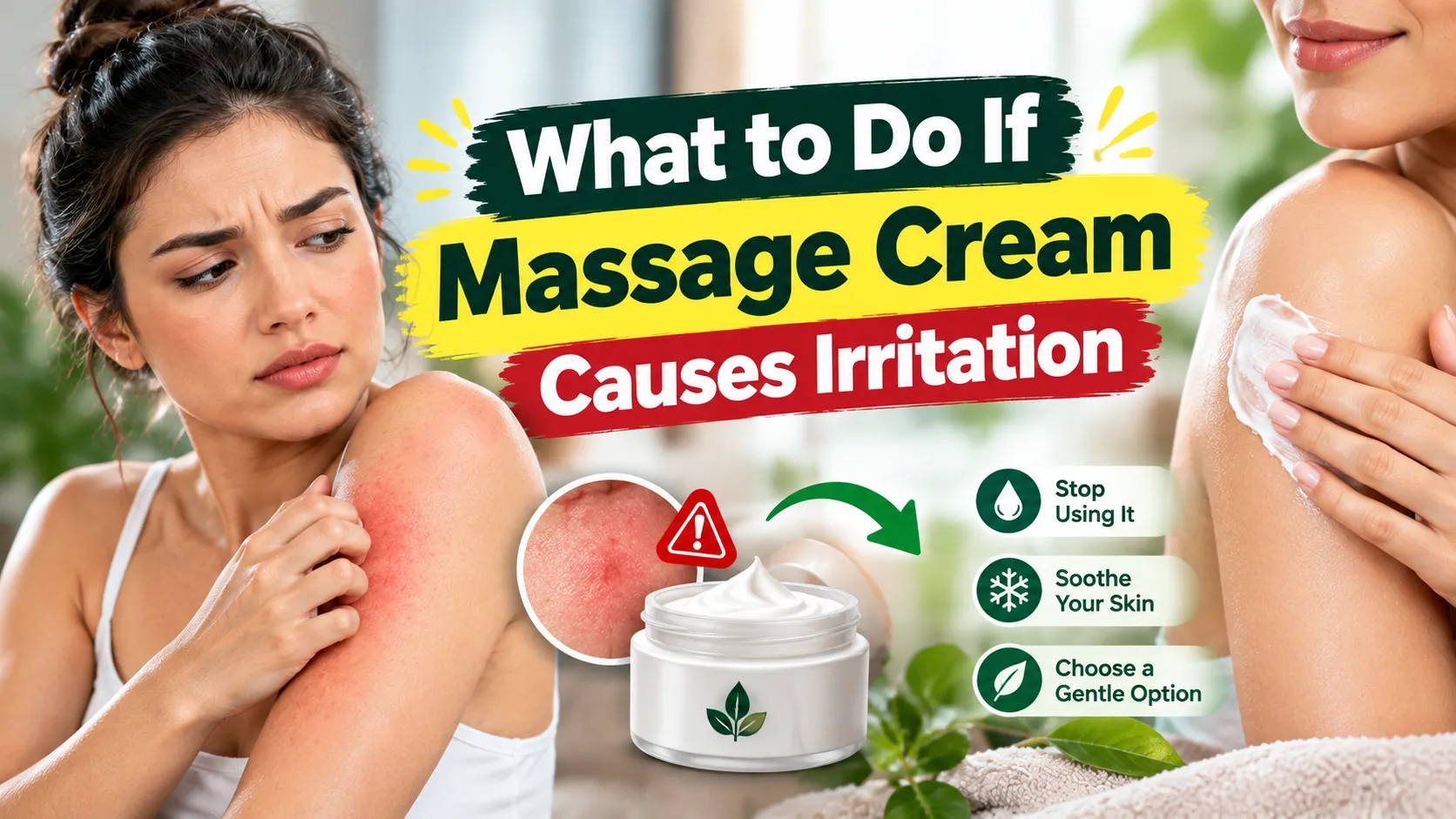
If your skin becomes itchy, red, swollen, or uncomfortable after applying massage cream, stop using the product. Gently remove residue according to the product instructions and avoid adding more fragranced or active products until you understand what happened.
Mild irritation may settle after avoiding the suspected product, but persistent or worsening symptoms deserve professional attention.
Warning:
Do not continue using a product through burning, significant itching, swelling, or a spreading rash simply because it is labeled for massage or skincare. More exposure is not a reliable way to build tolerance.
Practical risk guide
General Use Risk Guide
This is a general practical guide, not a medical risk score.
The safest choice depends on the product and your skin’s response. If there is uncertainty, a basic moisturizer with a clear intended use is often easier to evaluate.
When to Contact a Professional
Most minor product-related irritation can be addressed by stopping the suspected product and monitoring the skin. However, professional advice is appropriate when symptoms are severe, persistent, unusual, or worsening.
When to contact a professional
- Swelling, blistering, or severe burning develops.
- A rash spreads or continues after stopping the product.
- Symptoms repeatedly return with skincare products.
- You have significant discomfort that does not improve.
- You are unsure whether an existing skin problem is reacting to the product.
Self-care or professional advice?
Swipe left/right to see the full table →
| Situation | General next step |
|---|---|
| No symptoms, simple formula | Monitor normal skin tolerance |
| Mild temporary discomfort | Stop use and observe |
| Persistent redness or itching | Seek professional advice |
| Severe swelling or unusual reaction | Seek urgent medical attention |
Myth vs. Fact: Is Massage Cream a Moisturizer?
There are several common assumptions about massage products and skincare. Understanding the difference can help prevent unnecessary irritation or disappointment.
Swipe left/right to see the full table →
| Myth | Fact |
|---|---|
| All creams moisturize equally | Formulas have different purposes |
| Natural ingredients are always gentle | Natural does not guarantee irritation-free use |
| A rich texture means better hydration | Texture and long-term barrier support differ |
| More product gives better results | A small amount may be enough |
The Bottom Line: Can I Use Massage Cream as a Moisturizer?
Yes, massage cream can sometimes provide temporary softness and moisture on the body, but it is not automatically a substitute for a dedicated moisturizer. The most important factors are the ingredient list, intended use, your skin type, and whether the product causes irritation.
If you have normal, healthy body skin and a simple formula, occasional use may be reasonable. For daily skincare, sensitive skin, facial use, or persistent dryness, a moisturizer specifically designed for that purpose is usually easier to evaluate and use consistently.
Tip:
When comparing products, look for clear labeling, simple ingredients, and a formula that matches your intended body area. Patch testing can help you identify potential irritation before regular use.
Frequently Asked Questions
Can I use massage cream as a moisturizer every day?
It depends on the ingredients and your skin’s tolerance. A dedicated body moisturizer is generally the more predictable option for daily use.
Can I use massage cream on my face?
Only if the product is specifically intended for facial use. General body massage creams may contain ingredients that are not ideal for facial skin.
Does massage cream hydrate dry skin?
Some massage creams contain moisturizing ingredients and may temporarily soften dry skin. Their hydration performance depends on the specific formula.
Can massage cream cause skin irritation?
Yes, some formulas may irritate sensitive skin, especially those containing fragrance, essential oils, warming ingredients, or cooling agents.
Should I patch test massage cream before using it?
Patch testing a small area is a sensible precaution, especially if you have sensitive skin or are trying a new product.
What should I do if massage cream makes my skin itchy?
Stop using the product and avoid further exposure until the irritation settles or you receive professional guidance. Persistent or worsening symptoms should be evaluated.
Is massage cream better than regular moisturizer?
Neither is universally better because they serve different purposes. Massage cream prioritizes glide, while moisturizer is specifically designed for routine hydration and skin care.
Final Thoughts
Massage cream may work as an occasional body moisturizer when its ingredients and your skin’s needs align. However, a purpose-made moisturizer is usually the simpler choice for consistent daily hydration. If you develop severe, worsening, unusual, or persistent skin symptoms, seek advice from a licensed healthcare professional.
Author
-

I’m Alex Turner, a massage product reviewer and wellness writer at RemedyTip. I specialize in researching, evaluating, and comparing massage and recovery products to help readers make informed purchasing decisions. My focus is on practical, evidence-informed product guidance covering muscle recovery, relaxation, everyday comfort, and wellness.
I take a research-driven approach to every product I review. I examine product specifications, features, materials, performance claims, user feedback, durability, comfort, ease of use, and overall value. When appropriate, I also consult trusted industry and health-related sources to verify important information and provide readers with a more complete and balanced view.
I cover a wide range of products, including massage guns, handheld massagers, neck and shoulder massagers, foot massagers, massage chairs, foam rollers, and other recovery tools. Rather than focusing only on marketing claims, I look at how products compare in real-world use and who they are actually suitable for. I also consider different budgets, use cases, and user needs when making recommendations.
At RemedyTip, I’m committed to accuracy, transparency, and unbiased product information. I clearly distinguish between manufacturer claims, available evidence, and my own product analysis so readers can understand the basis of each recommendation. I continuously research new products, technologies, and developments in the massage and recovery space to keep my content current and useful.
My goal is simple: to provide trustworthy, easy-to-understand information that helps readers choose massage and recovery products with greater confidence.