Written by Alex Turner
Quick Answer: The best massage oil is one that provides comfortable glide, matches your skin preferences, and avoids ingredients you know you react to. Jojoba and sweet almond oil are versatile starting points, while lighter oils such as grapeseed or sunflower may suit people who dislike a heavy finish.
Find the right oil by matching the feel you want
There is no single massage oil that is perfect for everyone. The better approach is to match the oil to the massage style, skin feel, scent preference, and ingredients you can comfortably use. A simple formula can often be more useful than a complicated blend packed with fragrance or botanical extracts.
Health and safety note: This article is for general educational information only. It does not diagnose, treat, cure, or prevent any condition. It does not replace advice from a licensed healthcare professional. Readers should seek professional help for severe, worsening, unusual, or persistent symptoms.
What to look for in a massage oil
The first question is not which oil is most popular. It is what you want the oil to do during your massage. A good option should let your hands move smoothly without requiring constant reapplication, while still feeling comfortable afterward.
Texture is especially important. A very light oil may feel clean and absorb relatively quickly, but you may need more of it during a longer massage. A richer oil can provide more lasting slip, although some people dislike the heavier or greasier finish.
Ingredient simplicity also matters. If you have sensitive skin or known allergies, a short ingredient list can make it easier to identify potential triggers. Fragrance and essential oils are not automatically bad, but they add ingredients that some people may prefer to avoid. :contentReference[oaicite:0]{index=0}
Practical guide: what matters most
Choose enough slip for your massage style.
Favor ingredients your skin already tolerates.
Unscented or fragrance-free can simplify sensitive-skin choices.
Check storage, packaging, and the product’s use-by guidance.
Think of these as practical buying priorities rather than a scientific ranking. The best combination depends on how you use the product and what your skin tolerates.
Which massage oils are worth considering?
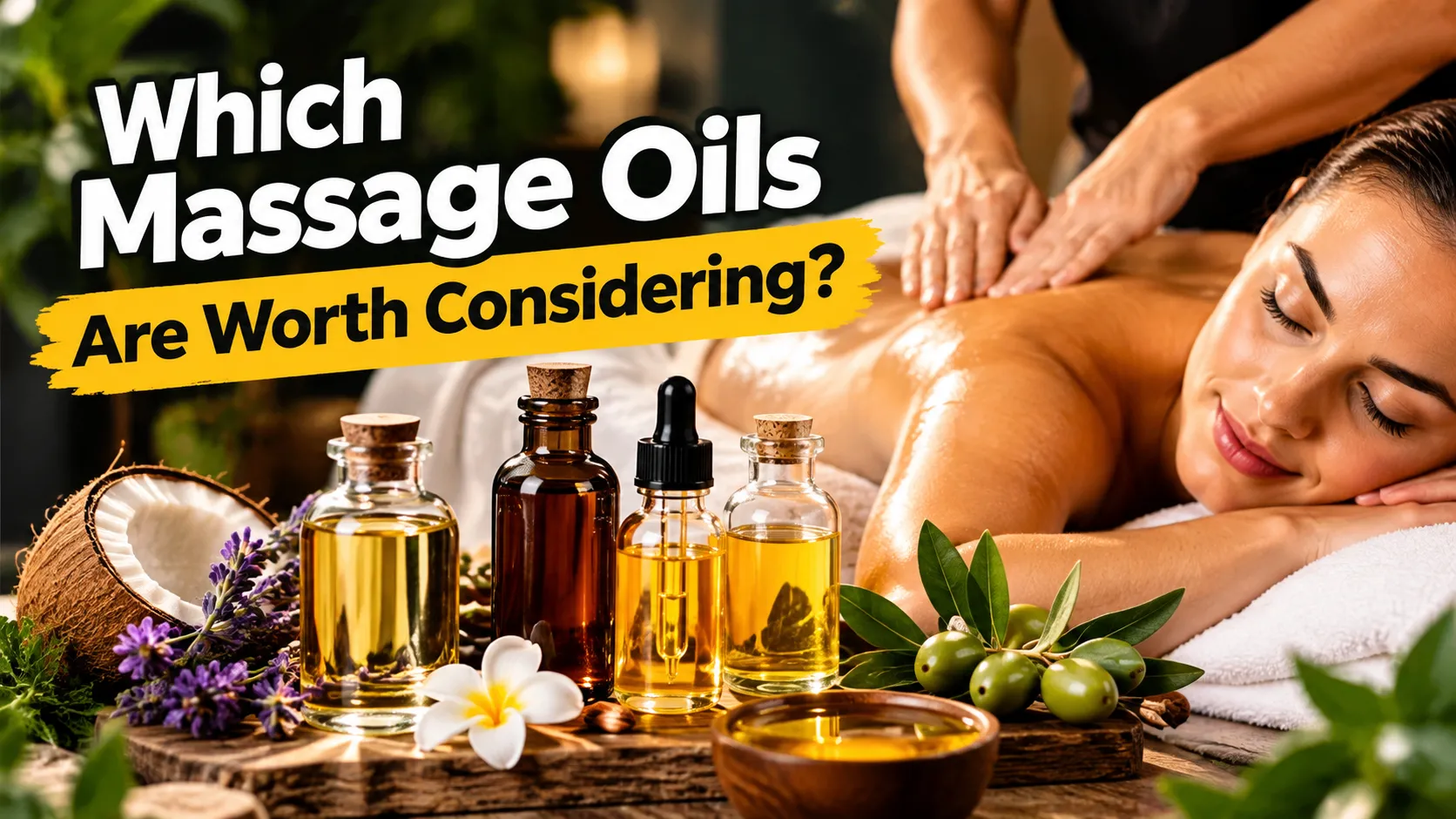
Several common carrier oils can work well for massage. Their differences are mainly about texture, glide, scent, absorption, and personal compatibility rather than one being universally superior.
Jojoba oil
Jojoba is a popular choice when you want a relatively light, smooth feel and a simple ingredient list. It is technically a liquid wax rather than a conventional plant oil, but it is commonly used in personal-care and massage products. Its relatively stable nature can also make it appealing for people who keep a bottle around for repeated use. :contentReference[oaicite:1]{index=1}
Sweet almond oil
Sweet almond oil is a familiar massage and body-care option with a smooth feel and useful glide. It can be a practical choice for general body massage, but anyone with an almond or related nut allergy should read the ingredient label carefully before using it.
Grapeseed and sunflower oil
These lighter-feeling options can appeal to people who do not enjoy a thick, lingering oil layer. They may work particularly well when you want easy movement without a rich finish. Individual formulas still vary, so the label matters more than the oil name alone.
Coconut and richer oils
Coconut and other richer oils can provide substantial slip and a more noticeable skin feel. They may suit people who prefer a cushiony finish, but they can feel too heavy for others. If you are prone to breakouts on the area being massaged, consider a lighter product and see how your skin responds.
Essential oils are a separate consideration. They are concentrated aromatic ingredients rather than ordinary carrier oils, and they should not be applied directly to skin in concentrated form. :contentReference[oaicite:2]{index=2}
Massage oil fit by preference
Swipe left/right to see the full table →
| Option | Feel | Good fit | Main caution |
|---|---|---|---|
| Jojoba | Light-silky | Simple daily use | Still can irritate |
| Sweet almond | Smooth | Body massage | Nut allergy concern |
| Grapeseed | Light | Less-greasy feel | May feel too thin |
| Coconut | Richer | Longer-lasting slip | Can feel heavy |
Note: “Natural,” “organic,” or “therapeutic” on a label does not automatically mean an oil will be better for your skin. Ingredient simplicity, freshness, intended use, and your personal sensitivities are more useful buying factors.
How skin type and sensitivity change the choice
For many people, the safest starting point is a simple oil with a short ingredient list. This is especially useful if you are unsure how your skin will react. A complicated blend can contain several fragrances, botanical extracts, or essential oils, making it harder to identify a trigger if irritation appears.
If your skin tends to feel dry, a richer oil may feel more comfortable. If you dislike residue or have an oily skin tendency, a lighter formula may be preferable. These are comfort preferences, not guarantees about how your skin will respond.
Practical fit dashboard
Start with jojoba, grapeseed, or sunflower-style formulas.
Consider a thicker oil or massage blend and use a smaller amount first.
Favor simple, fragrance-free options and inspect the full ingredient list.
Skip the relevant ingredient rather than relying on a “natural” label.
Patch testing can be useful when introducing a new topical product. The American Academy of Dermatology recommends testing a product on a small area and watching for a reaction before wider use; if a reaction develops, stop using the product. :contentReference[oaicite:3]{index=3}
Ingredients worth checking before buying
Swipe left/right to see the full table →
| Label item | Why check it | Simple choice |
|---|---|---|
| Fragrance | May bother sensitive skin | Fragrance-free |
| Essential oils | Concentrated aromatics | Skip if reactive |
| Nut-derived oils | Relevant to allergies | Choose another base |
| Added botanicals | More ingredients to tolerate | Keep formula simple |
Massage oil mistakes that can make shopping harder
A common mistake is choosing an oil because it sounds luxurious rather than because it fits the intended use. A strongly scented blend may smell appealing in the bottle but become distracting during a long massage or prove unsuitable for sensitive skin.
Another mistake is buying the largest bottle immediately. Oils can change over time when exposed to heat, light, and air, so a smaller bottle may make more sense if you use massage oil only occasionally. Check the manufacturer’s storage instructions and discard a product if its smell, appearance, or texture changes noticeably. :contentReference[oaicite:4]{index=4}
Swipe left/right to see the full table →
| Common mistake | Better choice | Why |
|---|---|---|
| Choosing by scent | Check ingredients first | Better fit for sensitivities |
| Buying a huge bottle | Start smaller | Easier to use while fresh |
| Ignoring allergies | Read the full label | Reduces avoidable exposure |
| Assuming natural means safe | Patch test new products | Natural ingredients can still irritate |
Tip: If you are buying your first massage oil, start with one simple formula rather than several blends. Use it on a small area first, note how the skin feels afterward, and only then decide whether you want a different texture or scent.
Two practical product types to consider

If you want a straightforward starting point, single-ingredient oils can make the buying decision easier. A purpose-made massage oil may be more convenient when you want a ready-to-use blend with a particular scent or texture.
This article may contain affiliate links. If you buy through these links, we may earn a small commission at no extra cost to you. We only mention products that fit the topic and do not replace professional medical advice.
NOW Solutions Sweet Almond Oil
A simple sweet almond oil can be a practical choice if you want a smooth, multipurpose body oil without a complicated blend. Avoid it if almond or related nut ingredients are a concern for you.
NOW Solutions Jojoba Oil
A single-ingredient jojoba oil is another useful option when you prefer a lighter, simple formula. It can be a good fit for people who want one oil for occasional massage and general body-care use.
These are examples of simple product categories rather than claims that either product is universally best. Always confirm the current ingredient list and product directions before buying because formulas and packaging can change.
Typical routine priority: product fit
These bars are a practical buying guide, not measured scientific scores. In most cases, ingredients and skin compatibility deserve more attention than decorative packaging or marketing language.
What should you avoid when choosing massage oil?
Be cautious with products that make broad claims about treating pain, inflammation, circulation, or other medical conditions. Massage oil can provide useful glide and may make a massage routine more comfortable, but the oil itself should not be treated as a substitute for medical care.
Also avoid using a product on broken, irritated, or unusually inflamed skin unless a qualified professional has specifically advised you to do so. Stop using an oil if you develop burning, significant itching, swelling, or a spreading rash.
Buying decision path
Decide whether you want light, medium, or rich glide.
Remove ingredients linked to known allergies or sensitivities.
If unsure, choose a shorter ingredient list.
Try a small area before wider use and stop if irritation develops.
When to choose self-care versus professional advice
Swipe left/right to see the full table →
| Situation | Reasonable next step | Seek help if |
|---|---|---|
| New oil | Small-area test | Strong reaction |
| Mild irritation | Stop product | Persistent or worsening |
| Known allergy | Avoid trigger | Unclear reaction |
| Persistent rash | Avoid experimentation | Professional evaluation |
Warning: Do not assume a concentrated essential oil is safe simply because it is plant-derived. Essential oils can irritate skin when used incorrectly, so follow the product’s dilution directions or choose a ready-to-use massage product instead. :contentReference[oaicite:5]{index=5}
When to contact a professional: Seek professional advice for a severe, spreading, unusual, or persistent skin reaction. Urgent medical attention is appropriate for serious symptoms such as significant swelling, breathing difficulty, faintness, or other signs of a severe allergic reaction.
A simple way to make your final choice
If you are still unsure, narrow the decision to three questions: Do you want a light or rich feel? Do you need to avoid a known ingredient? And do you prefer a simple oil or a ready-made scented blend?
For a general starting point, jojoba is worth considering if you want a relatively light, simple option. Sweet almond can be a practical choice for general body massage if you tolerate almond ingredients. Grapeseed or sunflower-style oils may appeal if you prefer a lighter finish, while richer oils can suit people who want longer-lasting slip.
The best massage oil is ultimately the one you can use comfortably and consistently. You do not need the longest ingredient list, the strongest scent, or the most expensive bottle to get a useful massage product.
Frequently asked questions
What is the best massage oil for beginners?
A simple jojoba or sweet almond oil can be a practical starting point if you tolerate the ingredients. Choose based on the texture and scent you prefer.
Is jojoba oil good for massage?
Jojoba can work well when you want a relatively light, smooth oil with a simple ingredient profile. It may be a useful choice for general body massage.
Is sweet almond oil good for body massage?
Sweet almond oil is commonly used for body care and massage because it provides a smooth, slippery feel. Avoid it if almond or related nut ingredients are a concern.
Is fragrance-free massage oil better for sensitive skin?
It can be a simpler starting point because fragrance is one less category of ingredient to consider. You should still check the complete ingredient list and patch test new products.
Can massage oil cause a skin reaction?
Yes. Oils, fragrances, essential oils, and other ingredients can cause irritation or allergic reactions in some people, so stop using a product if a reaction develops.
Should I choose massage oil with essential oils?
Only if you want the added fragrance and your skin tolerates the formula. Essential oils are concentrated and should be properly diluted according to product directions.
How do I choose between light and rich massage oil?
Choose a lighter oil if you dislike residue or want a less greasy finish. Choose a richer formula if you prefer more lasting slip during massage.
Final Thoughts
The best massage oil is usually the one that matches your preferred glide, feels comfortable on your skin, and avoids ingredients you know you cannot tolerate. Start simple, check the label, and test a new product before wider use. If a skin reaction is severe, worsening, unusual, or persistent, seek professional advice rather than continuing to experiment with oils.
Author
-

I’m Alex Turner, a massage product reviewer and wellness writer at RemedyTip. I specialize in researching, evaluating, and comparing massage and recovery products to help readers make informed purchasing decisions. My focus is on practical, evidence-informed product guidance covering muscle recovery, relaxation, everyday comfort, and wellness.
I take a research-driven approach to every product I review. I examine product specifications, features, materials, performance claims, user feedback, durability, comfort, ease of use, and overall value. When appropriate, I also consult trusted industry and health-related sources to verify important information and provide readers with a more complete and balanced view.
I cover a wide range of products, including massage guns, handheld massagers, neck and shoulder massagers, foot massagers, massage chairs, foam rollers, and other recovery tools. Rather than focusing only on marketing claims, I look at how products compare in real-world use and who they are actually suitable for. I also consider different budgets, use cases, and user needs when making recommendations.
At RemedyTip, I’m committed to accuracy, transparency, and unbiased product information. I clearly distinguish between manufacturer claims, available evidence, and my own product analysis so readers can understand the basis of each recommendation. I continuously research new products, technologies, and developments in the massage and recovery space to keep my content current and useful.
My goal is simple: to provide trustworthy, easy-to-understand information that helps readers choose massage and recovery products with greater confidence.