
By Ryan Mitchell
Last updated: October 24, 2026
As an Amazon Associate, we earn from qualifying purchases.
Quick Answer: Seasonal changes in daylight and temperature shift melatonin timing and core body temperature cues. Many people sleep a little longer in winter and a little less in summer. Consistent morning light, a cooler bedroom, and steady sleep timing help keep the body clock steadier across seasons.
As days grow shorter or longer, your internal clock notices. Light reaching the eyes, outdoor temperature, and even humidity can nudge bedtime, wake time, and how rested you feel. These shifts are usually modest for most adults, yet they can feel noticeable when schedules stay fixed while the sun’s schedule moves.
This guide explains the main biological signals, what research shows about seasonal patterns, and simple, practical steps that support sleep without overcomplicating daily life.
Key Takeaways
- Day length and light intensity are the strongest seasonal cues for the circadian system.
- Sleep duration often runs slightly longer in winter and shorter in summer for many people.
- Cooler ambient temperatures support the natural drop in core body temperature that precedes sleep.
- Morning outdoor light and a consistent schedule are among the most reliable everyday supports.
How Light and Day Length Shape the Body Clock
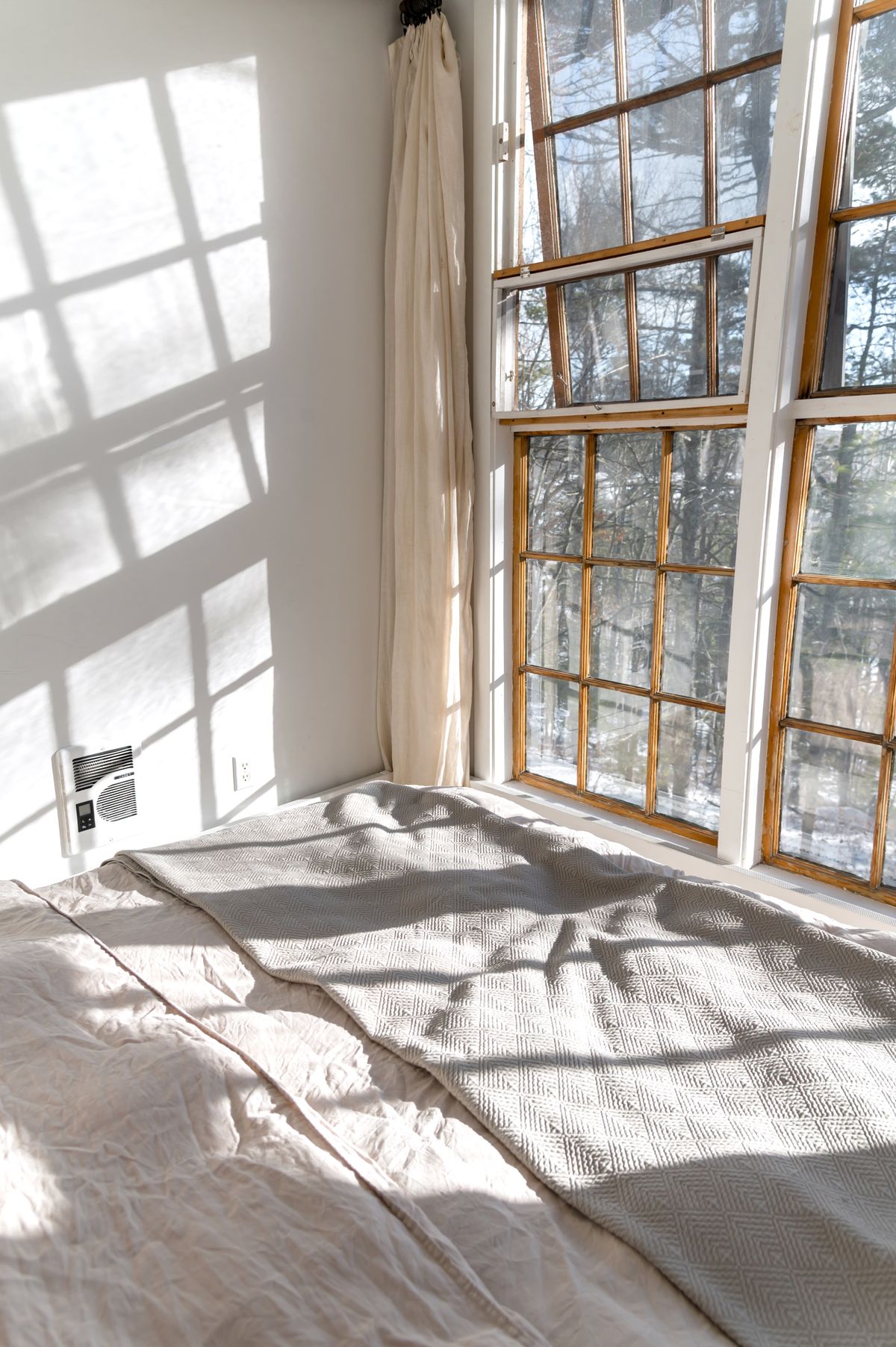
The circadian system, centered in the brain’s suprachiasmatic nucleus, uses light as its primary time cue. Specialized cells in the retina detect brightness and send signals that suppress or permit melatonin release. Longer summer days tend to keep melatonin onset later; shorter winter days can allow earlier or more prolonged melatonin signaling in many people.
Even in cities with artificial lighting, studies have observed seasonal differences in sleep timing and architecture. Wake times often track more closely with sunrise than bedtimes do, which helps explain why sleep duration can shorten modestly when days lengthen in spring and summer.
Daytime light exposure appears especially important. Bright light in the morning advances the clock (supporting earlier sleepiness later), while evening light delays it. Seasonal changes in outdoor light intensity therefore interact with indoor habits such as screen use and late-night lighting.
Light Signal Snapshot
Morning light
Supports earlier circadian phase and daytime alertness.
Evening light
Can delay melatonin and push bedtime later.
Shorter winter days
Often linked with earlier or longer melatonin windows.
Temperature’s Role in Seasonal Sleep
Core body temperature follows a daily rhythm: it tends to decline in the evening, reaching a low point during the night. Sleep onset is often easier when ambient temperature allows heat to leave the body through the skin. Rooms that stay too warm can interfere with this cooling process and increase nighttime wakefulness.
Outdoor temperature also correlates with sleep measures in large datasets. Warmer months are frequently associated with slightly shorter sleep and more time awake after sleep onset. Cooler seasons often show the reverse pattern for many adults, especially when bedroom temperature can be controlled.
Most people sleep more comfortably in a bedroom that feels cool rather than warm. A practical target range often cited for adults is roughly 60–67°F (15–19°C), though individual preference and bedding matter. Layer bedding so you can adjust without fully waking.
Seasonal Patterns at a Glance
The table below summarizes common tendencies reported across observational studies. Individual responses vary with latitude, age, work schedules, and light exposure habits.
| Season | Typical light pattern | Common sleep tendency |
|---|---|---|
| Winter | Shorter days, lower outdoor light | Slightly longer sleep, later wake for some |
| Spring | Lengthening days | Earlier wake, modestly shorter sleep |
| Summer | Long days, higher temperatures | Shorter sleep, more heat-related disruption |
| Autumn | Shortening days, cooling air | Transition toward longer sleep windows |
These are group-level patterns, not rules for every person or climate.
Melatonin and Seasonal Rhythm
Melatonin is produced primarily at night and is strongly suppressed by light. In natural settings, the duration of nighttime melatonin secretion lengthens when nights are longer. Modern indoor lighting and screens can blunt that seasonal signal, yet residual effects still appear in many datasets.
Some people notice heavier sleepiness in winter evenings or more difficulty waking on dark mornings. Others feel the opposite pressure in summer: staying alert later into the evening. Neither pattern is inherently a disorder; both reflect the interaction of biology with environment and schedule.
Melatonin Timing Factors
Photoperiod — longer nights can extend the melatonin window.
Evening screens — blue-rich light can delay onset.
Morning outdoor light — helps set the next night’s timing.
Who Notices Seasonal Sleep Shifts Most
Not everyone experiences the same degree of change. Latitude matters: people farther from the equator see larger swings in day length. Age, chronotype (morning or evening preference), and how much time is spent outdoors also influence sensitivity.
Older adults and younger children sometimes show clearer seasonal differences in sleep duration. People with fixed early work or school schedules may feel the mismatch more when natural light cues shift. Those who already struggle with insomnia or delayed sleep phase can find seasonal transitions more disruptive.
Factors That Amplify or Buffer Seasonal Effects
| Factor | May increase noticeability | May reduce impact |
|---|---|---|
| Latitude | Higher latitudes | Near-equator living |
| Outdoor time | Mostly indoor days | Regular morning daylight |
| Schedule rigidity | Fixed early start times | Some flexibility in wake time |
| Bedroom climate | Warm, poorly ventilated rooms | Cool, adjustable bedding |
Use this as a decision aid, not a diagnosis checklist.
Practical Ways to Support Sleep Across Seasons
Small, repeatable habits usually matter more than dramatic overhauls. The goal is to give the circadian system clear, consistent signals even when outdoor conditions change.
Seasonal Sleep Support Path
1
Morning outdoor light within the first hour of waking
2
Keep bedtime and wake time within about an hour daily
3
Cool the sleep space and dim evening lights
4
Adjust bedding layers rather than room temperature extremes
Winter-Focused Adjustments
Dark mornings make it harder to feel alert. Seek outdoor light or bright indoor light soon after waking when possible. Keep the bedroom cool and use breathable layers. If you feel sleepier earlier, protect an earlier wind-down rather than forcing late-night activity under bright screens.
Summer-Focused Adjustments
Longer evenings and warmer rooms are the main challenges. Blackout options or eye masks can help if sunrise arrives very early. Prioritize a cooler sleep environment and reduce bright light in the hour before bed. A consistent wake time still anchors the clock even when bedtime drifts a little later.
Common Problems and Practical Next Steps
| What you notice | Likely seasonal link | Practical step |
|---|---|---|
| Hard to wake on dark mornings | Low morning light | Outdoor light or bright indoor light soon after rising |
| Difficulty falling asleep in summer | Late light + heat | Dim lights earlier; cool the room |
| More nighttime waking in heat | Impaired body cooling | Lighter bedding, airflow, cooler thermostat |
| Earlier evening sleepiness in winter | Earlier darkness cue | Protect earlier wind-down; avoid fighting it with bright screens |
If sleep problems are severe, persistent, or affect daytime function, speak with a qualified healthcare professional.
Routine Timing Across Seasons
A simple daily framework can stay the same year-round while allowing small seasonal tweaks.
| Time of day | Core habit | Seasonal note |
|---|---|---|
| Morning | Light exposure + consistent wake | More intentional in winter darkness |
| Daytime | Movement and outdoor time when possible | Supports sleep pressure and mood |
| Evening | Dim lights, cooler space, wind-down | Earlier dimming helps in summer |
| Night | Dark, cool, quiet bedroom | Blackout or layers as needed |
Consistency of wake time usually outweighs perfect bedtime control.
Bedroom Environment Checklist
- Temperature feels cool rather than warm when you get into bed
- Light can be blocked or dimmed when you want darkness
- Bedding layers allow quick adjustment without fully waking
- Noise is minimized or masked if it disrupts you
When Seasonal Change Overlaps With Mood or Health Concerns
Some people experience more pronounced winter low mood, energy changes, or sleep shifts that go beyond ordinary seasonal adjustment. Seasonal affective patterns can include increased sleepiness, later timing, or difficulty getting started in the morning. These experiences exist on a spectrum.
This article does not diagnose or treat any condition. If mood, energy, or sleep changes are intense, last for weeks, or interfere with work, relationships, or safety, contact a qualified healthcare professional. Light therapy and other approaches are sometimes used under clinical guidance; they are not do-it-yourself medical treatments.
Pregnancy, postpartum periods, older age, and certain medical conditions can alter sleep needs and light sensitivity. In those situations, personalized advice from a clinician is the safer path.
Safety Note
Seek professional guidance if sleep problems are severe, worsening, or accompanied by low mood that affects daily life. Do not start intense light devices or supplements without checking with a clinician if you are pregnant, have eye conditions, take photosensitizing medications, or have bipolar spectrum concerns.
Helpful Tools for Seasonal Comfort
Simple environment tools can make seasonal transitions easier. Blackout options, cooling bedding, and consistent morning light habits often matter more than specialized gadgets. If you explore products, check current manufacturer details and suitability for your situation.
Related reading on this site includes practical explanations of how daylight exposure affects sleep timing, how body temperature affects sleep, and how circadian rhythm affects sleep quality.
Suitable-Use vs. Extra Caution
Often helpful
- Morning outdoor light walks
- Cooler bedroom temperature
- Consistent wake schedule
- Dim evening lighting
Check with a clinician first
- Bright light therapy devices
- Melatonin supplements
- Major schedule overhauls during illness
- New routines in pregnancy or with medical conditions
Feature Comparison for Everyday Sleep Environment Supports
These are general categories, not product ratings. Always verify current specifications before purchase.
| Support type | Main purpose | Best suited for | Limitation |
|---|---|---|---|
| Blackout curtains or shades | Reduce early light | Summer early sunrise | Does not fix heat alone |
| Breathable bedding layers | Temperature flexibility | Year-round adjustment | Room climate still matters |
| Eye mask | Portable darkness | Travel or shared spaces | Comfort varies by design |
| Fan or airflow | Heat and air movement | Warm nights | Noise sensitivity |
For current product options, you can browse categories such as blackout curtains or cooling bedding on Amazon and check details there.
Illustrative Complexity Meter (not research data)
How much effort different supports usually require:
Morning outdoor light — low complexity
Consistent schedule — moderate complexity
Full environmental redesign — higher complexity
Mistakes That Make Seasonal Transitions Harder
A few common patterns tend to amplify rather than ease seasonal friction.
| Common approach | Why it can backfire | Gentler alternative |
|---|---|---|
| Staying up later on screens in winter | Adds evening light when darkness is already short | Dim earlier and keep a steady wind-down |
| Skipping morning light entirely | Removes the strongest daily reset cue | Even 10–20 minutes outdoors can help |
| Overheating the bedroom “for comfort” | Interferes with natural cooling | Cooler room + warmer layers if needed |
| Large weekend schedule swings | Creates weekly social jet lag | Keep wake time within about one hour |
Small consistency usually outperforms perfect but unsustainable rules.
FAQ
Do people really sleep longer in winter?
Why is it harder to fall asleep in summer?
Does daylight saving time affect seasonal sleep patterns?
Is seasonal sleep change the same as seasonal affective disorder?
What is the most useful single habit for seasonal stability?
Should I change my sleep schedule with every season?
Final Thoughts
Seasonal change affects sleep mainly through light and temperature signals that guide the circadian system and the body’s nightly cooling rhythm. Most adults experience modest shifts rather than dramatic overhauls. Clear morning light, a cooler sleep space, and steady wake timing remain the most reliable everyday supports.
If sleep or mood changes feel intense or persistent, talk with a healthcare professional rather than relying only on general tips. Small, sustainable habits usually serve better than chasing perfect seasonal optimization.

