Written by Ryan Mitchell
Quick Answer: Hobbies for stress relief can give your mind a healthy break from daily demands. Creative activities, reading, gardening, music, puzzles, cooking, crafts, gentle outdoor activities, journaling, and photography can all be useful options. The best choice is one you enjoy and can do regularly without adding pressure.
A Hobby Can Be a Small Reset in Your Day
Stress often fills spare moments with more thinking, scrolling, planning, or worrying. A hobby can create a different kind of attention: you are making something, solving something, caring for something, or simply enjoying an activity.
You do not need a perfect routine or a large block of free time. A useful hobby can fit into 10 or 20 minutes and still give you a reason to pause. The goal is not to become highly skilled. The goal is to have an activity that feels worthwhile rather than demanding.
Important: This article is for general educational information only. It does not diagnose, treat, cure, or prevent any condition. It does not replace advice from a licensed healthcare professional. Readers should seek professional help for severe, worsening, unusual, or persistent symptoms.
Why Hobbies May Help You Handle Everyday Stress
A hobby changes what you are asking your attention to do. Instead of repeatedly checking messages or replaying a difficult situation, you may focus on a recipe, a drawing, a plant, a book, or a simple puzzle.
That shift does not make stressful circumstances disappear. It can, however, create a useful pause between demanding parts of the day. Some activities also give you a sense of progress, which can feel satisfying when other parts of life are uncertain or repetitive.
The most helpful activity is usually not the one that looks impressive online. It is the one that matches your energy, interests, budget, available space, and realistic schedule.
Note: Think of a hobby as a supportive part of your routine, not a test you need to pass. If an activity starts feeling like another obligation, simplify it or choose something different.
What makes a good stress-relief hobby?
A good choice is easy enough to start, enjoyable enough to repeat, and flexible enough to fit ordinary life. It should not require you to feel productive every minute. Some hobbies are valuable precisely because they are playful, quiet, or absorbing.
Match the hobby to your current energy
After a demanding day, a complicated project may feel like work. A quiet activity may be a better fit. On another day, you may want movement or social connection. Choosing based on your current energy can make a hobby easier to maintain.
Hobby Fit: Choose by What You Need Most
Use this table as a practical starting point rather than a strict rule.
Swipe left/right to see the full table →
| If you want… | Try… | Why it may fit |
|---|---|---|
| Quiet focus | Reading | Low setup |
| Creative focus | Drawing | Hands-on activity |
| Outdoor time | Gardening | Nature + routine |
| Social connection | Group cooking | Shared activity |
10 Hobbies to Consider for a Calmer Routine
1. Reading
Reading gives you a simple way to direct attention toward a story, idea, or subject you genuinely enjoy. Choose fiction, essays, biographies, comics, or another format that feels inviting. If concentration is difficult, start with a few pages rather than setting a large reading goal.
2. Drawing or Sketching
Drawing can be completely informal. Doodles, patterns, landscapes, lettering, and simple objects all count. You do not need artistic training; the useful part may simply be giving your hands and attention something specific to do.
3. Gardening
Gardening creates a gentle sequence of small tasks: watering, planting, trimming, observing, and caring for a growing space. If you have little room, a few containers or indoor plants can provide a smaller version of the same routine.
4. Cooking or Baking
Cooking can turn attention toward practical sensory details such as ingredients, textures, smells, and timing. Keep the project simple when your energy is low. Trying a new recipe can be enjoyable, while repeating a familiar one may be more relaxing on busy days.
5. Puzzles
Jigsaw puzzles, crosswords, logic puzzles, and similar activities offer a clear problem to work on. They can be especially appealing if you like structure and visible progress. Pick a difficulty that feels engaging rather than frustrating.
6. Music
Listening to music can be a hobby on its own, while learning an instrument adds a more active form of focus. Singing, practicing simple rhythms, or building themed playlists can also make music part of a regular wind-down routine.
7. Photography
Photography can encourage you to notice ordinary details: light, colors, buildings, plants, or interesting patterns. You do not need expensive equipment. A phone can be enough for a simple “notice five interesting things” walk.
8. Crafts
Knitting, crochet, paper crafts, clay work, model building, and similar hobbies give your hands a repeated or creative task. Beginners should choose projects with clear instructions and modest expectations so learning does not become another source of pressure.
9. Journaling
Journaling can provide a private space for thoughts, plans, observations, gratitude, or creative writing. There is no required format. A few sentences about what happened today may be enough when your attention feels crowded.
10. Gentle Outdoor Activities
Walking, birdwatching, casual cycling, or simply sitting outdoors can combine a hobby with a change of environment. Choose an activity that matches your abilities and surroundings rather than treating it as a fitness challenge.
Practical hobby-selection flow
Low, medium, or high?
Quiet, creative, social, or outdoor?
Try 10–20 minutes.
Did it feel worthwhile?
This flow keeps the decision simple. If the activity repeatedly feels like another task, change the activity rather than forcing yourself to continue.
Build a Hobby Into Your Week Without Overdoing It
A hobby does not need to occupy an entire evening. Start with a small window that is easy to protect. You might read after dinner, sketch before bed, garden on a weekend morning, or work on a puzzle during a quiet afternoon.
Typical routine priority — practical guide
Easy to start
Enjoyable enough to repeat
Fits your schedule
The bars above are a practical guide, not scientific measurements. In real life, consistency usually becomes easier when the hobby requires little preparation and gives you something to look forward to.
Frequency and Timing: Keep the Routine Flexible
Swipe left/right to see the full table →
| Situation | Practical approach | Example |
|---|---|---|
| Very busy day | 10 minutes | Read or sketch |
| Normal day | 20–30 minutes | Cook or craft |
| Free weekend | Longer session | Gardening or photography |
| Low motivation | Minimum version | One page or one song |
Common Mistakes That Can Turn a Hobby Into Work
A hobby is supposed to add something positive to your routine. It can lose that benefit when you make it competitive, expensive, complicated, or overly dependent on achievement.
Mistake vs. Better Choice
Swipe left/right to see the full table →
| Common mistake | Better choice | Reason |
|---|---|---|
| Buying too much gear | Start with basics | Lower pressure |
| Chasing perfection | Enjoy the process | Keeps it playful |
| Forcing a schedule | Use flexible timing | Fits real life |
| Comparing online | Track your enjoyment | Reduces pressure |
Tip: Give a new hobby three or four low-pressure attempts before deciding whether it fits. You are testing the activity, not your ability to master it.
Common stress triggers → hobby matches
Try reading, drawing, or a simple puzzle.
Try gardening, crafts, or photography.
Try group cooking or a shared hobby.
Try a gentle outdoor activity.
These matches are simply starting points. The same activity can feel relaxing to one person and frustrating to another. Your response to the hobby matters more than its label.
Simple Tools That Can Make a Hobby Easier
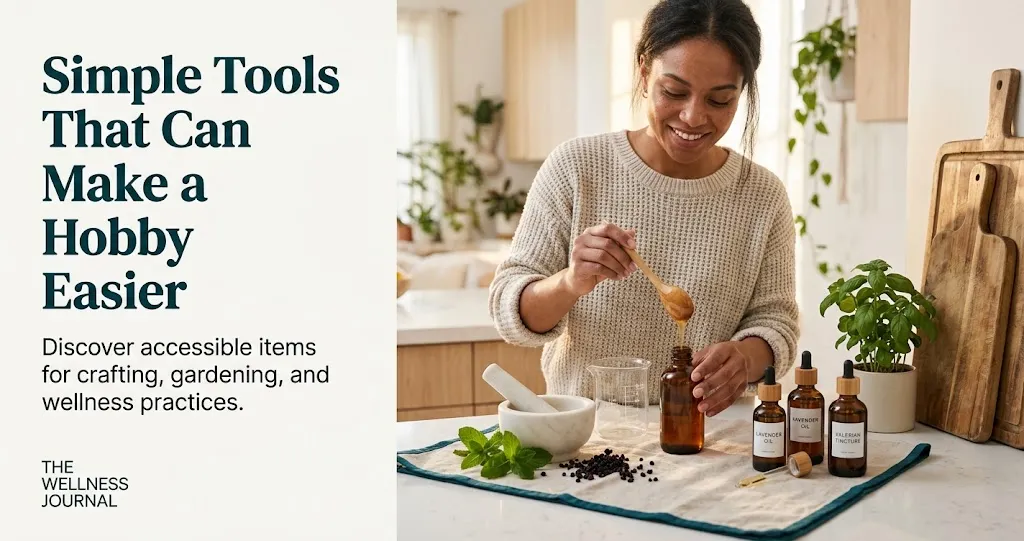
Most hobbies can be started without specialized equipment. If a basic tool genuinely removes friction, it may make the activity easier to repeat. Buy only what supports the hobby you already intend to use.
Swipe left/right to see the full table →
| Hobby | Simple tool | Useful feature |
|---|---|---|
| Drawing | Sketchbook | Portable |
| Reading | Book light | Convenient lighting |
| Puzzles | Puzzle mat | Easy storage |
| Journaling | Notebook | Simple setup |
Warning: Avoid turning relaxation into a spending competition. Expensive equipment, subscriptions, or large projects are not necessary for a hobby to be worthwhile.
Do’s and don’ts for keeping hobbies relaxing
Do
Keep the starting version small. Choose activities you genuinely enjoy. Leave room for imperfect results and missed days.
Don’t
Use the hobby as another performance target. Do not compare every result with people online or keep buying supplies before testing the activity.
When a Hobby Is Not Enough
A hobby can be one part of a balanced routine, but it should not be treated as a replacement for professional care when you are dealing with significant or persistent distress.
If stress is interfering with everyday functioning, relationships, school, work, sleep, or your ability to manage ordinary responsibilities, consider talking with a qualified healthcare or mental-health professional. A hobby can remain part of your routine while you seek appropriate support.
General decision path
Stress feels manageable and you want a healthy routine break.
The hobby itself feels demanding or difficult to maintain.
Symptoms are severe, worsening, unusual, persistent, or disrupting daily life.
When to contact a professional
Consider professional support if stress or related symptoms are severe, worsening, unusual, persistent, or significantly affecting daily life. Seek urgent medical help for symptoms that may indicate an emergency, such as chest pain, severe difficulty breathing, sudden weakness, or other alarming changes.
A hobby can support everyday wellbeing, but it should not delay appropriate evaluation when something feels seriously wrong.
Optional Hobby Supplies
Basic Sketchbook
A simple sketchbook can make drawing, doodling, or journaling easier to start without a complicated setup.
Beginner Jigsaw Puzzle
A beginner-friendly puzzle can provide a structured, screen-free activity when you want a quiet project with a clear stopping point.
Frequently Asked Questions
What are good hobbies for stress relief?
Reading, drawing, gardening, cooking, puzzles, music, photography, crafts, journaling, and gentle outdoor activities are useful options to consider.
How long should I spend on a hobby?
There is no required amount. Even 10–20 minutes can provide a useful break if the activity feels enjoyable and manageable.
Can creative hobbies help with stress?
Creative activities can give your attention a focused task and may provide a satisfying break from repetitive daily demands.
What if I do not have much free time?
Choose a hobby with very little setup, such as reading, sketching, journaling, or listening to music, and use a short session when your schedule allows.
Should a hobby always make me feel relaxed?
Not necessarily. A good hobby may simply feel enjoyable, absorbing, meaningful, or different from your usual responsibilities.
Can outdoor hobbies support a stress-relief routine?
Outdoor hobbies such as gardening, photography, birdwatching, or casual walking can add a change of environment and a pleasant reason to spend time outside.
When should I seek professional help for stress?
Seek professional support when stress or related symptoms are severe, worsening, unusual, persistent, or interfering significantly with everyday life.
Final Thoughts
The best hobby is one you can enjoy without turning it into another responsibility. Start small, choose something that matches your energy, and let your routine change as your needs change.
Hobbies can be a useful part of everyday wellbeing, but they are not a substitute for professional care. If stress or related symptoms become severe, worsening, unusual, persistent, or difficult to manage, consider speaking with a qualified professional.
Author
-

Hi, I’m Ryan Mitchell, a wellness and relaxation writer at RemedyTip.com, where I focus on helping readers better understand stress management, relaxation techniques, mindfulness, sleep improvement, and everyday wellness habits. I have developed a strong knowledge of the Wellness & Relaxation field through sustained learning, in-depth research, and a continued commitment to exploring practical approaches to well-being.
My work focuses on researching wellness topics, examining available evidence, and turning complex information into clear, accessible, and actionable guidance. I’m continually exploring new findings, relaxation practices, and lifestyle strategies to help readers make informed decisions about their daily wellness routines. At RemedyTip.com, my goal is to share trustworthy, research-informed content that encourages healthier habits, greater relaxation, and a more balanced lifestyle.