
By Alex Turner
Quick Answer: The most useful stress relief techniques are simple and repeatable: slow breathing, a short walk, a few minutes of writing, steady hydration, and a calm bedtime routine. Pick one or two, practice daily, and talk with a professional if stress feels severe or lasting.
Stress shows up in busy mornings, crowded inboxes, and restless nights. You do not need a perfect plan to feel steadier. This guide walks through stress relief techniques you can try at home, in plain steps, with clear signs for when it is time to ask for help.
Health note: This article is for general educational information only. It does not diagnose, treat, cure, or prevent any condition. It does not replace advice from a licensed healthcare professional. Readers should seek professional help for severe, worsening, unusual, or persistent symptoms.
Why Stress Builds Up in Everyday Life
Stress is the body’s response to pressure. A deadline, a noisy commute, or a tense talk can all set it off. Short bursts are normal. The trouble starts when pressure keeps coming and your body rarely gets a chance to settle.
Common signs include tight shoulders, a racing mind, a short temper, restless sleep, and trouble focusing. These signs overlap with many other things, so this article does not try to explain what any one of them means for you. It focuses on habits that may support everyday calm.
Most daily stress comes from a mix of sources. Looking at them in groups makes it easier to choose the right habit.
Common Stress Triggers, Grouped
Deadlines, workload, and bills. These often feel constant and hard to switch off.
Family needs, conflict, or loneliness. Strong support can soften their weight.
Poor sleep, skipped meals, and heavy caffeine. These can make small problems feel bigger.
Endless news and late-night scrolling. Constant alerts keep your mind switched on.
Notice that several triggers come from habits, not just events. Habits are the part you can adjust most easily, which is why the routine below leans on them.
For example, someone who skips lunch, drinks coffee all afternoon, and scrolls in bed may feel wired and tired at once. Changing just one of those habits can make the evening feel calmer.
Step-by-Step Stress Relief Techniques for Daily Use
The best approach is the one you will actually repeat. This routine takes about 15 to 20 minutes spread across a day, and you can use any step on its own.
1
2
3
4
5
6
Here is the same routine as a simple flow you can picture on a busy day.
Daily Calm Flow
Name the feeling
Two slow minutes
Easy ten-minute walk
Write one action
Calm evening wind-down
You do not need every step each time. On a hard day, breathing plus a short walk is already a solid start.
How Often to Use Each Technique
Different habits fit different moments. This table shows a practical rhythm, not a rule.
Swipe left/right to see the full table →
| Technique | How Often | Typical Time | Best Moment |
|---|---|---|---|
| Slow breathing | 1-3 times daily | 2 minutes | Before tense tasks |
| Easy walk | Most days | 10-20 minutes | Midday or after work |
| Journaling | A few times weekly | 5-10 minutes | Evening |
| Stretch break | Every few hours | 3-5 minutes | During desk work |
| Screen-free wind-down | Nightly | 20-30 minutes | Before bed |
Which Habits to Start With
If you feel unsure where to begin, this guide shows a typical routine priority. It is a practical guide, not scientific data.
Typical Routine Priority
Sleep and movement sit at the top because they support almost everything else. Start there, then add breathing or writing once those feel steady.
Note: Stress relief is personal. A habit that works well for a friend may not suit you, so give each one a fair week or two before deciding.
Simple Tools and Drinks That Support Your Routine
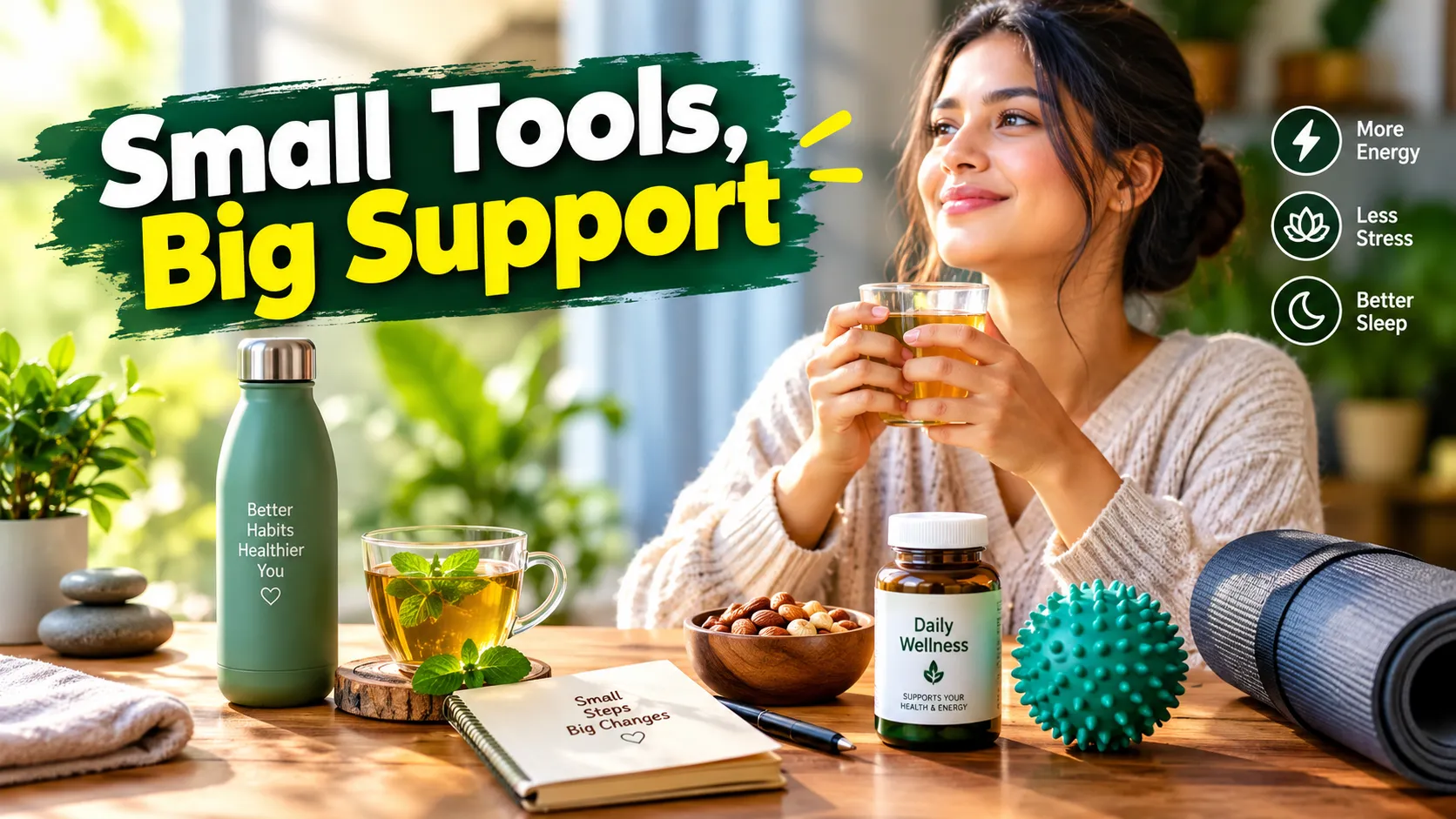
You do not need special gear. Still, a few everyday items can make habits easier to repeat.
Swipe left/right to see the full table →
| Item | How It May Help | Good Fit If | Skip If |
|---|---|---|---|
| Water bottle | Makes sipping easy | You forget to drink | You already hydrate well |
| Notebook or journal | Gets worries onto paper | Your mind feels crowded | Writing adds pressure |
| Comfortable shoes | Supports regular walks | You walk to unwind | Your current pair fits well |
| Warm caffeine-free drink | Signals a calm evening | You like a bedtime ritual | A label or medicine warns against it |
| Phone timer | Keeps breaks short and regular | You skip breaks | Your phone distracts you |
Hydration matters more than many people expect. Water is the simplest choice. Caffeine can feel jittery, especially later in the day, and alcohol may disrupt sleep, so neither is a reliable way to unwind. If you enjoy herbal tea, read the label first and ask a pharmacist if you take any medication, because some herbs can interact with it.
Common Mistakes and Better Choices
Most people do not fail at calming habits because of willpower. They fail because the plan is too big or the timing is off.
Swipe left/right to see the full table →
| Common Mistake | Why It Backfires | Better Choice |
|---|---|---|
| Waiting until overwhelmed | Hard to learn under pressure | Practice when you feel okay |
| Scrolling to relax | Keeps the mind alert | Set a screen cutoff time |
| Skipping meals, adding coffee | Can increase jitters | Regular meals and water |
| Trying everything at once | Feels like another chore | Pick two and repeat them |
| Judging by one bad day | Progress is uneven | Look at two-week patterns |
Tip: Attach a new habit to something you already do. For example, breathe slowly for two minutes right after brushing your teeth. Anchored habits are easier to remember.
Troubleshooting When Techniques Feel Hard
If stress relief techniques feel pointless at first, that is common. Your mind may need a few tries before a new habit feels natural. Here are the usual roadblocks.
“Breathing makes me feel worse”
Try shorter rounds with a gentler pace. Breathe normally between rounds, or switch to a walk or stretch instead.
“I cannot focus long enough to write”
Set a timer for three minutes and write just one line per worry. Messy notes still count.
“I have no time”
Use small pockets of the day: breathe while the kettle heats, stretch between calls, or walk during a phone chat. One minute is better than none.
“I keep forgetting”
Place a visible cue where you will see it, such as a note on your mirror or a daily phone alarm. Reminders turn good intentions into routine.
Warning: If breathing exercises make you dizzy, lightheaded, or short of breath, stop and breathe normally. If these feelings continue, talk with a healthcare professional.
Pro Tips to Make Habits Stick
These tips make stress relief techniques easier to keep up over weeks, not just days.
Two minutes of breathing counts. Small wins make habits easier to keep.
Use breathing for sudden tension and walking for built-up stress. Choose writing when your thoughts feel crowded.
Keep a steady bedtime and dim the lights early. Good rest makes every other habit easier.
Talk with a friend or join a walking group. Sharing a worry often makes it feel smaller.
When Stress Relief Techniques Are Not Enough
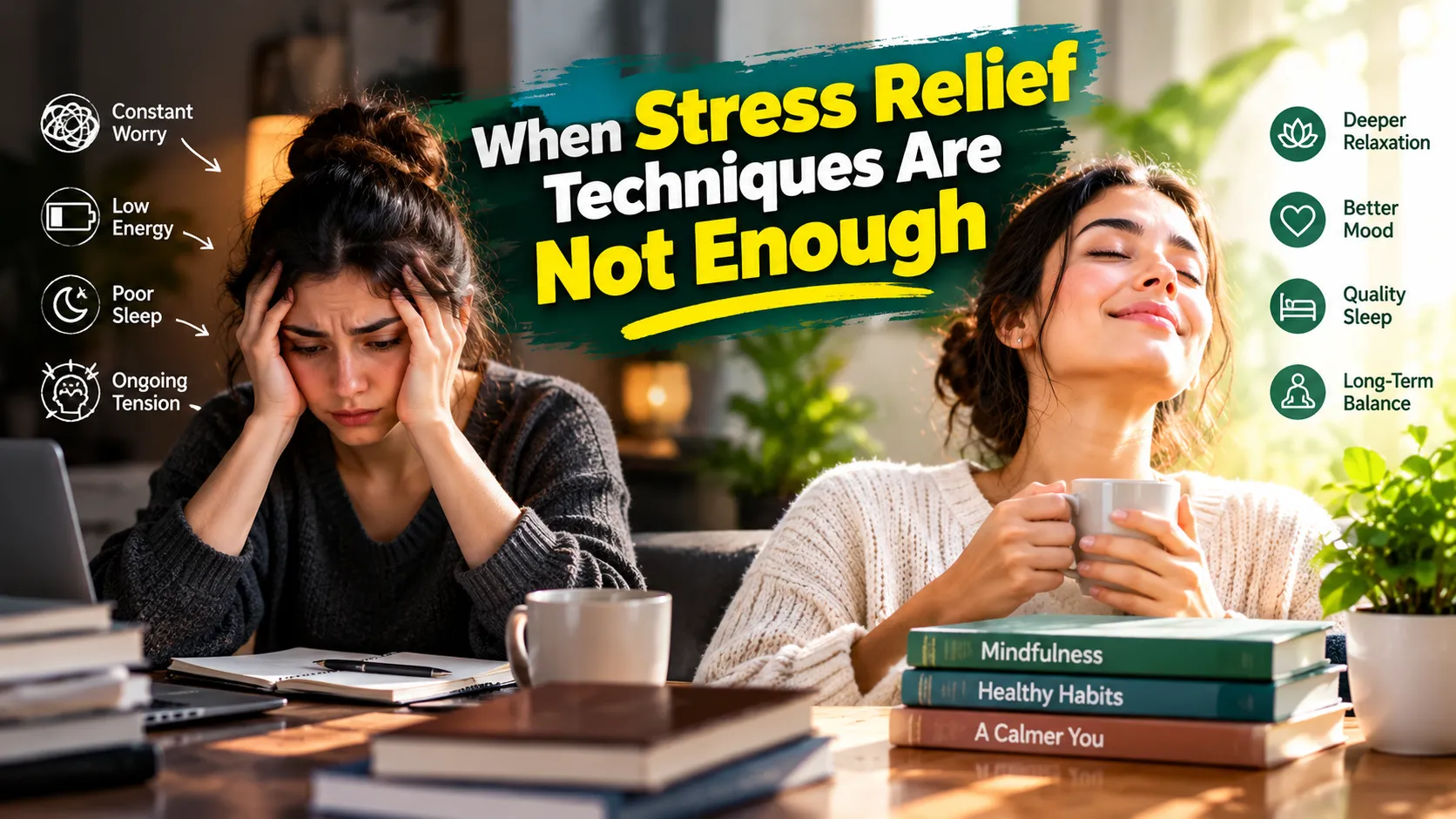
Self-care can help with everyday pressure, but it is not meant to handle everything. This table shows a general guide for deciding your next step.
Swipe left/right to see the full table →
| What You Notice | Self-Care May Fit | Consider Professional Help |
|---|---|---|
| Busy week, tense shoulders | Yes, try the routine | If it keeps returning |
| Poor sleep for a few nights | Yes, adjust bedtime habits | If it lasts for weeks |
| Constant worry, hard to function | Not enough on its own | Yes, make an appointment |
| Chest pain or fainting | No | Seek urgent medical care |
Use this red-flag checklist as a quick general guide to spot stress that needs more support than home habits.
Red-Flag Checklist
Weeks of poor sleep or big appetite changes. Mention this to a healthcare professional.
Trouble working, studying, or caring for yourself. Support can help you get back on track.
Chest pain, fainting, or severe symptoms. Seek urgent medical care.
Thoughts of self-harm or deep hopelessness. In the US, call or text 988 right away.
If any of these fit, do not wait for a perfect moment. Reaching out early is a practical step, not a sign of failure.
When to contact a professional: Reach out to a doctor or licensed mental health professional if stress feels overwhelming, lasts for weeks, or affects your sleep, work, or relationships. Seek urgent medical help for chest pain, fainting, or severe symptoms. If you have thoughts of harming yourself, call or text 988 in the US.
For more background, see MedlinePlus on stress and the NIMH stress fact sheet.
Helpful Items for Your Routine
This article may contain affiliate links. If you buy through these links, we may earn a small commission at no extra cost to you. We only mention products that fit the topic and do not replace professional medical advice.
Insulated Water Bottle
May make steady sipping easier through busy days and walks.
Guided Journal
Can help with routine consistency by giving you simple prompts for evening reflection.
Frequently Asked Questions
What are the best stress relief techniques for beginners?
Slow breathing, a short walk, and a regular bedtime are easy places to start. Pick one or two and repeat them daily.
How long does it take to feel calmer?
Some people feel a little calmer within minutes of slow breathing or walking. Habits like steadier sleep often take a few weeks, and results vary.
Can I relieve stress at work without leaving my desk?
Yes. Try slow breathing, shoulder rolls, and a short stretch, and step outside for a few minutes when you can.
Does coffee or alcohol help with stress?
They may feel relaxing in the moment, but caffeine can feel jittery and alcohol can disrupt sleep. Water or a warm caffeine-free drink is a gentler option.
Is it normal to feel stressed every day?
Some daily stress is common. Stress that feels constant or interferes with work, sleep, or relationships is worth discussing with a healthcare professional.
When should I see a professional about stress?
Seek help if stress feels overwhelming, lasts for weeks, or affects daily life. If you have thoughts of harming yourself, call or text 988 in the US right away.
Final Thoughts
You do not need to master every one of the stress relief techniques above. Choose a few that fit your day, practice them gently, and notice what helps over two weeks.
Remember that these habits support everyday calm and do not replace professional care. If stress feels severe, worsening, unusual, persistent, or not improving, please reach out to a healthcare professional.
Author
-

I’m Alex Turner, a massage product reviewer and wellness writer at RemedyTip. I specialize in researching, evaluating, and comparing massage and recovery products to help readers make informed purchasing decisions. My focus is on practical, evidence-informed product guidance covering muscle recovery, relaxation, everyday comfort, and wellness.
I take a research-driven approach to every product I review. I examine product specifications, features, materials, performance claims, user feedback, durability, comfort, ease of use, and overall value. When appropriate, I also consult trusted industry and health-related sources to verify important information and provide readers with a more complete and balanced view.
I cover a wide range of products, including massage guns, handheld massagers, neck and shoulder massagers, foot massagers, massage chairs, foam rollers, and other recovery tools. Rather than focusing only on marketing claims, I look at how products compare in real-world use and who they are actually suitable for. I also consider different budgets, use cases, and user needs when making recommendations.
At RemedyTip, I’m committed to accuracy, transparency, and unbiased product information. I clearly distinguish between manufacturer claims, available evidence, and my own product analysis so readers can understand the basis of each recommendation. I continuously research new products, technologies, and developments in the massage and recovery space to keep my content current and useful.
My goal is simple: to provide trustworthy, easy-to-understand information that helps readers choose massage and recovery products with greater confidence.

