By Ryan Mitchell | Wellness & Relaxation
Quick Answer: To start, sit comfortably, set a timer for five minutes, and breathe slowly through your nose. When your mind wanders, gently return to your breath without judging yourself. Practice daily at the same time. Many people find short, regular sessions more manageable than long ones, and this may help you feel calmer.
Stress shows up in both body and mind: a tight jaw, racing thoughts, a restless evening. Learning how to meditate for stress relief gives you a simple tool you can use almost anywhere. You do not need special gear, a quiet mountain, or an empty schedule. This guide covers a beginner routine, common mistakes, troubleshooting, and when to ask a professional for support.
This article is for general educational information only. It does not diagnose, treat, cure, or prevent any condition. It does not replace advice from a licensed healthcare professional. Readers should seek professional help for severe, worsening, unusual, or persistent symptoms.
Why Stress Builds Up and What Meditation Does
Stress is your body’s response to pressure. Deadlines, money worries, noise, and poor sleep can keep your system on high alert. When that alert never switches off, you may notice shallow breathing, tense shoulders, and a mind that jumps from one worry to the next.
Meditation is a practice of training attention. Instead of fighting stressful thoughts, you notice them and return to one anchor, usually your breath. The National Center for Complementary and Integrative Health offers a plain-language overview of meditation and mindfulness, and Mayo Clinic explains common meditation styles. Results vary from person to person.
Picture a work email landing at 9 p.m. Your shoulders rise, your breath turns shallow, and your mind starts rehearsing replies. A short breathing session teaches you to spot that pattern and pause before reacting.
Note: Short, regular practice usually works better than occasional long sessions. Think of it like brushing your teeth: a small daily habit that adds up over time.
Here is a quick map of where everyday stress often comes from, so you know what you may notice during practice.
Racing thoughts, long to-do lists, and replaying conversations. These loops keep attention stuck on the past or future.
Clenched jaw, tight shoulders, and shallow breathing. Many people carry stress physically without realizing it.
Late caffeine, skipped meals, and screens before bed. These can make a stressful day feel heavier.
Noise, clutter, and crowded commutes. Your environment can quietly keep your system on alert.
In practice, you are not trying to erase these triggers. You are learning to notice them sooner, which can make it easier to pause instead of react.
Step-by-Step: How to Meditate for Stress Relief at Home
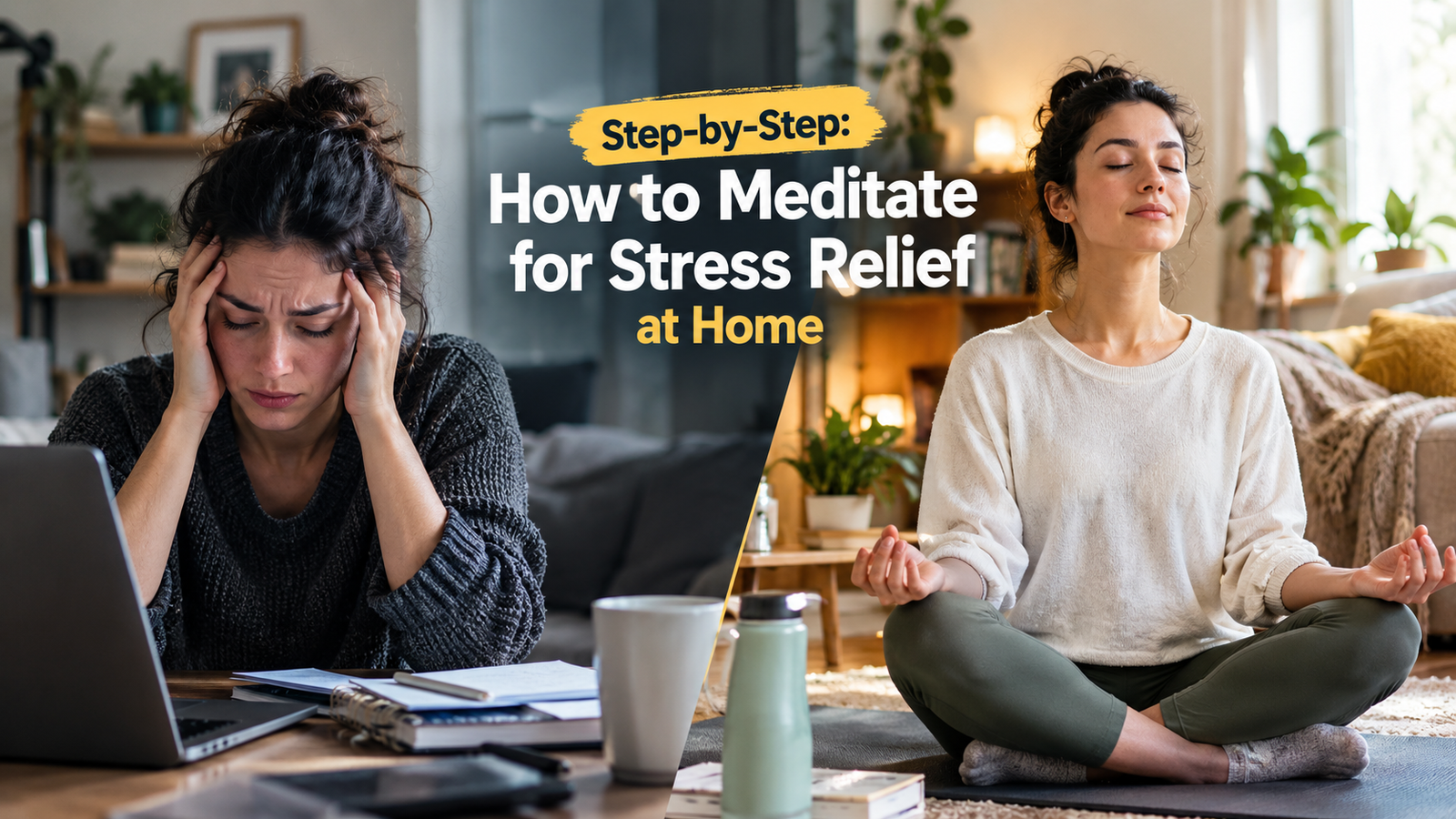
This routine takes about five minutes and suits most beginners. Follow the steps in order the first few times.
A longer exhale is a common technique because slower breathing can feel calming. If counting feels forced, just breathe naturally. The goal is not an empty mind. Noticing that you drifted and coming back is the actual practice, and each return works like one repetition at the gym for your attention.
Here is the same routine as a loop you can remember without rereading the steps.
Sit and set timer
→
Slow breaths
→
Mind wanders
→
Back to breath
→
Stretch, stand
The Notice and Return steps repeat many times in one session. That is normal, and it is the heart of the practice.
How Long and How Often to Practice
If you are wondering how to meditate for stress relief without overcommitting, start small and build slowly. A session you can finish every day beats an ambitious one you abandon by Friday. Add a couple of minutes only when the current length feels easy.
A Gentle Practice Schedule
Swipe left/right to see the full table →
| Stage | Session length | How often | Focus |
|---|---|---|---|
| Week 1 | 3-5 minutes | Daily | Counting breaths |
| Weeks 2-3 | 5-8 minutes | Daily | Body awareness |
| Week 4 onward | 10-15 minutes | Most days | Open attention |
| Stressful moment | 1-2 minutes | As needed | Three slow breaths |
Treat these numbers as a flexible guide, not a rule. If a week feels hard, stay at your current length. Choose a time you can repeat, such as right after waking or before dinner, so the habit has a fixed place in your day.
Simple Tools That Can Make Practice Easier
You do not need much gear to learn how to meditate for stress relief. A few small items can remove friction, though, and make it easier to start on busy days.
Tools and What They Help With
Swipe left/right to see the full table →
| Tool | Helps with | Choose it if |
|---|---|---|
| Gentle timer | Not watching the clock | You peek at your phone |
| Chair or cushion | Steady, upright posture | Floor sitting feels awkward |
| Guided audio | Staying on track | Silence feels uncomfortable |
| Small notebook | Spotting patterns | You like tracking habits |
Start with a timer and a chair. Add other items only if a specific problem keeps getting in your way.
Common Mistakes and Better Choices
Most beginners who struggle with how to meditate for stress relief run into the same few problems. Almost all of them come from expecting too much too soon.
Mistake vs Better Choice
Swipe left/right to see the full table →
| Common mistake | Better choice |
|---|---|
| Trying to empty your mind | Let thoughts pass and return to the breath |
| Starting with 30 minutes | Begin with 5 and add a few minutes weekly |
| Scolding yourself for wandering | Treat each return as a success |
| Meditating only when overwhelmed | Practice daily so the skill is ready |
| Expecting instant calm | Focus on showing up, not on feelings |
The pattern across every row is the same: lower the pressure. Meditation is not a test you can fail, and some days will simply feel busier than others.
The bars below show a general guide to what tends to matter most for beginners.
Typical routine priority (practical guide, not scientific data)
Consistency and attitude count for more than equipment. If you can only change one thing, change how often you show up.
Troubleshooting Your Practice
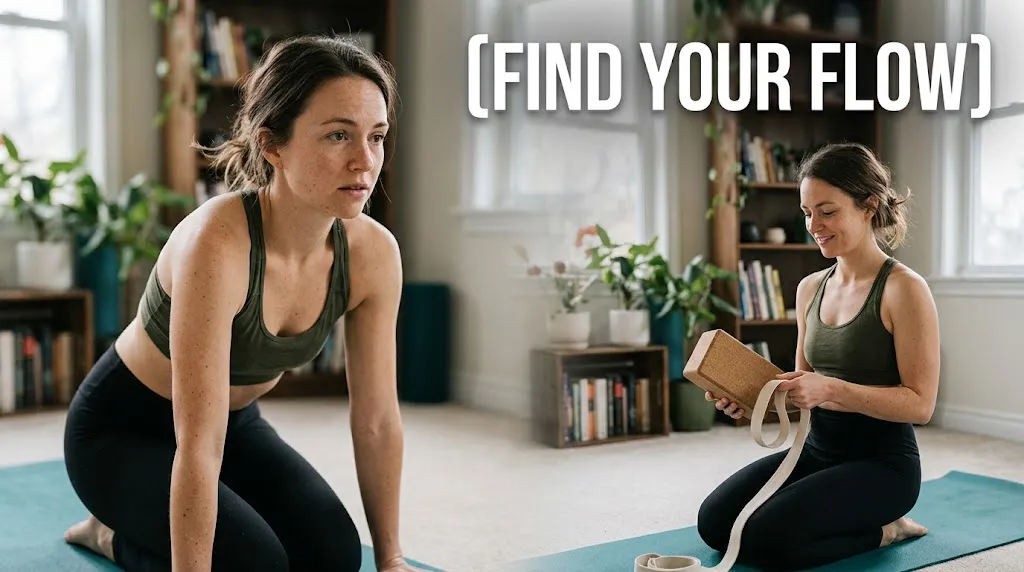
Even when you know how to meditate for stress relief, some sessions will feel messy. These are the most common roadblocks and simple adjustments.
Racing thoughts are the top beginner complaint. Count each breath from one to ten, then start over. The counting gives your attention a simple job.
Try a shorter session or a gentle walk first. You can also keep your eyes open and rest your gaze on one spot.
Sit upright instead of lying down. Choose a time of day when you feel more alert, and consider a brief stretch beforehand.
Some people feel uneasy sitting in silence. Shorten the session, keep your eyes open, or use guided audio. If the feeling continues, pause and talk with a professional.
Pro Tips to Make the Habit Stick
A few small tricks can keep your routine going when motivation dips.
Pair it with an existing habit. Meditate right after brushing your teeth or before your morning coffee. The old habit becomes the reminder for the new one.
Try a body scan. Move your attention slowly from your feet to your head, noticing tension without trying to fix it. This works well when breath focus feels dull.
Use micro-sessions. Take three slow breaths before opening your inbox or starting the car. These tiny pauses add up across a week.
Keep a short log. Write one line after each session about how you felt. Over several weeks, you may spot patterns in what helps.
Tip: Leave your cushion or chair where you can see it. A visible reminder makes starting easier, even on a crowded day.
Before you decide whether to adjust your routine or reach out for help, use this quick guide.
How does your session feel?
Keep your routine. Stay at the same length until it feels easy, then add a few minutes.
Shorten the session, open your eyes, or try guided audio. Pause if it does not ease.
If stress lasts for weeks or affects sleep and work, talk with a doctor or licensed mental health professional.
For chest pain, fainting, or thoughts of self-harm, seek urgent help. In the U.S., call or text 988 or local emergency services.
Most people land in the first two boxes. The last two exist so you know exactly when practice alone is not enough.
When Results Do Not Improve
If you have practiced most days for several weeks and still feel overwhelmed, that does not mean you are doing it wrong. Stress can come from many sources, including workload, health conditions, grief, or anxiety, and a breathing routine may not be enough by itself. A doctor or licensed mental health professional can help you look at the bigger picture.
Self-Care or Professional Support?
Swipe left/right to see the full table →
| What you notice | Reasonable next step |
|---|---|
| Everyday tension after a busy day | Short breathing sessions and self-care |
| Stress lasting weeks, affecting sleep or work | Talk with a doctor or mental health professional |
| Panic, chest pain, or fainting | Seek urgent medical help |
| Hopelessness or thoughts of self-harm | Call or text 988 right away |
Warning: Stop the session if you feel dizzy, panicky, or emotionally flooded. Open your eyes, feel your feet on the floor, and breathe naturally. Do not push through distress. People with a history of trauma, panic, or serious mental health conditions may want guidance from a professional before starting.
When to contact a professional: Reach out to a doctor or licensed mental health professional if stress lasts for weeks, disrupts your sleep, work, or relationships, or if you rely on alcohol or other substances to cope. Seek urgent medical help for chest pain, fainting, or trouble breathing. If you have thoughts of harming yourself, call or text 988 in the U.S. or contact local emergency services right away.
Optional Gear for a Comfortable Practice
This article may contain affiliate links. If you buy through these links, we may earn a small commission at no extra cost to you. We only mention products that fit the topic and do not replace professional medical advice.
Meditation Cushion
May support comfort during seated practice and help you hold a steady, upright posture.
Digital Meditation Timer
Can help with routine consistency by letting you set a session length without watching your phone.
Frequently Asked Questions
How long should a beginner meditate each day?
Five minutes a day is a common starting point. Add a few minutes each week as it feels comfortable.
Can I meditate lying down?
Yes, but you may fall asleep. Sitting upright usually helps you stay alert.
What if my mind keeps wandering?
That is normal and part of the practice. Each time you notice and return to your breath, you are doing it correctly.
How soon will I feel calmer?
Some people notice a calmer feeling after one session, while others need several weeks. Results vary, so focus on regular practice.
Do I need an app or guided audio?
No, a simple timer is enough. Guided audio can help beginners stay on track if silence feels uncomfortable.
Is meditation safe for everyone?
It is gentle for most people, but it can stir up difficult feelings for some. Talk with a professional if it increases anxiety or distress.
Can meditation replace therapy or medication?
No. It may complement other care, but never stop prescribed treatment without talking with your healthcare provider first.
Final Thoughts
Learning how to meditate for stress relief is less about perfect focus and more about showing up. Start with five minutes, return to your breath each time your mind drifts, and be patient with yourself.
Meditation is a supportive habit, not a medical treatment. If your stress feels severe, worsening, unusual, or persistent, or if it is not improving, please talk with a licensed healthcare professional.
Author
-

Hi, I’m Ryan Mitchell, a wellness and relaxation writer at RemedyTip.com, where I focus on helping readers better understand stress management, relaxation techniques, mindfulness, sleep improvement, and everyday wellness habits. I have developed a strong knowledge of the Wellness & Relaxation field through sustained learning, in-depth research, and a continued commitment to exploring practical approaches to well-being.
My work focuses on researching wellness topics, examining available evidence, and turning complex information into clear, accessible, and actionable guidance. I’m continually exploring new findings, relaxation practices, and lifestyle strategies to help readers make informed decisions about their daily wellness routines. At RemedyTip.com, my goal is to share trustworthy, research-informed content that encourages healthier habits, greater relaxation, and a more balanced lifestyle.