Written by Ryan Mitchell · Wellness & Relaxation
Quick Answer: Journaling can be a simple way to put stressful thoughts into words, notice patterns, and decide what deserves your attention. A useful routine can take just a few minutes: name what is bothering you, describe how you feel, separate what you can control from what you cannot, and choose one small next step.
When stress makes your thoughts feel crowded, a blank page can provide a private place to slow down and sort through them. You do not need polished writing, a special notebook, or a long daily session. The goal is to create a manageable pause between a stressful thought and your next response.
Different journaling styles can serve different needs. A brain dump may be useful when your mind is overloaded, while a worry journal can help you separate controllable problems from concerns you cannot immediately change. Gratitude or reflection prompts can also give a daily routine more structure.
Safety & Trust: This article is for general educational information only. It does not diagnose, treat, cure, or prevent any condition. It does not replace advice from a licensed healthcare professional. Readers should seek professional help for severe, worsening, unusual, or persistent symptoms.
Why Writing Can Help When Stress Feels Overwhelming
Stress can make several concerns compete for attention at the same time. You may be thinking about a deadline while replaying a conversation, remembering an unfinished task, or worrying about something that has not happened yet. Writing gives those thoughts a defined place outside your head.
Keeping a journal can also make stress patterns easier to notice. Cleveland Clinic notes that a journal can help people track stressors, physical and emotional reactions, and coping responses. The useful part is not simply recording events; it is noticing what tends to trigger stress and what responses seem helpful. :contentReference[oaicite:1]{index=1}
The effect is not guaranteed, and journaling should not be treated as a cure for ongoing mental health problems. Think of it as one low-cost self-care tool that may support awareness, reflection, and healthier coping alongside other appropriate sources of support.
Stress Trigger Map — Practical Guide
What happened just before the stress increased?
What thoughts, feelings, or body sensations appeared?
What did you do next, and did it help?
What small action could make the situation easier?
This simple map turns a vague feeling into information. Over several entries, repeated triggers or helpful responses may become easier to recognize.
Choose a Journaling Style That Matches Your Stress
You do not have to use one method every day. Match the approach to what is happening in the moment. If your mind feels crowded, start by getting thoughts onto the page. If one specific concern keeps returning, use a structured worry entry. If you want a gentle evening practice, reflection or gratitude may feel easier.
Which Method Fits Your Situation?
Swipe left/right to see the full table →
| Method | Best fit | Starting idea |
|---|---|---|
| Brain dump | Mental clutter | Write everything on your mind |
| Worry journal | Repeating worries | Ask what you can control |
| Gratitude | Evening reflection | Name a few positive moments |
| Prompted writing | Blank-page frustration | Answer one focused question |
Note: There is no requirement to write beautifully or in complete sentences. Lists, short phrases, questions, and unfinished thoughts can all be useful if they help you understand what is occupying your attention.
A Simple Five-Step Journaling Routine
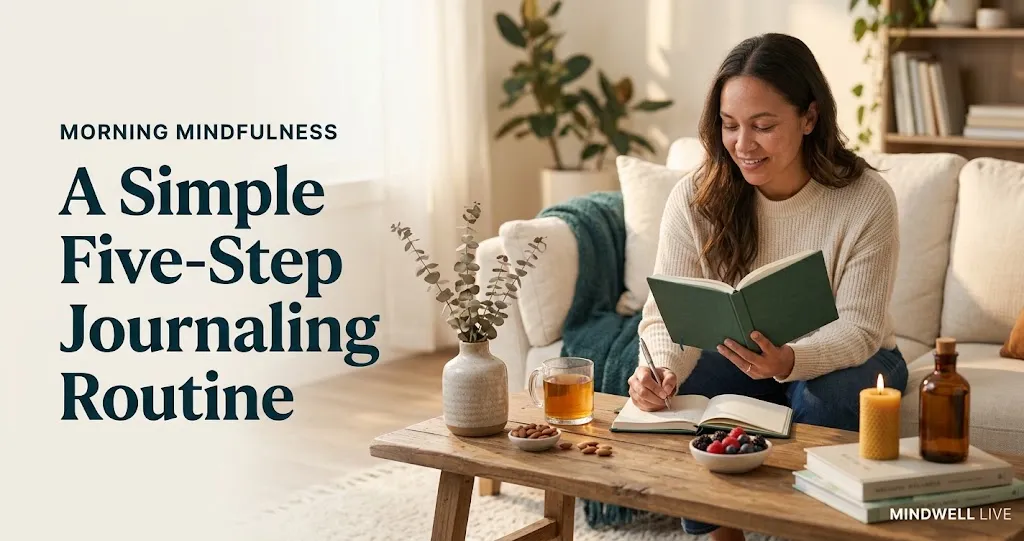
A consistent routine can make journaling easier because you do not have to decide what to do every time you open the notebook. Keep the process short enough that it feels realistic rather than like another responsibility.
1
Pause and identify the main source of stress instead of trying to document your entire day.
2
Write what happened and describe the thoughts or feelings that came with it.
3
Separate facts from predictions, assumptions, or worries about what might happen.
4
Identify one part you can influence and one part you may need to leave alone for now.
5
Finish with one small next step, a calming activity, or permission to stop thinking about the issue for the moment.
Routine Flow — Typical Daily Priority
1. Name the stressor
2. Describe the reaction
3. Sort control
4. Choose one next step
The bars are a practical routine guide, not scientific measurements. If five steps feel like too much, use only the first two: identify the stressor and put your thoughts into words.
How Often Should You Journal?
Consistency matters more than creating a perfect schedule. Some people prefer a short daily entry, while others may find several sessions each week more realistic. Cleveland Clinic recommends journaling as one way to track stressors and coping patterns, rather than presenting a single required schedule. :contentReference[oaicite:2]{index=2}
Swipe left/right to see the full table →
| Pattern | Useful for | Simple approach |
|---|---|---|
| Daily | Building a habit | Short check-in |
| Several times weekly | Flexible schedules | Write after stressful days |
| As needed | Specific stressors | Use one focused prompt |
| Short evening entry | End-of-day reflection | What helped today? |
Prompts to Use When You Do Not Know What to Write
Prompts reduce the pressure of starting from an empty page. Pick one rather than trying to answer every question. The best prompt is usually the one that makes the current stressor clearer without encouraging you to endlessly replay it.
For mental clutter
What are the three things taking up the most space in my mind right now?
For worry
What part of this situation is within my control today?
For frustration
What do I wish someone understood about this situation?
For reflection
What helped me handle stress better today, even briefly?
Common Mistakes That Can Make Journaling Feel Like Work
Journaling should reduce complexity, not become another performance goal. A common mistake is setting a long writing requirement and then treating a missed day as failure. Another is using every entry to analyze problems without giving yourself a stopping point.
Mistake vs. Better Choice
Swipe left/right to see the full table →
| Mistake | Why it can be unhelpful | Better choice |
|---|---|---|
| Writing too much | Feels like another task | Use a short entry |
| Chasing perfect wording | Adds performance pressure | Use honest fragments |
| Repeating the same worry | Can keep attention fixed on it | End with one next step |
| Forcing a daily streak | Creates unnecessary pressure | Restart without guilt |
Tip: End difficult entries with a transition. Close the notebook, stretch, take a slow walk, talk with someone you trust, or move to another ordinary activity. The purpose is not to spend the rest of the day analyzing the stressor.
Routine Priority Meter — Practical Guide
Keep the entry short 90%
Name the main stressor 85%
Choose one manageable action 80%
Make the writing look polished 20%
These percentages are only a practical guide to where a beginner can place attention. The appearance of the journal matters far less than whether the routine feels usable and sustainable.
When Journaling Helps — and When to Do Something More

Journaling is best viewed as one coping tool rather than the entire stress-management plan. Cleveland Clinic describes journaling alongside other approaches to managing stress and recommends professional support when stress feels overwhelming. :contentReference[oaicite:3]{index=3}
If writing helps you identify a practical next step, understand a recurring trigger, or create a little mental space, it may be worth keeping. If it repeatedly makes you feel more distressed, keeps you stuck in the same thoughts, or becomes a source of pressure, change the approach or take a break.
Self-Care or Professional Support?
Swipe left/right to see the full table →
| Situation | Reasonable next step | Decision rule |
|---|---|---|
| Everyday stress | Try a short journal entry | Use what feels manageable |
| Stress keeps returning | Track patterns and consider support | Do not rely on journaling alone |
| Symptoms are severe | Seek appropriate professional help | Prioritize evaluation over self-care |
| Writing increases distress | Stop or change the routine | Choose a safer coping option |
When to Continue, Adjust, or Seek Help
The routine feels manageable and helps you organize ordinary stress.
The routine feels repetitive, stressful, or too demanding.
Stress is severe, persistent, worsening, unusual, or interfering significantly with daily life.
Warning: Do not use journaling as a substitute for professional care when symptoms are severe, worsening, persistent, or difficult to manage. If writing about a stressful experience repeatedly leaves you more distressed rather than more settled, stop the exercise and consider another form of support.
When to contact a professional: Consider talking with a licensed healthcare or mental health professional if stress feels overwhelming, persists despite reasonable self-care, significantly interferes with daily functioning, or comes with severe or unusual symptoms. If you feel you may be in immediate danger or need urgent help, seek appropriate emergency support in your area.
A Practical Seven-Day Starting Plan
If you want to experiment with journaling without making it complicated, give yourself a flexible week. The aim is not to produce seven perfect pages. It is to learn which style feels useful for your own stress patterns.
Seven-Day General Routine Guide
Brain dump the main sources of mental clutter.
Identify one recurring stress trigger.
Sort one worry into controllable and uncontrollable parts.
Write about something that went better than expected.
Use one prompt focused on what you need today.
Review the week for repeated triggers or helpful responses.
Choose the simplest routine you would actually repeat.
At the end of the week, look for patterns rather than judging the quality of your writing. A useful journal can be messy. What matters is whether the process helps you understand your stress and make reasonable choices about what to do next.
Frequently Asked Questions
Does journaling actually help with stress?
It may help some people organize stressful thoughts, identify triggers, and reflect on coping responses. It is one self-care strategy rather than a guaranteed solution.
How long should I journal for stress?
There is no universal required length. Start with a short entry that feels realistic, then adjust based on whether the routine remains useful rather than burdensome.
What should I write in a stress journal?
Start with what happened, how you responded, what is within your control, and one small next step. A simple prompt can make starting easier.
Is it better to journal in the morning or at night?
Either can work. Choose a time that fits your routine; an evening entry may help you organize worries before rest, while morning writing can clarify priorities for the day.
What if journaling makes me think about my problems more?
Shorten the session, switch to a practical prompt, or stop if the exercise increases distress. Journaling should not become an endless cycle of replaying the same concern.
Do I need a special journal or notebook?
No. A basic notebook or another private writing method can work. Choose something easy to access and comfortable enough that it does not create extra pressure.
Can journaling replace professional help for stress?
No. Journaling can be one coping tool, but severe, persistent, worsening, or significantly disruptive stress may require support from a qualified professional.
Final Thoughts
A useful journal does not need to be long, polished, or perfectly consistent. Start by putting one stressful thought into words, separate what you can control from what you cannot, and finish with one manageable next step.
If journaling does not feel helpful, adjust the routine rather than forcing it. For severe, worsening, unusual, or persistent stress symptoms, seek guidance from a licensed healthcare professional.
Author
-

Hi, I’m Ryan Mitchell, a wellness and relaxation writer at RemedyTip.com, where I focus on helping readers better understand stress management, relaxation techniques, mindfulness, sleep improvement, and everyday wellness habits. I have developed a strong knowledge of the Wellness & Relaxation field through sustained learning, in-depth research, and a continued commitment to exploring practical approaches to well-being.
My work focuses on researching wellness topics, examining available evidence, and turning complex information into clear, accessible, and actionable guidance. I’m continually exploring new findings, relaxation practices, and lifestyle strategies to help readers make informed decisions about their daily wellness routines. At RemedyTip.com, my goal is to share trustworthy, research-informed content that encourages healthier habits, greater relaxation, and a more balanced lifestyle.