Written by Ryan Mitchell
Quick Answer: DIY stress relief body care can be a simple at-home reset built around slow breathing, warm water, gentle body care, light self-massage, and a quiet transition afterward. The goal is not to force your body to relax, but to create calm conditions and repeat the routine consistently.
A Calmer Body-Care Ritual Starts Small
DIY stress relief body care does not need a long shopping list or an elaborate spa setup. A few gentle actions can turn an ordinary evening into a deliberate pause: slow your breathing, soften your shoulders, warm your hands or feet, and give your attention to simple physical sensations.
Relaxation techniques commonly combine focused attention and breathing to encourage the body’s natural relaxation response. :contentReference[oaicite:0]{index=0}
Important: This article is for general educational information only. It does not diagnose, treat, cure, or prevent any condition. It does not replace advice from a licensed healthcare professional. Readers should seek professional help for severe, worsening, unusual, or persistent symptoms.
Why Body Care Can Fit Into Stress Relief
Stress is not only a thought or emotion. The body can respond with faster breathing, increased heart rate, muscle tension, and a feeling of being physically “switched on.” Relaxation practices are intended to encourage the opposite pattern: slower breathing, focused attention, and a greater sense of physical calm. :contentReference[oaicite:1]{index=1}
That makes a body-care ritual useful as a transition rather than a cure. Washing your face, taking a comfortably warm shower, moisturizing dry hands, or gently rubbing lotion into your arms can become cues that the busy part of the day is ending.
The most useful routine is usually the one you can repeat without making it another task to complete. Keep the pressure gentle, choose comfortable temperatures, and stop anything that causes pain, dizziness, skin irritation, or other concerning symptoms.
Common Stress Triggers and a Body-Care Response
Before starting, identify what kind of day you are trying to come down from. The best first step may differ after a long screen-heavy workday, an emotionally demanding conversation, or a physically tiring day.
Trigger Map — practical routine guide
Start with slow breathing and quiet.
Try gentle movement and progressive relaxation.
Lower stimulation and use warm, simple care.
Repeat the same short sequence each evening.
This is a practical way to choose a starting point, not a medical assessment. If stress symptoms are intense or persistent, self-care should not become a substitute for appropriate professional support.
A Simple DIY Stress Relief Body Care Routine
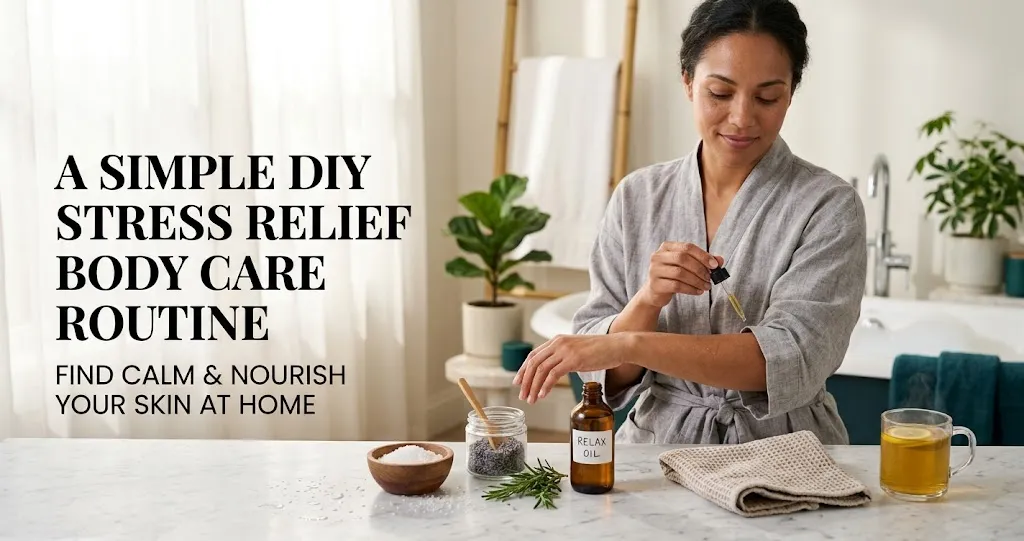
A useful routine can take roughly 15–25 minutes, but there is no required duration. The sequence below is designed to move from “busy” toward “quiet” without demanding complicated techniques.
Routine Flow — practical guide
Think of the sequence as a transition, not a performance. If one step feels especially calming, it is fine to keep it and shorten the others.
Step 1: Create a Low-Stimulation Space
Dim harsh lighting if comfortable, silence unnecessary notifications, and gather what you need before starting. A towel, moisturizer, comfortable clothing, and a glass of water may be enough.
Step 2: Slow the Breathing
Sit or lie comfortably and breathe slowly without forcing a very deep breath. Let the abdomen move naturally as you inhale and exhale. MedlinePlus describes slow breathing as one of the simple relaxation techniques that can be practiced independently. :contentReference[oaicite:2]{index=2}
Step 3: Add Comfortable Warmth
A warm shower or washcloth can make the routine feel more soothing. Keep water comfortably warm rather than very hot, especially if you tend to feel light-headed or your skin is sensitive.
Step 4: Give Your Hands Something Calm to Do
Apply a plain moisturizer slowly to your hands, arms, legs, or feet. Use light pressure and notice the texture, temperature, and movement instead of rushing through the task. The sensory focus can help turn ordinary grooming into a deliberate pause.
Step 5: Try Gentle Self-Massage
Use the palms or fingertips with comfortable pressure over broad muscle areas such as the forearms, hands, shoulders, or calves. Avoid aggressive pressure, painful areas, recent injuries, broken skin, or places that feel numb or unusually sensitive.
Step 6: Finish Without Immediately Switching Back On
Give yourself several quiet minutes after the body-care portion. You can sit, listen to calm music, read something light, or simply notice your breathing. Mayo Clinic notes that relaxation practices can be useful for stress management and can be learned and practiced independently. :contentReference[oaicite:3]{index=3}
Note: You do not need to use every technique in one session. If a short breathing exercise followed by a warm shower works better for you than a longer ritual, that simpler routine may be easier to maintain.
Which Tools Actually Fit the Routine?
The point of DIY care is simplicity. Choose tools that support the routine rather than turning relaxation into another project.
Swipe left/right to see the full table →
| Tool | Best use | Keep it simple |
|---|---|---|
| Washcloth | Warm compress | Comfortably warm |
| Moisturizer | Slow hand or body care | Choose a familiar product |
| Towel | Post-shower comfort | Soft and clean |
| Calm audio | Quiet transition | Low volume |
None of these items is required. The routine should remain useful even if all you have is a comfortable place to sit and a few uninterrupted minutes.
Typical Routine Priority — practical guide
These bars show routine priority, not scientific measurements. The idea is to build the routine around simple behaviors first and optional products or accessories second.
How Often Should You Practice It?
Consistency matters more than creating an elaborate ritual once in a while. Pick a time that naturally follows a stressful part of your day, such as after work, after dinner, or before getting ready for bed.
Swipe left/right to see the full table →
| Situation | Possible routine | Timing idea |
|---|---|---|
| Busy workday | Breathing + shower | After work |
| Screen-heavy evening | Quiet care + breathing | Before bed routine |
| Occasional stressful day | Short reset | As needed |
| Building a habit | Same short sequence | Regular time |
There is no need to make the routine longer just because you are having a stressful week. A repeatable five-to-ten-minute version may be more practical than a 45-minute ritual you rarely use.
Tip: Choose one “anchor” that happens almost every day, such as taking a shower. Attach two calming actions to it—perhaps three slow breaths before the shower and two quiet minutes afterward. This makes the routine easier to remember.
Mistakes That Can Make Relaxation Harder
More effort is not always better. A routine can become counterproductive when you treat relaxation like another performance goal or use uncomfortable techniques simply because they seem more intense.
Swipe left/right to see the full table →
| Mistake | Better choice |
|---|---|
| Very hot water | Comfortably warm water |
| Hard self-massage | Light, comfortable pressure |
| Too many products | Use familiar basics |
| Checking the clock constantly | Use a simple routine cue |
| Forcing deep breaths | Breathe slowly and comfortably |
Do’s and Don’ts
Use gentle pressure, comfortable warmth, slow breathing, and familiar products.
Push through pain, use extreme heat, or treat relaxation as a replacement for needed care.
Warning: Stop a body-care technique if it causes significant pain, dizziness, faintness, unusual numbness, skin injury, or another concerning reaction. Avoid massaging directly over a recent injury, open wound, or area that feels unusually sensitive.
When a Routine Is Not Enough
Self-care can be a reasonable part of everyday stress management, but it should not become a way to ignore symptoms that need assessment. NCCIH specifically advises against using relaxation techniques as a replacement for conventional care or postponing medical attention for a health problem. :contentReference[oaicite:4]{index=4}
Self-Care Decision Path — general safety guide
Stress can show up in many ways, including sleep problems, headaches, digestive symptoms, irritability, and changes in daily behavior. Persistent or worsening symptoms deserve more attention than a home relaxation ritual alone. :contentReference[oaicite:5]{index=5}
When to Contact a Professional
Consider professional help if stress is severe, persistent, worsening, interfering with normal daily life, or accompanied by unusual physical or emotional symptoms.
Seek urgent medical help for emergency symptoms such as chest pain, severe trouble breathing, fainting, sudden weakness, or other symptoms that feel immediately dangerous. If you are struggling emotionally or feel unable to stay safe, seek urgent mental-health support or emergency assistance.
Swipe left/right to see the full table →
| Situation | Reasonable next step |
|---|---|
| Mild, occasional stress | Try a simple routine and monitor how you feel. |
| Stress keeps interfering with life | Talk with a healthcare or mental-health professional. |
| New or unusual physical symptoms | Seek appropriate professional evaluation. |
| Emergency warning signs | Seek urgent medical assistance. |
Making the Ritual Easier to Repeat
The strongest routine is rarely the most elaborate one. Start with one predictable cue, such as finishing your shower, changing into comfortable clothes, or turning off your work notifications. Then attach two or three calming actions to that cue.
For example, your version of DIY stress relief body care could simply be: put the phone away, take several comfortable slow breaths, shower with comfortably warm water, apply moisturizer, and sit quietly for a few minutes. If that feels sustainable, there is no need to keep adding steps.
The Relaxation Transition — practical guide
Recognize that the busy part of the day is ending.
Reduce rushing and allow breathing to become comfortable.
Pay attention to warmth, texture, movement, and muscle release.
Leave a few quiet minutes before returning to stimulation.
This approach keeps the focus on the experience rather than a perfect checklist. Relaxation techniques may be self-taught, and regular practice can be more useful than expecting one session to solve every stressful day. :contentReference[oaicite:6]{index=6}
Helpful Resources for Stress and Relaxation
For additional educational information, readers can review NCCIH’s relaxation guidance, MedlinePlus relaxation techniques, and Mayo Clinic’s relaxation techniques guide. These resources provide broader information about breathing, progressive relaxation, meditation, and other stress-management approaches. :contentReference[oaicite:7]{index=7}
Frequently Asked Questions
What is DIY stress relief body care?
It is a simple at-home routine that combines calming body-care actions with relaxation habits such as slow breathing, comfortable warmth, gentle self-massage, and quiet time.
Can a body-care routine really help with stress?
Relaxation practices may help manage everyday stress by encouraging slower breathing, focused attention, and a calmer physical state. They are not a substitute for professional care when symptoms are persistent or severe.
What should I include in a simple stress-relief routine?
Start with slow breathing, a comfortable shower or warm washcloth, simple moisturizing, gentle self-massage, and a few quiet minutes afterward.
Is hot water better for relaxation?
Very hot water is not necessary. Use comfortably warm water and stop if you feel dizzy, uncomfortable, or irritated.
How often should I practice a stress-relief body-care routine?
There is no required schedule. A short routine used consistently at a natural transition point may be easier to maintain than an elaborate routine used only occasionally.
Can I use self-massage as part of stress relief?
Gentle self-massage can be included as a calming body-care step. Use comfortable pressure and avoid painful, injured, numb, or irritated areas.
When should I seek professional help for stress?
Seek professional guidance when stress is severe, persistent, worsening, or interfering with daily life, and seek urgent help for symptoms that feel immediately dangerous.
Final Thoughts
DIY stress relief body care works best as a simple transition into a calmer part of the day, not as a complicated spa project. Start with slow breathing, comfortable warmth, gentle body care, and a few quiet minutes, then keep only the steps that fit naturally into your life. If stress or related symptoms become severe, unusual, persistent, or keep getting worse, talk with a qualified healthcare or mental-health professional.
Author
-

Hi, I’m Ryan Mitchell, a wellness and relaxation writer at RemedyTip.com, where I focus on helping readers better understand stress management, relaxation techniques, mindfulness, sleep improvement, and everyday wellness habits. I have developed a strong knowledge of the Wellness & Relaxation field through sustained learning, in-depth research, and a continued commitment to exploring practical approaches to well-being.
My work focuses on researching wellness topics, examining available evidence, and turning complex information into clear, accessible, and actionable guidance. I’m continually exploring new findings, relaxation practices, and lifestyle strategies to help readers make informed decisions about their daily wellness routines. At RemedyTip.com, my goal is to share trustworthy, research-informed content that encourages healthier habits, greater relaxation, and a more balanced lifestyle.