
Written by Alex Turner
Quick Answer: An infrared massage hammer is a handheld electric massager that combines mechanical vibration or tapping with an infrared-based heat function. It is designed mainly for temporary comfort, relaxation, and muscle-focused massage. The exact heat, vibration, attachments, and operating instructions vary by model.
A closer look at infrared massage hammers
If you have seen a handheld massager described as an “infrared massage hammer,” the name can make the device sound more complicated than it is. Most versions are simply massage tools that use a moving head or vibrating mechanism, with an additional infrared or warming function.
The important distinction is that the massage action and the infrared function are two different features. The moving head provides the mechanical stimulation, while infrared radiation is associated with radiant heat in many consumer devices. Some models allow the features to operate separately, while others combine them.
Handheld massage Infrared warmth Muscle comfort At-home routine
Trust & Safety: This article is for general educational information only. It does not diagnose, treat, cure, or prevent any condition. It does not replace advice from a licensed healthcare professional. Readers should seek professional help for severe, worsening, unusual, or persistent symptoms.
What is an infrared massage hammer?
An infrared massage hammer is a handheld electrical device intended to massage selected areas of the body while also providing an infrared or warming function. Many models have a handle, one or more massage heads, adjustable vibration or tapping settings, and a button or switch for heat or infrared output.
The word “hammer” describes the repeated tapping or vibrating movement rather than a literal striking action. Depending on the design, the head may move back and forth, pulse against the skin, or vibrate continuously. The goal is usually to create a massage sensation over muscles and other soft tissues.
Infrared is a form of electromagnetic radiation that is commonly experienced as heat. It is different from visible light because people cannot normally see infrared radiation. The infrared spectrum is broad, so the label alone does not tell you exactly which wavelength a particular consumer massager uses.
That matters because “infrared” is not automatically a guarantee of a particular health effect. A product marketed with the word may primarily provide warmth, while another device may use a different infrared wavelength and operating design. The product manual is the best source for the exact function of a specific model.
Two features, one handheld tool
Massage action
Vibration or tapping creates the mechanical massage sensation.
Infrared function
Infrared energy may provide radiant warmth depending on the device design.
This simple split is useful when comparing products. A strong vibration setting does not necessarily mean stronger infrared output, and visible warmth does not prove that a device delivers a particular therapeutic effect.
What features usually work together?
Consumer infrared massage hammers can differ substantially, but common features include adjustable speed, interchangeable heads, a warming function, and an ergonomic handle. Some products allow vibration without heat, heat without massage, or both together. A Beurer infrared massager manual, for example, specifically describes separate use of its heat and vibration functions and warns that attachments can affect heat treatment.
Because designs differ, avoid assuming that every infrared massage hammer should be used in exactly the same way. Temperature, massage strength, session limits, attachment use, and cleaning instructions should come from the individual manual.
Common features and what they mean
The table below separates the marketing label from the practical function you can actually look for when evaluating a device.
Swipe left/right to see the full table →
| Feature | Practical meaning | What to check |
|---|---|---|
| Vibration | Mechanical massage sensation | Speed and comfort range |
| Infrared | Radiant heat or infrared output | Manual and heat controls |
| Massage heads | Different contact sensations | Approved body areas |
| Timer | Controls session length | Automatic shutoff instructions |
How does the infrared part work?
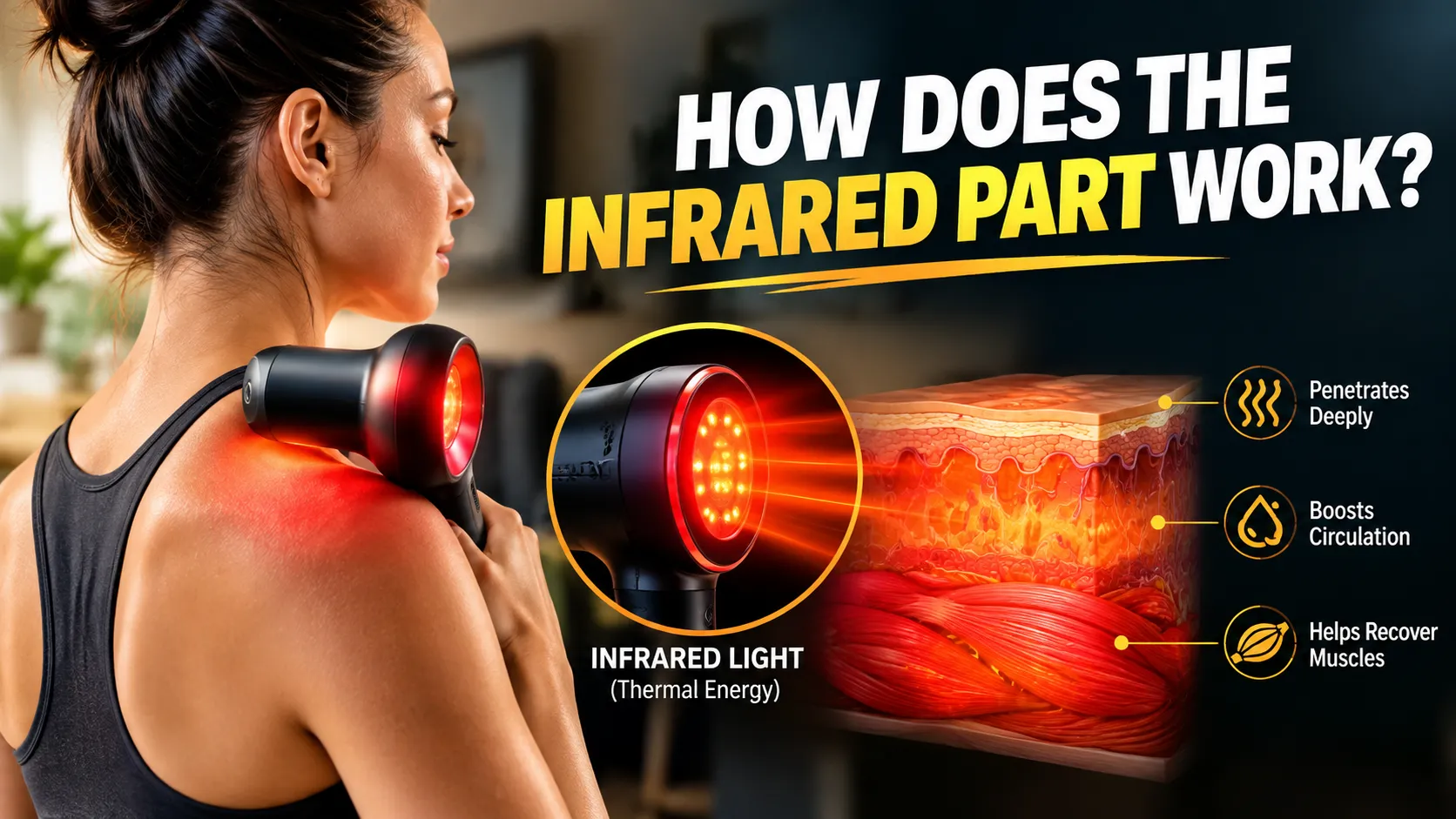
Infrared energy sits beyond the red end of visible light. Depending on its wavelength and intensity, infrared can transfer energy to the skin and be perceived as warmth. That is why infrared devices can feel similar to other forms of controlled heat, even though the energy is delivered differently.
For an infrared massage hammer, the simplest way to understand the combination is mechanical stimulation plus warmth. The massage mechanism creates movement against the body, while the infrared feature may warm the contacted area. These effects can make a routine feel more relaxing for some users.
It is important not to turn this basic mechanism into a promise of deeper healing. Research on infrared technologies includes different wavelengths, devices, and applications, so evidence from one infrared system cannot automatically be transferred to every consumer massage hammer.
Typical routine priority — practical guide
These bars are a practical routine guide, not scientific measurements. The main idea is to prioritize comfort and control rather than treating the highest setting as the goal.
Note: “Infrared” can describe different wavelength ranges and technologies. Unless a product gives clear technical specifications, do not assume that two devices with the same marketing label produce identical infrared output.
What may an infrared massage hammer be used for?
People commonly use these devices as part of a comfort or relaxation routine. The combination of movement and warmth may feel useful after a long day at a desk, after ordinary physical activity, or when muscles feel generally tight from routine activity.
That does not mean the device is appropriate for every type of pain. A massage tool can change how an area feels without explaining why the symptom is present. If discomfort follows an injury, keeps getting worse, or comes with other concerning symptoms, using a stronger massage setting is not a substitute for evaluation.
Potentially useful roles
Relaxation
Gentle massage can become part of a wind-down routine when the sensation feels comfortable and easy to control.
Temporary muscle comfort
Some people use massage to temporarily reduce the feeling of tightness or post-activity soreness.
Warmth
The infrared function may add warmth to a routine, which some users find soothing.
Convenience
A handheld device can make it easier to target selected areas at home without arranging a full massage session.
Massage itself has been studied for several forms of discomfort, but the evidence varies by condition and type of massage. NCCIH also notes that vigorous massage has been associated with rare serious adverse effects, which is one reason to avoid assuming that harder or stronger is always better.
Benefits versus limitations
Swipe left/right to see the full table →
| Possible role | Potential upside | Important limit |
|---|---|---|
| Massage | May feel relaxing | Does not identify a cause |
| Warmth | May add soothing warmth | Heat can irritate or burn skin |
| Convenience | Easy home access | Technique still matters |
| Infrared label | Adds a different energy source | Does not prove a health outcome |
Who may want to be cautious?
An infrared massage hammer is not automatically safe for every person or every body area. The two main issues are mechanical pressure and heat. Both deserve extra attention when normal sensation, circulation, tissue integrity, or healing may be affected.
People with a medical condition, recent injury, unexplained pain, or reduced skin sensation should ask a healthcare professional whether massage and heat are appropriate. NCCIH advises people with health conditions to discuss complementary approaches with their healthcare providers when safety is uncertain.
Good fit versus situations needing caution
Swipe left/right to see the full table →
| Situation | Practical approach | Reason |
|---|---|---|
| Routine muscle tightness | Use gently if comfortable | Lower-risk routine use |
| Recent injury | Ask a professional first | Massage may not fit the injury |
| Reduced heat sensation | Avoid heat until cleared | Burns may be harder to notice |
| Severe or unexplained pain | Seek medical guidance | The cause needs attention |
Safety decision path
No open wound or obvious injury?
Can you clearly feel warmth and pressure?
Use the lowest comfortable setting.
Stop if pain, burning, numbness, or irritation develops.
The decision path is intentionally conservative. If the area is injured, numb, unusually swollen, or producing severe symptoms, skip experimentation with the device and get appropriate professional guidance.
Warning: Heat can cause burns even when a setting does not feel extremely hot at first. FDA adverse-event reports involving heating pads illustrate why users should follow device warnings, avoid sleeping with heat devices, and monitor exposed skin rather than relying only on the control setting.
How to use an infrared massage hammer more carefully
There is no single universal routine because models differ. A sensible starting point is to read the manual, inspect the massage head, choose a comfortable setting, and keep the tool moving rather than holding strong pressure over one small spot for an extended period.
1
Read the instructions. Check approved body areas, heat settings, attachments, session limits, and cleaning directions.
2
Inspect your skin. Do not begin over damaged, irritated, or unusually sensitive areas.
3
Start low. Choose a gentle massage setting and add warmth only if the device instructions allow it.
4
Keep it moving. Use smooth passes rather than pressing hard into one point for a prolonged period.
5
Check your response. Stop if the sensation becomes painful, burning, numb, or otherwise unpleasant.
Safe routine versus risky routine
Swipe left/right to see the full table →
| Safer choice | Riskier choice | Why it matters |
|---|---|---|
| Lowest comfortable setting | Starting at maximum power | Gives you room to adjust |
| Follow the manual | Copying another model’s routine | Devices differ |
| Keep moving | Hard pressure on one spot | Reduces concentrated irritation |
| Monitor your skin | Ignoring burning or redness | Heat can injure skin |
Tip: Treat comfort as the stopping signal. If you need to push through pain to feel that a massage hammer is “working,” lower the intensity or stop instead of increasing pressure.
How long should you use one?
There is no universal session length for every infrared massage hammer. Some products provide a built-in timer, while others rely on user control. Follow the specific manual rather than borrowing a time limit from another model.
A useful general routine is to begin with a short, comfortable session and reassess your skin and symptoms afterward. If the area becomes increasingly tender, irritated, numb, or painful, that is a reason to stop rather than extend the session.
Timing guide for routine use
Swipe left/right to see the full table →
| Situation | General approach | Check before continuing |
|---|---|---|
| First session | Short and gentle | Skin comfort |
| Routine use | Follow model instructions | No increasing irritation |
| Heat added | Use extra caution | Skin temperature and sensation |
| Symptoms worsen | Stop the session | Consider professional advice |
Routine-fit dashboard
Good routine fit
General muscle comfort, relaxation, and ordinary post-activity stiffness when the sensation remains comfortable.
Pause and reassess
New pain, increasing soreness, persistent redness, burning, or numbness after use.
Common mistakes to avoid
One of the biggest mistakes is treating an infrared massage hammer like a tool that should always be used at maximum intensity. More pressure can make a massage feel stronger, but a stronger sensation is not automatically a better result.
Another mistake is assuming that the infrared label means the device can be used on any body part. Product designs differ, and the manufacturer’s instructions may limit use around particular areas. The manual should take priority over generic advice found online.
Mistake → better choice
Maximum power immediately
→ Start gently and increase only if comfortable.
Holding one painful spot
→ Keep the tool moving and reduce pressure.
Ignoring heat
→ Check skin and follow heat instructions.
Using it instead of evaluation
→ Seek professional guidance for persistent or concerning symptoms.
Heat is another area where caution matters. FDA reports involving powered heating pads include burn injuries and emphasize checking skin, following warnings, and avoiding use during sleep. Those reports concern heating pads rather than every infrared massage hammer, but they illustrate the general risk of unattended heat exposure.
What to avoid
Swipe left/right to see the full table →
| Avoid | Use instead | Practical reason |
|---|---|---|
| Falling asleep with heat | Turn the device off before sleep | Reduces unattended heat exposure |
| Using over damaged skin | Wait or ask a professional | Protects irritated tissue |
| Hard pressure on bones | Target surrounding soft tissue | Avoids unnecessary pressure |
| Ignoring numbness | Stop and seek advice if persistent | Normal sensation helps monitor heat |
When should you stop using it?
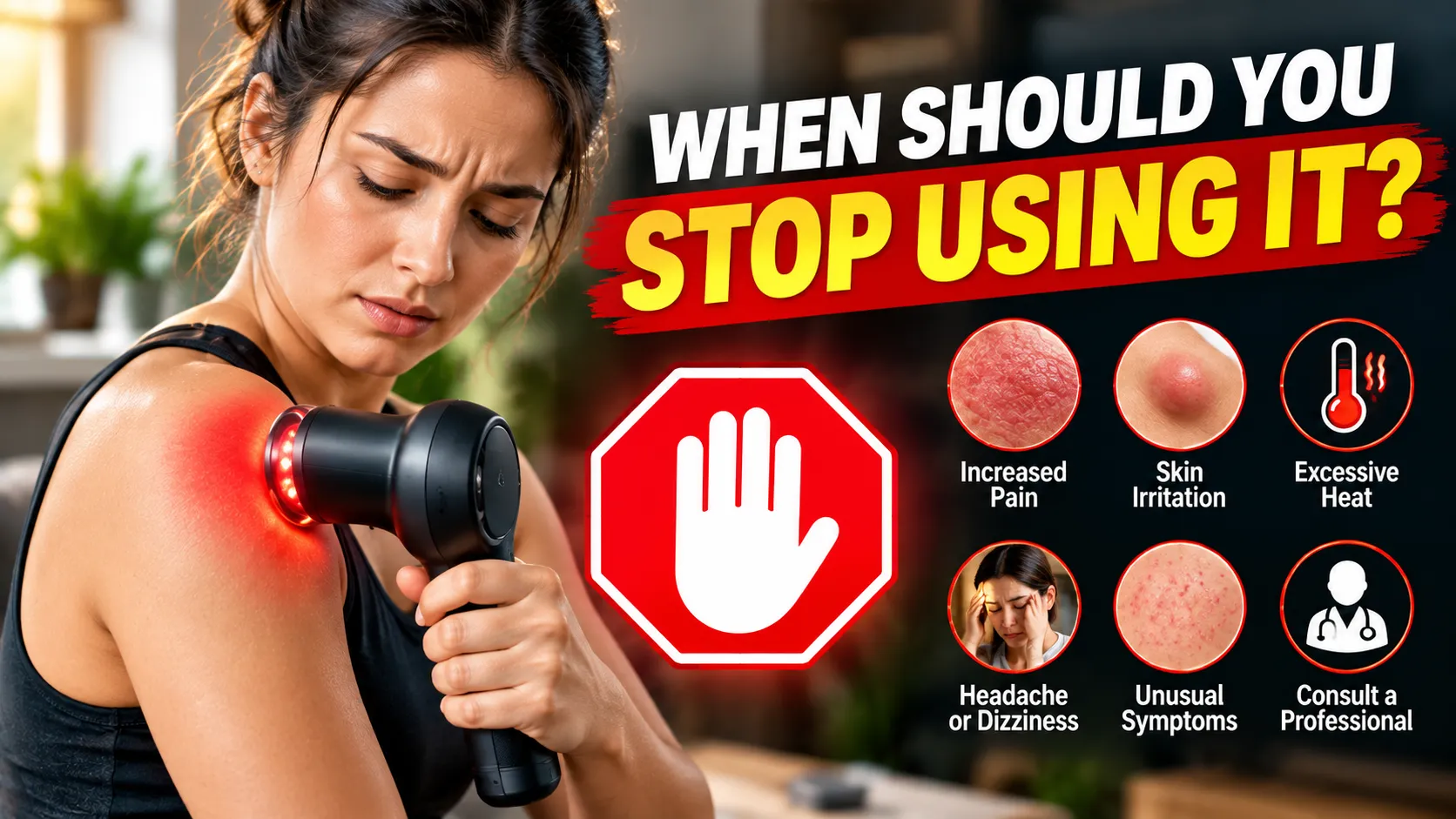
Stop using the device if it causes burning, unexpected pain, increasing swelling, significant skin irritation, persistent numbness, or another unusual reaction. Do not keep increasing the intensity to overcome an unpleasant sensation.
FDA guidance for heat-based therapy also recommends stopping when serious reactions such as numbness, unexpected pain, burning, blisters, welts, increased swelling, redness, discoloration, or other skin changes occur.
Red-flag checklist dashboard
This checklist is a practical safety screen, not a diagnosis tool. Any severe, unusual, persistent, or rapidly worsening symptom deserves professional attention rather than repeated massage.
When to contact a professional: Seek appropriate medical advice for severe or worsening pain, numbness, weakness, significant injury, fever, chest pain, loss of bladder or bowel control, or symptoms that remain unexplained or persistent. Do not use massage to postpone evaluation of a medical problem. NCCIH specifically advises against delaying professional care because of massage therapy.
What should you look for in a device?
If you are considering buying one, focus less on dramatic claims and more on practical controls. A useful device should make it easy to select a comfortable massage level, understand the heat function, clean the contact surfaces, and follow a clear operating routine.
Look for a readable manual, clearly labeled controls, realistic body-area guidance, and safety information. If the product makes broad claims about curing pain, removing disease, or producing guaranteed medical results, treat those claims cautiously.
Useful product-fit criteria
Swipe left/right to see the full table →
| Criterion | Why it helps | Check |
|---|---|---|
| Adjustable intensity | Better control | Multiple settings |
| Heat control | Avoids one fixed heat level | Clear heat instructions |
| Timer | Helps limit sessions | Automatic shutoff |
| Clear manual | Reduces guesswork | Body-area warnings |
These criteria are more useful than simply counting massage heads or choosing the device with the strongest motor. A tool that is easy to control is often easier to use consistently and conservatively.
Frequently asked questions
What is an infrared massage hammer?
It is a handheld electric massager that typically combines mechanical vibration or tapping with an infrared or warming function. Exact features vary by model.
Does an infrared massage hammer use heat?
Many models use infrared output that can be experienced as warmth, but the exact technology and temperature vary. Check the individual product manual.
Can an infrared massage hammer help tight muscles?
It may provide temporary comfort or relaxation for some people. It should not be treated as a way to diagnose or address the underlying cause of persistent pain.
Can I use it on an injured area?
Do not assume that an injured area is suitable for massage or heat. Ask a healthcare professional when there is a recent injury, significant swelling, severe pain, or uncertainty about the cause.
Is infrared the same as red light therapy?
No. Infrared covers a broad range of wavelengths, while red light occupies a different part of the spectrum. Product labels should be checked for the actual technology and specifications.
How strong should an infrared massage hammer feel?
It should remain comfortable rather than painful. Starting at a lower setting gives you more room to adjust without immediately exposing the area to strong pressure or vibration.
When should I stop using an infrared massage hammer?
Stop if you develop burning, unexpected pain, numbness, significant irritation, swelling, or another unusual reaction. Seek professional advice for severe, worsening, unusual, or persistent symptoms.
Final Thoughts
An infrared massage hammer is best understood as a handheld massage tool that combines mechanical movement with an infrared or warming feature. It may fit a comfort-focused routine, but the infrared label alone does not guarantee a specific health outcome.
Start gently, follow the manufacturer’s instructions, monitor your skin and sensation, and stop when something feels wrong. For severe, worsening, unusual, or persistent symptoms, seek appropriate professional guidance instead of relying on massage alone.
Author
-

I’m Alex Turner, a massage product reviewer and wellness writer at RemedyTip. I specialize in researching, evaluating, and comparing massage and recovery products to help readers make informed purchasing decisions. My focus is on practical, evidence-informed product guidance covering muscle recovery, relaxation, everyday comfort, and wellness.
I take a research-driven approach to every product I review. I examine product specifications, features, materials, performance claims, user feedback, durability, comfort, ease of use, and overall value. When appropriate, I also consult trusted industry and health-related sources to verify important information and provide readers with a more complete and balanced view.
I cover a wide range of products, including massage guns, handheld massagers, neck and shoulder massagers, foot massagers, massage chairs, foam rollers, and other recovery tools. Rather than focusing only on marketing claims, I look at how products compare in real-world use and who they are actually suitable for. I also consider different budgets, use cases, and user needs when making recommendations.
At RemedyTip, I’m committed to accuracy, transparency, and unbiased product information. I clearly distinguish between manufacturer claims, available evidence, and my own product analysis so readers can understand the basis of each recommendation. I continuously research new products, technologies, and developments in the massage and recovery space to keep my content current and useful.
My goal is simple: to provide trustworthy, easy-to-understand information that helps readers choose massage and recovery products with greater confidence.

