By Alex Turner · Content author
Quick Answer: Do infrared massagers really work? For many people, gentle heat plus massage action feels soothing and may help tight muscles feel looser for a short time. They are comfort tools, not treatments, and results vary from person to person.
Infrared massagers promise deep relief, faster recovery, and stiffness that melts away. Some of that is fair. Some of it is marketing. This guide separates realistic comfort benefits from big claims, so you can decide whether one fits your routine and how to use it with care.
Health note: This article is for general educational information only. It does not diagnose, treat, cure, or prevent any condition. It does not replace advice from a licensed healthcare professional. Readers should seek professional help for severe, worsening, unusual, or persistent symptoms.
Myth vs Fact: What These Devices Can and Cannot Do
Most marketing around infrared massagers stretches a small truth into a big promise. Here is a quick side-by-side view before we break each claim down.
Common Claims Compared With Realistic Expectations
Swipe left/right to see the full table →
| Common Claim | More Realistic View | Practical Takeaway |
|---|---|---|
| Repairs deep tissue | Warmth may feel relaxing | Expect comfort, not repair |
| Cures pain | May ease tightness briefly | Ongoing pain needs a check-up |
| More heat works faster | Too much heat can irritate skin | Stay at a comfortable warmth |
| Safer than regular heat | Any heat can cause burns | Use the same care as any heat |
| All models perform alike | Heat, motion, and build vary | Compare features, not slogans |
Note: “Infrared” simply describes a type of light that we feel as warmth. Many home devices pair it with vibration, kneading, or tapping. That means some of the comfort you feel may come from the massage motion itself, not only from the heat.
So Do Infrared Massagers Really Work in Daily Life?
The honest answer is “it depends on what you expect.” If you want a warm, relaxing way to ease everyday tightness, many people find these devices worth using. If you want a treatment for an injury or a long-running problem, a massager is the wrong tool. Let’s look at each common myth in turn.
Myth 1: Infrared Heat Repairs Deep Tissue
Infrared devices produce warmth, and warmth can make muscles feel less stiff. That is a real comfort effect, and it is why many people enjoy them after a long day. What a home massager cannot do is promise tissue repair or faster healing. Think of it like a warm shower aimed at one spot: pleasant and relaxing, but not a fix for an underlying problem. Choose a device like this if you want comfort. Look to a professional if you are dealing with an injury.
Myth 2: An Infrared Massager Cures Pain
Massage and warmth may ease the feeling of tightness for a while. A person who sits at a desk all day, for example, might notice their shoulders feel looser after ten minutes of gentle heat. But feeling looser is not the same as solving the reason for the tightness. Posture, stress, sleep, and daily movement often play a bigger part. If the same ache keeps returning, treat that as useful information and talk with a professional rather than adding more sessions.
Myth 3: Hotter Settings Give Faster Relief
It is tempting to turn the heat up when a spot feels stubborn. The problem is that skin can be irritated or burned by heat that feels only “strong” at first, especially if you press the device firmly against one area. Comfortable warmth is the target. If your skin looks very red, feels tender, or you feel the urge to pull away, the setting is too high. Choose the lowest heat that feels pleasant and raise it only slightly if needed.
Myth 4: Infrared Heat Is Automatically Safer
The word “infrared” can sound gentle or high-tech, but the safety rules are the same as for any heating pad or warm compress. People who cannot fully feel heat on their skin are at higher risk, because they may not notice a device is too hot. Products can also differ in how evenly they heat. Always read the manual, follow the time limits, and avoid using the device while sleepy or lying down for a long time.
Myth 5: Every Infrared Massager Is Basically the Same
Two devices that both say “infrared” on the box can feel very different. One may have a tiny heating element and weak vibration. Another may have a broader heated surface, several speeds, and an auto shut-off timer. Weight, handle shape, and noise also matter, because a device you find awkward is a device you will stop using. Judge products by heat control, safety features, and how comfortable they are to hold, not by big promises.
A Reality Check on Typical Benefits
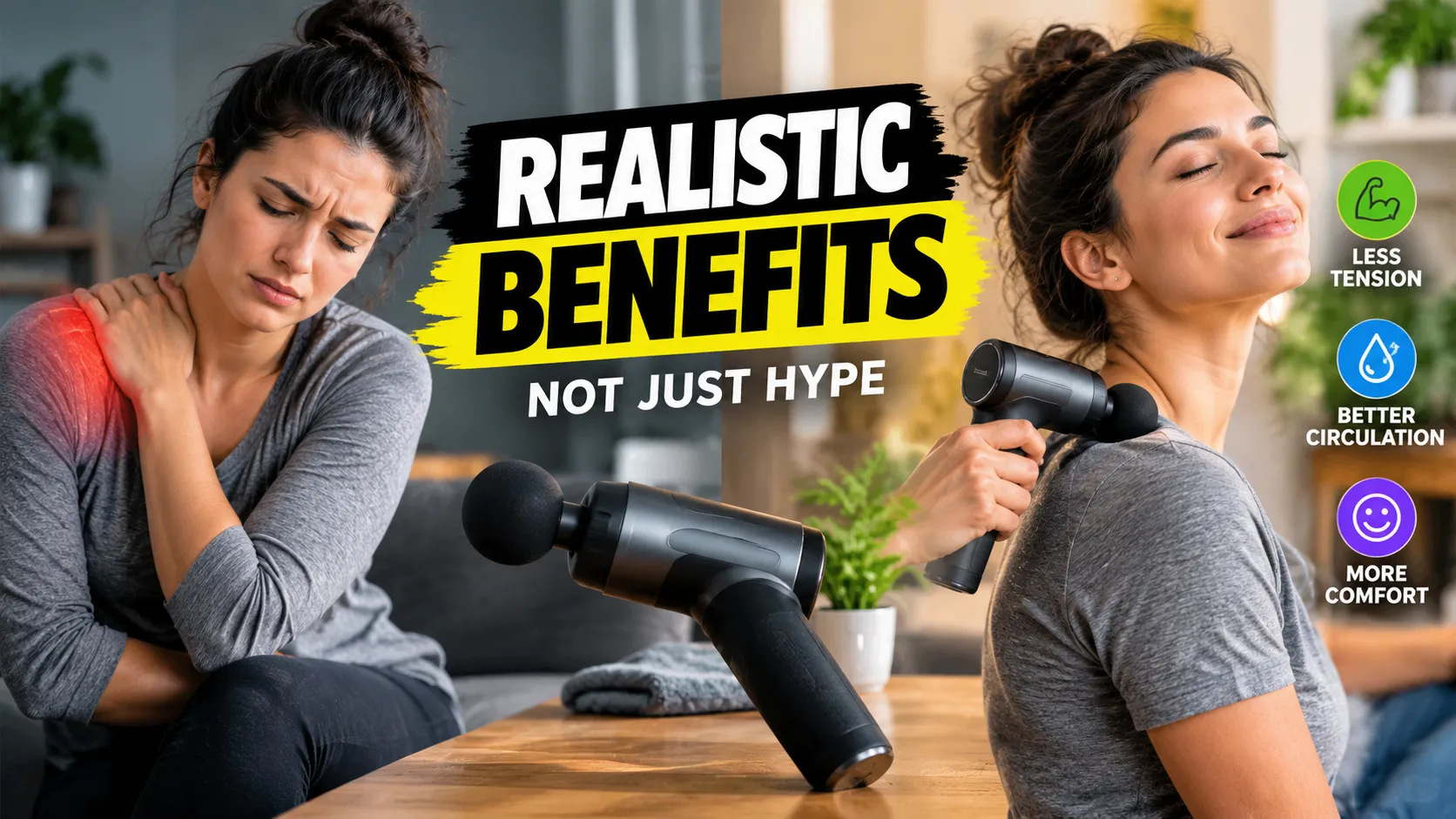
To keep expectations grounded, the chart below shows where these devices tend to fit best. It is a practical guide based on common comfort use, not scientific data.
Typical comfort payoff (practical guide, not scientific data)
The pattern is clear. Do infrared massagers really work for comfort and relaxation? Often, yes. For lasting change, they work best as one small part of a routine that also includes movement, stretching, good posture, and rest.
Safe Practice: Who Should Be Careful
Heat and pressure suit many people, but not everyone. This table shows situations where extra caution makes sense. Do infrared massagers really work for these groups? That is not the right question. The right question is whether they are safe, and that is a decision to make with a professional.
Situations That Call for Extra Caution
Swipe left/right to see the full table →
| Situation | Why Caution Matters | Smart Next Step |
|---|---|---|
| Numb or less sensitive skin | Heat may not feel too hot | Ask a professional first |
| Pregnancy | Heat and pressure need guidance | Check with your provider |
| Implanted device such as a pacemaker | Some manuals list use warnings | Read the manual and ask |
| Recent injury, swelling, or broken skin | Heat may worsen irritation | Skip until it is checked |
| Diabetes or circulation concerns | Skin may be more easily harmed | Get professional advice first |
A Simple Decision Path Before Each Session
Run through this short path every time you pick the device up. It takes about ten seconds and helps you avoid the most common mistakes.
This path is a general guide only. When in doubt, stopping is always the safer choice.
How Long and How Often
Short, gentle sessions are the smart starting point. Always follow your own product manual first, because timing limits differ between devices.
Swipe left/right to see the full table →
| Use Case | General Session Guide | Helpful Note |
|---|---|---|
| First use | About 5 minutes, low heat | Check skin afterward |
| Before activity | 5 to 10 minutes | Follow with easy movement |
| After a desk day | 10 to 15 minutes | Pair with a posture break |
| After exercise | 10 to 15 minutes | Skip if skin looks flushed |
| Evening wind-down | About 10 minutes | Never fall asleep with it on |
Tip: Move the device slowly over the muscle belly, such as the upper shoulder or the thick part of the calf. Keep it away from bones, joints, and the front of the neck, and do not press hard. Gentle contact usually feels better and is easier on your skin.
Do’s and Don’ts at a Glance
A few habits separate a pleasant session from a poor one. Keep this split panel in mind.
Do
Start low and short. Read the manual.
Use a thin layer of clothing if the device feels warm.
Pair sessions with gentle stretching and movement.
Don’t
Use it on numb, swollen, or broken skin.
Press hard or stay in one spot for long.
Use it while sleepy, and never fall asleep with it running.
Most problems come from too much heat, too much pressure, or too much time in one place. Simple habits prevent nearly all of them.
Warning: Stop using the device if you notice burning, blistering, a rash, sharp pain, or tingling. Do not use it over creams that produce warmth or strong odors, and do not use a device with a damaged cord, cracked casing, or a heating element that behaves strangely.
Red Flags: When a Massager Is Not the Answer
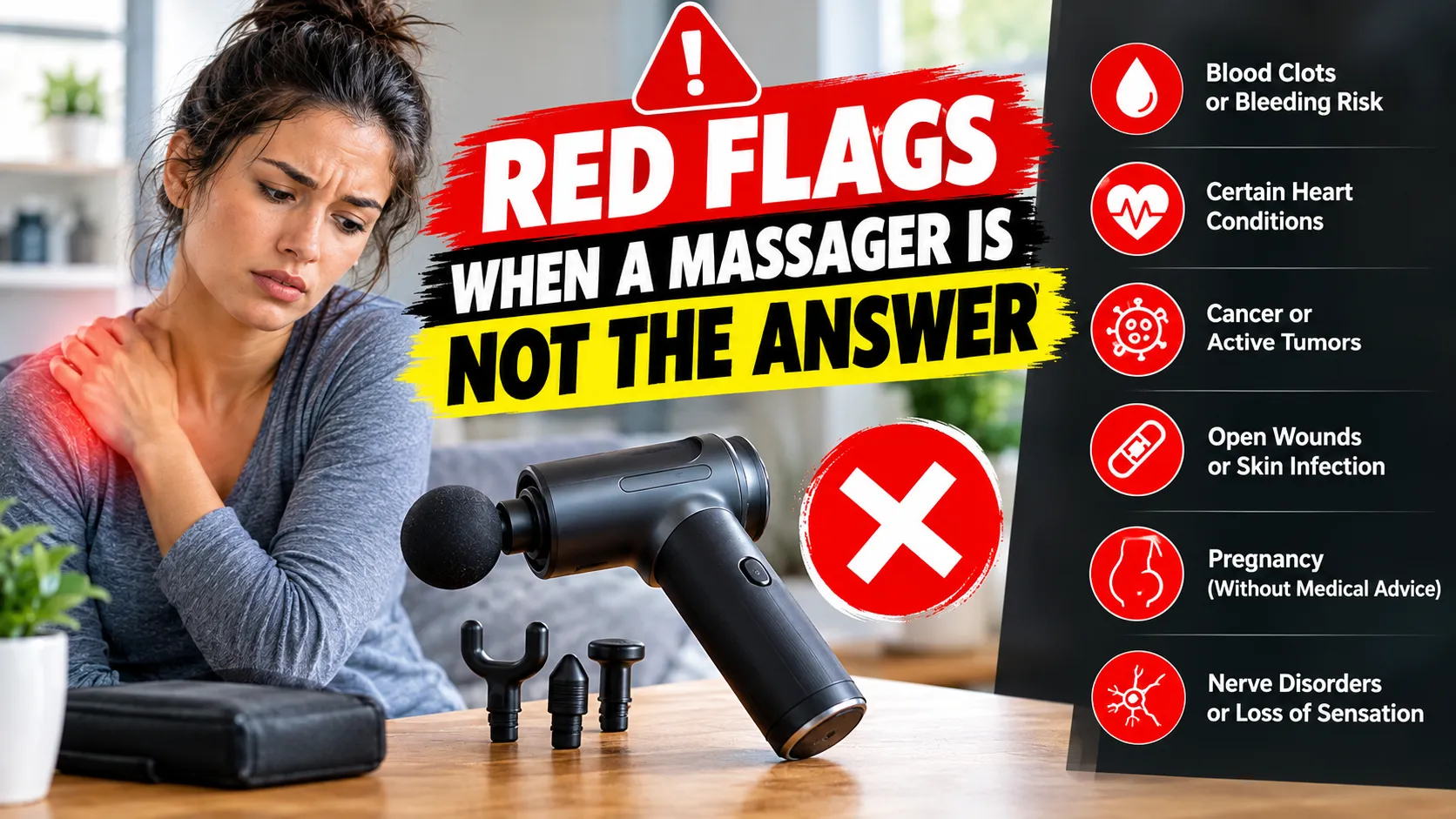
Comfort tools should never cover up warning signs. If any of the items below appear, stop self-care and get proper medical advice.
Red-flag checklist
Any single item on this list is enough reason to stop and speak with a professional. Do not wait to see whether a massager helps first.
Self-Care or Professional Help?
Swipe left/right to see the full table →
| Situation | Reasonable Self-Care | Seek Professional Help If |
|---|---|---|
| Post-workout soreness | Gentle heat, rest, light movement | Sharp pain or swelling appears |
| Desk-related stiffness | Short heat sessions, posture breaks | Tingling or weakness in the arm |
| Lower back tightness | Low heat, walking, gentle stretches | Pain with fever or numbness |
| Ache that keeps returning | Note triggers and adjust habits | It persists or is not improving |
When to contact a professional: Reach out to a licensed healthcare provider if pain is severe, keeps getting worse, follows an injury, or lasts longer than you would expect. Also check in before using heat if you have numb skin, are pregnant, have an implanted device, or manage a circulation-related concern. Seek urgent medical help for chest pain or loss of bladder or bowel control.
Choosing a Device: What Fits Which Need
If you decide to try one, choose based on how you plan to use it. Before asking whether do infrared massagers really work, first ask whether the device suits your body, your routine, and your comfort level. Look for adjustable heat, an auto shut-off timer, a comfortable grip, and clear safety instructions.
Device Types and Who They Suit
Swipe left/right to see the full table →
| Option Type | May Suit You If | Watch Out For |
|---|---|---|
| Handheld heated massager | You want targeted spot use | Small heat area, uneven warmth |
| Neck and shoulder massager with heat | You sit for long hours | Fit varies by body size |
| Infrared heating wrap or pad | You prefer gentle, wide warmth | No massage motion |
| Percussion massager without heat | Motion matters more than warmth | Can feel too intense |
This article may contain affiliate links. If you buy through these links, we may earn a small commission at no extra cost to you. We only mention products that fit the topic and do not replace professional medical advice.
Handheld Infrared Heat Massager
May support comfort after a long day, with adjustable heat and easy spot-by-spot use.
Neck and Shoulder Massager With Heat
Can help with routine consistency for desk-day wind-downs, and may make daily care easier.
Frequently Asked Questions
Do infrared massagers really work for sore muscles?
Some people find that warmth plus massage eases tightness for a while. Results vary, and it is a comfort tool rather than a treatment.
How long should I use an infrared massager?
Short sessions of about 10 to 15 minutes are a common general range. Always follow your product manual and stop if the skin feels too warm.
Is an infrared massager the same as red light therapy?
Not always. They are often marketed differently, so read the product label and instructions to see what the device actually does.
Can I use an infrared massager every day?
Some people use one lightly each day if their skin looks normal and discomfort does not increase. If you are unsure, ask a healthcare professional.
Can an infrared massager help with back pain?
It may ease the feeling of muscle tightness for some people. Back pain with numbness, weakness, fever, or an injury needs professional advice instead.
Who should avoid infrared massagers?
Check with a professional first if you have numb skin, are pregnant, have an implanted device, or have swelling, injury, or broken skin.
Is a massage gun better than an infrared massager?
They are different tools. One focuses on percussion and the other on warmth, so choose based on what feels comfortable for you.
Final Thoughts
Do infrared massagers really work? They can be a pleasant, low-effort way to feel warmer and looser, as long as you expect comfort rather than a cure. Start low, keep sessions short, and pay attention to your skin. If symptoms are severe, worsening, unusual, persistent, or not improving, please talk with a healthcare professional instead of relying on a device.
Author
-

I’m Alex Turner, a massage product reviewer and wellness writer at RemedyTip. I specialize in researching, evaluating, and comparing massage and recovery products to help readers make informed purchasing decisions. My focus is on practical, evidence-informed product guidance covering muscle recovery, relaxation, everyday comfort, and wellness.
I take a research-driven approach to every product I review. I examine product specifications, features, materials, performance claims, user feedback, durability, comfort, ease of use, and overall value. When appropriate, I also consult trusted industry and health-related sources to verify important information and provide readers with a more complete and balanced view.
I cover a wide range of products, including massage guns, handheld massagers, neck and shoulder massagers, foot massagers, massage chairs, foam rollers, and other recovery tools. Rather than focusing only on marketing claims, I look at how products compare in real-world use and who they are actually suitable for. I also consider different budgets, use cases, and user needs when making recommendations.
At RemedyTip, I’m committed to accuracy, transparency, and unbiased product information. I clearly distinguish between manufacturer claims, available evidence, and my own product analysis so readers can understand the basis of each recommendation. I continuously research new products, technologies, and developments in the massage and recovery space to keep my content current and useful.
My goal is simple: to provide trustworthy, easy-to-understand information that helps readers choose massage and recovery products with greater confidence.