To release neck tension, start with 10 minutes of heat, add gentle neck stretches, use light self-massage, and fix the posture habits that keep the muscles tight. This simple mix often helps reduce stiffness, ease soreness, and improve movement without overdoing it.
Neck tension can sneak up on you. It often starts after a long workday, a hard workout, a stressful week, or a bad night of sleep.
I’m Ethan Carter, and I’ve spent years testing massage tools, recovery products, and pain relief methods. I focus on simple, practical advice that helps people feel better and recover faster at home.
In this guide, I’ll show you how to release neck tension step by step, what usually causes it, which tools may help most, and what mistakes to avoid so the tightness does not keep coming right back.
Quick Answer
The best simple plan is heat, slow stretching, light self-massage, and a posture reset. That works well because neck tension is usually not just one knot. It is often a mix of tight muscles, trigger points, stress, and too much time in one position.
What Neck Tension Is and Why It Happens
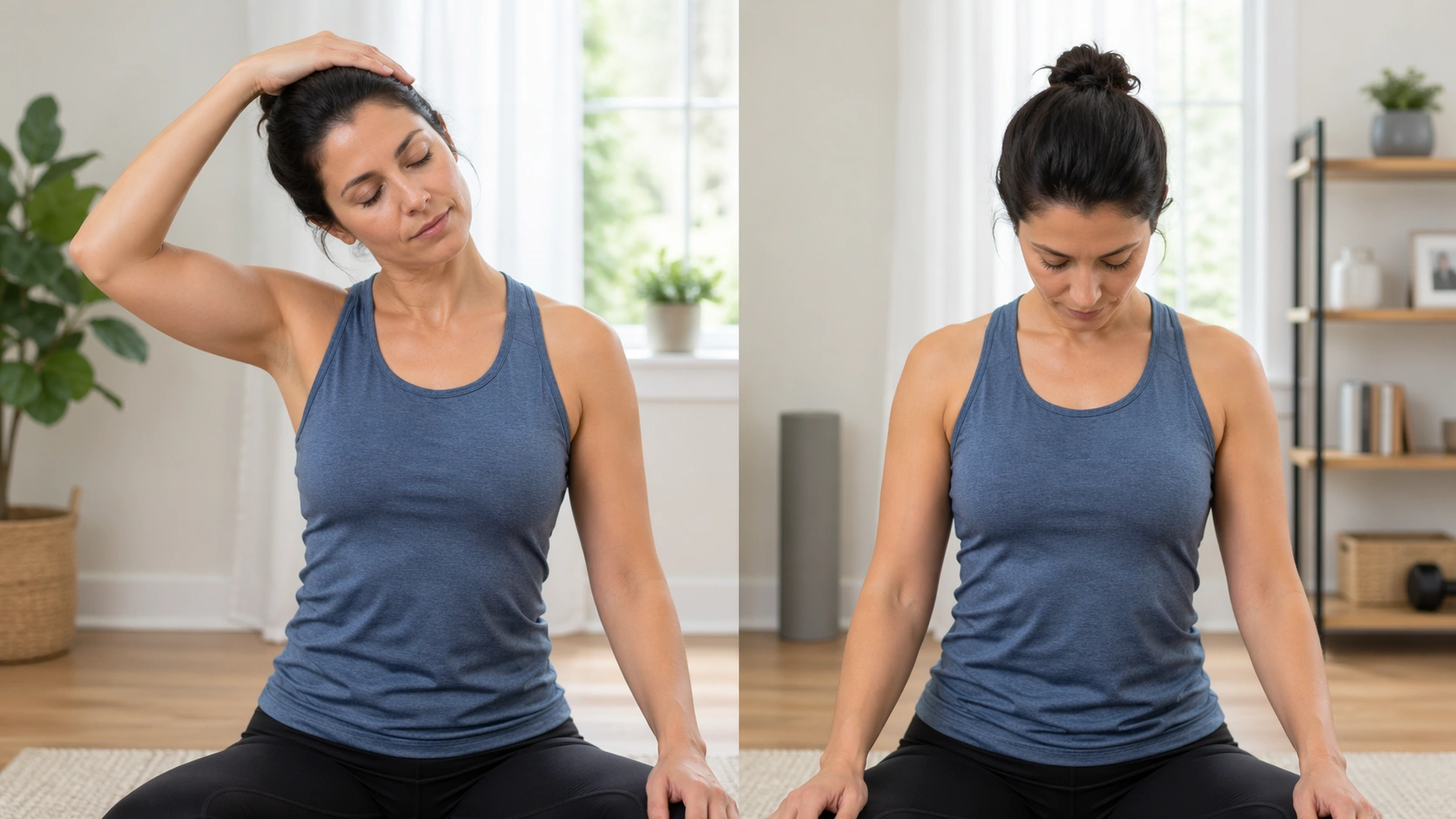
Neck tension usually means the muscles around your neck and upper shoulders stay tight longer than they should. That can make your neck feel stiff, sore, heavy, or hard to turn.
The most common triggers are long hours at a desk, looking down at a phone, stress, clenching, poor sleep position, hard upper-body training, and weak support from the upper back. Many people also feel it after driving, travel, or carrying a bag on one side.
When the area stays tight, blood flow may feel limited, trigger points can build up, and your range of motion often drops. That is why a tight neck can also lead to shoulder tightness, upper back soreness, and tension headaches.
For a simple medical overview of neck pain warning signs, see Cleveland Clinic. If stress is a big part of your tightness, Mayo Clinic also explains how stress can affect the body.
How Neck Tension Works in the Body
Most neck tension shows up in a few common spots. The upper trapezius muscles sit from the shoulders up toward the neck. The levator scapulae runs from the shoulder blade to the neck. The small suboccipital muscles sit at the base of the skull.
When you hunch forward, shrug your shoulders, or stare at a screen for hours, these muscles often stay slightly switched on. Over time, that low-level tension can create stiffness, sore trigger points, and a neck that feels locked up.
Stress makes this worse. Many people breathe shallowly, lift their shoulders, and tighten the jaw without noticing. That keeps the whole area guarded. Bad sleep posture can do the same thing overnight.
That is why the best relief plan usually combines three things: movement to improve mobility, gentle pressure to calm tight soft tissue, and heat to help the area relax. If you want more stretch ideas, Healthline has a simple overview of text neck treatment and mobility work.
How to Release Neck Tension Step by Step
Step 1: Use Heat First
Start with a warm shower, heating pad, or warm wrap for 10 minutes. Heat often works well for stress tightness and stiff muscles because it helps the area relax before you stretch or massage it.
If your neck feels irritated after a fresh strain, skip hard pressure and keep things gentle.
Step 2: Reset Your Posture and Breathing
Sit or stand tall. Let your shoulders drop. Keep your chin level instead of poking forward. Then take 5 slow breaths and try to expand your ribs instead of lifting your shoulders.
This sounds simple, but it matters. If your shoulders stay shrugged, your neck muscles never really get a break.
Step 3: Do Gentle Neck Stretches
- Chin tuck: Pull your chin straight back without tipping your head up or down. Hold for 5 seconds. Repeat 5 times.
- Upper trap stretch: Sit tall, gently tilt one ear toward one shoulder, and hold for 20 to 30 seconds each side.
- Levator stretch: Turn your nose slightly toward your armpit, then gently look down. Hold for 20 to 30 seconds each side.
- Chest opener: Clasp your hands behind your back or place your forearms on a doorway and open the chest gently for 20 seconds.
Keep each stretch easy. You want mild tension, not sharp pain. Aggressive stretching often makes a tight neck tighten up more.
Step 4: Try Light Self-Massage
Use your fingers on the top of the shoulder and the thick muscles behind the neck. Press gently into tender spots and move in small circles for 20 to 30 seconds at a time.
You can also use a tennis ball or massage ball against a wall. Place it between your upper trap and the wall, then lean in lightly and breathe. Move slowly until you find a tight spot. Hold mild pressure for 20 seconds, then shift.
Avoid pressing hard on the front of the neck, the side of the neck, or directly on the spine.
Step 5: Loosen the Upper Back and Shoulders
Neck tension rarely lives in the neck alone. Tight chest muscles, weak mid-back muscles, and stiff shoulders can all pull the neck into a bad position.
Try 10 shoulder rolls, 10 wall slides, and a few minutes of upper back mobility. For many office workers, this is the piece that finally makes the neck feel lighter.
Step 6: Fix the Setup That Keeps Causing It
If your screen is too low, your pillow is too high, or you always hold your phone in your lap, the tension usually comes back. Raise your screen, keep your elbows supported, and try to sleep with the neck in a neutral position.
A small change in ergonomics often helps more than one more hard massage session.
Step 7: Use a Simple Daily Routine
My favorite basic routine takes less than 10 minutes:
- Heat for 5 to 10 minutes
- 5 chin tucks
- 20-second upper trap stretch each side
- 20-second levator stretch each side
- 1 to 2 minutes of light self-massage
- 10 shoulder rolls and 10 wall slides
This works well for daily pain relief, desk job pain, and stress relief before bed.
Best Benefits and When These Methods Work Best

These methods often work well for:
- Office workers with forward-head posture and shoulder tightness
- People who wake up with a stiff neck from sleep position
- Athletes with upper trap soreness after training
- People who carry stress in the shoulders and jaw
- Older adults who need a gentle home routine
- Anyone who wants better mobility and less tension before sleep
The biggest benefit is usually better movement with less soreness. Many people also notice fewer headaches, less shoulder heaviness, and easier relaxation at night.
Best Tools and Products for Neck Tension Relief
You do not need a pile of gear. But the right tool can make home relief easier, especially if your hands get tired or you need more targeted pressure.
| Tool | Best For | Main Benefit | Watch-Out |
|---|---|---|---|
| Heating pad or heated wrap | Stress tightness and stiffness | Helps muscles relax before stretching | Do not use too hot or too long |
| Massage ball | Trigger points in upper traps | Targeted pressure at home | Avoid pressing on the spine |
| Shiatsu neck massager | Evening relaxation and hands-free relief | Steady kneading with less effort | Keep pressure moderate |
| Massage gun | Upper traps and rear shoulders | Fast post-workout muscle relief | Do not use on front or side of neck |
Shiatsu Neck and Shoulder Massager
Best for evening tension, stress tightness, and hands-free relief after long desk days.
Trigger Point Massage Ball Set
Great for targeted knots in the upper traps, between the shoulder blade and spine, and travel-friendly relief.
If you are very sensitive or older, I usually suggest starting with heat and a massage ball before jumping to stronger tools.
Stretching vs Self-Massage vs Heat vs Massage Tools
Each method helps in a different way. The best choice depends on whether your main problem is stiffness, stress, trigger points, or poor daily posture.
| Method | Best For | What It Does Well | Not Ideal For |
|---|---|---|---|
| Stretching | Stiffness and limited mobility | Improves range of motion | Deep knots that need pressure |
| Self-massage | Trigger points and sore spots | Targets tight tissue directly | People who press too hard |
| Heat therapy | Stress tightness and morning stiffness | Helps muscles relax | Heavy pressure needs |
| Neck massager | Daily home relaxation | Easy, steady, low-effort relief | Very specific knot work |
| Massage gun | Upper trap and shoulder recovery | Fast muscle stimulation | Direct neck use and very sensitive users |
If I had to keep it simple, I would say this: use heat for stress tension, stretching for stiffness, a massage ball for knots, and a neck massager for easy evening relief.
Common Problems and Fixes
| Problem | Likely Cause | What Usually Helps |
|---|---|---|
| Neck feels tight every afternoon | Desk posture and screen height | Chin tucks, monitor reset, shoulder breaks every hour |
| Sharp soreness after stretching | Stretching too hard | Back off, use heat, and keep stretches gentle |
| Knot on top of shoulder | Upper trap trigger point | Massage ball against wall and chest opening work |
| Morning neck stiffness | Pillow height or sleep position | Neutral neck support and gentle heat after waking |
| Tension keeps coming back | Stress, posture, and no daily reset | Short routine twice a day and better desk setup |
| Sore after a workout | Overuse strain in traps and shoulders | Light movement, heat, and easier recovery work |
Common Mistakes to Avoid
- Stretching too far too fast
- Using a massage gun directly on the throat, side of the neck, or bony spine
- Only massaging the neck and ignoring the upper back and chest
- Keeping the shoulders shrugged while trying to relax
- Using strong pressure on a very irritated area
- Skipping posture and ergonomic fixes
- Thinking one session should solve a problem built over weeks or months
In my experience, the biggest mistake is chasing the pain spot only. The better move is to calm the tissue, improve mobility, and change the habit that is feeding the tension.
Safety Tips and Best Practices
Go gentle if your neck is very sore, you are older, or you are new to self-massage. Start with heat, breathing, and easy movement before you try deep pressure.
Do not force your neck into a hard stretch. Do not grind tools into the front of the neck. Do not use high-pressure percussion on the neck itself.
Massage guns can support recovery in the upper traps and rear shoulder area, but they are not a good choice directly over the front or side of the neck. A massage ball or your hands is usually safer for precise neck-adjacent work.
Stop and get medical advice if pain starts after a fall or car accident, if you notice numbness or weakness, if the pain comes with severe headache or fever, or if the tightness keeps getting worse instead of improving.
FAQ
What is the fastest way to release neck tension?
The fastest simple reset is heat for 10 minutes, slow chin tucks, gentle upper trap stretches, and 1 to 2 minutes of light self-massage. Many people feel some relief when they combine warmth, movement, and less pressure instead of forcing one hard stretch.
Why does my neck feel tight all the time?
Constant neck tightness often comes from desk posture, stress, shallow breathing, poor sleep position, or repeating the same movements all day. If you only chase the knot and ignore your setup, the tension usually returns.
Is heat or ice better for neck tension?
Heat is usually better for everyday muscle tension because it helps the area relax before stretching or massage. Ice may feel better after a fresh strain or when the area feels irritated after overdoing activity.
Can a massage gun help neck tension?
A massage gun can help the upper traps and rear shoulder muscles, but do not use it on the front of the neck, the side of the neck, or directly on the bony spine. Use low pressure and short sessions.
How often should I stretch a tight neck?
For simple tension, gentle stretches 2 to 3 times a day usually work better than one long aggressive session. Keep each move slow, easy, and pain-free.
When should I stop self-treating neck tension?
Stop and get medical advice if neck pain starts after a fall or car accident, comes with numbness, weakness, severe headache, fever, or keeps getting worse instead of improving.
Conclusion
If you want to know how to release neck tension, keep it simple. Start with heat, gentle stretching, light self-massage, and better posture habits. That combination often works better than one aggressive fix.
If you want extra support at home, a good neck massager or massage ball can make your routine easier. Just use the right tool for the job and keep safety first.