Quick Answer: The safest way to approach how to cure neck pain is to reduce strain, calm tight muscles, improve posture, use heat or cold when helpful, and add gentle movement. Mild neck pain often improves with consistent home care, but severe, spreading, or persistent pain needs professional advice.
Neck pain can make simple things feel difficult. Turning your head, working at a desk, sleeping, driving, and even relaxing can become uncomfortable.
I’m Ethan Carter, and I’ve spent years testing massage tools, recovery products, and pain relief methods. I focus on simple, practical advice that helps people feel better and recover faster at home.
In this guide, I’ll show you how to handle neck pain safely, what usually causes it, which massage methods may help, what mistakes to avoid, and which tools are worth considering for home relief.
Why Your Neck Hurts and What Actually Helps
Neck pain is often connected to muscle tension, poor posture, stress, sleep position, or repetitive strain. It can feel like stiffness, soreness, pressure, burning, or a dull ache around the neck and shoulders.
According to Cleveland Clinic neck pain guidance, common causes include physical strain, poor posture, mental stress, injury, aging changes, and certain health conditions.
For many people, the biggest triggers are simple daily habits. Looking down at a phone, sitting at a computer all day, sleeping with poor pillow support, clenching during stress, or overworking the upper body can make the neck feel tight and tired.
What Neck Pain Usually Feels Like
- A tight band feeling around the neck and shoulders
- Stiffness when turning the head
- Soreness after sleeping
- Pain after sitting at a desk
- Tender trigger points in the upper traps
- Tension that travels toward the shoulders or upper back
- Headache-like pressure from tight neck muscles
Common Triggers: Posture, Stress, Sleep, and Overuse
| Trigger | What It Can Do | What May Help |
|---|---|---|
| Desk work | Pulls the head forward and overloads neck muscles | Raise the screen, support the back, and take movement breaks |
| Phone use | Creates “tech neck” from looking down | Hold the phone higher and relax the shoulders |
| Stress | Makes the neck and shoulder muscles clench | Use breathing, heat, and gentle massage |
| Poor pillow support | Leaves the neck bent for hours | Use a pillow that keeps the neck neutral |
| Workout strain | Overloads upper traps and soft tissue | Use light mobility, recovery, and controlled massage |
How Neck Pain Works Inside the Muscles and Joints
Your neck supports your head all day. When your posture slips forward, the neck muscles work harder to hold your head up. Over time, that extra load can create muscle tension, soreness, trigger points, and limited range of motion.
The neck also connects closely with the shoulders, upper back, jaw, and head. That is why tight neck muscles can sometimes make the shoulders feel heavy or cause tension around the base of the skull.
Muscle Tension, Trigger Points, and Stiff Fascia
Muscle tension happens when the soft tissue stays contracted longer than it should. Trigger points are tender spots inside tight muscle tissue that may feel sore when pressed. Fascia is connective tissue around muscles, and when it feels restricted, movement may feel stiff.
Gentle massage, heat therapy, and slow mobility can support relaxation in these tissues. The goal is not to force the neck into a new position. The goal is to help the muscles feel safe enough to loosen.
Why Circulation and Range of Motion Matter
Movement helps bring blood flow to stiff areas. Better circulation can support recovery and reduce that heavy, locked-up feeling many people notice after sitting too long.
Range of motion matters because the neck is designed to move. If you avoid movement completely, stiffness can build. If you move too aggressively, irritation can increase. The sweet spot is slow, gentle movement that stays within a comfortable range.
How to Cure Neck Pain at Home Step by Step
When people search for how to cure neck pain, they usually want fast relief. I understand that. But the smartest home routine is not extreme stretching or aggressive massage. It is a calm, repeatable plan that reduces irritation and supports normal movement.
Step 1: Check for Warning Signs First
Before using massage, heat, stretching, or any tool, look for warning signs. Mayo Clinic advises urgent or professional care when neck pain is linked with trauma, weakness, fever, worsening pain, pain that radiates down the arms or legs, headache, numbness, or tingling. You can review their guidance here: Mayo Clinic neck pain self-care and warning signs.
| Warning Sign | What to Do |
|---|---|
| Neck pain after a car accident, fall, or injury | Get medical care before trying home treatment |
| Weakness, numbness, or tingling in the arm or hand | Stop self-treatment and seek professional advice |
| Fever with severe neck pain | Seek urgent medical care |
| Pain that keeps getting worse | Do not push through it |
| Pain that does not improve after self-care | Schedule a professional evaluation |
Step 2: Use Ice or Heat the Right Way
Cold therapy may help when neck pain feels new, irritated, or slightly swollen after strain. Wrap an ice pack in a towel and use it for short sessions. Do not place ice directly on the skin.
Heat therapy often works well for tight, stiff, stress-related neck muscles. A warm shower, heating pad on a low setting, or heated neck wrap may help relax the area and support blood flow.
| Use This | Best For | Simple Rule |
|---|---|---|
| Cold therapy | Fresh soreness, mild swelling, recent strain | Use short sessions with a towel barrier |
| Heat therapy | Stiffness, chronic tension, stress tightness | Use comfortable warmth, not intense heat |
| Warm shower | Morning stiffness or evening relaxation | Let the shoulders relax while breathing slowly |
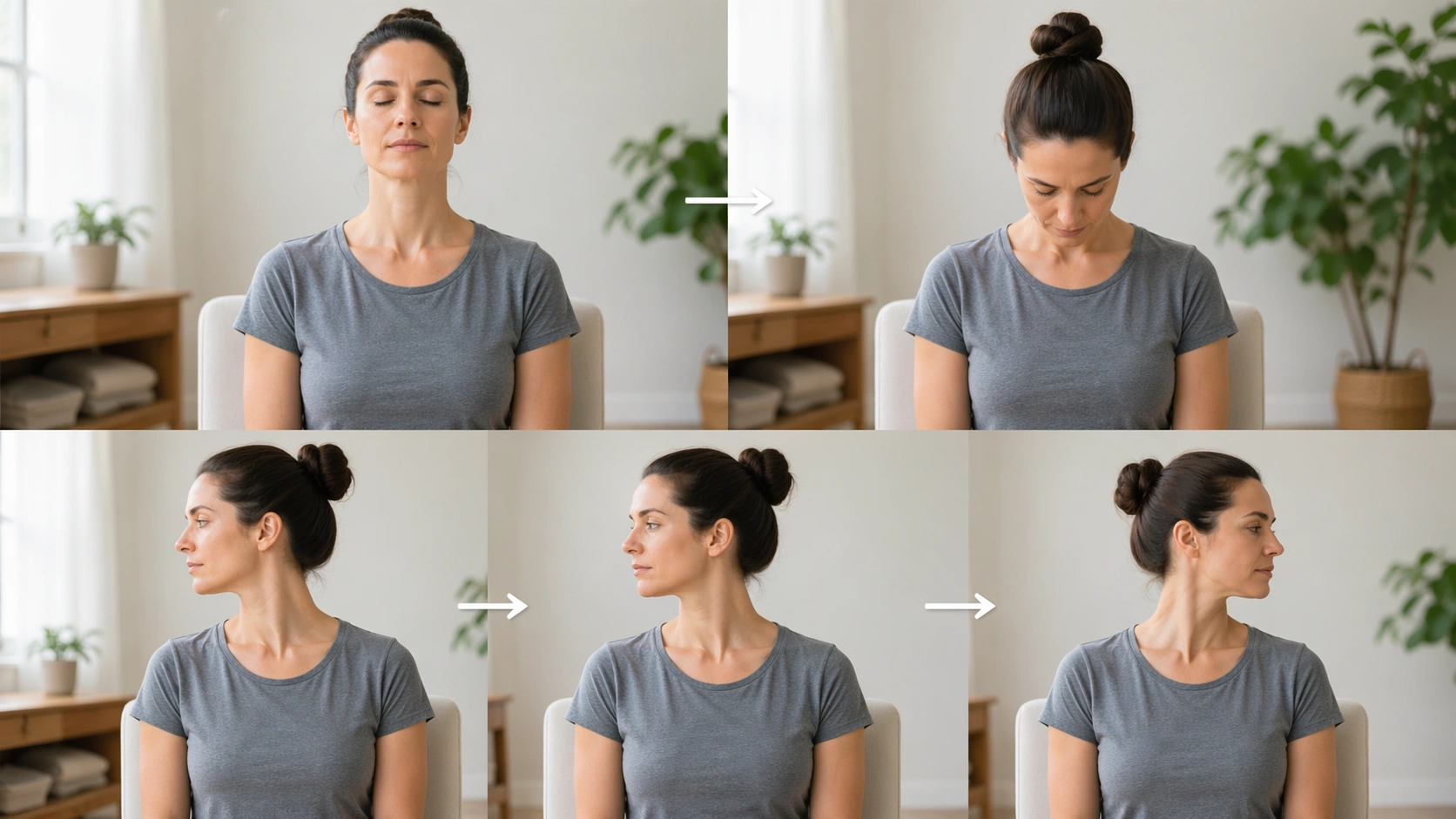
Step 3: Try Gentle Neck Mobility Exercises
Gentle movement can help restore comfort and range of motion. Move slowly. Stop if pain becomes sharp, spreads, or causes tingling.
- Sit tall with your shoulders relaxed.
- Slowly turn your head to the right, then return to center.
- Slowly turn your head to the left, then return to center.
- Gently tilt one ear toward the shoulder without forcing it.
- Repeat on the other side.
- Try a light chin tuck by drawing your chin straight back, not down.
- Use 5 to 8 gentle reps per movement.
This should feel like mobility work, not a battle with your neck. Keep the movement smooth and controlled.
Step 4: Use Self Massage for Tight Neck Muscles
Self massage may help when the neck feels tight from desk work, stress, or upper shoulder tension. Use light to moderate pressure. Avoid pressing directly on the spine, front of the neck, or any area that feels sharp or nerve-like.
- Start with the upper shoulder muscle near the base of the neck.
- Use your fingertips to make small slow circles.
- Hold gentle pressure on a tender spot for 10 to 20 seconds.
- Relax your jaw and breathe slowly.
- Move gradually toward the upper traps and base of the skull.
- Stop if pain increases or travels down the arm.
A tennis ball can also help with upper back and shoulder blade tension. Place it between your upper back and a wall, then gently roll over tight spots. Keep it away from the bones of the spine.
Step 5: Fix Your Desk, Phone, and Sleep Posture
If your daily setup keeps irritating your neck, massage will only give temporary relief. Posture changes matter.
- Keep your computer screen near eye level.
- Support your lower back while sitting.
- Keep shoulders relaxed instead of shrugged.
- Bring your phone closer to eye level instead of bending your neck down.
- Take short breaks every 30 to 60 minutes.
- Use a pillow that keeps your head and neck aligned.
- Avoid sleeping on your stomach if it twists your neck for hours.
Best Neck Pain Relief Techniques Compared
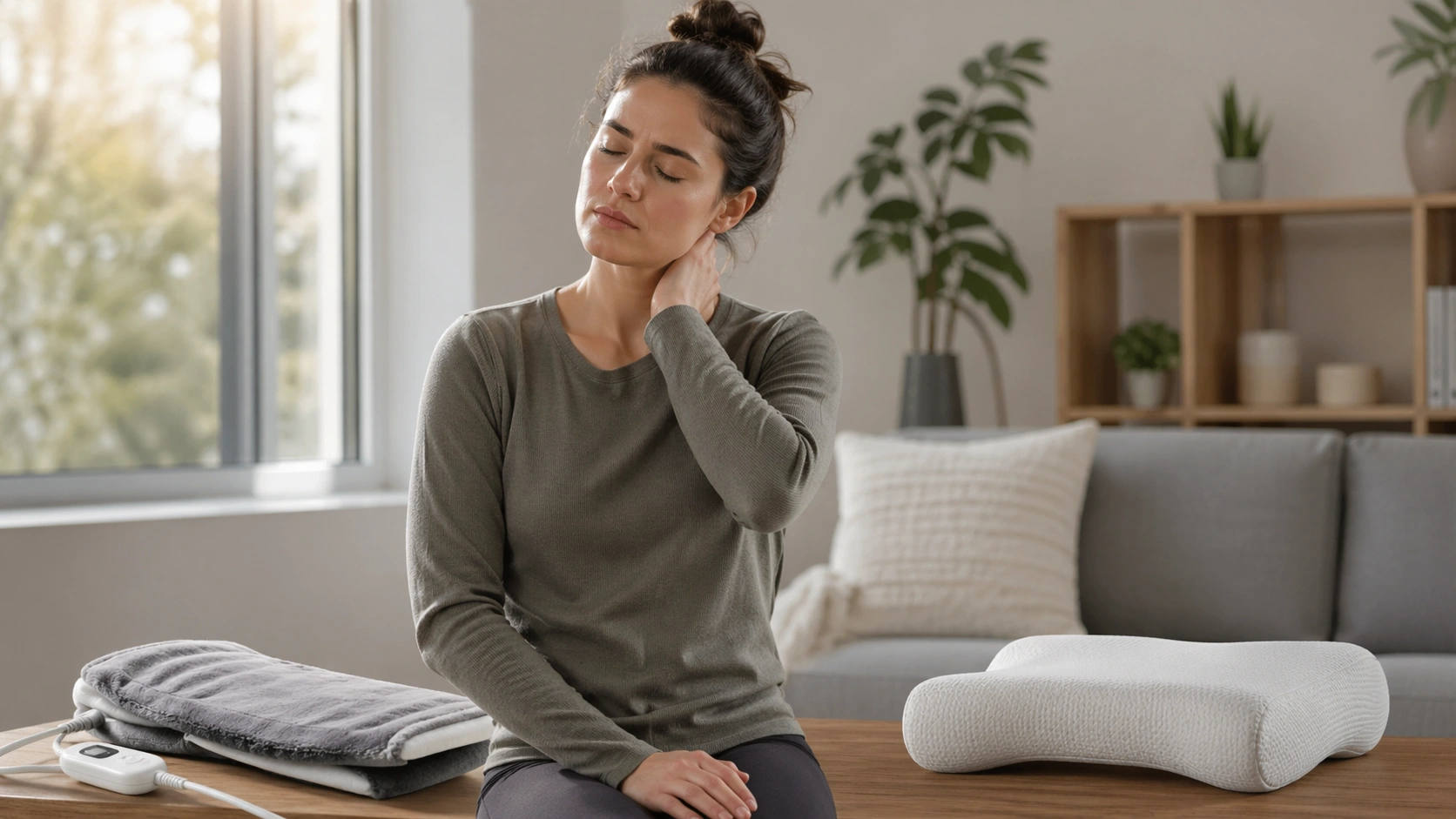
There is no single best technique for every type of neck pain. The right choice depends on whether your neck feels stiff, irritated, sore, tense, or weak from poor posture.
| Technique | Best For | How to Use | Use Carefully If |
|---|---|---|---|
| Heat therapy | Stiff, tight, stress-related muscles | Use comfortable warmth for short sessions | Your skin is sensitive or numb |
| Cold therapy | Fresh strain or irritated soreness | Wrap cold pack in towel | Cold makes symptoms worse |
| Self massage | Upper trap tension and trigger points | Use slow, gentle pressure | Pain radiates down the arm |
| Stretching | Limited mobility and mild stiffness | Move slowly within comfort | Sharp pain appears |
| Neck pillow | Sleep-related neck discomfort | Keep neck neutral overnight | The pillow forces the neck too high |
| Neck massager | General relaxation and tight muscles | Use low intensity first | You have injury, nerve symptoms, or severe pain |
Benefits and Best Uses for Neck Pain Relief Methods
The best neck pain routine is simple enough to repeat. Most people do not need a complicated setup. They need better posture, less strain, gentle movement, and the right recovery tool for the right situation.
For Office Workers
Office workers often deal with forward head posture, tight upper traps, and shoulder tension. A good routine includes screen height changes, short walking breaks, gentle chin tucks, and self massage around the upper shoulders.
For Sleep Discomfort
If you wake up with neck stiffness, your pillow may be too high, too flat, or too unsupportive. A cervical support pillow may help keep the neck in a more neutral position while sleeping on your back or side.
For Post-Workout Soreness
After upper-body workouts, neck pain can come from shrugging during lifts, poor form, or tight traps. Use light mobility, warm showers, and gentle massage. Avoid aggressive percussion therapy directly on the neck.
For Stress-Related Neck Tension
Stress often shows up as jaw clenching, raised shoulders, and tight neck muscles. Heat therapy, slow breathing, light stretching, and a relaxing neck and shoulder massage routine often work well at night.
Common Neck Pain Problems and Smart Fixes
| Problem | Likely Cause | Smart Fix |
|---|---|---|
| Morning neck stiffness | Poor pillow height or twisted sleep posture | Try a neutral pillow and gentle morning mobility |
| Desk job neck pain | Forward head posture and long sitting | Raise screen, support back, and move often |
| Neck and shoulder tightness | Stress, upper trap tension, or phone posture | Use heat, breathing, and shoulder relaxation |
| Trigger point soreness | Tight soft tissue around the upper traps | Use gentle fingertip massage or a tennis ball near the upper back |
| Limited neck rotation | Stiff muscles or guarded movement | Use slow side-to-side movement without forcing range |
| Pain after workouts | Overuse strain or poor lifting posture | Reduce intensity, improve form, and support recovery |
Common Neck Pain Mistakes to Avoid
I see these mistakes often when people try to fix neck pain quickly. The problem is that the neck is sensitive. More pressure is not always better.
Stretching Too Hard
A gentle stretch can feel helpful. A forced stretch can irritate the area. Stay in a mild range and avoid bouncing.
Pressing Directly on the Spine
Massage should focus on soft tissue, not the bones of the neck. Avoid hard pressure on the cervical spine, front of the neck, and any area that causes sharp pain.
Using a Massage Gun Aggressively on the Neck
Massage guns can be useful for large muscle groups, but the neck requires caution. I do not recommend using high percussion directly on the front or side of the neck. If using a massage gun, keep it around the upper traps and shoulders, use the lowest setting, and avoid bony or sensitive areas.
Ignoring Pain That Spreads or Gets Worse
If pain travels down the arm, comes with numbness or tingling, or keeps getting worse, stop self-treatment and get professional advice.
Safety Tips Before You Use Massage Tools or Heat Therapy
Massage tools, heat wraps, and support pillows can be helpful, but they should be used carefully. The goal is comfort and support, not forcing a cure.
Who Should Avoid Aggressive Neck Massage
- People with recent neck injury or trauma
- People with numbness, tingling, or weakness
- People with severe pain that does not change with position
- People with dizziness, fever, or unexplained symptoms
- People who have been told to avoid massage by a healthcare professional
- People with skin sensitivity, open wounds, or recent surgery near the area
When to Stop and Get Professional Advice
Stop your home routine if pain becomes sharp, spreads into the arm, causes weakness, or does not improve with careful self-care. You can also review general neck pain information from Healthline neck pain overview for a broad educational breakdown of symptoms, causes, and treatment options.
Best Tools and Product Recommendations for Neck Pain Relief
For this keyword, product relevance is strong because many readers want practical home tools. These are not magic cures, but they can support a better neck pain relief routine when used safely.
Heated Neck Wrap
A heated neck wrap may help relax tight muscles, support blood flow, and make evening tension relief easier.
Neck and Shoulder Massager
A neck and shoulder massager can be helpful for office workers, stress tension, and general muscle relaxation at home.
Cervical Support Pillow
A cervical support pillow may help people who wake up with neck stiffness from poor sleep alignment.
Neck Massager vs Heat Wrap vs Pillow: Full Comparison
| Tool | Best For | Main Benefit | Best User |
|---|---|---|---|
| Neck and shoulder massager | Muscle tension and relaxation | Helps knead tight soft tissue | Office workers and people with stress tension |
| Heated neck wrap | Stiffness and evening tightness | Provides soothing warmth | People who feel tight after sitting or sleeping |
| Cervical support pillow | Sleep-related neck discomfort | Supports better neck alignment | Back and side sleepers |
| Tennis ball massage | Trigger points near upper back | Low-cost pressure control | Beginners who want simple self massage |
| Massage gun | Shoulders and upper traps | Quick vibration or percussion support | Active users who avoid direct neck use |
FAQ: How to Cure Neck Pain
Can neck pain be cured at home?
Mild neck pain from posture, tension, or overuse often improves with gentle movement, heat or cold therapy, self massage, and better ergonomics. See a healthcare professional if pain is severe, spreading, or not improving.
What is the fastest way to relieve neck pain?
The fastest safe approach is to reduce strain, apply heat or cold based on the situation, move gently, and relax tight shoulder muscles. Avoid hard stretching or aggressive massage.
Is heat or ice better for neck pain?
Ice may help fresh soreness or irritation, while heat often works better for tight, stiff, stress-related neck muscles. Use both carefully and protect your skin.
Does massage help neck pain?
Massage may help neck pain caused by tight muscles, trigger points, or stress tension. Use gentle pressure and avoid direct pressure on the spine or front of the neck.
Should I stretch my neck if it hurts?
Gentle movement can help mild stiffness, but stretching should never feel sharp or forced. Stop if pain spreads, tingling appears, or symptoms get worse.
What pillow is best for neck pain?
The best pillow keeps your head and neck aligned with your spine. Many back and side sleepers prefer a cervical support pillow, but the right height depends on your body and sleep position.
When should I worry about neck pain?
Get professional advice if neck pain follows an injury, spreads down the arm, causes weakness or numbness, comes with fever, or does not improve after careful self-care.
Conclusion: The Smart Way to Handle Neck Pain
Learning how to cure neck pain starts with understanding what your neck needs. For many people, the best routine is simple: reduce strain, use heat or cold wisely, move gently, massage tight soft tissue carefully, and improve posture during work and sleep.
Tools like a heated neck wrap, neck and shoulder massager, or cervical support pillow may help when they match your symptoms and are used safely. Start gentle, stay consistent, and get professional help if your pain feels unusual, severe, or persistent.