Quick Answer
Knee pain often comes from overuse, muscle tightness, joint irritation, poor movement habits, or a mild strain. The best first steps are usually to reduce aggravating activity, use ice or heat based on symptoms, improve mobility, and support the area with simple recovery tools when needed.
Knee pain can show up after workouts, long walks, desk days, stairs, or even after sleeping in a bad position. I’m Ethan Carter, and I’ve spent years testing massage tools, recovery products, and pain relief methods. I focus on simple, practical advice that helps people feel better and recover faster at home. In this guide, I’ll walk you through common reasons your knee hurts, what may help at home, which tools are actually useful, and when it makes sense to get medical help.
Why Knee Pain Matters
Your knee sits in the middle of almost everything you do. It takes stress when you stand, walk, squat, climb stairs, and change direction. That means the pain is not always coming from the knee joint itself. Sometimes the real issue is tight muscles, poor recovery, weak hips, or a sudden jump in activity.
That is why two people can both say, “My knee hurts,” while needing very different fixes. One may need rest and compression after overdoing it. Another may need mobility work for stiff quads and calves. Someone else may simply need better load management after too much running or too much sitting.
How Knee Pain Works
The knee is a hinge joint, but it does not work alone. It relies on your quads, hamstrings, glutes, calves, tendons, ligaments, and surrounding soft tissue to move smoothly and share force well.
When the muscles above and below the knee get tight or weak, the knee can start taking more stress than it should. Many people notice this after desk work, heavy leg training, long hikes, travel days, or a fast jump in workouts.
I often explain knee pain this way: the joint is where you feel it, but the cause may be coming from how the rest of the leg is moving. Tight quads may pull harder on the kneecap area. Tight calves can change ankle motion and push more pressure upward. Weak glutes can make the knee track less smoothly during stairs, squats, and walking.
Common Reasons Your Knee Hurts
Overuse and repetitive strain: This is one of the most common patterns I see. You walk more than usual, add running too quickly, do extra squats, or spend a weekend kneeling and suddenly the knee becomes sore or irritated.
Stiffness after sitting: Desk workers often feel knee pain after long periods of sitting. The joint gets stiff, the hips tighten up, and the first few steps feel rough.
Pain after workouts: Sore quads, tight calves, irritated tendons, or poor recovery can all show up as knee discomfort the day after training.
Weak hips and quads: If your glutes and quads are not doing enough, the knee may absorb more stress during stairs, lunges, and daily movement.
Joint irritation and swelling: Sometimes the knee hurts because the joint itself is irritated. That may happen after a twist, long impact sessions, or age-related wear and stiffness.
Arthritis and age-related changes: Many older adults notice knee pain with stiffness, swelling, and reduced motion. This often feels worse after inactivity and a bit better once the joint warms up.
Pain location can give a clue: Front knee pain often shows up with stairs, squats, and sitting too long. Inner knee pain may feel worse with twisting or long walks. Pain in the back of the knee can feel tighter when the leg fully bends or straightens.
Symptom vs Possible Cause vs What May Help First
| Symptom Pattern | Possible Contributor | What May Help First |
|---|---|---|
| Aching after sitting all day | Stiff hips, quads, limited circulation, poor posture | Short walk, gentle mobility, light heat before movement |
| Pain going up or down stairs | Quad weakness, kneecap irritation, tight hips | Reduce volume, strengthen glutes and quads, use support if needed |
| Soreness after workouts | Overuse strain, poor recovery, tight calves or quads | Ice if swollen, recovery walk, self-massage around the knee |
| Morning stiffness | Joint stiffness, arthritis, reduced mobility | Gentle heat, easy movement, low-impact exercise |
| Sudden swelling after a twist | Acute irritation or strain | Rest, compression, avoid deep massage, get checked if unstable |
How to Relieve Knee Pain at Home Step by Step
Step 1: Stop doing what clearly makes it worse. You do not need full bed rest, but you should back off high-impact movement, deep squats, hard stairs, or long sessions that keep stirring it up.
Step 2: Pick ice or heat based on the pattern. I usually think of ice for a fresh flare-up, swelling, or post-workout irritation. Heat tends to work better for stiffness, tightness, or getting the knee ready for gentle movement.
Step 3: Walk lightly and restore motion. Short easy walks, gentle knee bends, calf stretches, and hip mobility often feel better than complete stillness. The goal is to keep the area moving without aggravating it.
Step 4: Work on the muscles around the knee. Many people do better once they start strengthening the glutes, quads, and calves in a simple way. Mini squats, supported sit-to-stands, step-ups, and straight-leg raises are common starting points if they do not increase pain.
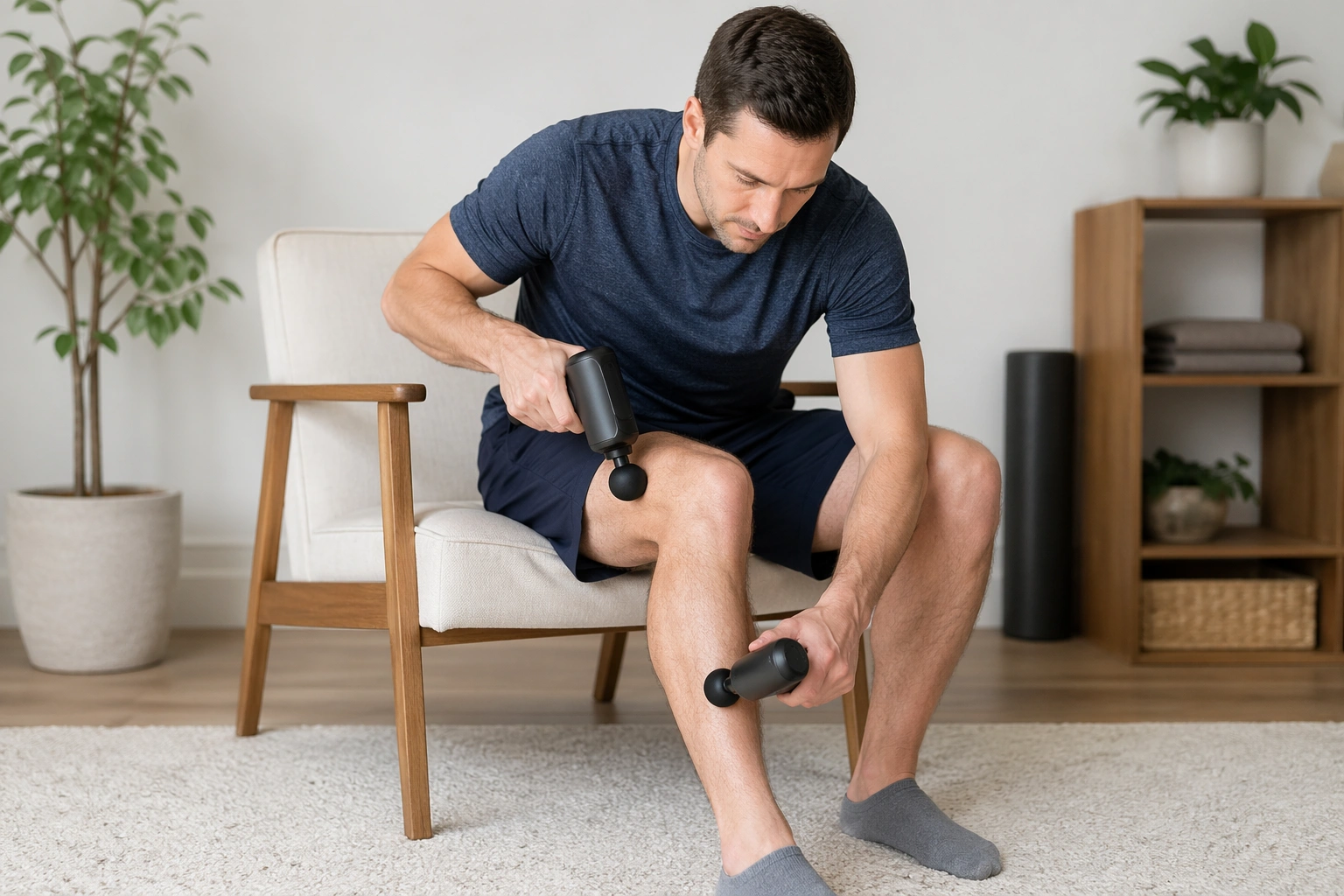
Step 5: Use self-massage on the surrounding muscles, not the painful joint itself. This is a big one. If the front of your knee hurts, I usually look at the quads, hips, and calves first. A massage gun, foam roller, or even a tennis ball can help relax tight tissue around the knee. I avoid aggressive pressure directly on the kneecap or a hot, swollen knee.
Step 6: Return to normal activity gradually. Once symptoms settle, build back up slowly. A lot of knee pain comes back because people feel a little better and jump right back into long runs, heavy leg days, or repeated stairs.
Best Uses for Massage, Mobility, and Recovery Tools
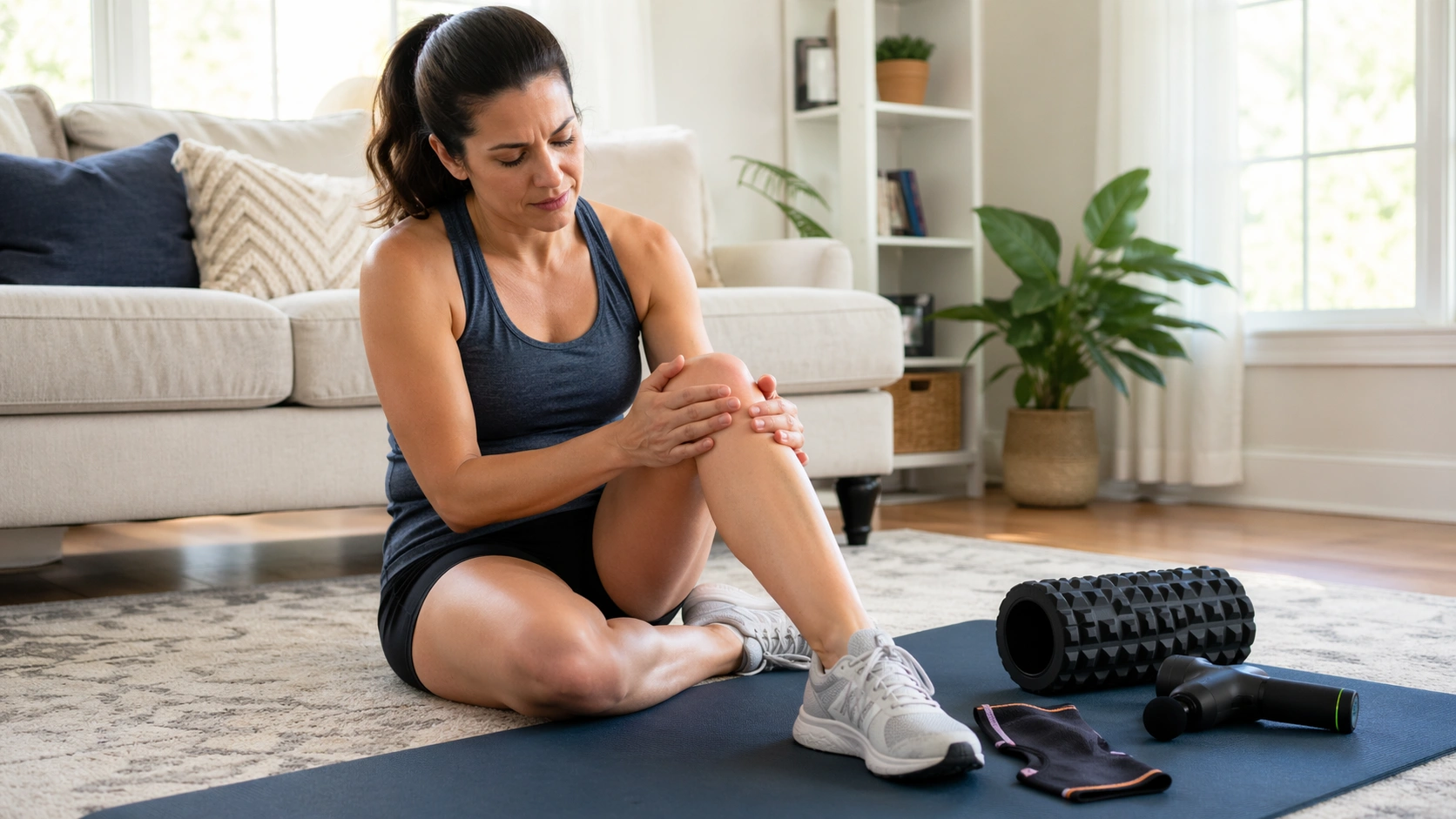
Massage and recovery tools are most helpful when the problem involves muscle tension, stiffness, mild overuse, recovery delay, or general soreness around the knee. They often work well for office workers, walkers, runners, gym-goers, and older adults who need gentle support at home.
In my experience, these tools tend to be most useful when your pain is linked to tight quads, calves, or glutes rather than a major injury. They can support blood flow, reduce that heavy stiff feeling, and make it easier to move again.
They are usually less helpful when the knee is badly swollen, unstable, sharply painful, or painful after a clear injury. That is where caution matters more than pushing harder on recovery tools.
Common Problems and Simple Fixes
Pain on stairs: Focus on lighter activity for a few days, gentle quad strengthening, and improving hip control. Supportive shoes and a compression sleeve may also help.
Pain after sitting: Get up more often. A brief walk every hour, gentle heat, and calf and quad mobility can make a big difference.
Pain after workouts: Look at load first. You may simply be doing too much too fast. Trim the volume, recover better, and use light massage around the surrounding muscles.
Knee tightness at night: Many people do well with a short evening mobility routine, a warm shower, light heat, or a pillow position that keeps the knee comfortable while sleeping.
Common Mistakes to Avoid
Mistake 1: Massaging directly on a painful kneecap or swollen joint. I get better results by working the quads, calves, and glutes instead.
Mistake 2: Pushing through sharp pain because you think more exercise will solve it faster. Sharp, worsening pain is usually a sign to scale back.
Mistake 3: Using a massage gun at full pressure. More intensity is not always better. A light setting is often enough for the muscles around the knee.
Mistake 4: Ignoring daily habits. Bad posture, poor footwear, too much sitting, and sudden spikes in activity can all keep knee pain hanging around.
Mistake 5: Resting too much for too long. Full rest may calm things down for a day or two, but gentle movement usually supports better recovery than complete stillness.
Safety Tips and Best Practices
Use deep pressure carefully. I avoid heavy massage on a newly injured, hot, red, or visibly swollen knee. I also avoid forcing painful stretches just because the area feels tight.
If the knee gives out, locks, looks deformed, swells quickly after an injury, or you cannot put weight on it, home care is not the first move. The same goes for severe redness, fever, or intense pain after a fall or twist.
For broader guidance on common causes and red-flag symptoms, it is worth reviewing Cleveland Clinic’s knee pain overview, Mayo Clinic’s advice on when knee pain needs medical care, and Cleveland Clinic’s knee arthritis guide.
Tool and Product Recommendations
I only like adding tools after the basics are covered. If your activity, mobility, and recovery plan are off, no gadget will fix that alone. But the right tool can absolutely make home care easier and more consistent.
| Tool | Best For | Main Advantage | Watch Out For |
|---|---|---|---|
| Knee compression sleeve | Daily support, walking, mild swelling | Easy to wear and supportive | Too much tightness can feel uncomfortable |
| Massage gun | Tight quads, calves, post-workout soreness | Fast soft-tissue relief around the knee | Do not pound directly on the joint |
| Ice and heat wrap | Flare-ups, stiffness, recovery routine | Simple and versatile | Use the right temperature for the right problem |
Adjustable Knee Compression Sleeve
A solid first pick for walking, mild swelling, and everyday support without bulk.
Quiet Percussion Massage Gun
Best for loosening tight quads and calves that may be adding stress around the knee.
Reusable Ice and Heat Knee Wrap
Useful when your pain shifts between swelling after activity and stiffness before movement.
Massage Gun vs Foam Roller vs Knee Compression Sleeve
| Option | Works Best For | What I Like | Main Limitation |
|---|---|---|---|
| Massage gun | Post-workout soreness and tight surrounding muscles | Fast and targeted | Needs careful use around the joint |
| Foam roller | Broad leg stiffness and recovery work | Affordable and simple | Less precise on small sore areas |
| Knee compression sleeve | Daily support and mild activity pain | Convenient during walking and errands | Does not fix mobility or strength issues |
If I had to keep it simple, I would use a compression sleeve for day-to-day support, a massage gun or foam roller for tight muscles around the knee, and an ice or heat wrap based on whether the main problem is swelling or stiffness.
FAQ
Why does my knee hurt without an injury?
Knee pain without injury often comes from overuse, joint irritation, tight muscles, arthritis, or movement habits that overload the knee.
Why does my knee hurt when I bend it?
Pain when bending the knee often points to irritation under the kneecap, swelling, stiffness, or a strained tendon.
Why does my knee hurt going up or down stairs?
Stair pain is commonly linked to kneecap tracking issues, quad weakness, tight hips, or irritated joint surfaces.
Can massage help knee pain?
Massage may help when the problem is muscle tension around the knee, but it is not the right move for a hot, swollen, or newly injured joint.
Should I use ice or heat for knee pain?
Ice usually works better for a fresh flare-up or swelling, while heat is often better for stiffness and warm-up before movement.
When should I worry about knee pain?
Get medical help if you cannot bear weight, your knee locks or gives way, you see major swelling or deformity, or you have redness, fever, or severe pain after injury.
Can tight hips or calves make my knee hurt?
Yes, tight hips, quads, and calves can change how your knee tracks and may increase pressure during walking, squatting, or stairs.
Conclusion
If you keep asking, “Why does my knee hurt?” the honest answer is that it is often a mix of load, movement, muscle tension, and recovery habits rather than one single thing. Start with simple relief, support the surrounding muscles, and use tools that match the problem instead of overdoing every option at once.
For mild knee pain, small consistent actions usually work better than aggressive fixes. And if your symptoms feel severe, unstable, or keep hanging around, getting the knee checked is the smarter move.