Quick answer: Knees often hurt after exercise because the joint or the muscles around it were overloaded, irritated, or not recovering well. Common reasons include sore supporting muscles, overuse, poor form, tight quads or calves, and front-of-knee irritation. Sharp pain, swelling, locking, or instability deserve extra caution.
I’m Ethan Carter, and I’ve spent years testing massage tools, recovery products, and pain relief methods. I focus on simple, practical advice that helps people feel better and recover faster at home. If your knees feel sore after a workout, a run, squats, or even a long walk, I’ll show you what may be going on, what usually helps, and which recovery tools are actually worth using.
Why Knee Pain After Exercise Matters
A lot of people assume knee pain after exercise is just part of getting fitter. Sometimes it is just normal post-workout soreness. But repeated knee pain usually means your body is asking for better recovery, better movement, or less load for a while. In my experience, the faster you spot the pattern, the easier it is to calm things down before it becomes a bigger problem.
Minor soreness around worked muscles may settle on its own. True knee pain is different. It often shows up as pain around the kneecap, pain on stairs, swelling, stiffness, or a sharp pinch with squats, lunges, or running. Front-of-knee pain after activity is commonly linked with patellofemoral pain, while repeated exercise without enough recovery can also lead to overuse problems like tendon irritation or bursitis.
What Usually Causes Knees to Hurt After Exercise
Normal post-workout soreness vs knee joint pain
One of the first things I look at is timing. Delayed onset muscle soreness, often called DOMS, tends to show up one to three days after a harder-than-usual workout. It usually causes tenderness, stiffness, and reduced range of motion in the muscles you trained, and it typically fades over a few days. That feels different from a knee joint pain that flares during exercise, gets worse on stairs, or comes with swelling.
Sudden training increases and overuse strain
If you recently added mileage, heavier squats, more jumping, more stairs, or more workout days, that jump in load is a common reason your knees start complaining. Overuse injuries happen when repeated stress builds faster than the tissues can recover.
Runner’s knee and front-of-knee pressure
Pain at the front of the knee or around the kneecap often points to patellofemoral pain syndrome, which many people know as runner’s knee. It can feel like a dull ache, and it often gets worse with squatting, stairs, longer sitting with bent knees, downhill movement, or a recent jump in training intensity.
Tight quads, calves, hips, and poor mobility
Tight leg muscles can change how your knee moves and how pressure spreads through the joint. I see this a lot in people who sit all day, then jump into hard workouts. Tight quads, calves, hip flexors, and IT band area tension can make the knee feel stiff, pulled, or overloaded even when the knee itself is not the main issue. Tight muscles and imbalances are also commonly mentioned alongside patellofemoral pain.
Weak support muscles and form issues
Your knee works best when the muscles above and below it do their job. Weak glutes, undertrained hamstrings, and poor squat or landing mechanics can increase knee stress. Stronger support muscles help absorb shock and reduce stress on the knee joint.
Shoes, surface, and recovery mistakes
Sometimes the issue is not the workout itself. It is the combo of hard surfaces, worn-out shoes, poor running form, little sleep, and not enough recovery between sessions. In practical terms, your body may tolerate one of those stressors well, but several stacked together can tip your knees over the edge.
| Symptom | Likely Trigger | What May Help |
|---|---|---|
| Front-of-knee ache | Runner’s knee, load increase, poor tracking | Reduce load, strengthen hips and quads, check form |
| Stiffness the next day | DOMS, tight quads or calves | Gentle walking, mobility work, light self massage |
| Swelling after exercise | Irritation, overuse, strain | Ice, compression, elevation, rest from aggravating moves |
| Sharp pain with squats | Form issue, overload, tendon irritation | Shorten range, reduce weight, improve mechanics |
| Pain on stairs | Front knee overload, weak support muscles | Lower impact training, support work for glutes and quads |
| Pain after running downhill | Extra kneecap stress, overuse | Reduce downhill volume, improve cadence and recovery |
How the Knee and Recovery Process Work
Your knee is not working alone. The kneecap, tendons, ligaments, cartilage, quads, hamstrings, calves, and glutes all share the load. When the muscles that support the knee are strong and flexible, they help absorb shock and reduce stress on the joint. When they are weak, tight, or tired, more pressure can land on the knee.
This is why post-workout knee pain often is not just a “knee problem.” It may be a recovery problem, a mobility problem, or a movement-quality problem. In a lot of at-home cases, relief comes from improving circulation with gentle movement, easing soft-tissue tension, supporting the area with compression when needed, and gradually rebuilding strength instead of resting too long or pushing too hard.
Step-by-Step Guide to Relieve Knee Pain After Exercise
Step 1: Stop and assess the pain
If the pain feels sharp, unstable, or tied to one specific movement, stop the workout. If it feels more like general soreness around the muscles, you may just need a lighter recovery day.
Step 2: Reduce load but keep gentle movement
I usually recommend backing off high-impact exercise for a few days and switching to something easier like walking, cycling with low resistance, or easy mobility work if that feels comfortable. Low-impact movement often works better than complete inactivity for minor flare-ups.
Step 3: Use ice if swelling is present
If your knee looks puffy or feels hot after exercise, icing can help calm things down. A common home-care approach is 15 to 20 minutes at a time with a towel between the ice and skin.
Step 4: Add compression and elevation if needed
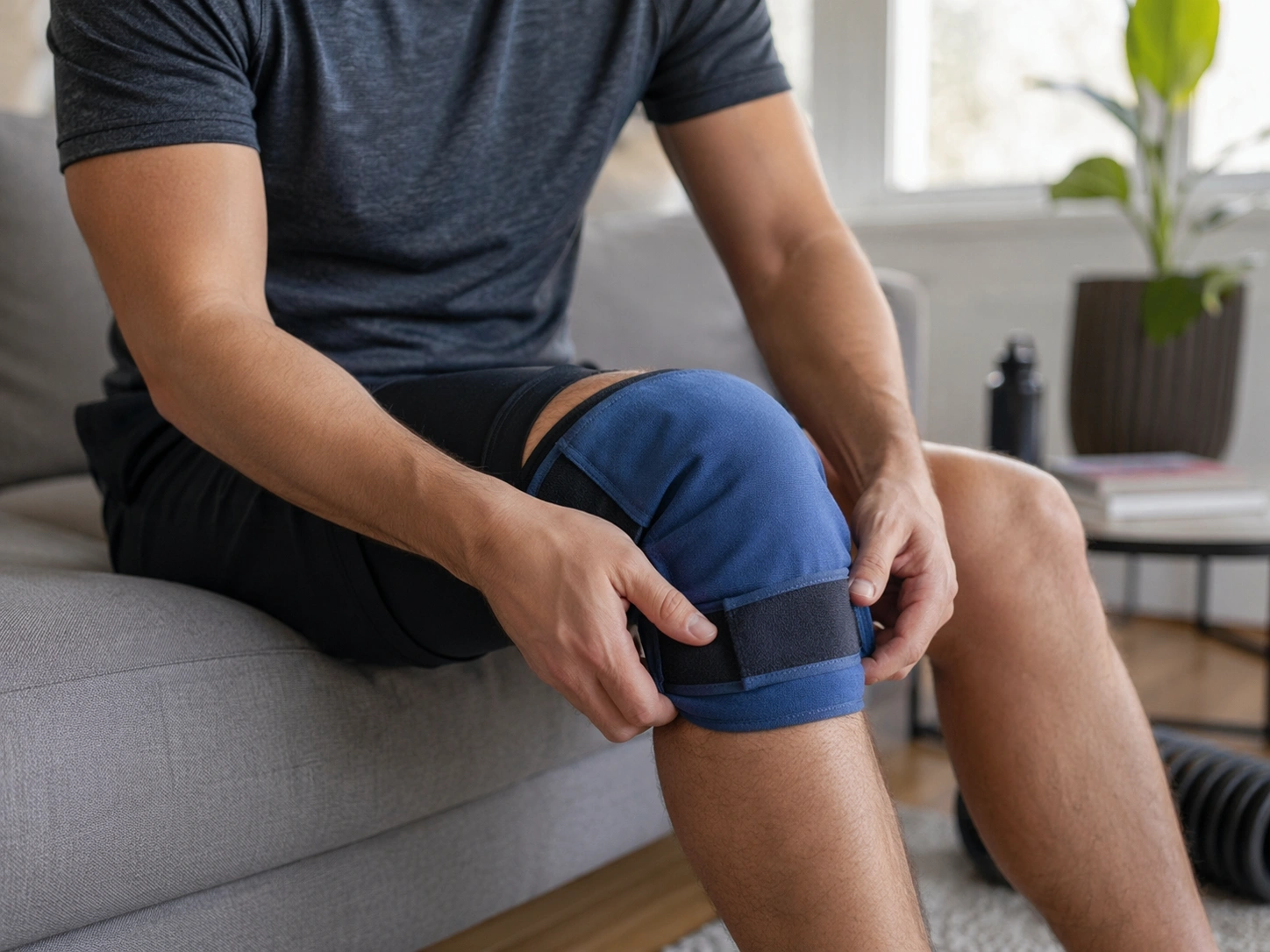
A simple compression sleeve or elastic wrap may help control swelling and give the area a more supported feel. Elevation can also help when swelling is noticeable.
Step 5: Try gentle mobility and self massage around the knee
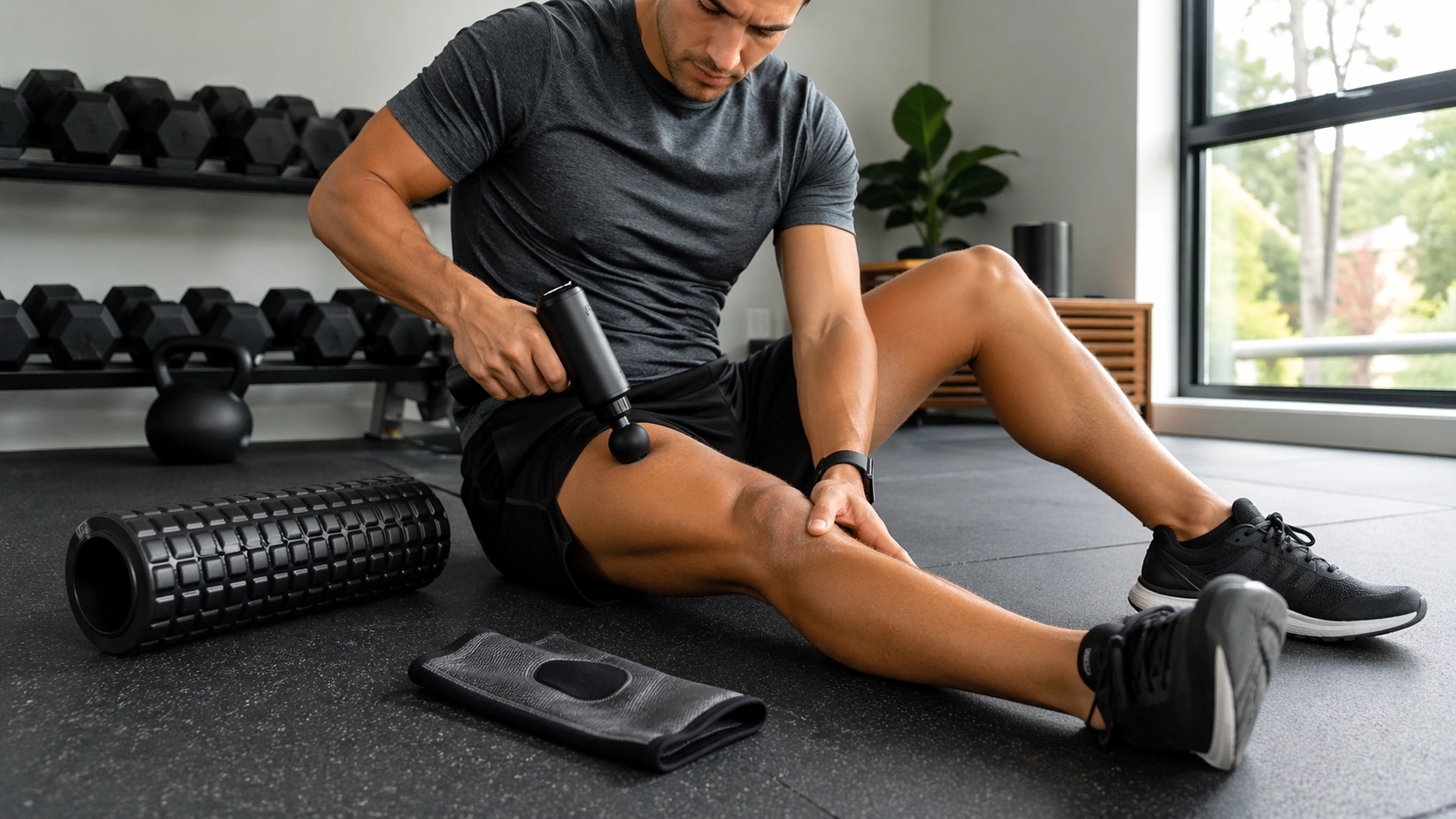
This is where many people get real relief. I do not recommend pounding directly on the kneecap or pressing hard on a swollen joint. Instead, focus on the muscles around the area: quads, calves, hamstrings, and glutes. A foam roller, massage gun on a low setting, or hand massage can help reduce tightness and improve how the whole leg feels. For many people, that change in muscle tension makes stairs, walking, and getting up from a chair feel easier.
Step 6: Return to workouts gradually
Once pain settles, build back slowly. Reduce volume first, then intensity. If squats, lunges, jumps, or runs brought the pain on, start with a smaller range of motion, lower impact, and better control before you ramp up again.
Benefits and Best Uses of Knee Recovery Strategies
In practical home recovery, different tools solve different problems.
- Ice may help most when swelling or heat shows up after activity.
- Compression often works well when the knee feels puffy, mildly irritated, or unstable.
- Self massage may help when tight quads, calves, or glutes are pulling on the knee.
- Mobility work can support range of motion and reduce stiffness.
- Strength work matters most when the pain keeps returning with workouts.
That last point is important. Strengthening the muscles that support the knee can reduce stress on the joint and improve shock absorption over time.
Best Tools and Products That May Help
I only like tools that fit the actual problem. If your knee is swollen, an ice wrap and compression sleeve make more sense than aggressive massage. If the joint is not swollen but your quads and calves are tight, a massage gun or foam roller may be the better move.
| Tool | Best For | Why It Helps | When to Skip It |
|---|---|---|---|
| Knee compression sleeve | Mild swelling, supported feel, walking | May improve comfort and light compression | If it feels too tight or increases discomfort |
| Reusable knee ice wrap | Post-workout swelling or heat | Easy way to cool the area | If stiffness is the only issue and there is no swelling |
| Massage gun | Tight quads, calves, glutes | May reduce muscle tension around the knee | Do not use directly on the kneecap or a swollen joint |
| Foam roller | General leg tightness and recovery | Helps with broad soft-tissue work | If pressure feels too intense during a flare-up |
| Mini band | Glute activation and knee control work | Good for support-muscle training | If exercise itself is still painful |
Knee Compression Sleeve
A simple option for mild swelling, light support, and more comfort during daily movement.
Reusable Knee Ice Pack Wrap
Useful when your knee feels hot, puffy, or irritated after a workout.
Massage Gun
Best for loosening tight quads, calves, and glutes that may be adding stress around the knee.
Massage Gun vs Foam Roller vs Knee Sleeve
| Option | Best For | Pros | Limitations |
|---|---|---|---|
| Massage gun | Targeted muscle tightness | Fast, easy, great for quads and calves | Not for direct use on the kneecap or obvious swelling |
| Foam roller | Broad leg recovery | Good for quads, IT band area, calves, hamstrings | Less precise and can feel intense for beginners |
| Knee sleeve | Support and mild compression | Simple, travel-friendly, easy during daily activity | Does not fix tight muscles or poor mechanics |
If I had to simplify it, I would say this: use a massage gun for muscle tension, a foam roller for general leg recovery, and a knee sleeve for support and light compression.
Common Problems and Fixes
My knees hurt after squats
This usually makes me look at load, depth, and control first. Try reducing weight, slowing the movement, and making sure your knees are tracking smoothly instead of collapsing inward. Tight ankles and weak glutes are common contributors.
My knees hurt after running
Check for a sudden jump in mileage, speed work, hills, or harder surfaces. Front-of-knee pain after running often fits the runner’s knee pattern, especially if it is worse with stairs or downhill running.
My knees hurt on stairs after a workout
Pain on stairs often points to front-of-knee overload or irritated tissues around the kneecap. In my experience, that is a good time to cut back impact, ease muscle tightness in the quads and calves, and focus on controlled strength work. Stairs are a common aggravating movement in patellofemoral pain.
My knees feel stiff the next day
This often lines up with DOMS or tight surrounding muscles rather than a serious injury. Gentle walking, light cycling, and short mobility sessions usually feel better than doing nothing all day.
My knee is swollen after exercise
Swelling changes the plan. I would lean more on rest from aggravating movements, ice, compression, and elevation. If swelling is marked, keeps returning, or comes with instability or trouble bending and straightening, it is smarter to get it checked.
Common Mistakes to Avoid
- Pushing through sharp pain. Mild soreness is one thing. Sharp joint pain is another.
- Using a massage gun directly on the kneecap. Work the muscles around the knee instead.
- Jumping back into impact too fast. Pain usually comes back when the return is rushed.
- Ignoring hip, glute, and ankle mobility. The knee often pays for problems elsewhere.
- Using only passive tools. Sleeves, ice, and massage help, but strength and movement still matter.
- Treating every flare-up with heat. If the knee is swollen or warm, cooling it first usually makes more sense.
Safety Tips and Best Practices
Most mild knee flare-ups respond to simple self-care. But there are some clear signs to stop guessing. You should get medical help if you cannot bear weight, the knee gives out, you cannot fully bend or straighten it, there is marked swelling, there is an obvious deformity, or you have fever with redness, pain, and swelling.
If your pain is more of a mild overuse issue, home care usually starts with rest from aggravating activity, low-impact movement, icing for swelling, compression, and elevation. Mayo Clinic’s self-care guidance covers those basics well, and Cleveland Clinic’s guides are useful for understanding DOMS and front-of-knee pain patterns. Mayo Clinic knee pain self-care, Cleveland Clinic DOMS guide, and Cleveland Clinic patellofemoral pain guide are good starting points.
FAQ
Is it normal for knees to hurt after exercise?
Mild soreness around the muscles can be normal after a hard or new workout. Sharp pain, swelling, instability, or pain that keeps coming back is not something I would ignore.
Why do my knees hurt after squats?
Common reasons include too much load, poor squat mechanics, weak support muscles, and tight quads or calves. Front-of-knee irritation can also show up when training volume increases too fast.
Should I keep exercising if my knee hurts?
You can often keep moving with lower-impact exercise if the pain is mild, but I would stop any movement that causes sharp pain, worsening swelling, or instability.
Does icing help knee pain after exercise?
It may help most when there is swelling, heat, or irritation after activity. A common home-care range is 15 to 20 minutes at a time.
Can a massage gun help sore knees?
It can help when the real issue is tight quads, calves, or glutes around the knee. I would avoid using it directly on the kneecap or on a swollen joint.
What is the best recovery tool for knee pain after exercise?
It depends on the problem. I prefer an ice wrap for swelling, a sleeve for light support, and a massage gun or foam roller for muscle tightness.
When should I worry about knee pain after exercise?
I would take it more seriously if you cannot bear weight, the knee gives out, you cannot fully bend or straighten it, there is major swelling, or the pain came with a significant injury.
Conclusion
Knees hurt after exercise for a few common reasons: too much load, poor recovery, tight surrounding muscles, or irritation around the kneecap. In my experience, the best results come from matching the fix to the problem. Calm swelling when it is there. Loosen tight muscles when they are the issue. Rebuild strength and control so the pain does not keep coming back. If you want an easier home routine, start with one simple support tool and one recovery habit you can actually stick with.