By Alex Turner
Quick Answer: A percussion massager is generally intended for soft muscle tissue, not bones, joints, the front or side of the neck, or injured or irritated areas. Common target areas include the thighs, calves, glutes, upper back muscles, and other broad muscle groups. Start gently and follow your device’s instructions.
Where Can You Safely Use a Percussion Massager?
A percussion massager is designed to deliver repeated pulses to soft tissue. The most practical places to target are areas with enough muscle bulk to absorb the movement, such as the thighs, calves, glutes, and upper back muscles.
The important distinction is not simply “where it feels good.” Safe use depends on staying on muscle rather than pressing directly over bones, joints, sensitive structures, open skin, or an area affected by an unexplained or significant problem.
Safety note: This article is for general educational information only. It does not diagnose, treat, cure, or prevent any condition. It does not replace advice from a licensed healthcare professional. Readers should seek professional help for severe, worsening, unusual, or persistent symptoms.
Start With Broad, Muscular Areas
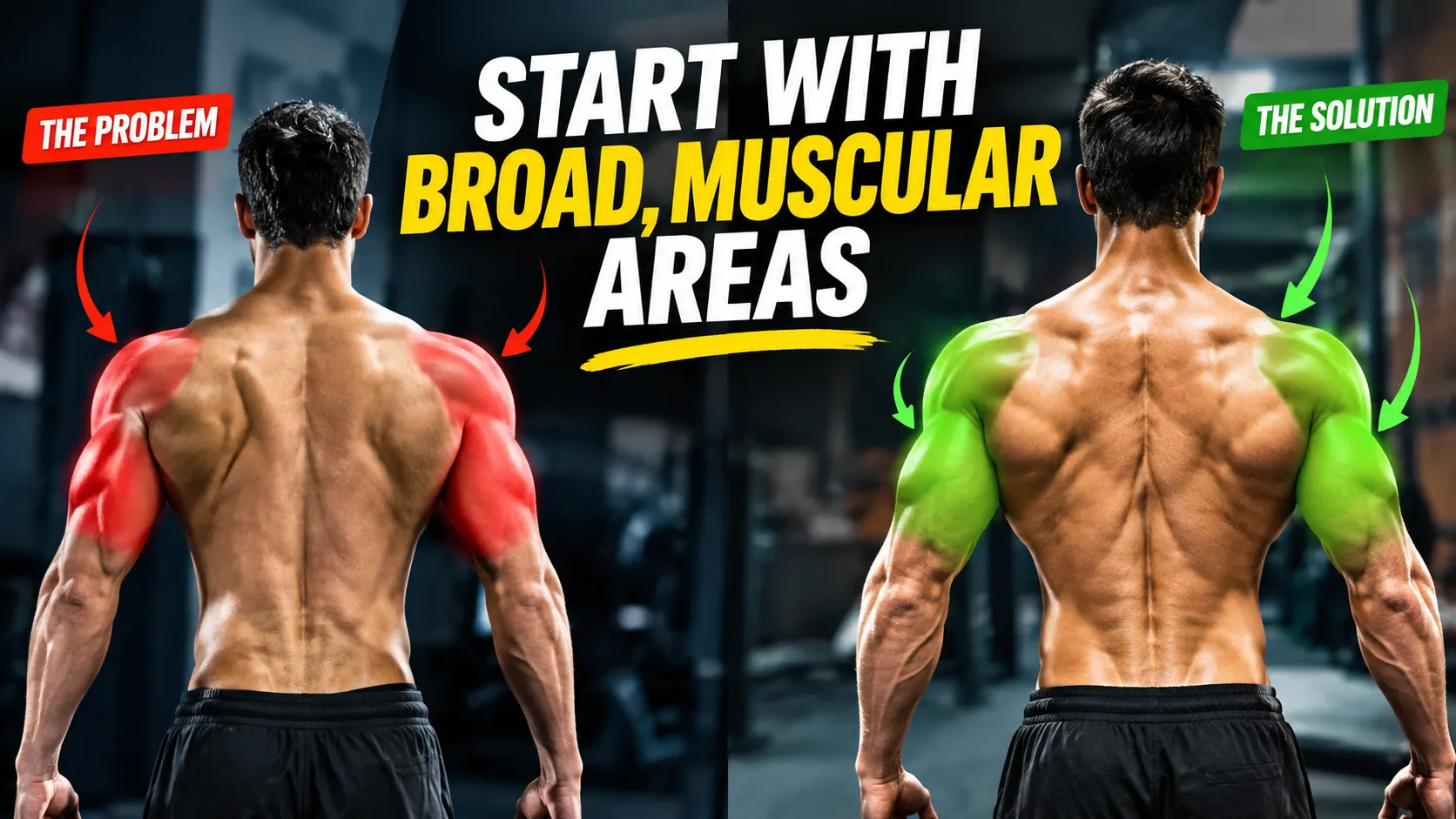
If you are learning where to use a percussion massager, start with large muscle groups that are easy to identify. The thighs, calves, glutes, and upper back muscles are common examples. These areas give you more room to keep the device on soft tissue instead of accidentally hitting a hard structure.
A useful beginner rule is simple: if you can clearly feel bone directly underneath the spot, move the device onto the surrounding muscle. Cleveland Clinic and UCLA Health both advise keeping percussion massage on muscles and away from bones and joints. Cleveland Clinic’s massage-gun guidance and UCLA Health’s guidance provide additional safety context.
The goal should also be comfortable movement, not maximum pressure. A device that feels aggressively painful is not automatically working better.
Body Areas and the Basic Fit
This table gives a practical starting point for deciding where the tool fits. Always check your own device manual because attachments, intensity ranges, and warnings vary between models.
Swipe left/right to see the full table →
| Area | General fit | Beginner focus |
|---|---|---|
| Thighs | Good muscle bulk | Use light pressure |
| Calves | Muscular area | Stay off ankle and shin |
| Glutes | Broad muscle area | Use a comfortable setting |
| Upper back | Muscle beside spine | Avoid the spine itself |
Practical guide: start where muscle bulk is easiest to identify.
Large, easy-to-find muscle area.
Work around the muscle, not shin or ankle.
Use a comfortable pressure level.
Stay beside, rather than on, the spine.
The practical takeaway is to choose the easiest muscle target first. Learning the location of the surrounding bones and joints makes the routine easier to control.
How to Use It Without Overdoing Pressure
Good technique starts before the massager touches your body. Turn the device on at a low or comfortable setting, place it gently against the muscle, and let the device do the work. There is usually little reason to force the head deeply into the tissue.
1
Choose the muscle. Find a soft-tissue area with enough room to move around obvious bones.
2
Start gently. Use a low setting first, especially when trying a new body area.
3
Keep it moving. Slowly glide across the muscle instead of holding intense pressure on one tiny spot.
4
Watch your response. Reduce pressure or stop if the sensation becomes sharply painful, numb, or unusually uncomfortable.
5
Finish before irritation. More time and more force are not automatically better.
Tip: UCLA Health advises beginners to start with short exposure to an area and notes that a single muscle group should not be targeted for an extended period. Your device’s own instructions should take priority over a generic timing rule.
Useful Timing for Common Situations
Timing can depend on why you are using the tool. A short, gentle pass before activity may fit a warm-up routine, while a comfortable session after activity may fit a recovery routine. There is no need to make the device the center of every workout or daily routine.
Swipe left/right to see the full table →
| Situation | Practical approach | Priority |
|---|---|---|
| Before exercise | Brief, comfortable pass | Warm-up support |
| After exercise | Gentle muscle work | Comfort and recovery |
| Everyday tightness | Short, easy session | Comfort first |
| Persistent or unexplained pain | Do not rely on the device | Professional guidance |
Think of these as routine priorities rather than fixed medical instructions. Your comfort, the manufacturer’s instructions, and the reason for using the device should guide the session.
Areas to Avoid or Approach With Extra Care
Knowing where not to use a percussion massager is just as important as knowing where it can be useful. Avoid direct percussion over bones and joints. That includes the spine itself, kneecaps, elbows, ankles, and other prominent hard structures.
The front and sides of the neck deserve particular caution. They contain sensitive structures, and a general muscle-massage routine is not a reason to press a percussion device into those areas. The same principle applies to the head and other delicate regions.
Therabody’s current safety guidance also lists circumstances requiring extra caution or professional advice, including recent injury or surgery, abnormal sensations such as numbness, sensitivity to pressure, blood-thinning medications, direct pressure over surgical sites or hardware, and a history of embolism. Its guidance emphasizes modifying or avoiding use depending on the situation. Review Therabody’s current precautions for device-specific details.
Safe Area vs Riskier Target
Swipe left/right to see the full table →
| Safer target | Avoid direct contact with | Why |
|---|---|---|
| Thigh muscle | Knee joint | Keep percussion on muscle |
| Calf muscle | Shin and ankle bone | Hard structures are sensitive |
| Upper back muscles | Spine | Work beside the spine |
| Glute muscle | Tailbone or prominent bone | Redirect onto soft tissue |
Warning: Do not use a percussion massager to “push through” sharp pain, numbness, tingling, significant swelling, unexplained pain, or an area that appears injured or irritated. Stop rather than increasing the intensity.
Typical routine priority: use the tool where there is muscle, room to maneuver, and comfortable sensation.
Broad muscle
Near a joint
Over bone
These bars are a practical guide, not scientific measurements. The further you move toward a hard or sensitive structure, the more important it becomes to redirect the device or choose another method of comfort.
Common Beginner Mistakes
Many problems come from technique rather than the basic idea of percussion massage. A beginner may use too much force, choose a narrow attachment for a broad muscle, or keep the device in one spot because the sensation feels intense.
Mistake vs Better Choice
Swipe left/right to see the full table →
| Common mistake | Better choice | Reason |
|---|---|---|
| Using maximum power immediately | Start low | Lets you judge comfort |
| Pressing onto bone | Move onto muscle | Reduces harsh impact |
| Holding one spot too long | Glide gradually | Keeps pressure distributed |
| Ignoring unusual symptoms | Stop and reassess | Symptoms may need evaluation |
Do’s and don’ts for a simple session
Use a comfortable setting, target muscle, and follow your device instructions.
Use the device directly over bones, joints, wounds, or areas with unusual symptoms.
Who Should Check Before Using One?
Extra caution is appropriate when your normal sensation, circulation, tissue condition, or healing status may be different. This can include people with recent surgery or injury, reduced sensation, certain circulation problems, blood-thinning medication use, or other conditions specifically listed in a device’s safety instructions.
Do not assume that a percussion massager is appropriate simply because the target area contains muscle. The surrounding medical context can matter as much as the body location.
Situations That May Need Professional Guidance
Swipe left/right to see the full table →
| Situation | Practical response | Why it matters |
|---|---|---|
| Recent injury or surgery | Ask a professional first | Healing tissue may need protection |
| Numbness or altered sensation | Seek guidance before use | You may not feel excessive pressure normally |
| Blood-thinning medication | Check with a professional | Device precautions may apply |
| Unexplained swelling or significant pain | Do not self-manage with percussion | The cause may need assessment |
Safety decision path: a simple practical guide
If yes, continue with gentle use.
Redirect to nearby muscle.
Stop and seek appropriate guidance.
Check the device manual or ask a healthcare professional.
This decision path is deliberately conservative. A percussion massager is optional; there is no need to force its use when the situation is uncertain.
When to contact a professional: Seek prompt medical guidance for severe or worsening pain, numbness, weakness, significant injury, fever, chest pain, loss of bladder or bowel control, unexplained swelling, or symptoms that are unusual or persistent. Do not use percussion massage to delay evaluation of a concerning symptom.
A Simple Routine for Everyday Muscle Comfort
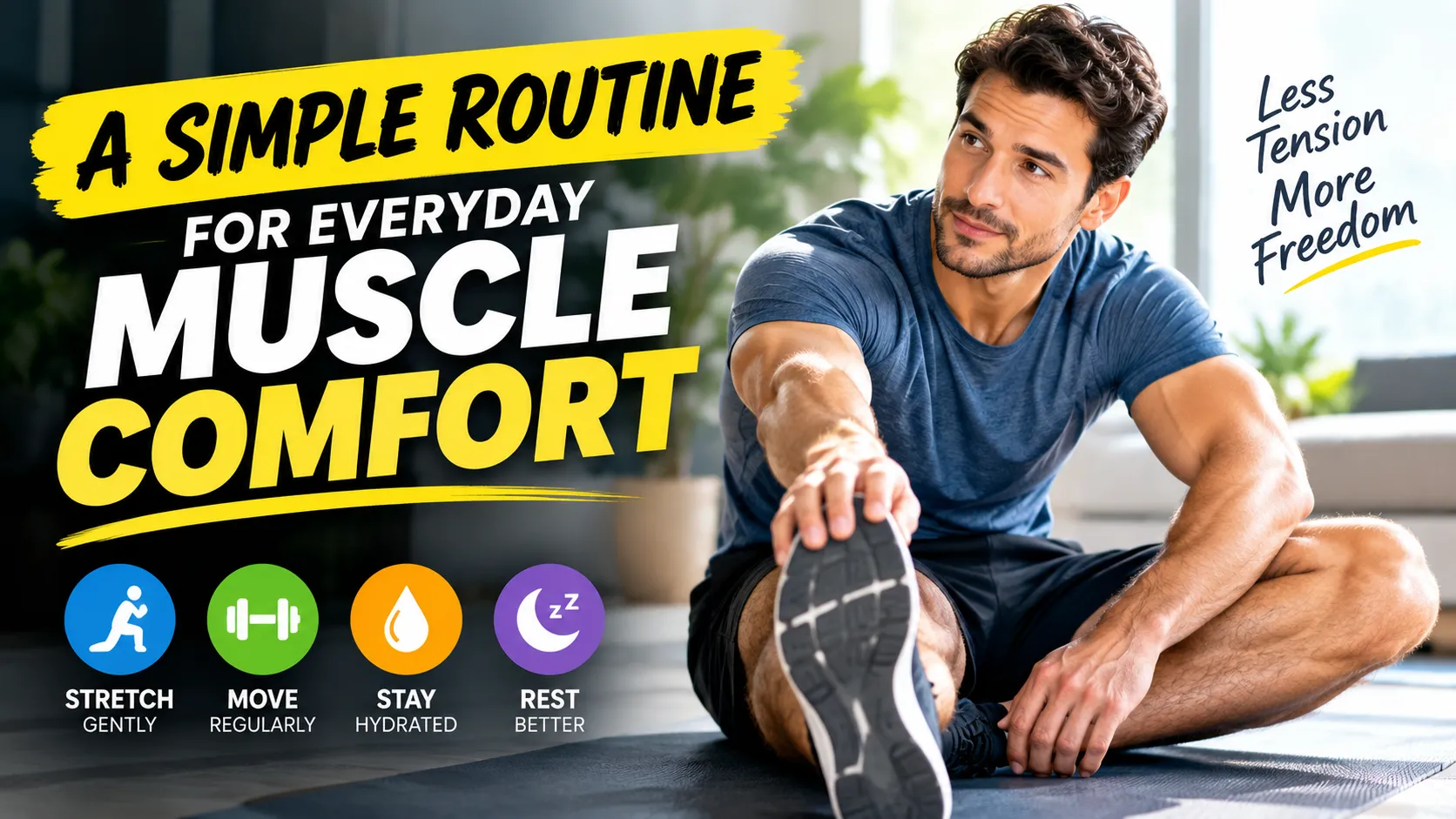
For a healthy adult using a percussion massager as part of an ordinary comfort or exercise routine, simplicity is usually easier to manage than an elaborate protocol. Pick one or two muscle groups, begin gently, and reassess how the area feels afterward.
Routine flow: muscle → gentle contact → movement → reassessment
Soft muscle tissue
Low, comfortable setting
Slowly across the muscle
Stop if symptoms worsen
When learning where to use a percussion massager, this basic sequence is more useful than chasing a particular intensity number. Different devices feel different even when their settings use similar labels.
What to Remember About Attachment Choice
Many percussion devices include several heads. A broad, softer attachment may be easier for large muscle groups, while a smaller head may feel more concentrated. The exact attachment guidance should come from the manufacturer rather than from a universal rule.
Whatever attachment you choose, it should not change the basic safety principle: keep the device on appropriate soft tissue and avoid hard, sensitive, injured, or otherwise unsuitable areas.
Frequently Asked Questions
Where to use a percussion massager on the legs?
The thighs and calf muscles are common soft-tissue targets. Stay away from the knee, shin, ankle, and other prominent bones or joints.
Can you use a percussion massager on your back?
It can be used on suitable back muscles, but avoid direct percussion over the spine and other bony areas. A second person or a suitable grip may make hard-to-reach areas easier to control.
Where should you not use a percussion massager?
Avoid direct use over bones, joints, the front or side of the neck, open or irritated skin, and areas with significant unexplained pain or injury.
Can you use a percussion massager every day?
Some people use percussion massage regularly, but frequency should depend on the area, device instructions, and comfort. Avoid treating daily use as a requirement.
Should a percussion massager hurt?
It should not require sharp or escalating pain to be useful. Reduce the setting, move to another area, or stop if the sensation becomes painful or unusual.
Can I use one over a sore or injured area?
Do not assume percussion is appropriate for an injured area. Recent injury, surgery, unusual pain, numbness, or significant swelling may require professional guidance first.
Can a percussion massager be used on the neck?
The front and sides of the neck are not appropriate general-purpose targets. For neck concerns, consider safer alternatives or ask a healthcare professional about the specific area.
Final Thoughts
The safest way to use a percussion massager is to keep it on comfortable, healthy muscle tissue and away from bones, joints, sensitive areas, wounds, and unexplained symptoms. Start gently, follow the manufacturer’s instructions, and stop when something feels wrong. If pain is severe, worsening, unusual, persistent, or accompanied by concerning symptoms, seek professional guidance instead of relying on percussion massage.
Author
-

I’m Alex Turner, a massage product reviewer and wellness writer at RemedyTip. I specialize in researching, evaluating, and comparing massage and recovery products to help readers make informed purchasing decisions. My focus is on practical, evidence-informed product guidance covering muscle recovery, relaxation, everyday comfort, and wellness.
I take a research-driven approach to every product I review. I examine product specifications, features, materials, performance claims, user feedback, durability, comfort, ease of use, and overall value. When appropriate, I also consult trusted industry and health-related sources to verify important information and provide readers with a more complete and balanced view.
I cover a wide range of products, including massage guns, handheld massagers, neck and shoulder massagers, foot massagers, massage chairs, foam rollers, and other recovery tools. Rather than focusing only on marketing claims, I look at how products compare in real-world use and who they are actually suitable for. I also consider different budgets, use cases, and user needs when making recommendations.
At RemedyTip, I’m committed to accuracy, transparency, and unbiased product information. I clearly distinguish between manufacturer claims, available evidence, and my own product analysis so readers can understand the basis of each recommendation. I continuously research new products, technologies, and developments in the massage and recovery space to keep my content current and useful.
My goal is simple: to provide trustworthy, easy-to-understand information that helps readers choose massage and recovery products with greater confidence.