
By Alex Turner
Quick Answer: An infrared massager pairs gentle infrared warmth with kneading or vibration to help tight-feeling muscles relax. Some people find it comforting for everyday stiffness and post-activity soreness. It does not treat injuries or medical conditions, so use it carefully.
If you have wondered what does infrared massager do, you are not alone. Neck wraps, back pads, and handheld units with a little red glow are everywhere, and the box claims can feel vague. This guide explains the real, everyday role of these tools in plain language. It also covers who they suit, where they fall short, and how to use one more safely. I wrote it from a daily-routine point of view, not a medical one.
This article is for general educational information only. It does not diagnose, treat, cure, or prevent any condition. It does not replace advice from a licensed healthcare professional. Readers should seek professional help for severe, worsening, unusual, or persistent symptoms.
What Does Infrared Massager Do in Simple Terms?
An infrared massager is a comfort tool that adds warmth and movement to one area of the body at the same time. The “infrared” part usually means the device has heating elements or lamps that give off infrared energy. You feel this as a deep, gentle warmth on the skin. The “massager” part is the mechanical action, such as kneading nodes, rolling heads, tapping, or vibration.
In everyday use, the goal is simple: make a tight, tired area feel warmer, looser, and easier to relax. Many people reach for one after a long day at a desk, after yard work, or after a workout. Some use it in the evening to unwind before sleep.
It helps to be clear about what it is not. It is not a treatment for an injury, a nerve problem, or a joint condition. It also cannot fix the reason your muscles feel tight, such as long sitting, poor sleep, or repetitive movement. Think of it as a support for comfort, not a solution for the cause.
Common Forms You Will See
Most infrared massagers fall into a few shapes. Neck and shoulder wraps drape over the upper body. Back pads or belts sit against the lower back. Handheld units are pressed on a spot, and small foot or calf units are built for the lower legs. The right shape depends on where you usually feel tight, not on which one has the most features.
How Infrared Heat and Massage Work Together
Heat and massage each have a familiar role in comfort routines. Warmth can make skin and surface muscles feel more relaxed. Gentle pressure and movement can make the same area feel less stiff. When a device combines both, you get a short, hands-free session that is easy to repeat.
The infrared element is usually described as heat that reaches a little deeper than the surface warmth of a basic pad. Claims about how deep it goes, or what it does inside the body, vary a lot between brands. Treat big promises with caution. What you can reliably judge is how the warmth and movement feel to you and whether your routine becomes easier to stick with.
Here is the usual flow of a session, from setup to cool-down.
Typical session flow (general guide)
Check the skin and read the manual.
Pick the lowest heat and gentlest motion.
Stay awake and check the skin often.
Turn it off and gently move the area.
The point of this flow is control. Starting low and staying short keeps warmth comfortable and gives you time to notice if the area reacts badly.
What Users Usually Notice
Warm, relaxed feeling
Many people first notice a soothing warmth over the area. This can make it easier to unwind and pause for a few minutes.
Less stiff-feeling muscles
Warmth plus gentle movement may make a tight shoulder or lower back feel looser for a while. The effect is usually short-term.
A steadier routine
A device with a timer makes it easy to set aside a short recovery window each day. Consistency often matters more than intensity.
Awareness of tight spots
Using one can show you which areas keep tightening. That is useful information to bring to a professional if the tightness never eases.
Benefits vs Limits: What to Realistically Expect
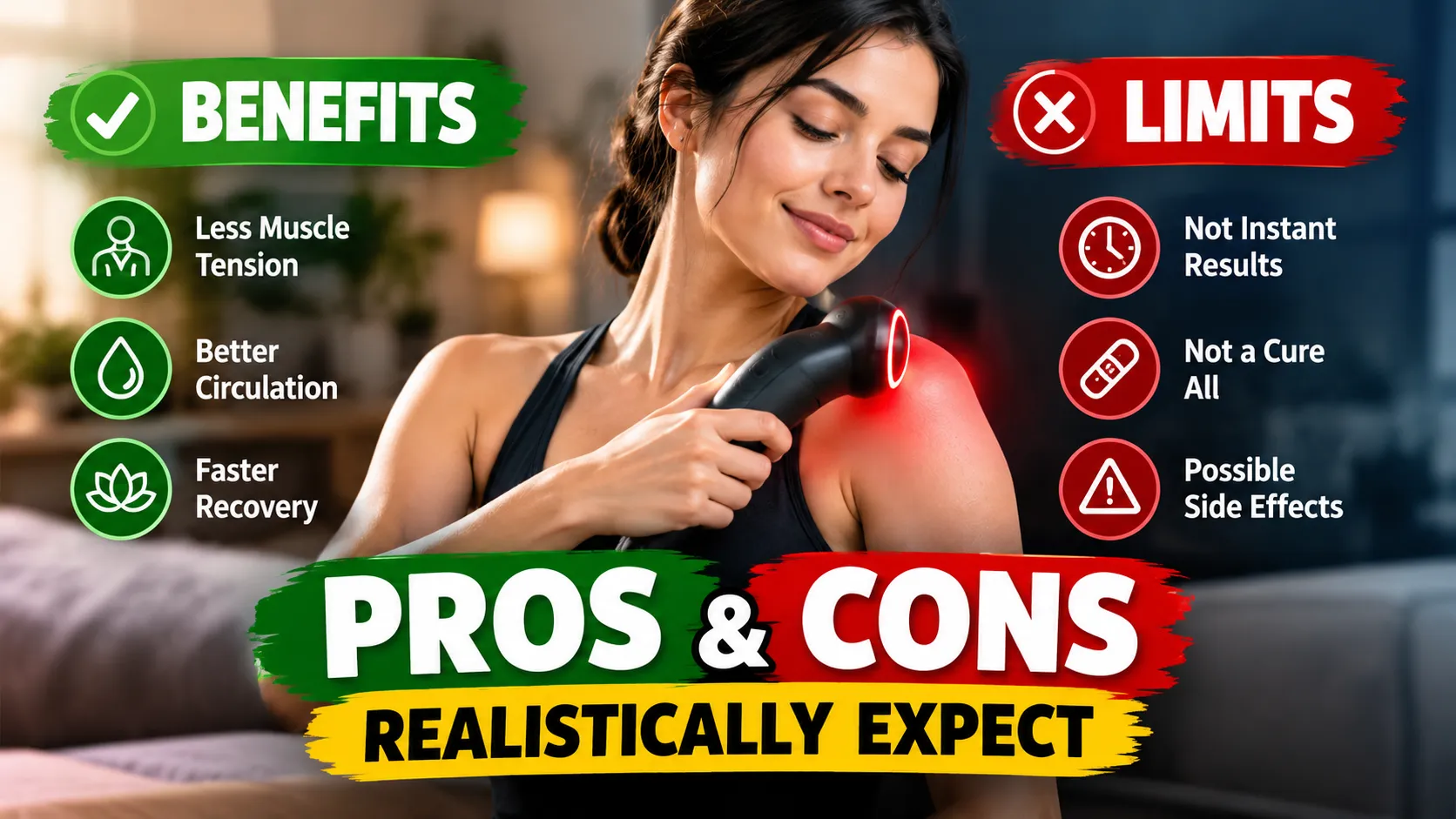
Understanding what does infrared massager do also means knowing what it cannot do. The table below separates comfort benefits from limits so your expectations stay realistic.
Benefits vs Limitations at a Glance
Swipe left/right to see the full table →
| Area | What it may offer | Its limit |
|---|---|---|
| Muscle comfort | Warmth may ease tight feelings | Relief is often temporary |
| Relaxation | A calm wind-down moment | Does not fix stress or sleep issues |
| Convenience | Hands-free, timer-based use at home | Cannot reach every spot equally |
| Injury or pain | None claimed here | Not a treatment; see a professional |
Notice that every benefit comes with a boundary. The tool supports comfort, but it does not address the underlying reason for ongoing pain or stiffness.
Not every routine benefits equally. The bars below show what people commonly get from a session, ordered by typical routine priority.
Where an infrared massager fits best (typical routine priority, practical guide only)
The tool shines as a comfort habit, not as a fix. If you expect more than that, you will likely feel let down.
Note: Infrared massager brands describe their heat differently, and features like wattage, wavelength, or “deep penetration” are not standardized for shoppers. Judge a unit by comfort, safety features, and clear instructions rather than technical-sounding claims.
Who It Suits and Who Should Skip It
Heat and pressure are not right for every body or every situation. Before you decide, check the good-fit and avoid-if guide below. When in doubt, ask a licensed healthcare professional first.
Good Fit vs Avoid-If Guide
Swipe left/right to see the full table →
| Situation | Choose this if | Avoid or ask first if |
|---|---|---|
| Desk-day tightness | Mild, familiar stiffness | Tingling, numbness, or weakness |
| After exercise | Ordinary muscle soreness | Sharp pain, swelling, or a suspected injury |
| Skin condition | Healthy, intact skin | Open wounds, rash, burns, or reduced feeling |
| Health background | No known concerns, product OK’d by the maker | Pregnancy, implants, circulation or heart concerns |
The pattern is consistent: mild, familiar tightness on healthy skin is the usual fit. New, sharp, or unexplained symptoms call for a professional, not a gadget. If you are asking what does infrared massager do for your specific situation, that professional is the best person to answer.
Use this simple path when you are unsure whether to start a session.
Self-care or seek-help path (general guide)
Skipping a session is always a safe choice. Pushing through discomfort is not.
Warning: Never fall asleep with a heated or infrared unit running, never use it over skin that cannot feel heat properly, and never press it on a swollen or injured area. Follow the maker’s time limits and stop if the device feels hotter than comfortable.
How to Fit One Into a Daily Routine
A routine that is short and predictable beats long, intense sessions. Most instruction manuals suggest limited session times, so use the manual as your final word. The table below is a general timing guide, not a prescription.
General Timing Guide
Swipe left/right to see the full table →
| Moment | General approach | Keep in mind |
|---|---|---|
| Before activity | Brief, gentle warm-up | Follow with normal movement |
| After activity | Short comfort session | Drink water; skip if area is swollen |
| Evening | Low-heat wind-down | Never fall asleep using it |
| Rest days | Optional, as needed | Give skin and muscles a break |
Many people ask what does infrared massager do for recovery days. The honest answer is that it supports comfort, while rest, sleep, water, and gentle movement still do the real work. Pair it with those habits instead of leaning on it alone.
Tip: Place a thin layer of clothing between the unit and your skin if the manual allows it, and check the skin every few minutes. Start with the lowest setting for the first week so you learn how your body responds.
Here is a quick side-by-side for the habits that keep sessions comfortable versus the ones that cause trouble.
Do
Read the manual first. Start low and short. Check your skin. Stay awake and stop if anything feels off.
Don’t
Use it on injuries or broken skin. Crank the heat up. Sleep with it on. Use it to ignore ongoing pain.
If you follow only the “do” side, most comfort sessions stay simple and low-risk. The “don’t” side is where burns, irritation, and delayed care tend to start.
Common Mistakes and Better Choices
Most poor experiences come from a few avoidable habits. I usually notice that people either use the device too long or expect it to solve a bigger issue. Here is how to correct both.
Mistake vs Better Choice
Swipe left/right to see the full table →
| Common mistake | Why it backfires | Better choice |
|---|---|---|
| Using high heat right away | Can irritate or burn skin | Start on the lowest setting |
| Long, unsupervised sessions | Overheating goes unnoticed | Use the timer and stay alert |
| Treating sharp pain with it | May hide a real problem | Get it checked by a professional |
| Buying on claims alone | Big promises are often unproven | Pick clear safety features and instructions |
Small corrections make a real difference. Slow, low, and short is a better default than strong, hot, and long, especially in your first few weeks of use.
When to contact a professional
Contact a licensed healthcare professional if you have severe, worsening, or persistent pain, numbness, tingling, weakness, swelling, fever, or a recent injury. Seek urgent medical help for chest pain or loss of bladder or bowel control. Stop using the device and ask for advice if you notice burns, blisters, spreading redness, or a rash. If tightness keeps returning despite a steady routine, get it checked instead of adding more sessions.
Choosing a Unit That May Fit Your Routine
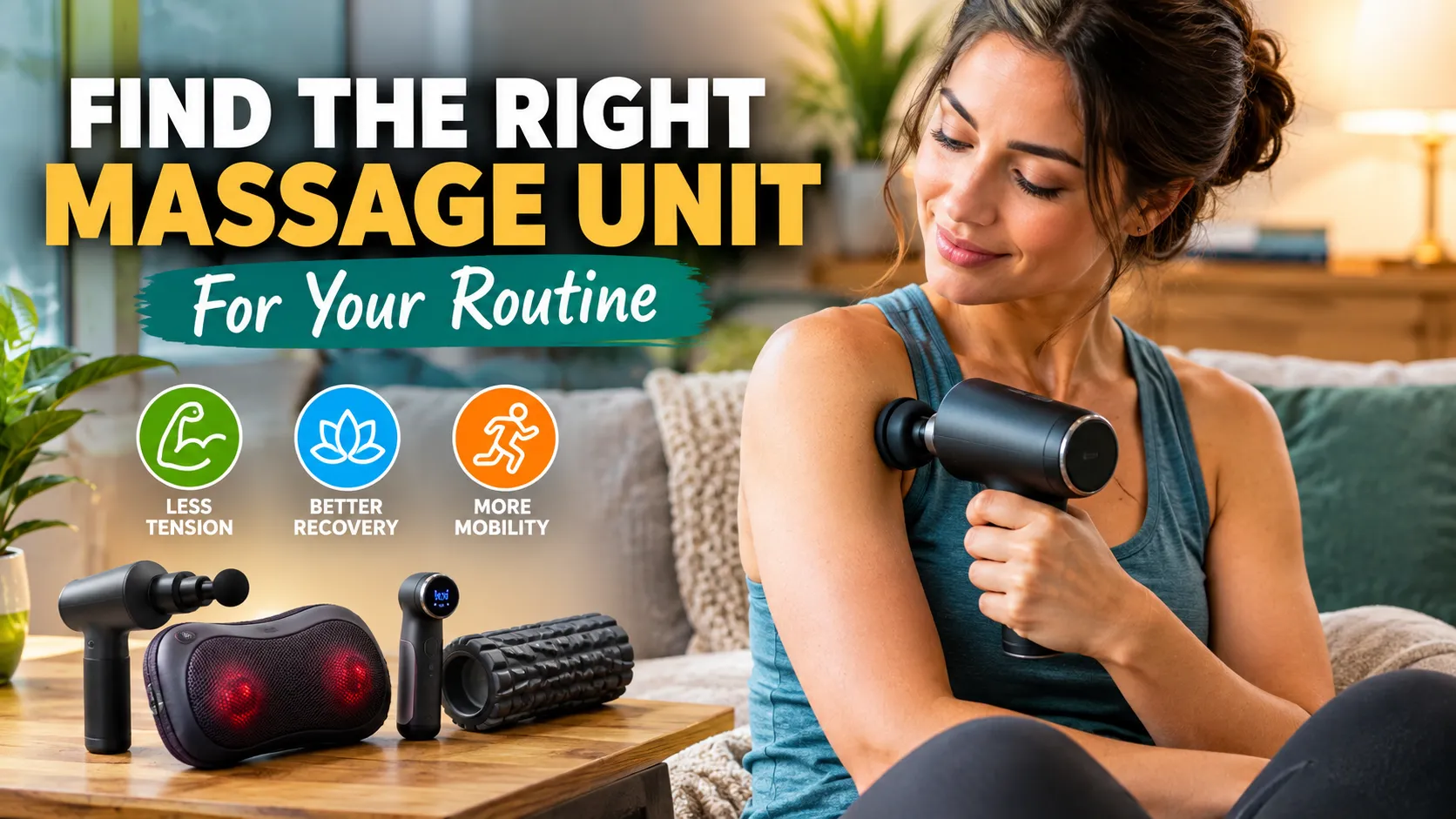
If a comfort tool suits your situation, look for adjustable heat levels, an automatic shut-off, a timer, and clear instructions. Pick the shape that matches the area you usually feel tight. Below are two general product types worth browsing.
This article may contain affiliate links. If you buy through these links, we may earn a small commission at no extra cost to you. We only mention products that fit the topic and do not replace professional medical advice.
Infrared Heated Neck and Shoulder Massager
May support comfort and relaxation for upper-body tightness after a long day, with heat and timer options that can make daily care easier.
Handheld Infrared Heat Massager
Can help with routine consistency by letting you target one tight spot for a short, controlled session.
Frequently Asked Questions
What does infrared massager do for the body?
It delivers gentle warmth and mechanical massage to a targeted area. Some people find this may support relaxation and comfort in tight-feeling muscles.
Does an infrared massager help sore muscles?
It may help sore muscles feel more comfortable for some people, mainly through warmth and gentle pressure. It does not repair muscle tissue or replace rest.
How long should I use an infrared massager?
Follow your product’s manual, since limits differ by device. Keep sessions short and stop if the skin feels too hot or irritated.
Is an infrared massager safe to use every day?
Some people use one daily for short sessions, but safety depends on your health and the product. Check the manual and ask a professional if you are unsure.
Who should avoid an infrared massager?
People with numb skin, open wounds, swelling, pregnancy, implanted devices, circulation concerns, or unexplained pain should ask a healthcare professional first.
Can an infrared massager replace physical therapy or medical care?
No. It is a comfort tool, not a treatment, and it cannot diagnose or fix the cause of ongoing pain.
Is infrared heat the same as a heating pad?
Both add warmth, but infrared units use infrared heating elements and often add massage motion. Comfort, safety cutoffs, and care instructions differ by product.
Final Thoughts
So, what does infrared massager do? It adds gentle warmth and movement that may make tight, tired muscles feel more comfortable for a while. Use it as a simple routine helper, start low, keep sessions short, and read the manual every time.
It is not a treatment for pain or injury. If symptoms are severe, worsening, unusual, persistent, or not improving, please speak with a licensed healthcare professional.
Author
-

I’m Alex Turner, a massage product reviewer and wellness writer at RemedyTip. I specialize in researching, evaluating, and comparing massage and recovery products to help readers make informed purchasing decisions. My focus is on practical, evidence-informed product guidance covering muscle recovery, relaxation, everyday comfort, and wellness.
I take a research-driven approach to every product I review. I examine product specifications, features, materials, performance claims, user feedback, durability, comfort, ease of use, and overall value. When appropriate, I also consult trusted industry and health-related sources to verify important information and provide readers with a more complete and balanced view.
I cover a wide range of products, including massage guns, handheld massagers, neck and shoulder massagers, foot massagers, massage chairs, foam rollers, and other recovery tools. Rather than focusing only on marketing claims, I look at how products compare in real-world use and who they are actually suitable for. I also consider different budgets, use cases, and user needs when making recommendations.
At RemedyTip, I’m committed to accuracy, transparency, and unbiased product information. I clearly distinguish between manufacturer claims, available evidence, and my own product analysis so readers can understand the basis of each recommendation. I continuously research new products, technologies, and developments in the massage and recovery space to keep my content current and useful.
My goal is simple: to provide trustworthy, easy-to-understand information that helps readers choose massage and recovery products with greater confidence.

