
By Alex Turner · Health & Personal Care
Quick Answer: When choosing a percussion massager, focus on adjustable speed, useful amplitude, comfortable weight, manageable noise, reliable battery life, practical attachments, an easy grip, and clear safety instructions. More power is not automatically better; the right combination should match how and where you plan to use it.
Choose the features that fit your routine, not just the biggest numbers.
A percussion massager can look simple on the shelf, but models differ in speed range, stroke length, motor strength, weight, attachments, controls, and battery design. A thoughtful choice starts with your actual routine: where you will use it, how often you will carry it, and how much intensity feels comfortable.
This guide breaks down the features that matter most and explains which specifications deserve attention before you buy.
Safety & Trust Note: This article is for general educational information only. It does not diagnose, treat, cure, or prevent any condition. It does not replace advice from a licensed healthcare professional. Readers should seek professional help for severe, worsening, unusual, or persistent symptoms.
1. Start With Speed Control
The first feature to check is the speed range. Manufacturers may describe speed as percussions per minute, or PPM. A wider adjustable range gives you more control over how gentle or intense the massage feels.
For a first-time user, several lower settings can be more useful than one extremely fast setting. You can begin gently and adjust according to comfort instead of being locked into a strong sensation.
Multiple speeds are also useful because different muscle groups can feel different. A setting that feels comfortable on a large thigh muscle may feel too intense around a smaller or more sensitive area.
Practical speed priority
Adjustability
Very high maximum speed
Easy controls
Practical guide, not scientific scoring.
The takeaway is simple: prioritize useful control over impressive maximum numbers.
2. Understand Amplitude Before Chasing Power
Amplitude describes how far the massage attachment travels with each stroke. It is different from speed. Speed describes how quickly the percussion happens, while amplitude describes the stroke distance.
A longer stroke can create a more pronounced sensation, but that does not mean every person needs the longest available amplitude. If you prefer lighter massage or are new to percussion devices, a moderate design may be easier to control.
When comparing products, look at amplitude together with speed, weight, and motor behavior. A specification on its own tells only part of the story.
Feature fit: what matters for different users
Swipe left/right to see the full table →
| Need | Look for | Why it matters |
|---|---|---|
| Beginner use | Several gentle speeds | Easier intensity control |
| Frequent home use | Balanced amplitude | Versatile everyday feel |
| Travel | Compact design | Less space and weight |
| Large muscle groups | Stable motor performance | Less need to push hard |
3. Pay Attention to Weight and Grip
A percussion massager can be easy to hold for a few seconds but tiring after repeated use. Weight matters even more when you are trying to reach your back, shoulders, thighs, or other areas without assistance.
Look for a handle that feels secure without forcing your wrist into an awkward position. A well-shaped grip can matter more to everyday comfort than a long list of extra features.
Cleveland Clinic notes that handheld massagers vary considerably in size and suggests considering weight because users may need to hold the device for several minutes during a session. :contentReference[oaicite:0]{index=0}
Note: Do not assume a heavier device is automatically more powerful or more useful. A lighter model that you can position comfortably may be easier to use consistently.
4. Check Motor Strength and Stall Behavior
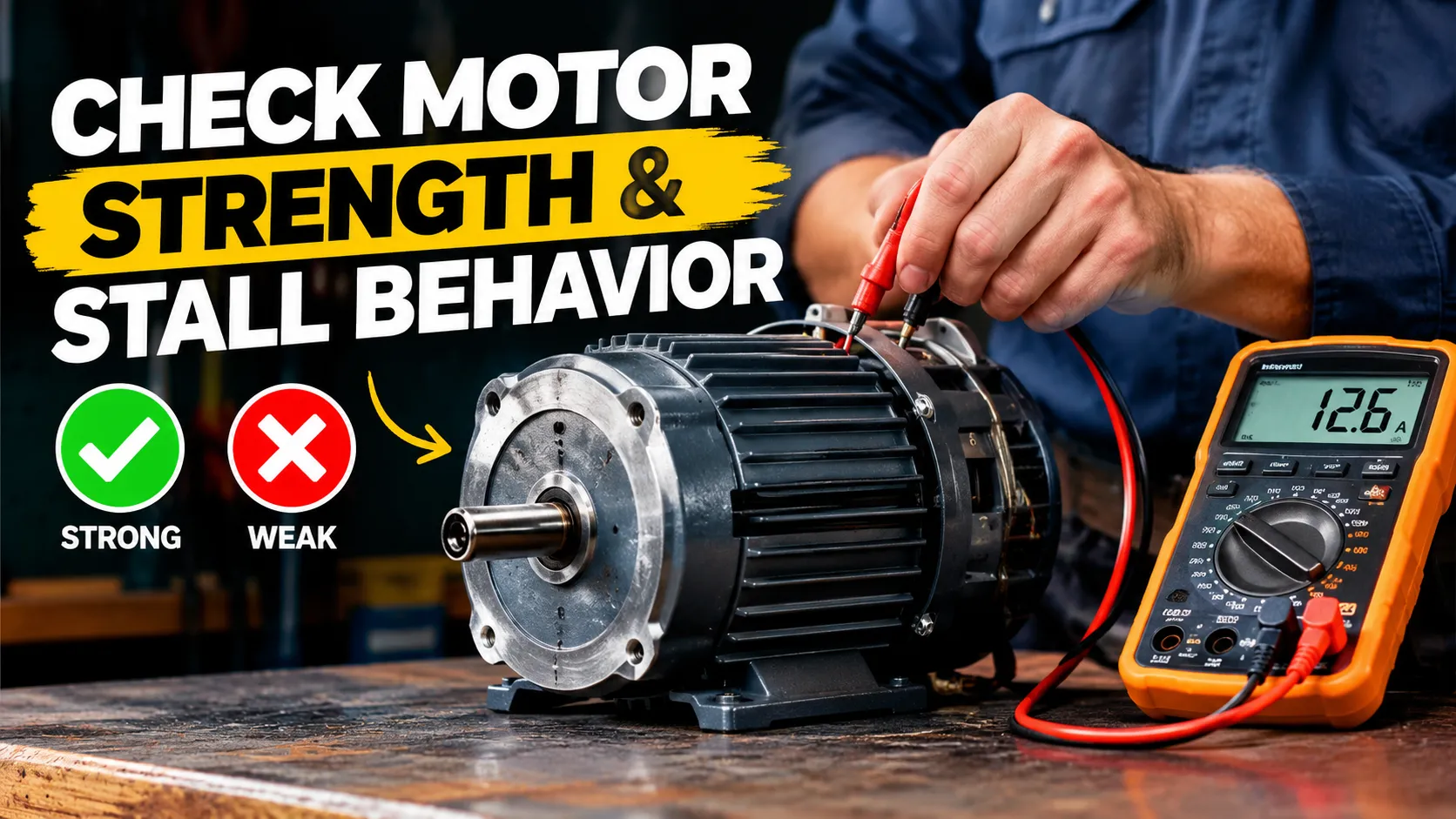
Motor strength becomes relevant when the attachment meets resistance. Some products advertise a stall-force figure, meaning the amount of pressure the motor can tolerate before the percussion slows or stops.
This specification can be useful when comparing models, but it should not encourage you to press harder against your body. More stall force is mainly a product-performance characteristic, not a reason to apply more pressure during normal use.
What the motor specifications actually tell you
Amplitude
Stroke distance. Higher numbers can produce a stronger, deeper-feeling sensation.
Speed
How quickly the attachment moves. More settings provide more control.
Stall force
How much pressure the motor can resist before slowing or stopping.
Motor feel
A stable motor can make the device feel more predictable during use.
These specifications work together. A product with a long amplitude but awkward handling may be less practical than a balanced model with moderate specifications.
5. Choose Attachments for the Muscles You Actually Use
Attachments are useful when they give you practical choices rather than simply increasing the accessory count. Common heads vary in shape and firmness, allowing the device to feel different on broad muscle areas or smaller target zones.
Think about your routine before buying. If you mainly want general muscle relaxation, a basic set may be enough. If you regularly work across several muscle groups, additional head shapes may be useful.
Attachment fit guide
Swipe left/right to see the full table →
| Attachment style | Useful for | Buying check |
|---|---|---|
| Round | Broad muscle areas | Good general-purpose option |
| Flat | General surface massage | Check comfort and firmness |
| Pointed | Smaller target areas | Use gentle pressure |
| Soft or cushioned | More sensitive users | Check material quality |
The safest approach is to follow the manufacturer’s instructions for each attachment and keep percussion on appropriate soft-tissue areas rather than bones.
6. Do Not Ignore Noise
Noise is easy to overlook during online shopping. A motor can sound acceptable for a short demonstration but become distracting during a longer session.
If you expect to use your device in a shared room, early in the morning, or while watching television, look for independent noise measurements when available. Brushless motors and other design choices may affect sound, but manufacturer claims should be checked against trustworthy reviews when possible.
Tip: If two models have similar speed, amplitude, and battery specifications, choose the one with the more comfortable grip and lower practical noise if those features matter in your daily routine.
7. Look for Useful Battery Life and Charging
Battery life should match how you actually use the device. A compact model may be perfectly adequate for occasional sessions, while frequent users may prefer a larger battery or a design with a convenient charging system.
Check whether the advertised runtime is measured at a particular speed. Higher settings can use power differently, so the headline battery number may not represent every use pattern.
Battery checklist
Swipe left/right to see the full table →
| Check | Why it matters | Good question to ask |
|---|---|---|
| Runtime | Avoid frequent charging | At which speed? |
| Charge time | Less downtime | How long from empty? |
| Battery indicator | Easier planning | Is remaining power visible? |
| Charger type | Travel convenience | Is it easy to replace or carry? |
8. Compare Controls, Display, and Ergonomics
A product can have excellent specifications and still be frustrating if the controls are difficult to reach. Look for clear buttons, a readable battery indicator, and simple speed adjustment.
Some premium models add pressure indicators or guided routines. Those features can be helpful if you want more assistance, but they should not replace learning the manufacturer’s basic instructions.
Product-fit dashboard
Home
Prioritize comfort, battery, controls, and moderate versatility.
Travel
Prioritize low weight, compact storage, and simple charging.
Frequent use
Prioritize grip, motor stability, battery, and durable attachments.
Occasional use
Prioritize simplicity and value instead of advanced extras.
9. Check the Warranty, Instructions, and Seller
Buying a percussion massager is not only about specifications. Check the warranty terms, return policy, included accessories, charging equipment, and availability of replacement attachments.
Clear instructions are especially important for a device that applies repeated mechanical pressure. FDA guidance for home-use devices also emphasizes buying from reliable sources, checking support information, and following available instructions. For U.S. device information, you can review the FDA home-use device guidance.
The specifications that deserve the most attention
For most shoppers, the ideal buying process is not about finding the device with the biggest number in every category. It is about matching features to use.
Typical routine priority — practical guide
Comfortable grip
Adjustable speed
Useful attachments
Battery convenience
Very high maximum speed
These bars show buying priority, not scientific measurements.
Avoid These Common Buying Mistakes
Mistake vs. better choice
Swipe left/right to see the full table →
| Common mistake | Better choice |
|---|---|
| Choosing maximum power | Choose controllable intensity |
| Ignoring weight | Consider one-handed comfort |
| Buying many attachments | Buy useful attachment types |
| Trusting every specification | Check independent reviews |
| Ignoring instructions | Read the product manual |
Warning: Avoid using a percussion device directly over bones, the front or sides of the neck, open wounds, irritated skin, or areas where you have reduced normal sensation. Do not use aggressive pressure simply because a device has a powerful motor. Follow the manufacturer’s safety instructions.
When a Percussion Massager May Not Be the Right Choice
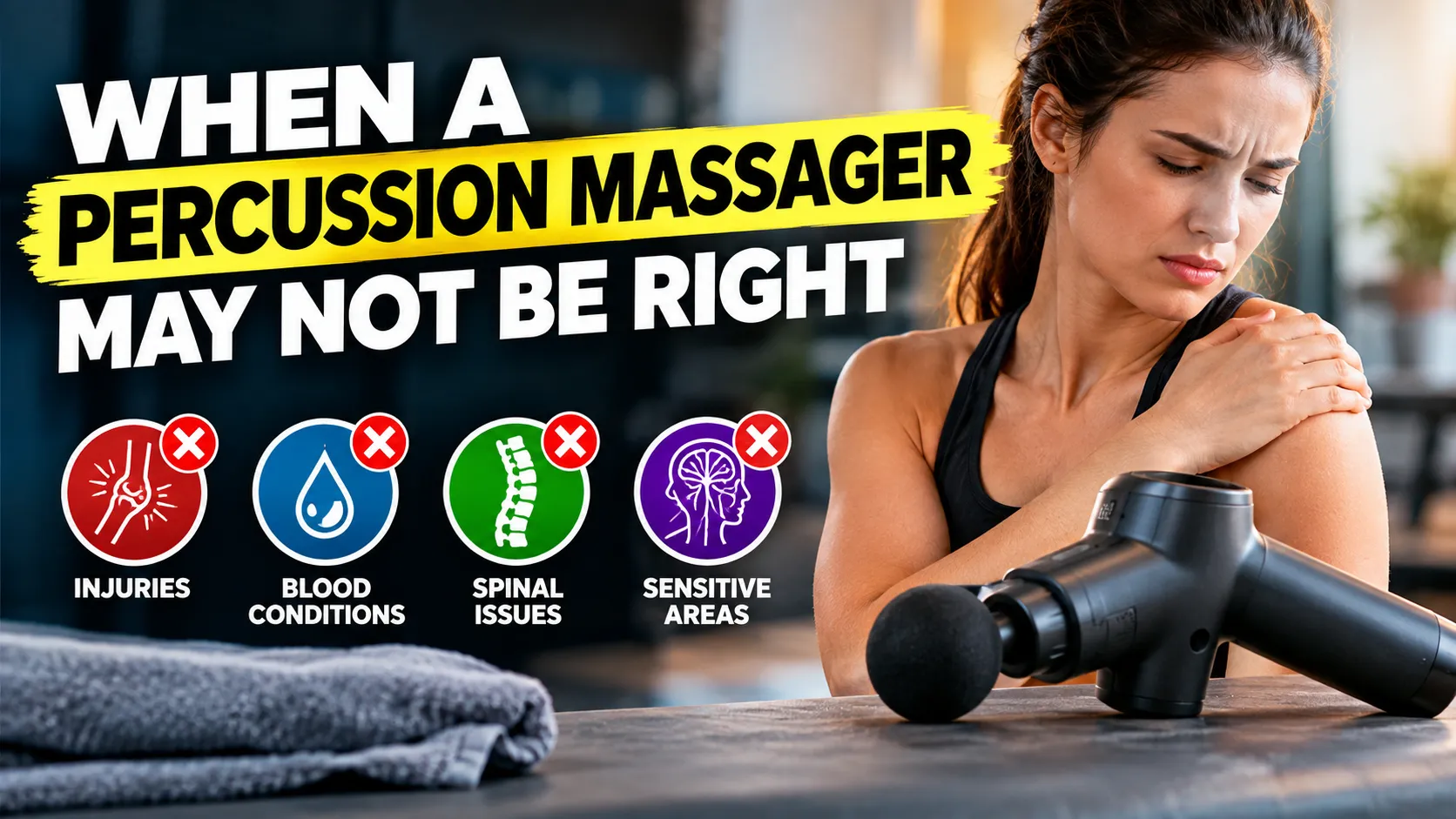
Product selection should include safety, not just performance. Cleveland Clinic advises avoiding bony areas and recommends professional guidance when someone has underlying medical concerns or is recovering from an injury. :contentReference[oaicite:1]{index=1}
If you have a significant medical condition, recent injury or surgery, unexplained severe pain, a bleeding problem, or another situation that could make vigorous mechanical pressure inappropriate, ask a qualified healthcare professional before using a percussion device.
Self-care or professional guidance?
Swipe left/right to see the full table →
| Situation | Practical approach |
|---|---|
| Routine muscle tightness | Use gentle, instructed settings |
| Recent injury | Ask a professional first |
| Severe or worsening pain | Seek professional evaluation |
| Numbness or weakness | Do not rely on self-massage |
| Persistent unusual symptoms | Arrange professional guidance |
Simple buying decision path
Mostly home → prioritize comfort and versatility. Travel → prioritize compact size and weight.
Choose multiple speed settings and straightforward controls.
Select useful attachments, adequate battery life, and a comfortable grip.
If yes, pause the purchase decision and ask a qualified professional for guidance when appropriate.
This decision path keeps the purchase focused on fit rather than marketing language. It also prevents a high-powered device from becoming the default choice when a simpler model may suit your routine.
What to Prioritize at Different Budgets
A higher price may buy a stronger motor, more refined ergonomics, additional attachments, quieter operation, longer battery life, or smart controls. But not every shopper needs every upgrade.
At a lower budget, prioritize adjustable speed, acceptable build quality, a comfortable handle, and basic attachments. At a mid-range price, compare motor behavior, battery, noise, grip, and warranty more closely. Premium models can be worth considering when advanced controls, ergonomic design, or frequent use genuinely justify the added cost.
The key is to compare the total package rather than one headline specification.
When to contact a professional: Stop using the device and seek professional medical guidance if you develop severe or worsening pain, new weakness or numbness, significant swelling, unusual symptoms after an injury, fever, chest pain, or loss of bladder or bowel control. These symptoms should not be managed by simply increasing or changing massage intensity.
Frequently Asked Questions
What should I look for in a percussion massager first?
Start with adjustable speed, comfortable weight and grip, useful attachments, adequate battery life, and clear instructions. Amplitude and motor performance are useful comparison points after those basics.
Is higher amplitude always better?
No. A longer stroke can feel more intense, but the best amplitude depends on your comfort, experience, and intended use.
How many attachments should a percussion massager have?
There is no required number. Choose a set with attachment shapes that match the muscle areas you actually expect to use rather than paying for accessories that will stay in the case.
Does weight matter when buying a massage gun?
Yes. A device that feels comfortable at first can become tiring during longer or harder-to-reach sessions, so consider one-handed balance and grip.
Is stall force important?
It can help you compare motor behavior, but it should not be treated as a reason to press harder against your body. Normal use should follow the manufacturer’s instructions.
What areas should I avoid with a percussion massager?
Avoid direct percussion over bones and sensitive areas such as the front or sides of the neck, and do not use it over wounds or irritated skin. Follow the device manual for additional restrictions.
Can a percussion massager replace professional care?
No. It can be a personal-care tool, but it should not replace professional evaluation for severe, worsening, unusual, persistent, or injury-related symptoms.
Final Thoughts
The best percussion massager is not necessarily the fastest, strongest, or most expensive model. Focus on controllable speed, suitable amplitude, comfortable handling, useful attachments, manageable noise, dependable battery life, and clear safety information. If you have severe, worsening, unusual, persistent, or injury-related symptoms, seek guidance from a qualified healthcare professional rather than relying on a massage device alone.
Author
-

I’m Alex Turner, a massage product reviewer and wellness writer at RemedyTip. I specialize in researching, evaluating, and comparing massage and recovery products to help readers make informed purchasing decisions. My focus is on practical, evidence-informed product guidance covering muscle recovery, relaxation, everyday comfort, and wellness.
I take a research-driven approach to every product I review. I examine product specifications, features, materials, performance claims, user feedback, durability, comfort, ease of use, and overall value. When appropriate, I also consult trusted industry and health-related sources to verify important information and provide readers with a more complete and balanced view.
I cover a wide range of products, including massage guns, handheld massagers, neck and shoulder massagers, foot massagers, massage chairs, foam rollers, and other recovery tools. Rather than focusing only on marketing claims, I look at how products compare in real-world use and who they are actually suitable for. I also consider different budgets, use cases, and user needs when making recommendations.
At RemedyTip, I’m committed to accuracy, transparency, and unbiased product information. I clearly distinguish between manufacturer claims, available evidence, and my own product analysis so readers can understand the basis of each recommendation. I continuously research new products, technologies, and developments in the massage and recovery space to keep my content current and useful.
My goal is simple: to provide trustworthy, easy-to-understand information that helps readers choose massage and recovery products with greater confidence.

