
Author: Alex Turner
Quick Answer: Yes, massage cream can expire or become unsuitable for use. Check the printed date when available, then look for changes in smell, color, texture, separation, contamination, or packaging. Storage in heat or moisture can shorten usable life. When in doubt, replace it.
Old massage cream is not always an obvious problem.
A tube or jar may still look normal even after its formula has changed. Creams can gradually lose their intended texture, preservatives can become less effective, and repeated handling can introduce microorganisms. The practical question is not only how old the product is, but also how it has been stored and handled.
ExpirationStorageTextureSafe Use
Safety note: This article is for general educational information only. It does not diagnose, treat, cure, or prevent any condition. It does not replace advice from a licensed healthcare professional. Readers should seek professional help for severe, worsening, unusual, or persistent symptoms.
Can massage cream actually expire?
Yes. Massage cream can become less suitable for use over time, even when a package does not show a simple expiration date. In the United States, the FDA says cosmetic products are not generally required by law to carry expiration dates. Instead, manufacturers are responsible for determining the safety and shelf life of their products.
Massage creams vary widely. Some are mainly moisturizers or lubricating creams, while others contain fragrance, botanical ingredients, warming or cooling ingredients, or ingredients that place the product under different regulatory requirements. If the label provides an expiration date, follow it. If it does not, the condition of the product and its storage history become especially important.
The FDA notes that cosmetic products can change because of heat, moisture, air, sunlight, contamination, and the gradual breakdown of preservatives. Water-and-oil emulsions can separate, while changes in color, smell, and texture may signal that a product is no longer in its expected condition.
Practical safety path
Look for a date or storage instruction.
Check smell, color, texture and packaging.
Consider heat, moisture and handling.
Any meaningful warning sign? Replace it.
This is a practical screening method rather than a laboratory test. A product that passes a visual check is not automatically guaranteed to be free from contamination.
What should you check before using an old cream?
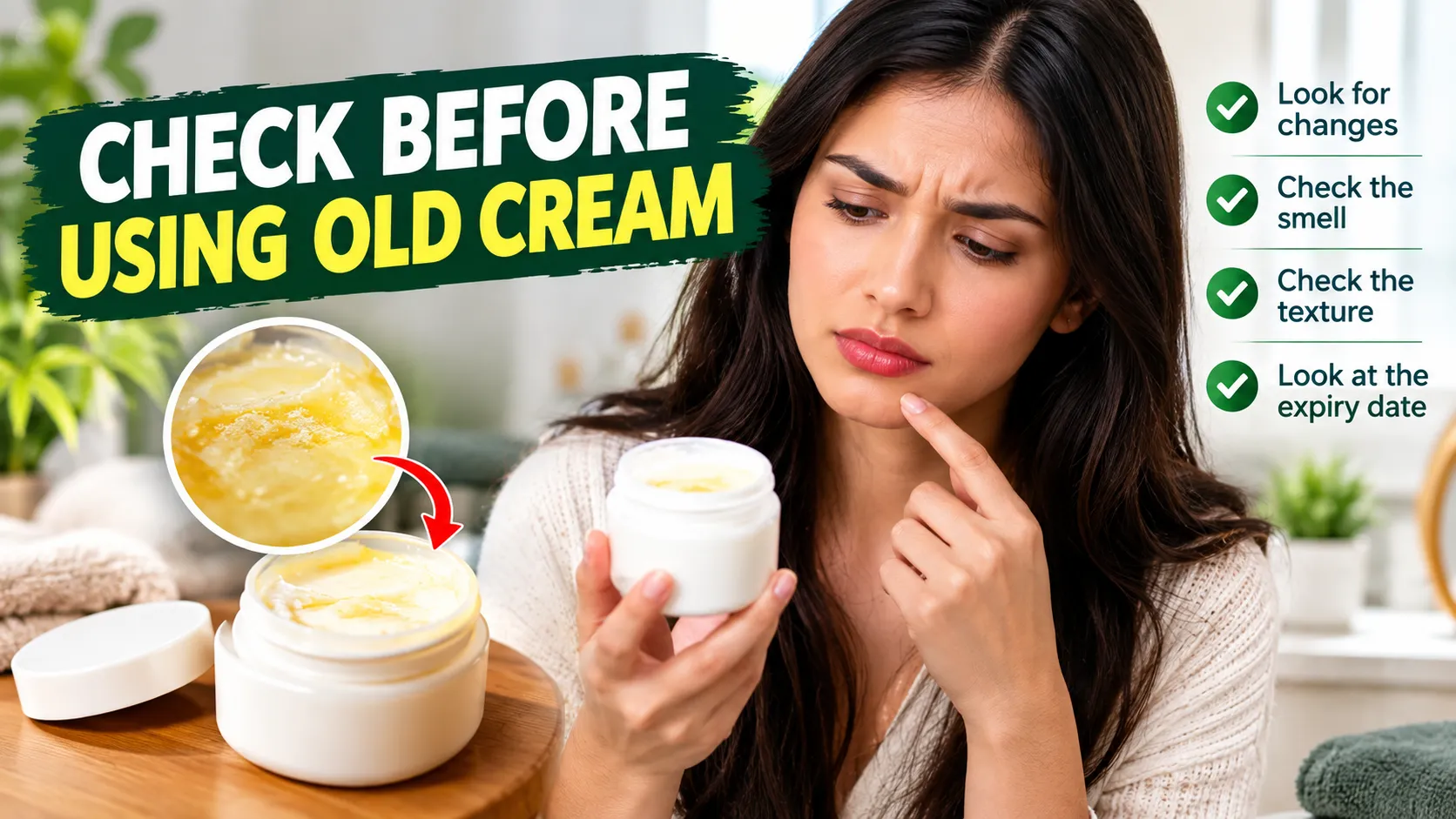
Start with the label. Look for an expiration date, a batch or lot code, storage instructions, and any opening-related symbol or instruction supplied by the manufacturer. If the manufacturer gives a specific discard period after opening, that guidance is more useful than guessing from the product’s appearance.
Label and condition checklist
Swipe left/right to see the full table →
| Check | What to look for | Practical action |
|---|---|---|
| Date | Printed expiration date | Follow the label |
| Smell | New or unpleasant odor | Do not use if noticeably changed |
| Texture | Lumps, hardening, unusual thinning | Replace if substantially changed |
| Color | Unexpected discoloration | Do not use |
A product that has changed in any of these ways is not worth testing on your skin just to finish the container. The FDA specifically advises consumers to discard cosmetics when they develop changes in color or smell.
Signs massage cream may have gone bad
There is no single visual sign that proves a cream is contaminated. Instead, several changes can make continued use a poor choice. Pay particular attention when a product has been opened repeatedly, stored somewhere hot or damp, or handled with unwashed hands.
Common warning signs
Warning dashboard — practical guide
A sour, rancid, musty, or otherwise unusual odor is a reason to stop.
Unexpected darkening, yellowing, or other discoloration deserves caution.
Separation, hardening, clumps, or an unusual watery layer can indicate formula changes.
A damaged, leaking, swollen, or poorly closed package should not be ignored.
None of these signs should be treated as a precise test of microbial safety. They are practical reasons to stop using a questionable product rather than trying to rescue it. FDA guidance explains that contamination can occur through ingredients, packaging, storage conditions, or consumer handling, and that warm or damp conditions can encourage microbial growth.
Note: Separation does not automatically mean every cream is unsafe. Some formulas naturally separate and may be designed to be shaken or mixed. Follow the manufacturer’s instructions rather than assuming that every change has the same meaning.
How storage affects an opened massage cream
Storage matters because the formula does not exist in isolation. Heat, moisture, sunlight, air exposure, and repeated contact can gradually affect a product. A cream kept in a cool, dry location with its container tightly closed is being handled differently from one left in a steamy bathroom or hot vehicle.
Opening the container also changes the situation. Each time fingers touch a jar, material from the hands or surrounding environment can enter the product. Pump packaging can reduce direct contact, while wide-mouth jars generally require more careful handling.
Storage condition and practical response
Swipe left/right to see the full table →
| Storage history | Potential concern | Practical choice |
|---|---|---|
| Cool, dry, closed | Lower storage stress | Still inspect before use |
| Hot car | Heat exposure | Check carefully; replace if changed |
| Steamy bathroom | Moisture and heat | Move to a dry storage area |
| Open jar, frequent dipping | More handling exposure | Use clean, dry hands and close promptly |
The FDA advises keeping cosmetic containers clean and tightly closed and protecting them from temperature extremes.
Storage priority meter — practical guide
These bars are a practical routine guide, not scientific measurements.
The simplest storage routine is usually the most useful: follow the package directions, close the container after use, keep it away from excessive heat and moisture, and avoid unnecessary contact with the product.
Safe routine versus risky routine
People often focus on the age of a product and overlook how it has been used. Handling can matter because contamination is not limited to the manufacturing stage. FDA guidance identifies consumer use, poor storage, packaging problems, and ineffective preservation as possible routes for microbial contamination.
What changes the risk?
Swipe left/right to see the full table →
| Situation | Better choice | Riskier choice |
|---|---|---|
| Applying from jar | Clean, dry hands | Dirty or wet fingers |
| After use | Close promptly | Leave open |
| Storage | Cool, dry area | Hot, damp location |
| Unusual product | Replace it | Try to fix or dilute it |
Tip: If you use massage cream regularly, write the opening date on the container. It will not replace the manufacturer’s instructions, but it can make it easier to remember how long a product has been in use.
How long does an opened massage cream last?
There is no single safe number of months that applies to every massage cream. Formulas, packaging, preservatives, storage conditions, opening frequency, and manufacturer testing can differ. Giving one universal timeframe could create false confidence.
Instead, use a hierarchy of information. First, follow an expiration date or manufacturer instruction when one is provided. Second, consider any period-after-opening guidance shown on the package. Third, assess whether the product has been stored correctly and whether its smell, color, texture, and packaging remain normal.
Timing guide
Swipe left/right to see the full table →
| Label situation | What it means | Next step |
|---|---|---|
| Expiration date present | Manufacturer supplied a date | Follow it |
| Opening symbol or instruction | Use period may be specified after opening | Follow package guidance |
| No date or opening guidance | More uncertainty | Inspect condition and storage history |
| Unknown age and questionable condition | Cannot confidently assess | Replace it |
FDA explains that cosmetic shelf life varies by product type, use, and storage, which is why a universal expiration period is not appropriate.
Mistakes that make an old cream harder to judge
Several habits can make it difficult to decide whether a massage cream is still appropriate. The biggest problem is assuming that a familiar smell or normal-looking texture proves that the product is safe.
Common mistakes and better choices
Swipe left/right to see the full table →
| Mistake | Better choice |
|---|---|
| Assuming old means safe if it looks normal | Consider label, storage, handling, and changes |
| Adding water to thin a thick cream | Follow the product instructions; replace questionable cream |
| Keeping it in a hot car | Store it according to label instructions |
| Ignoring a new smell | Stop using it and replace it |
Warning: Do not try to extend the life of a questionable cream by adding water, mixing it with another product, or transferring it into a different container. Changes to the formula or packaging can make its condition harder to assess.
Do’s and don’ts split panel
DO
Read the label, close the container, keep it in suitable storage, and replace it when its condition becomes questionable.
DON’T
Do not dilute an old product, ignore obvious changes, or keep using it simply because there is still a lot left.
When should you stop using massage cream?
Replace the product when its expiration date has passed, when the manufacturer says it should no longer be used, or when you notice a meaningful change in smell, color, texture, or packaging. Replacement is also a sensible choice when the product’s age and storage history are unknown and you cannot confidently assess its condition.
If a product causes unexpected redness, burning, rash, or another reaction, stop using it. FDA consumer guidance recommends stopping use and contacting a healthcare provider about an unexpected reaction.
Self-care versus professional help — practical guide
Replace the product
The cream is expired, visibly changed, contaminated, badly stored, or of unknown condition.
Ask a professional
You develop a significant or persistent skin reaction, or symptoms are unusual, worsening, or not improving after stopping the product.
When to contact a professional: Seek professional help for severe, worsening, unusual, or persistent skin symptoms, including significant swelling, severe burning, spreading redness, signs of infection, or a reaction that does not settle after stopping the product. If you have a serious reaction or trouble breathing, seek urgent medical care.
Does massage cream expire differently from massage oil?
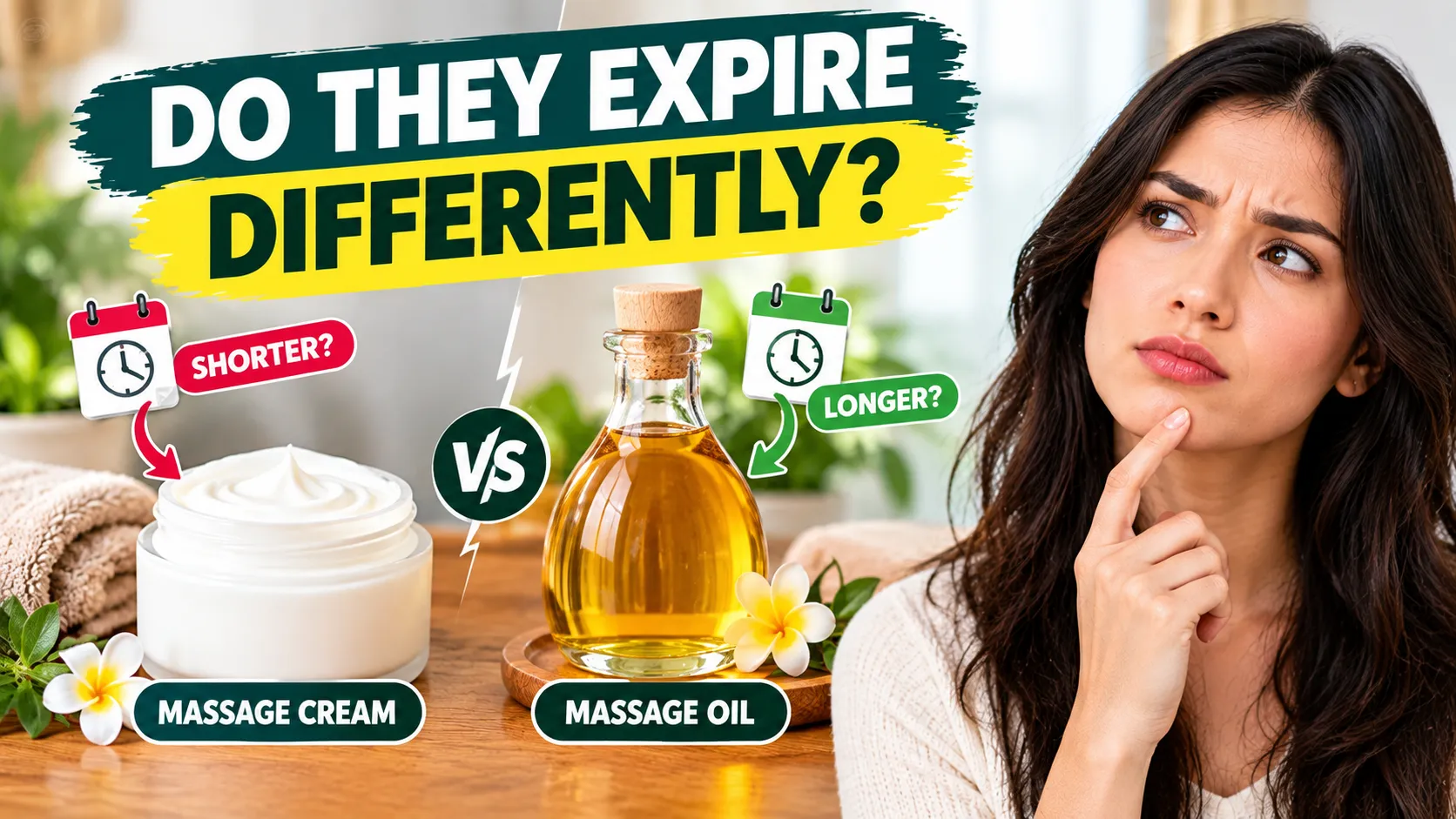
They should not be treated as interchangeable products. Creams often contain water and are commonly emulsions, meaning they combine water and oil phases. FDA notes that emulsions can separate as products age, and preservatives can break down over time.
An oil-based product may behave differently, but that does not mean it remains usable indefinitely. Its own label, ingredients, packaging, storage conditions, odor, and appearance still matter. The safest approach is to judge each product according to its manufacturer’s instructions rather than applying one shelf-life rule to every massage product.
A simple routine for keeping massage cream usable
You do not need a complicated preservation routine. A few consistent habits can reduce unnecessary exposure to heat, moisture, and contamination.
1
Read the label. Check expiration, opening, storage, and use instructions.
2
Record the opening date. This makes an older product easier to track.
3
Keep it closed. Secure the cap or pump promptly after each use.
4
Use clean hands. Avoid introducing unnecessary moisture or debris into a jar.
5
Inspect before use. Pay attention to unexpected changes instead of relying only on age.
This routine follows the general storage principles described by FDA: keep containers clean and tightly closed, protect cosmetics from temperature extremes, and pay attention to changes in smell or appearance.
Frequently Asked Questions
Does massage cream expire if there is no date on the package?
Yes, it can still become unsuitable over time. If there is no date, consider the manufacturer’s instructions, opening history, storage conditions, and changes in smell, color, or texture.
How can you tell if massage cream has gone bad?
Look for an unexpected change in smell, color, texture, separation, or packaging. These signs do not prove contamination, but they are good reasons not to keep using the product.
Can heat make massage cream go bad faster?
Heat can affect cosmetic products and may contribute to preservative breakdown and microbial growth. Avoid storing massage cream in places such as hot cars unless the manufacturer specifically permits those conditions.
Can I use massage cream after it separates?
Some products are designed to be shaken or mixed, so separation is not automatically a safety problem. Follow the manufacturer’s instructions, and replace the product if separation is unexpected or accompanied by other changes.
Should I throw away massage cream that smells different?
Yes. An unexpected change in smell is a practical reason to stop using the product and replace it, especially when the product is also old or has been poorly stored.
What should I do if old massage cream causes a rash?
Stop using the product. For a significant, persistent, or worsening reaction, contact a healthcare professional for advice.
Is it safe to keep massage cream in the bathroom?
A bathroom can expose products to repeated heat and moisture. Check the label and, when possible, store the cream in a cool, dry place away from temperature extremes.
Final Thoughts
Massage cream can age and become unsuitable for use, even when there is no obvious expiration date. Check the label, remember how the product was stored and handled, and replace it when its smell, color, texture, packaging, or safety history raises questions.
If using the product leads to severe, unusual, worsening, or persistent skin symptoms, stop using it and seek professional advice.
Author
-

I’m Alex Turner, a massage product reviewer and wellness writer at RemedyTip. I specialize in researching, evaluating, and comparing massage and recovery products to help readers make informed purchasing decisions. My focus is on practical, evidence-informed product guidance covering muscle recovery, relaxation, everyday comfort, and wellness.
I take a research-driven approach to every product I review. I examine product specifications, features, materials, performance claims, user feedback, durability, comfort, ease of use, and overall value. When appropriate, I also consult trusted industry and health-related sources to verify important information and provide readers with a more complete and balanced view.
I cover a wide range of products, including massage guns, handheld massagers, neck and shoulder massagers, foot massagers, massage chairs, foam rollers, and other recovery tools. Rather than focusing only on marketing claims, I look at how products compare in real-world use and who they are actually suitable for. I also consider different budgets, use cases, and user needs when making recommendations.
At RemedyTip, I’m committed to accuracy, transparency, and unbiased product information. I clearly distinguish between manufacturer claims, available evidence, and my own product analysis so readers can understand the basis of each recommendation. I continuously research new products, technologies, and developments in the massage and recovery space to keep my content current and useful.
My goal is simple: to provide trustworthy, easy-to-understand information that helps readers choose massage and recovery products with greater confidence.

