
Written by Alex Turner
Quick Answer: What can I use instead of massage cream?
You can often use a plain, fragrance-free body lotion, a suitable massage oil, or another skin-friendly lubricant instead of massage cream. Choose based on glide, skin sensitivity, cleanup, and the type of massage you plan to do.
A simple substitute can work surprisingly well
Massage cream is mainly useful because it gives the hands enough slip to move comfortably across the skin. If you have run out, do not necessarily need a specialty product, or simply prefer a lighter texture, another suitable product may work.
The key is not finding an identical replacement. It is choosing something that provides enough glide without making the skin uncomfortable, causing irritation, or making the massage harder to control.
Skin-friendly Good glide Easy cleanup Comfort first
Safety & trust note
This article is for general educational information only. It does not diagnose, treat, cure, or prevent any condition. It does not replace advice from a licensed healthcare professional. Readers should seek professional help for severe, worsening, unusual, or persistent symptoms.
Why people look for a massage cream substitute
Massage cream is not the only way to reduce friction during a massage. People may look for an alternative because they have run out of cream, dislike a thick texture, want something easier to wash off, or already have a suitable lotion or oil at home.
The best choice depends on the activity. A short hand or shoulder massage may need only modest slip, while a longer massage may work better with a product that stays slippery for longer. Your skin also matters: a heavily fragranced product may be less comfortable for someone with sensitive skin.
A useful rule is simple: choose a product intended for skin, check its ingredients if you are sensitive to anything, and stop if it causes burning, itching, redness, or another unexpected reaction.
The main qualities to look for
A good substitute should give you controlled movement without requiring excessive rubbing. It should also be reasonably easy to remove from your skin, clothing, towels, or massage surface.
Routine flow: choose your substitute
This is a practical routine rather than a medical formula. If the skin reacts, rinse the product away and do not continue using it on that area.
7 practical alternatives to massage cream
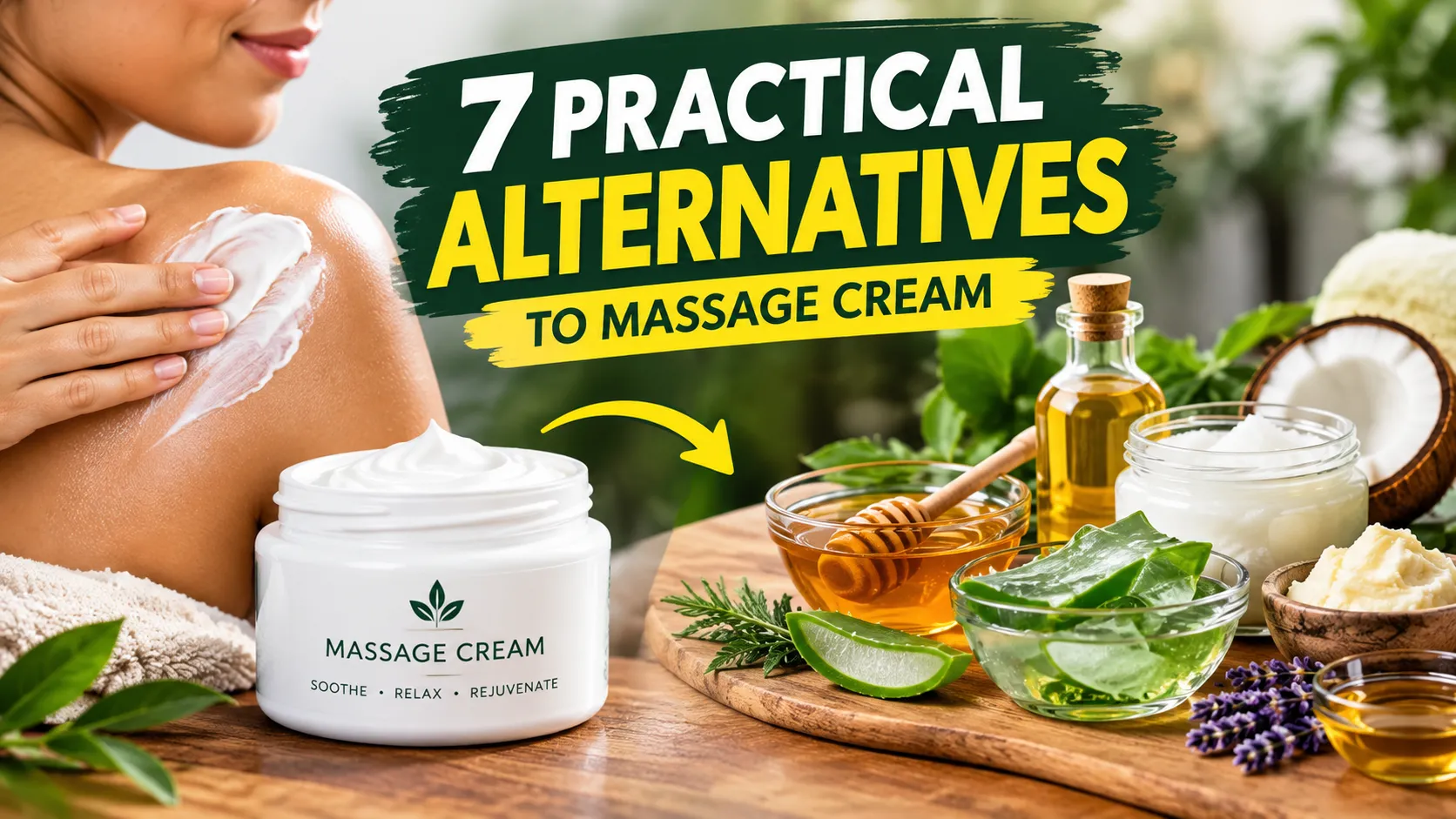
There is no single substitute that suits every person. The options below differ in texture, staying power, cleanup, and how they feel on the skin.
1. Fragrance-free body lotion
A plain body lotion can be one of the easiest alternatives because it is already designed for use on skin. It usually feels lighter than a thick massage cream and can be convenient for a brief massage.
Choose a simple formula if possible, especially if your skin is easily irritated. Lotion may absorb more quickly than oil, so you might need a small additional amount during a longer session.
2. Massage oil
A purpose-made massage oil can provide more lasting glide than many lotions. This can make it useful when you want hands to move smoothly without repeatedly adding product.
The trade-off is cleanup. Oil can transfer to clothing, towels, sheets, or furniture, so protect surfaces and use only enough to maintain comfortable movement.
3. Plain skin-safe body oil
A simple body oil may also work when it is labeled for topical skin use. Keep the formula straightforward if you are trying to reduce the chance of fragrance or other ingredients becoming irritating.
Oil can feel slippery for a long time, which is useful for massage but may make precise hand placement harder. Start with a small amount and add more only when needed.
4. Aloe-based body gel
A body gel with a skin-friendly formula can provide some slip while feeling lighter than oil. It may appeal to people who dislike greasy textures.
Check the label rather than assuming every aloe product is interchangeable. Avoid a product if it contains ingredients you already know irritate your skin.
5. Unscented moisturizing lotion
An unscented moisturizer can be useful when you want both skin moisturization and enough slip for a short massage. It is particularly convenient if you already have a familiar product that your skin tolerates well.
However, not every moisturizer is equally slippery. A very fast-absorbing lotion may require more frequent application.
6. A purpose-made massage gel
If you want an alternative that is still designed specifically for massage, a massage gel may offer a middle ground between cream and oil. Texture varies widely, so check the label and intended use.
This option can make sense when you massage regularly and want a product designed around glide rather than adapting an everyday moisturizer.
7. Nothing extra for very light contact
For a very brief, gentle touch-based routine, you may not need a lubricant at all. This is different from trying to perform a long massage with dry skin, where friction may become uncomfortable.
If the skin begins to feel pulled or irritated, stop rather than forcing the technique without enough glide.
Which option fits your routine?
The following table gives a quick practical comparison. It is not a medical ranking; it simply shows how common substitute types differ in everyday use.
Swipe left/right to see the full table →
| Option | Glide | Feel | Cleanup |
|---|---|---|---|
| Body lotion | Light | Creamy | Easy |
| Massage oil | High | Slippery | More work |
| Body oil | High | Oily | More work |
| Body gel | Moderate | Light | Usually easy |
Note
“Natural” does not automatically mean “better for every skin type.” Plant oils, essential oils, fragrances, and botanical extracts can still bother some people, so use the product label and your own known sensitivities as guides.
How to choose the right substitute
Start with the simplest option that meets the job. If you only need a little slip for a five-minute shoulder or hand massage, a familiar fragrance-free lotion may be enough. If you need longer-lasting glide, an oil or massage gel may be more practical.
Product-fit dashboard
Start with a lightweight lotion or gel.
Consider a suitable body or massage oil.
Look for a simple fragrance-free formula.
Check the label and test a small area first.
Texture is also important. Too little slip can make movement feel rough, while too much can make the hands difficult to control. The goal is comfortable, predictable movement rather than maximum slipperiness.
A simple 5-step routine
1
Wash your hands and make sure the skin is clean and intact.
2
Apply a small amount of the chosen product instead of covering the skin heavily.
3
Begin with gentle, controlled movements and adjust the amount if the skin feels too dry or slippery.
4
Stop if there is pain, burning, itching, marked redness, or another unexpected reaction.
5
Clean the skin and nearby surfaces according to the product’s usual care instructions.
What belongs on your skin?
For a substitute, favor products that are clearly intended for topical use. Avoid improvising with household products that were not made for skin contact, particularly if their ingredients, concentration, or intended use are unclear.
Swipe left/right to see the full table →
| Choice | Use when | Watch for |
|---|---|---|
| Fragrance-free lotion | Short massage | Fast absorption |
| Massage oil | Longer glide | Greasy residue |
| Body gel | Light texture | Ingredient sensitivity |
| No product | Very brief contact | Friction |
Tip
If you are trying a new product, use a small amount first. A familiar product that your skin already tolerates may be a more practical starting point than experimenting with several new ingredients at once.
Common mistakes to avoid
Most problems come from choosing a product for convenience without considering its intended use or from assuming that more product automatically means a better massage.
Swipe left/right to see the full table →
| Mistake | Better choice | Why |
|---|---|---|
| Using too much oil | Start small | Better control |
| Choosing strong fragrance | Use simple formula | Less unnecessary exposure |
| Ignoring irritation | Stop and rinse | Limits further exposure |
| Using an untested household product | Use skin-labeled products | Clearer intended use |
Do’s and don’ts: practical guide
DO
Choose products made for skin, start with a small amount, and pay attention to how the skin feels during use.
DON’T
Do not continue through burning, significant irritation, unusual pain, or a product reaction simply because you want to finish the massage.
When a substitute is not the main issue
A product can improve glide, but it does not make every massage appropriate. If you are massaging an area after an injury, around a significant swelling, or over skin that looks infected or unusually irritated, choosing a different lotion or oil may not solve the underlying concern.
Likewise, massage should not be used as a reason to ignore severe or worsening symptoms. If pain is accompanied by numbness, weakness, fever, chest pain, or loss of bladder or bowel control, seek urgent medical evaluation rather than relying on a topical product or massage routine.
Safety decision path
The decision path is intentionally conservative. The purpose of a massage product is to improve comfort and glide, not to mask symptoms that need assessment.
When to contact a professional
When to contact a professional
Talk with a licensed healthcare professional if symptoms are severe, worsening, unusual, persistent, or not improving. Seek urgent medical help for serious warning signs such as chest pain, significant weakness or numbness, symptoms after a major injury, fever with concerning symptoms, or loss of bladder or bowel control.
Self-care versus professional evaluation

For ordinary, comfortable massage on healthy skin, choosing between lotion, oil, gel, or no product can mostly come down to texture and personal preference. The situation changes when the massage is being used around an injury, unexplained pain, significant swelling, or persistent symptoms.
Swipe left/right to see the full table →
| Situation | Reasonable next step | Decision |
|---|---|---|
| Normal skin, brief massage | Choose a suitable skin product | Self-care may fit |
| New irritation | Stop product use | Monitor or ask a professional |
| Persistent unexplained pain | Get an evaluation | Professional guidance |
| Urgent warning signs | Seek urgent medical help | Do not rely on massage |
Typical routine priority: what matters most
These percentages are only a practical guide for organizing a choice, not scientific measurements. Skin compatibility and comfort should take priority over finding the slipperiest possible product.
Warning
Avoid using a product simply because it is oily or slippery. Household substances not intended for skin may contain ingredients or concentrations that are unsuitable for topical use, and fragrance-heavy products may be uncomfortable for some people.
FAQ
What can I use instead of massage cream?
A fragrance-free body lotion, suitable massage oil, body oil, or skin-friendly massage gel may work. Choose based on glide, skin tolerance, and cleanup.
Can I use regular body lotion for massage?
Yes, a body lotion intended for topical use can be convenient for a short massage. A lightweight lotion may absorb faster than a dedicated massage product.
Is oil better than massage cream?
Neither is automatically better. Oil often provides longer-lasting glide, while cream or lotion may feel lighter and be easier to clean.
Can I massage without any cream or oil?
For brief, gentle contact, you may not need an added product. Stop if dry friction becomes uncomfortable rather than forcing the massage.
What should I avoid as a massage cream substitute?
Avoid household products that are not intended for skin use and be cautious with formulas containing ingredients you know irritate your skin. A simple skin-labeled product is easier to evaluate.
Should I test a new massage product first?
Using a small amount first is a sensible way to see how your skin responds. Stop if you develop burning, itching, marked redness, or another unexpected reaction.
When should I avoid relying on massage?
Seek professional guidance for severe, worsening, unusual, or persistent symptoms. Urgent medical help is appropriate for serious warning signs such as chest pain, significant weakness or numbness, or loss of bladder or bowel control.
Final Thoughts
If you are wondering what can I use instead of massage cream, start with a skin-friendly lotion, suitable massage oil, body oil, or massage gel that fits your preferred texture and cleanup needs. Use a small amount, pay attention to your skin, and avoid products that cause irritation.
For severe, worsening, unusual, persistent, or unexplained symptoms, professional evaluation matters more than finding a different massage product.
Author
-

I’m Alex Turner, a massage product reviewer and wellness writer at RemedyTip. I specialize in researching, evaluating, and comparing massage and recovery products to help readers make informed purchasing decisions. My focus is on practical, evidence-informed product guidance covering muscle recovery, relaxation, everyday comfort, and wellness.
I take a research-driven approach to every product I review. I examine product specifications, features, materials, performance claims, user feedback, durability, comfort, ease of use, and overall value. When appropriate, I also consult trusted industry and health-related sources to verify important information and provide readers with a more complete and balanced view.
I cover a wide range of products, including massage guns, handheld massagers, neck and shoulder massagers, foot massagers, massage chairs, foam rollers, and other recovery tools. Rather than focusing only on marketing claims, I look at how products compare in real-world use and who they are actually suitable for. I also consider different budgets, use cases, and user needs when making recommendations.
At RemedyTip, I’m committed to accuracy, transparency, and unbiased product information. I clearly distinguish between manufacturer claims, available evidence, and my own product analysis so readers can understand the basis of each recommendation. I continuously research new products, technologies, and developments in the massage and recovery space to keep my content current and useful.
My goal is simple: to provide trustworthy, easy-to-understand information that helps readers choose massage and recovery products with greater confidence.

