By Ryan Mitchell
Quick Answer: A stress relief spray and body mist is a light scented product meant to add a calming moment to your routine. Choose a simple, clearly labeled formula, patch test first, and treat it as a comfort habit, not a treatment for stress or anxiety.
Shoppers now find a stress relief spray and body mist in almost every wellness aisle. Some are made for skin, some for pillows, and some for room air. This guide helps you sort them by scent, formula, and use, so you can choose something that fits your day without guesswork.
This article is for general educational information only. It does not diagnose, treat, cure, or prevent any condition. It does not replace advice from a licensed healthcare professional. Readers should seek professional help for severe, worsening, unusual, or persistent symptoms.
What a Stress Relief Spray and Body Mist Actually Does
These products are scented sprays made for skin, clothing, pillows, or the air around you. Most use fragrance, plant extracts, or essential oil blends with calming-sounding names like lavender, chamomile, or sandalwood.
They do not treat stress, anxiety, or any health condition. What they can offer is a cue. Smell is closely tied to memory and mood, so a familiar, pleasant scent used at the same time each day may help you pause, breathe, and shift gears. That also means a scent you dislike can feel more irritating than relaxing.
For example, I usually notice that a light spritz at my desk works best when I pair it with three slow breaths. The scent becomes a signal to slow down, not a fix.
Choose a spray if you want a quick, portable ritual. Skip it if fragrance gives you headaches, itching, or breathing trouble.
What to Look For Before You Buy
Four quick checks can narrow a crowded shelf. Each one helps you avoid products that look relaxing but are poorly suited to how you plan to use them.
Clear ingredient list
Pick products that list every ingredient, including fragrance or essential oils. Vague labels make it harder to avoid scents that bother you.
Skin-safe labeling
A body mist should say it is made for skin. Room and linen sprays are not always meant to touch your body, so follow the directions on the bottle.
Scent strength
Lighter scents are easier to live with at work or in shared spaces. Start with a small amount and add more only if you need it.
Honest claims
Look for words like “relaxing scent” or “comfort.” Be wary of labels that promise to cure anxiety, fix sleep, or replace professional care.
How to Read the Label Without Getting Lost
Labels can be confusing, but a few clues tell you most of what you need.
Swipe left/right to see the full table →
| Label clue | What to do | Why it matters |
|---|---|---|
| “Fragrance” listed alone | Patch test with care | May cover many scent ingredients |
| “For skin” or “body use” | Good sign for body mist | Shows it was made for skin contact |
| Essential oils listed | Check directions and your sensitivities | Strong oils may irritate some people |
| “Cures stress” claims | Skip the product | Scented sprays cannot treat conditions |
Two outside resources can help here. The FDA page on fragrances in cosmetics explains how fragrance ingredients appear on labels. The NIH NCCIH overview of aromatherapy and essential oils gives a general, balanced look at what is known.
Not every check carries the same weight. This guide shows a typical order for working through them.
Typical routine priority when choosing (practical guide)
Safety-related checks come first, and convenience comes last. A pretty bottle is never a reason to skip the ingredient list.
Calming Scent Families Explained

Scent is personal, so it helps to know the main families before you spend money. Think about which ones you already enjoy.
Lavender and herbal
Soft, green, and familiar, these are the most common calming scents. They suit bedtime routines, though some people find them too medicinal.
Citrus and fresh
Orange, lemon, and bergamot feel bright and clean. They work well for a midday reset, but check the label before sun exposure on skin.
Woody and vanilla
Sandalwood, cedar, and vanilla smell warm and rounded. They suit evening use, but heavy versions can feel strong in small rooms.
Light or low scent
Fragrance-light formulas give you a subtle cue with fewer scent ingredients. They are a sensible start if you react easily to perfumes.
Matching a Format to Your Situation
Where and when you plan to use the product matters as much as the scent itself.
Swipe left/right to see the full table →
| Your situation | Format that may fit | Why |
|---|---|---|
| Busy workday | Small travel-size mist | Easy to carry and reapply |
| Winding down at night | Pillow and linen spray | Scent stays on fabric, not skin |
| Easily irritated skin | Fragrance-light option | Fewer scent ingredients to react to |
| Shared office | Soft scent, close-range use | Less scent reaches coworkers |
Mist, Pillow Spray, Roll-On, and Room Spray Compared
These formats look alike on a shelf, but they are built for different jobs.
Swipe left/right to see the full table →
| Type | Best for | Watch for |
|---|---|---|
| Body mist | Quick refresh on skin or clothes | Alcohol or fragrance may bother dry skin |
| Pillow spray | Bedtime ritual | Let fabric dry before lying down |
| Roll-on blend | Small, targeted application | Needs a clear dilution statement |
| Room spray | Home or shared air | Usually not meant for skin |
Product Ideas to Browse
This article may contain affiliate links. If you buy through these links, we may earn a small commission at no extra cost to you. We only mention products that fit the topic and do not replace professional medical advice.
These links open Amazon search results so you can compare labels, sizes, and reviews yourself. Apply the label checks above before you buy.
Lavender Body and Pillow Mist
May support a calming bedtime routine as a soft, familiar scent. Confirm the label allows use on skin and fabric.
Travel-Size Calming Body Mist
Can make a quick desk or commute reset easier to keep consistent. A small bottle also lets you test a scent cheaply.
Fragrance-Light Body Spray
May make daily care easier for people who prefer a softer scent. Still patch test before regular use.
Mistakes to Avoid When Choosing
Most disappointments come from a few repeat errors. When you shop for a stress relief spray and body mist, these are the ones worth dodging, along with easy fixes.
Swipe left/right to see the full table →
| Common mistake | Better choice |
|---|---|
| Buying the strongest scent | Start with a light scent in a small size |
| Using room spray on skin | Use only products labeled for skin |
| Skipping the patch test | Test a small area and wait 24 hours |
| Spraying close to the face | Spray at arm’s length, eyes closed |
| Expecting it to fix stress alone | Pair it with rest, movement, and breaks |
Warning: Keep sprays away from your eyes, broken skin, and closed, unventilated rooms. Check labels carefully if you are pregnant, have asthma or allergies, or share space with pets or young children, and ask a professional first when you are unsure.
How to Try a New Spray Safely
A careful first week costs almost nothing and prevents most problems.
1
2
3
4
5
The path below shows what to do after your patch test.
Use lightly, and keep to the label directions.
Rinse with water, stop use, and ask a professional if it lasts.
A clean patch test lowers your risk but does not remove it. Keep watching how your skin and breathing feel with regular use.
A Simple Timing Guide for the Day
Swipe left/right to see the full table →
| When | How much | Tip |
|---|---|---|
| Morning | One or two light sprays | Pick a fresh, light scent |
| Midday break | One spray plus slow breaths | Step outside or open a window |
| Evening wind-down | One or two sprays on linens | Pair with dim lights |
| Just before bed | Pillow only, then let it dry | Keep it away from your face |
Different habits carry different levels of risk. This general guide helps you see where your own habits fall.
Risk level of common habits (general practical guide)
If your habits sit in the medium or higher rows, switch to a lighter product or a different format before you keep going.
Pro Tips for Using Your Stress Relief Spray and Body Mist Well
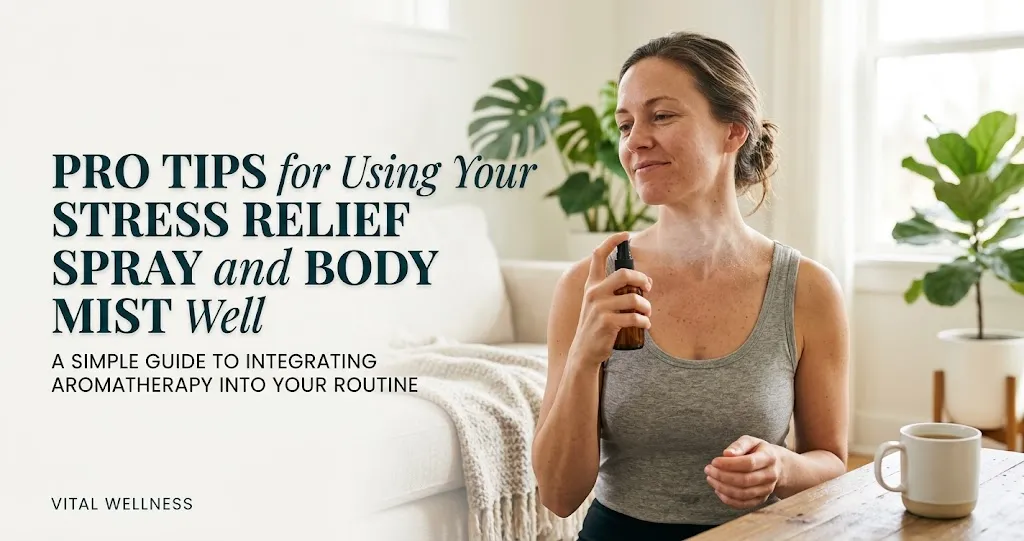
A scent works best when it belongs to a habit. Use the same product at the same moment each day, such as before a meeting or at the end of the evening. Over time your brain links the smell with that pause.
Store bottles away from heat and sunlight.
Rotate scents if one starts to feel strong.
Buy small sizes first.
Layer many scented products at once.
Spray near candles or open flames.
Share skin products with others.
Keep the list short: simple storage and light use prevent most scent fatigue and waste.
Tip: Pair your spray with one slow habit, like three deep breaths or a short stretch. The habit does much of the work, and the scent becomes your cue.
Note: Scent preferences are personal. A fragrance one person finds soothing may feel sharp to another, so try small sizes first and trust your own reaction.
When to contact a professional: Stop using the product and seek medical help if you develop a spreading rash, swelling, trouble breathing, or a severe headache. Talk with a licensed professional if stress feels constant, affects your sleep or work, or comes with low mood. If you feel unsafe or in crisis, call or text 988 in the US.
Frequently Asked Questions
Does a stress relief spray and body mist really work?
It may help you feel more relaxed as part of a routine, but it does not treat stress or anxiety. Results vary from person to person.
Can I use pillow spray on my skin?
Only if the label says it is made for skin. Many pillow and room sprays are meant for fabric or air, not your body.
How many sprays should I use?
Follow the label directions. Many people start with one or two light sprays and use less if the scent feels strong.
Is lavender safe for everyone?
Not always. Some people react to lavender or other fragrance ingredients, so patch test first and ask a professional if you are pregnant or have allergies or asthma.
How is a body mist different from perfume?
Body mists usually have a lighter scent and are meant for casual daily use. Always check the label for ingredients and skin-use directions.
Can I use these around pets or children?
Use extra caution, since some scented products can bother pets and young children. Ask a vet or your child’s doctor before using essential oil sprays around them.
Final Thoughts
A stress relief spray and body mist works best as a small, pleasant cue inside a bigger routine of rest, movement, and support. Pick a simple label, test it gently, and keep your expectations realistic. If stress feels severe, constant, or is not improving, or if you notice skin or breathing symptoms, talk with a licensed professional.
Author
-

Hi, I’m Ryan Mitchell, a wellness and relaxation writer at RemedyTip.com, where I focus on helping readers better understand stress management, relaxation techniques, mindfulness, sleep improvement, and everyday wellness habits. I have developed a strong knowledge of the Wellness & Relaxation field through sustained learning, in-depth research, and a continued commitment to exploring practical approaches to well-being.
My work focuses on researching wellness topics, examining available evidence, and turning complex information into clear, accessible, and actionable guidance. I’m continually exploring new findings, relaxation practices, and lifestyle strategies to help readers make informed decisions about their daily wellness routines. At RemedyTip.com, my goal is to share trustworthy, research-informed content that encourages healthier habits, greater relaxation, and a more balanced lifestyle.