Written by Ryan Mitchell
Quick Answer: A relaxing environment combines comfortable lighting, low-visual-noise colors, natural elements, and personal objects that help the space feel pleasant. Use these features together rather than relying on one item, and adjust the room around the activity, time of day, and your own comfort.
Build a Calmer Space Without Making It Complicated
A relaxing environment (light, color, crystals, plants) does not need to look like a spa or follow a strict decorating formula. The goal is simply to make the room feel comfortable, visually manageable, and suited to quiet activities.
Start with the features that affect the whole room: light, visual clutter, color, temperature, and noise. Then add smaller personal details such as plants, stones, artwork, or other meaningful objects. The most useful setup is one you can maintain easily.
Trust & Safety: This article is for general educational information only. It does not diagnose, treat, cure, or prevent any condition. It does not replace advice from a licensed healthcare professional. Readers should seek professional help for severe, worsening, unusual, or persistent symptoms.
What Makes a Space Feel Relaxing?
A calming room usually works because several small signals point in the same direction. Gentle light can make a space feel less harsh. A limited color palette can reduce visual busyness. Plants and other natural materials can add softness and visual interest without requiring a major redesign.
The important point is personal response. One person may prefer a warm reading lamp and muted green walls, while another may feel more comfortable with daylight, pale neutrals, and very little decoration. There is no single “correct” relaxation room.
Note: Think of the room as a collection of adjustable cues rather than a treatment. If a particular color, scent, object, or lighting choice makes you uncomfortable, remove it even if it is commonly described as calming.
The four main layers
Lighting controls the overall atmosphere, color shapes the visual mood, natural elements add texture and life, and personal objects make the room feel familiar. Together, these layers can create a more intentional place for reading, quiet reflection, stretching, or simply taking a break.
Swipe left/right to see the full table →
| Element | Purpose | Simple starting point |
|---|---|---|
| Light | Sets atmosphere | Use softer evening light |
| Color | Reduces visual noise | Choose a quiet palette |
| Plants | Adds natural texture | Add one manageable plant |
| Crystals | Adds personal meaning | Display a favorite stone |
Start With Lighting Before Decorating
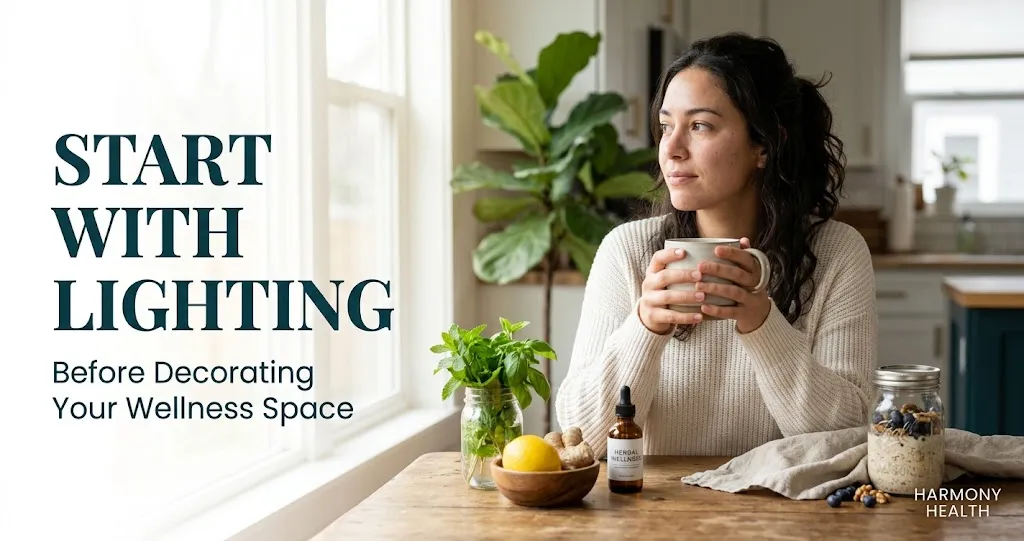
Lighting is often the easiest change because it can alter the feeling of a room without moving furniture. During the day, make use of comfortable natural light when available. Later, consider using a smaller lamp instead of relying on one bright overhead source.
Warm-looking light is commonly chosen for cozy spaces, while brighter neutral or cool light can be useful when you need to read, work, clean, or stay alert. The practical rule is simple: match the light to the activity rather than trying to make every moment equally dim.
Practical guide: room-comfort priority
Values are a practical guide, not scientific measurements.
The best setup is usually flexible. If your room serves several purposes, use separate light sources for separate zones. A desk lamp can support focused work, while a softer side lamp can make a nearby chair feel more suitable for winding down.
Match light to the time and task
Swipe left/right to see the full table →
| Situation | Useful approach | Avoid |
|---|---|---|
| Reading | Enough focused light | Straining in dim light |
| Quiet evening | Softer ambient light | Uncomfortable glare |
| Focused work | Clear task lighting | Lighting that feels harsh |
| Rest area | Low visual glare | Multiple competing lights |
Use Color to Reduce Visual Busyness
Color can change the character of a room, but there is no universal shade that makes everyone relax. Soft greens, muted blues, warm neutrals, gentle beige tones, and other low-intensity colors can work well when they fit your taste and the room’s existing furniture.
Instead of repainting immediately, test the idea with smaller changes. A throw, cushion, curtain, artwork, or small accent can show whether a palette feels comfortable before you commit to a larger project.
A simple color-selection flow
Add Plants and Natural Details
Plants can make a room feel more connected to nature and can add a softer visual texture. Research on indoor greenery has explored possible links with comfort and stress responses, but results vary by setting and study design. That makes plants a useful environmental choice, not a guaranteed health intervention.
Choose a plant that fits the available light and the amount of care you can realistically provide. One healthy, easy-to-maintain plant is often more useful than several neglected ones. If living plants are impractical, natural-looking materials, dried arrangements, landscape artwork, or views of greenery can provide a similar visual theme.
Where plants fit best
Place greenery where you naturally look during quiet moments: beside a reading chair, near a desk, on an open shelf, or close to a window that suits the plant. Keep walkways clear and avoid creating maintenance tasks that make the room feel more demanding.
Use Crystals as Personal Decor, Not a Promise of Healing
Crystals can be included because you like their color, texture, shape, symbolism, or personal meaning. In a relaxing environment (light, color, crystals, plants), they work best as decorative or mindful reminders rather than as objects expected to diagnose, treat, or prevent a health condition.
A small stone on a shelf, beside a journal, or near a favorite chair can become a visual cue to pause. The benefit comes from the routine and meaning you attach to the moment, not from assuming that a particular mineral has a guaranteed medical effect.
Tip: Give each decorative item a reason for being there. If an object reminds you to slow down, makes the room feel familiar, or simply looks pleasant, it earns its place. If it creates clutter or maintenance work, remove it.
Choose the right amount of each element
Swipe left/right to see the full table →
| Element | Good fit if | Scale back if |
|---|---|---|
| Plants | You enjoy caring for them | Care feels stressful |
| Crystals | They have personal meaning | They add clutter |
| Decor | It feels familiar | Surfaces feel crowded |
| Color accents | They support the palette | Too many compete |
Put the Room Together in a Simple Sequence
Rather than buying or changing everything at once, work from the largest influence to the smallest. This keeps the process affordable and makes it easier to identify which changes you actually enjoy.
Room setup flow
1
2
3
4
5
Give the room time to become familiar before making another major change. A space that is comfortable on an ordinary day is more useful than one that looks perfect for a photograph.
Common Mistakes That Make Calm Spaces Feel Busy
More relaxation-themed objects do not automatically create more relaxation. Too many lamps, decorative items, competing colors, or plants can create another layer of visual and practical work.
Swipe left/right to see the full table →
| Mistake | Better choice |
|---|---|
| Using one harsh light | Layer light sources |
| Copying a trend | Choose what feels natural |
| Adding too many objects | Keep meaningful favorites |
| Ignoring maintenance | Choose easy-care options |
Warning: Do not let decorative goals create trip hazards, blocked exits, unstable objects, excessive heat, or overloaded electrical outlets. A relaxing room still needs to be physically safe and easy to move through.
Do’s and don’ts for a calmer room
Do
Use adjustable light, keep surfaces manageable, and choose objects that have a clear purpose or personal meaning.
Don’t
Assume that more decorations, stronger colors, or more expensive items will automatically make the room more relaxing.
Know When a Room Change Is Not Enough

Room design can support comfort, but it should not be treated as a substitute for professional care when someone has significant or persistent symptoms. If you are changing your environment because you feel unwell, pay attention to the symptoms themselves rather than assuming the room is the cause.
Swipe left/right to see the full table →
| Situation | Reasonable first step | When to seek help |
|---|---|---|
| Room feels visually busy | Reduce clutter | Not usually a medical issue |
| Persistent sleep difficulty | Review routine and environment | Discuss ongoing problems with a professional |
| Ongoing distress | Use supportive routines | Seek appropriate professional support |
| Severe or worsening symptoms | Do not rely on decor | Seek prompt medical advice |
Practical decision path
When to contact a professional: Seek professional help for severe, worsening, unusual, or persistent symptoms. Environmental changes can support everyday comfort, but they should not replace an appropriate medical or mental-health evaluation when one is needed.
Frequently Asked Questions
What is a relaxing environment?
It is a space arranged to feel comfortable, visually manageable, and suited to quiet activities. Lighting, color, natural elements, sound, clutter, and personal preferences can all contribute.
What light is best for a relaxing room?
Many people prefer softer, warmer-looking light for quiet evening activities. The best choice is one that feels comfortable for the activity without creating glare or making it difficult to see.
Which colors can make a room feel calmer?
Muted greens, soft blues, warm neutrals, and other low-intensity shades are common choices, but personal preference matters more than following a fixed color rule.
Can plants make a room feel more relaxing?
Plants can add natural color and texture and may make a space feel more pleasant for some people. Choose plants that match the room’s light and the amount of care you can manage.
Do crystals make a space more relaxing?
Crystals can be meaningful decorative objects or reminders to pause, but they should not be presented as guaranteed treatments for health conditions.
How can I create a relaxing environment cheaply?
Start by reducing clutter, changing the placement of existing lamps, opening curtains when comfortable, and using items you already own in a simpler arrangement. You do not need a full room makeover.
Can a relaxing room replace professional help?
No. A comfortable environment can support everyday well-being, but severe, unusual, worsening, or persistent symptoms should be discussed with an appropriate healthcare professional.
Final Thoughts
A relaxing environment (light, color, crystals, plants) is less about buying the perfect objects and more about creating a space that feels comfortable and easy to use.
Begin with lighting and clutter, then add a restrained color palette, greenery, and meaningful decorative details. If persistent, severe, unusual, or worsening symptoms are the reason you are changing your environment, seek professional help rather than relying on room design alone.
Author
-

Hi, I’m Ryan Mitchell, a wellness and relaxation writer at RemedyTip.com, where I focus on helping readers better understand stress management, relaxation techniques, mindfulness, sleep improvement, and everyday wellness habits. I have developed a strong knowledge of the Wellness & Relaxation field through sustained learning, in-depth research, and a continued commitment to exploring practical approaches to well-being.
My work focuses on researching wellness topics, examining available evidence, and turning complex information into clear, accessible, and actionable guidance. I’m continually exploring new findings, relaxation practices, and lifestyle strategies to help readers make informed decisions about their daily wellness routines. At RemedyTip.com, my goal is to share trustworthy, research-informed content that encourages healthier habits, greater relaxation, and a more balanced lifestyle.