
By Ryan Mitchell | Wellness & Relaxation
Quick Answer: Red light therapy may have potential for supporting sleep, but evidence is still limited and results are not guaranteed. Red light exposure is not the same as a clinically studied light-therapy protocol. If you try a device, follow its instructions, protect your eyes, and keep proven sleep habits at the center of your routine.
Could the color of light in your evening routine influence how well you sleep? It is a reasonable question, especially if you have seen red-light panels, masks, and lamps promoted for nighttime relaxation.
The important distinction is between a promising idea and a proven sleep solution. Red and near-infrared light devices differ in wavelength, intensity, exposure time, and intended use. Understanding these differences can help you make a safer, more informed choice.
Sleep science
Light exposure
Device safety
Bedtime habits
Health disclaimer: This article is for general educational information only. It does not diagnose, treat, cure, or prevent any condition. It does not replace advice from a licensed healthcare professional. Readers should seek professional help for severe, worsening, unusual, or persistent symptoms.
What Does the Research Actually Say?
Research into red light therapy and sleep is developing, but the evidence does not yet establish red-light devices as a reliable solution for insomnia or other sleep problems. Some studies suggest potential benefits, while others examine different forms of light exposure that cannot be treated as equivalent.
A 2026 systematic review and meta-analysis examined five randomized controlled trials involving 240 participants who received photobiomodulation. The researchers reported a modest improvement in subjective sleep-quality scores compared with sham treatment, but the confidence interval was wide and the evidence remained limited. The findings are promising, not definitive.
Read the published research through PubMed’s photobiomodulation and sleep review. The small number of trials and differences between treatment protocols mean the findings should not be interpreted as proof that every red-light lamp or panel will improve sleep.
Red light, near-infrared light, and bright light are different
Red-light devices commonly use visible red wavelengths. Near-infrared devices use wavelengths beyond visible red, while bright-light therapy generally uses intense visible light within a prescribed schedule to influence circadian timing. These approaches have different purposes and should not be used interchangeably.
The distinction matters because the timing of light exposure can affect the body’s internal clock. Bright light is sometimes used under professional guidance for circadian-rhythm problems, whereas red-light devices are often marketed for other purposes. Evidence for one approach does not automatically establish benefits for another.
Myth versus fact: What should you believe?
Several common claims make red light sound more certain than the evidence allows. Use this table to separate reasonable expectations from unsupported promises.
Swipe left/right to see the full table →
| Claim | What the evidence supports |
|---|---|
| It always improves sleep | Not established for all users or devices. |
| It may influence sleep quality | Early findings suggest potential, with uncertainty. |
| All red lamps are equivalent | Wavelength, output, and exposure vary widely. |
| It replaces insomnia care | No; persistent sleep problems deserve proper evaluation. |
Evidence reality dashboard
Potential benefit
Early research suggests possible improvements in reported sleep quality.
Main limitation
Few trials and differing protocols make results hard to generalize.
Practical takeaway
Treat a device as optional, not as a guaranteed sleep aid.
Next step
Prioritize consistent sleep habits and seek advice for ongoing problems.
This dashboard is a practical interpretation of the available evidence, not a clinical rating scale. It highlights why promising research should encourage careful evaluation rather than sweeping product claims.
How Could Red Light Affect Your Nighttime Routine?

Light interacts with biological systems in more than one way. The eyes help the brain track the daily light-dark cycle, which supports circadian timing. Certain red and near-infrared wavelengths are also studied for their effects on tissues, a process often called photobiomodulation.
These are different pathways. A device’s proposed cellular effects do not prove that using it before bed will make you fall asleep faster, sleep longer, or wake feeling refreshed. Those outcomes require direct testing with suitable sleep measures.
Benefits and limitations at a glance
Use the comparison below to decide whether a device is worth considering as an optional part of your routine.
Swipe left/right to see the full table →
| Possible advantage | Important limitation |
|---|---|
| A relaxing ritual | Relaxation alone does not confirm a biological sleep benefit. |
| A non-drug option to explore | Safety, cost, and effectiveness depend on the device and user. |
| A consistent evening cue | The same routine can often be built without buying a device. |
| An area of active research | Long-term effects and ideal sleep protocols remain uncertain. |
Note: A relaxing experience can be worthwhile, but feeling calm after a session is not the same as demonstrating better sleep quality. If you track your sleep, remember that wearable estimates are imperfect and should not replace professional evaluation.
Is Red Light Before Bed a Good Idea?
There is no single answer for everyone. The brightness of a device, how close you sit to it, the duration of exposure, and its specific wavelengths all matter. So does your personal response. Some people may find a dim red ambient light comfortable, while a bright or powerful treatment panel may be unnecessary or unsuitable for nighttime use.
Importantly, a red bulb used for room lighting is not necessarily a photobiomodulation device. Conversely, a treatment panel designed for skin or other uses has not automatically been designed or tested to improve sleep. Check the intended purpose and instructions before using any device near bedtime.
Timing and routine: A practical guide
There is no universally established bedtime schedule for red-light treatment. Follow the manufacturer’s instructions and any guidance from your clinician rather than copying a routine from social media.
Swipe left/right to see the full table →
| Routine element | Practical approach |
|---|---|
| Device session | Use only the duration and distance specified for your device. |
| Lighting afterward | Keep room lighting comfortable and relatively dim. |
| Screen use | Reduce stimulating activities and bright screens before bed. |
| Sleep schedule | Keep wake time consistent when possible. |
A calmer bedtime flow
1
Finish demanding tasks and lower unnecessary stimulation.
2
Read, stretch gently, or follow device instructions if you already use a suitable light product.
3
Keep it dark, quiet, and comfortably cool.
4
Notice your overall sleep and daytime functioning rather than judging one night.
This flow is a general routine guide, not a validated treatment protocol. The key is consistency: avoid adding a device if it makes bedtime longer, more stressful, or less comfortable.
How to Choose a Red-Light Device Carefully
If you are considering a device specifically for sleep, start by asking whether it has been studied for that purpose. Marketing language such as “restorative,” “deep sleep,” or “circadian reset” is not enough to establish effectiveness.
Look for clear technical information, understandable safety instructions, a defined intended use, and realistic claims. A reputable seller should explain the device’s wavelength range, recommended distance, session duration, eye precautions, and contraindications where relevant.
Which option fits your situation?
The best choice may be no device at all. Use the following guide to compare common options without assuming that a higher price means better sleep results.
Swipe left/right to see the full table →
| Option | When it may make sense |
|---|---|
| Dim red ambient lamp | For comfortable evening lighting, not as proven treatment. |
| Red or near-infrared panel | Only if its intended use and safety guidance fit your needs. |
| Bright-light therapy device | For specific circadian concerns, with appropriate timing advice. |
| No light device | A sensible starting point for basic sleep-habit changes. |
Practical sleep priorities
These bars show a practical order for building a routine, not measured treatment effects.
The visual is a practical prioritization aid, not a ranking from clinical trials. Sleep habits are a reasonable starting point because they do not require purchasing a device and can be adjusted to your circumstances.
Tip: Before buying a product, write down your main goal: falling asleep sooner, waking less often, or feeling more rested. Then check whether the device has evidence for that exact outcome instead of relying on general wellness claims.
Safety: What to Check Before a Session
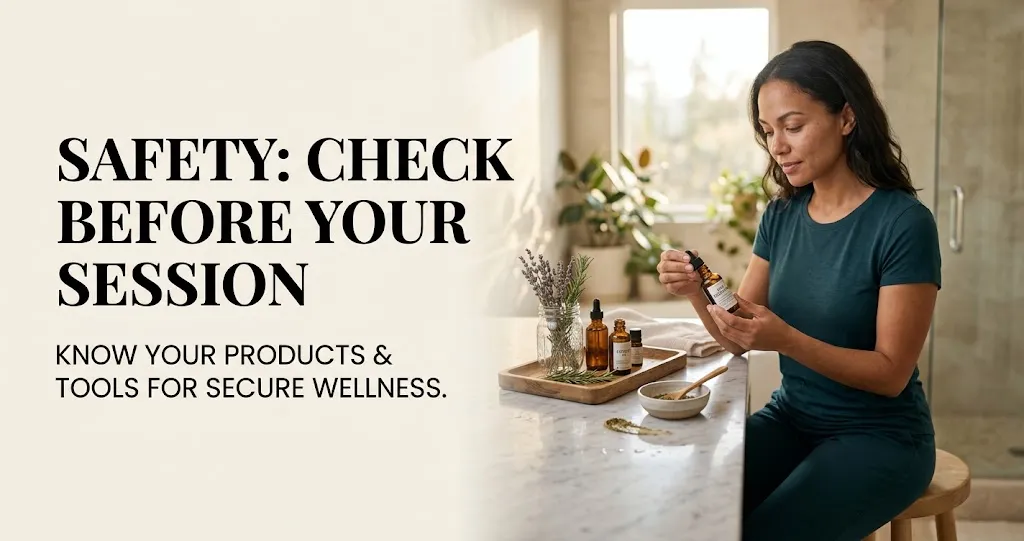
Red-light devices vary in power and design, so their safety cannot be judged by color alone. Follow the manufacturer’s directions, keep the device at the stated distance, and do not exceed the recommended session time. More exposure is not necessarily better.
Pay particular attention to eye safety. Do not stare directly into high-intensity LEDs or treatment lamps. Use eye protection when the instructions require it, and do not assume that closing your eyes is adequate protection. Near-infrared light may not be visible even when exposure is occurring.
Ask a healthcare professional before using a treatment device if you have an eye condition, a condition that makes you sensitive to light, or take medication that may increase photosensitivity. If you are unsure whether a device is suitable for you, check with a clinician or pharmacist before beginning.
Safer choices versus avoidable mistakes
A few simple checks can reduce avoidable problems and help you decide when not to continue.
Swipe left/right to see the full table →
| Safer practice | Avoid this mistake |
|---|---|
| Follow device instructions | Increasing time or power to chase faster results. |
| Use required eye protection | Looking directly into the light source. |
| Check medications and conditions | Assuming every device is suitable for everyone. |
| Stop if a reaction occurs | Ignoring pain, eye discomfort, or unusual skin changes. |
Safety decision path
Step 1: Is the device intended for your use?
If the purpose or instructions are unclear, do not guess. Contact the manufacturer or a healthcare professional.
Step 2: Do you have a relevant health concern or medication warning?
Ask a clinician or pharmacist before using the device if photosensitivity or eye safety may be an issue.
Step 3: Do symptoms develop during use?
Stop the session if you experience discomfort or an unusual reaction. Seek medical advice when appropriate.
This decision path is a general safety aid, not a substitute for a device-specific manual or individual medical advice.
Warning: Do not use a red-light product as a reason to delay care for a persistent sleep problem or another concerning symptom. Avoid devices with unclear specifications, missing safety instructions, or claims that sound like guaranteed medical outcomes.
When to contact a professional
Speak with a healthcare professional if poor sleep continues, affects your daily activities, or leaves you struggling to function. Seek evaluation for repeated loud snoring with gasping, persistent daytime sleepiness, or ongoing difficulty falling or staying asleep.
Stop using a light device and seek advice if you develop eye pain, vision changes, burns, significant skin irritation, or other unusual symptoms. Sudden vision loss or severe eye pain warrants urgent medical attention.
Sleep Habits Worth Trying First
Even if you are interested in red light therapy and sleep, start with the basics. A consistent sleep schedule, a comfortable bedroom, and a calming wind-down period offer a practical foundation. These habits will not solve every sleep disorder, but they can help make your routine more supportive of rest.
The Cleveland Clinic’s sleep-hygiene guidance discusses everyday habits that support better sleep. Keep your room dark and quiet, reduce stimulating activity near bedtime, and choose a wake time you can maintain most days.
If you work nights, travel across time zones, or naturally feel sleepy much later than your desired bedtime, your sleep timing may need a more tailored approach. Bright-light exposure can shift circadian timing depending on when it occurs, so avoid improvising a high-intensity light schedule if you suspect a circadian-rhythm issue.
For chronic insomnia, ask about evidence-based care such as cognitive behavioral therapy for insomnia (CBT-I). It addresses patterns that maintain sleep difficulty and is more established than relying on a red-light product alone.
Frequently Asked Questions
Does red light therapy help you sleep better?
Early research suggests a possible benefit for reported sleep quality, but the evidence is limited. It is not a proven solution for everyone with sleep difficulties.
Is red light before bed better than blue light?
Red light may be less disruptive than some bright, blue-enriched light, but brightness, timing, and duration also matter. A dark, comfortable bedroom remains a sensible goal.
How long should I use red light for sleep?
There is no universally established sleep-specific duration. Follow the instructions for your exact device and do not increase exposure beyond its recommendations.
Can I leave a red-light lamp on all night?
Do not leave a treatment device running overnight unless the manufacturer specifically designs and approves it for that use. A treatment lamp is not the same as ordinary ambient lighting.
Can red-light therapy replace insomnia treatment?
No. If insomnia continues or affects daily functioning, seek professional advice about established options such as CBT-I rather than relying on a light device alone.
Is near-infrared light the same as red light?
No. Red light is visible, while near-infrared light is beyond the visible range. Devices can differ in output and intended use, so their effects and safety instructions are not automatically interchangeable.
What should I try if I still cannot sleep?
Keep a consistent routine and review your sleep environment, caffeine timing, and evening habits. Contact a healthcare professional if the problem persists, worsens, or affects your daily life.
Final Thoughts
Red-light devices are an interesting area of research, but current evidence does not justify treating them as a guaranteed way to improve sleep. Start with consistent sleep habits, check device instructions and safety precautions, and keep expectations realistic. If sleep problems are persistent, severe, or affecting daily life, talk with a qualified healthcare professional about suitable next steps.
Author
-

Hi, I’m Ryan Mitchell, a wellness and relaxation writer at RemedyTip.com, where I focus on helping readers better understand stress management, relaxation techniques, mindfulness, sleep improvement, and everyday wellness habits. I have developed a strong knowledge of the Wellness & Relaxation field through sustained learning, in-depth research, and a continued commitment to exploring practical approaches to well-being.
My work focuses on researching wellness topics, examining available evidence, and turning complex information into clear, accessible, and actionable guidance. I’m continually exploring new findings, relaxation practices, and lifestyle strategies to help readers make informed decisions about their daily wellness routines. At RemedyTip.com, my goal is to share trustworthy, research-informed content that encourages healthier habits, greater relaxation, and a more balanced lifestyle.

