
Written by Alex Turner | General educational information
Quick Answer: The best massage oil for babies is usually a simple, fragrance-free oil with a short ingredient list and no unnecessary essential oils. Always choose products designed for babies, patch test first, and stop if redness or irritation appears.
Gentle Baby Massage Starts With the Right Oil
Baby massage can be a calming part of a daily routine. Many parents use a small amount of oil to reduce friction and help their hands move smoothly across the skin. But babies have delicate skin, so choosing an appropriate product matters more than picking the most expensive option.
The goal is simple: support comfortable skin and gentle touch without introducing unnecessary fragrance, harsh ingredients, or products that may not suit an infant’s age or skin condition.
Important safety note: This article is for general educational information only. It does not diagnose, treat, cure, or prevent any condition. It does not replace advice from a licensed healthcare professional. Readers should seek professional help for severe, worsening, unusual, or persistent symptoms.
What Makes the Best Massage Oil for Babies?
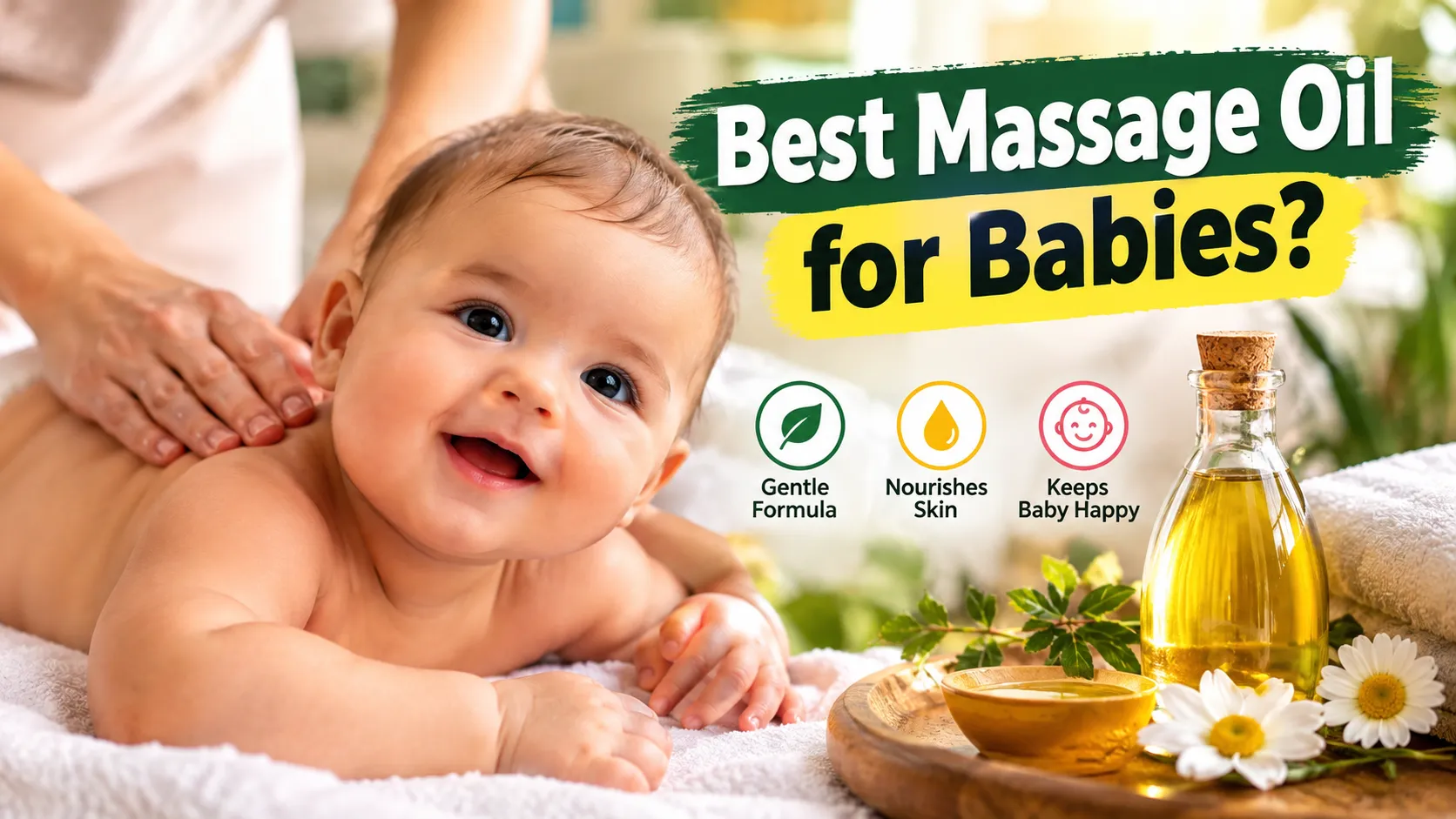
There is no single oil that is perfect for every baby. The best choice depends on the baby’s age, skin sensitivity, family preferences, and the product’s ingredient list. A suitable massage oil should make the massage comfortable without leaving behind an irritating formula.
For most families, the simplest approach is to look for a baby-specific product that is fragrance-free or minimally scented, contains a short list of recognizable ingredients, and is intended for use on infant skin. A product marketed for adult massage, aromatherapy, or essential oil use may not be appropriate for babies.
Key qualities to look for
Start with the label rather than the marketing claims. Words such as “natural,” “organic,” or “pure” do not automatically mean a product is suitable for an infant. The full ingredient list and intended age range are more useful starting points.
Ingredient Priority Dashboard
This is a practical buying guide, not a scientific ranking.
Simple ingredient list
Fragrance-free formula
Baby-specific labeling
Minimal added botanicals
The highest priorities are usually a gentle formula, clear labeling, and avoiding ingredients that could unnecessarily increase the chance of irritation.
Ingredients and qualities at a glance
Swipe left/right to see the full table →
| Quality | Why it matters | What to check |
|---|---|---|
| Fragrance-free | May reduce unnecessary exposure to fragrance ingredients. | Look for “fragrance-free” on the label. |
| Short ingredient list | Makes it easier to identify potential irritants. | Review every listed ingredient. |
| Baby-specific use | Shows the manufacturer considered infant skin use. | Check intended age and directions. |
| No unnecessary essential oils | Some concentrated botanical oils may irritate delicate skin. | Avoid aromatherapy-focused formulas for infants. |
Which Types of Oil Are Commonly Considered?
Parents often compare mineral oil, plant-based oils, and specialty baby massage blends. Each category has different characteristics, and none should be assumed suitable simply because it is natural or widely used.
Baby massage oils
Products specifically formulated for babies are often the easiest starting point because they provide usage directions and age guidance. Look for simple formulas that prioritize gentle skin care over strong fragrance or complex botanical blends.
Plant-based oils
Some parents prefer simple plant-derived oils. However, natural ingredients can still cause irritation or allergic reactions in sensitive individuals. A plant-based ingredient should not be treated as automatically risk-free.
Mineral oil
Mineral oil is commonly used in personal-care products because it creates a smooth barrier on the skin. Whether it is the right choice for a particular baby depends on individual preferences, the product formula, and how the baby’s skin responds.
Product type comparison
Swipe left/right to see the full table →
| Oil type | Potential fit | Main consideration |
|---|---|---|
| Baby-specific oil | Parents wanting clear infant-use labeling. | Review ingredients and fragrance. |
| Simple plant oil | Families preferring minimal formulas. | Natural does not mean irritation-proof. |
| Mineral oil | Those who prefer an uncomplicated barrier oil. | Choose a product labeled for intended use. |
| Aromatherapy blend | Generally not the first choice for infants. | Concentrated essential oils may be unsuitable. |
Note: If your baby has eczema, frequent rashes, broken skin, or a known sensitivity, ask a pediatric healthcare professional before introducing a new massage product.
How to Choose a Massage Oil for Your Baby
Choosing the best massage oil for babies is less about finding a trendy ingredient and more about matching a gentle product to your baby’s needs. Follow a simple decision process before buying.
Simple Buying Decision Path
Choose products that clearly indicate they are suitable for babies.
Prefer straightforward formulas with no unnecessary fragrance.
Apply a tiny amount first and observe the skin before full use.
Redness, swelling, or discomfort means the product should not continue without professional guidance.
This process helps prevent a common mistake: choosing an oil based only on scent, packaging, or influencer recommendations.
Product fit by family preference
Swipe left/right to see the full table →
| Your priority | Look for | Avoid prioritizing |
|---|---|---|
| Sensitive skin | Minimal, fragrance-free formula. | Strong scents and complex blends. |
| Easy application | Smooth texture and easy-to-use packaging. | Leaky or difficult containers. |
| Minimal ingredients | Short ingredient list. | Unnecessary additives. |
| Travel use | Secure, practical packaging. | Containers that may spill. |
How to Use Baby Massage Oil Safely
Even a gentle product should be used thoughtfully. Baby massage is intended to be a comfortable, relaxed interaction rather than a vigorous technique.
A simple routine
Tip: A small amount is usually enough. Too much oil can make the baby’s skin slippery and may make handling more difficult.
Safe routine versus risky routine
Swipe left/right to see the full table →
| Safer choice | Less suitable choice |
|---|---|
| Small amount of oil. | Applying excessive oil. |
| Gentle, slow movements. | Deep or forceful pressure. |
| Checking skin response. | Ignoring redness or irritation. |
| Using baby-appropriate products. | Using concentrated adult aromatherapy oils. |
Ingredients and Products to Approach Carefully
Baby skin can react differently from adult skin. A product that works well for one family member may not be appropriate for an infant. This is especially important when shopping for products containing multiple fragrances, botanical extracts, or concentrated essential oils.
Essential oils deserve particular caution. They are concentrated substances and should not be casually added to infant massage routines. If you are unsure about an ingredient or product, ask a pediatric healthcare professional before use.
Label-reading do’s and don’ts
Swipe left/right to see the full table →
| Do | Don’t |
|---|---|
| Read the complete ingredient list. | Rely only on front-label claims. |
| Check age recommendations. | Assume every oil is infant-safe. |
| Choose simple formulas. | Add essential oils without guidance. |
| Stop if irritation develops. | Continue using a product that causes discomfort. |
Warning: Never use massage oil as a substitute for medical care when a baby’s skin has severe irritation, significant swelling, signs of infection, or a rapidly worsening rash.
Common Mistakes Parents Make When Choosing Baby Massage Oil
Shopping for baby products can feel overwhelming because packaging often emphasizes natural ingredients, calming scents, or special benefits. However, these claims do not always answer the most important question: Is this product appropriate for my baby’s skin?
Mistake 1: Choosing fragrance first
A pleasant scent may appeal to adults, but fragrance is not necessary for a comfortable baby massage. A fragrance-free option may be a simpler starting point, especially for sensitive skin.
Mistake 2: Assuming natural means safer
Plant-derived ingredients can still cause skin reactions. Always evaluate the complete formula and your baby’s individual response.
Mistake 3: Using adult massage products
Adult massage oils may contain strong fragrances, essential oils, warming ingredients, or blends designed for different skin needs. These products are not automatically suitable for babies.
Mistake versus better choice
Swipe left/right to see the full table →
| Common mistake | Better choice |
|---|---|
| Buying based on scent. | Prioritize simple ingredients. |
| Using any natural oil. | Check intended age and skin suitability. |
| Ignoring a patch reaction. | Stop and seek advice if symptoms persist. |
| Applying too much oil. | Use a small amount and gentle technique. |
How to Test a New Massage Oil
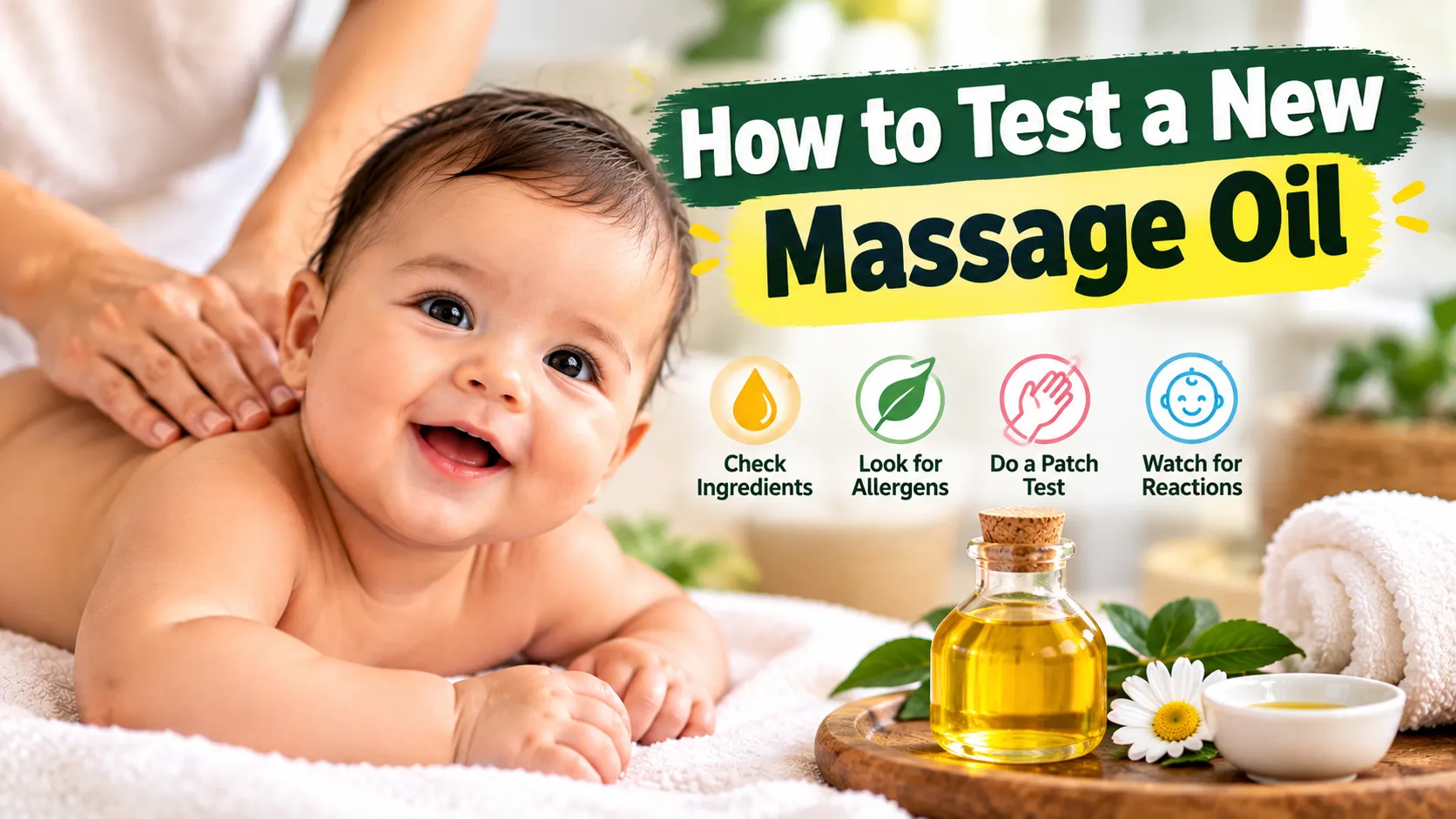
Before using a new product over a larger area, consider applying a very small amount to a limited area of healthy skin. Follow the product’s directions and observe how the skin responds.
Testing does not guarantee that a product will be suitable for every situation, but it can help parents notice obvious irritation before incorporating the product into a regular routine.
Practical Safety Gauge
General routine priority guide:
Simple, appropriate formula
Multiple ingredients or fragrance
Reaction or unclear suitability
If redness, swelling, persistent itching, or another concerning reaction develops, stop using the product and contact a healthcare professional for advice.
When to Contact a Professional
Most product decisions can be made with careful label reading and attention to the baby’s skin response. However, some situations deserve professional guidance rather than continued experimentation with different oils.
When to contact a professional
- The baby develops significant or persistent redness.
- There is swelling, blistering, or widespread irritation.
- The skin appears infected, oozing, or rapidly worsening.
- Your baby has a known allergy or significant skin condition.
- You are unsure whether a specific ingredient is appropriate for your baby’s age.
- The baby seems unusually uncomfortable during or after product use.
For infants with ongoing skin concerns, a pediatrician or qualified healthcare professional can help identify appropriate skin-care products and routines.
Frequently Asked Questions
What is the best massage oil for babies?
A simple, fragrance-free baby massage oil with a short ingredient list is often a practical starting point. Always check the intended age and test a small area first.
Can I use coconut oil for baby massage?
Some families use coconut oil, but natural ingredients can still cause irritation or sensitivity. Check with a healthcare professional if your baby has sensitive or reactive skin.
Is fragrance-free oil better for babies?
Fragrance-free products may be a simpler choice because they avoid unnecessary fragrance ingredients. They can be especially appealing for families concerned about sensitive skin.
Can I use essential oils for baby massage?
Essential oils are concentrated and should not be casually added to infant massage routines. Ask a qualified healthcare professional before considering products containing them.
How much massage oil should I use on a baby?
Usually, a small amount is enough to reduce friction. Applying too much can make the skin slippery and complicate safe handling.
How often can I massage my baby with oil?
There is no universal schedule. Follow your baby’s comfort cues and product directions, keeping the routine gentle and stopping if irritation occurs.
What should I do if my baby reacts to massage oil?
Stop using the product and monitor the skin. If symptoms are severe, persistent, worsening, or concerning, contact a pediatric healthcare professional.
Final Thoughts
The best massage oil for babies is not necessarily the most expensive or heavily marketed product. A gentle, simple formula with clear age guidance and minimal unnecessary ingredients is often the most practical place to start. Pay attention to your baby’s skin and comfort, and seek professional guidance if irritation or unusual symptoms develop.
Author
-

I’m Alex Turner, a massage product reviewer and wellness writer at RemedyTip. I specialize in researching, evaluating, and comparing massage and recovery products to help readers make informed purchasing decisions. My focus is on practical, evidence-informed product guidance covering muscle recovery, relaxation, everyday comfort, and wellness.
I take a research-driven approach to every product I review. I examine product specifications, features, materials, performance claims, user feedback, durability, comfort, ease of use, and overall value. When appropriate, I also consult trusted industry and health-related sources to verify important information and provide readers with a more complete and balanced view.
I cover a wide range of products, including massage guns, handheld massagers, neck and shoulder massagers, foot massagers, massage chairs, foam rollers, and other recovery tools. Rather than focusing only on marketing claims, I look at how products compare in real-world use and who they are actually suitable for. I also consider different budgets, use cases, and user needs when making recommendations.
At RemedyTip, I’m committed to accuracy, transparency, and unbiased product information. I clearly distinguish between manufacturer claims, available evidence, and my own product analysis so readers can understand the basis of each recommendation. I continuously research new products, technologies, and developments in the massage and recovery space to keep my content current and useful.
My goal is simple: to provide trustworthy, easy-to-understand information that helps readers choose massage and recovery products with greater confidence.

