By Alex Turner | Health & Personal Care
Quick Answer: A percussion massager may temporarily ease muscle tightness near an irritated tendon, but it does not heal tendonitis. Avoid using it directly over painful, swollen, or injured tendons. If symptoms persist, a healthcare professional can help identify the cause and recommend an appropriate recovery plan.
Can Percussion Massage Help an Irritated Tendon?
When a tendon becomes painful, even simple activities can feel uncomfortable. You might notice soreness around your elbow after lifting, stiffness near your heel after walking, or discomfort around your shoulder during everyday movements.
This raises a common question: is a percussion massager good for tendonitis, or could the repeated pressure make symptoms worse?
The answer depends on where you apply it, your symptoms, and the underlying condition. Percussion massage may offer temporary relief for nearby muscle tightness, but direct treatment of an irritated tendon requires considerably more caution.
Massage guns
Recovery
Pain management
Important Health InformationThis article is for general educational information only. It does not diagnose, treat, cure, or prevent any condition. It does not replace advice from a licensed healthcare professional. Readers should seek professional help for severe, worsening, unusual, or persistent symptoms.
What Happens When a Tendon Becomes Irritated?
Tendons are strong connective tissues that attach muscles to bones. They help transfer force during walking, lifting, running, and other movements. Repeated loading, sudden changes in activity, or injuries can sometimes make these tissues painful.
Tendonitis generally describes tendon inflammation. However, persistent tendon pain is often described as tendinopathy, a broader term covering several tendon problems. These conditions may require different approaches, so the terms should not always be treated as interchangeable.
A massage gun delivers rapid, repeated pulses to the tissues beneath its attachment. These pulses may temporarily change how nearby muscles feel, but there is insufficient evidence that percussion massage repairs damaged tendon tissue.
Why muscle relief is different from tendon recovery
Muscles and tendons respond differently to mechanical pressure. A tight calf muscle might feel more comfortable after gentle massage, while an irritated Achilles tendon may become more painful when repeatedly struck.
Reducing muscle tightness can sometimes improve comfort during movement. However, feeling better immediately after massage does not necessarily mean that the underlying tendon problem has improved.
Tendon irritation versus muscle tightness
The following distinctions can help explain why the location of discomfort matters. They cannot establish a diagnosis.
Swipe left/right to see the full table →
| Feature | Muscle tightness | Possible tendon irritation |
|---|---|---|
| Location | Muscle belly | Near a tendon or attachment |
| Sensation | General tightness | Localized pain or stiffness |
| Activity response | May ease with movement | May worsen with loading |
| Massage approach | Gentle use may be tolerated | Avoid direct percussion |
Is Percussion Massage Safe Around Tendonitis?
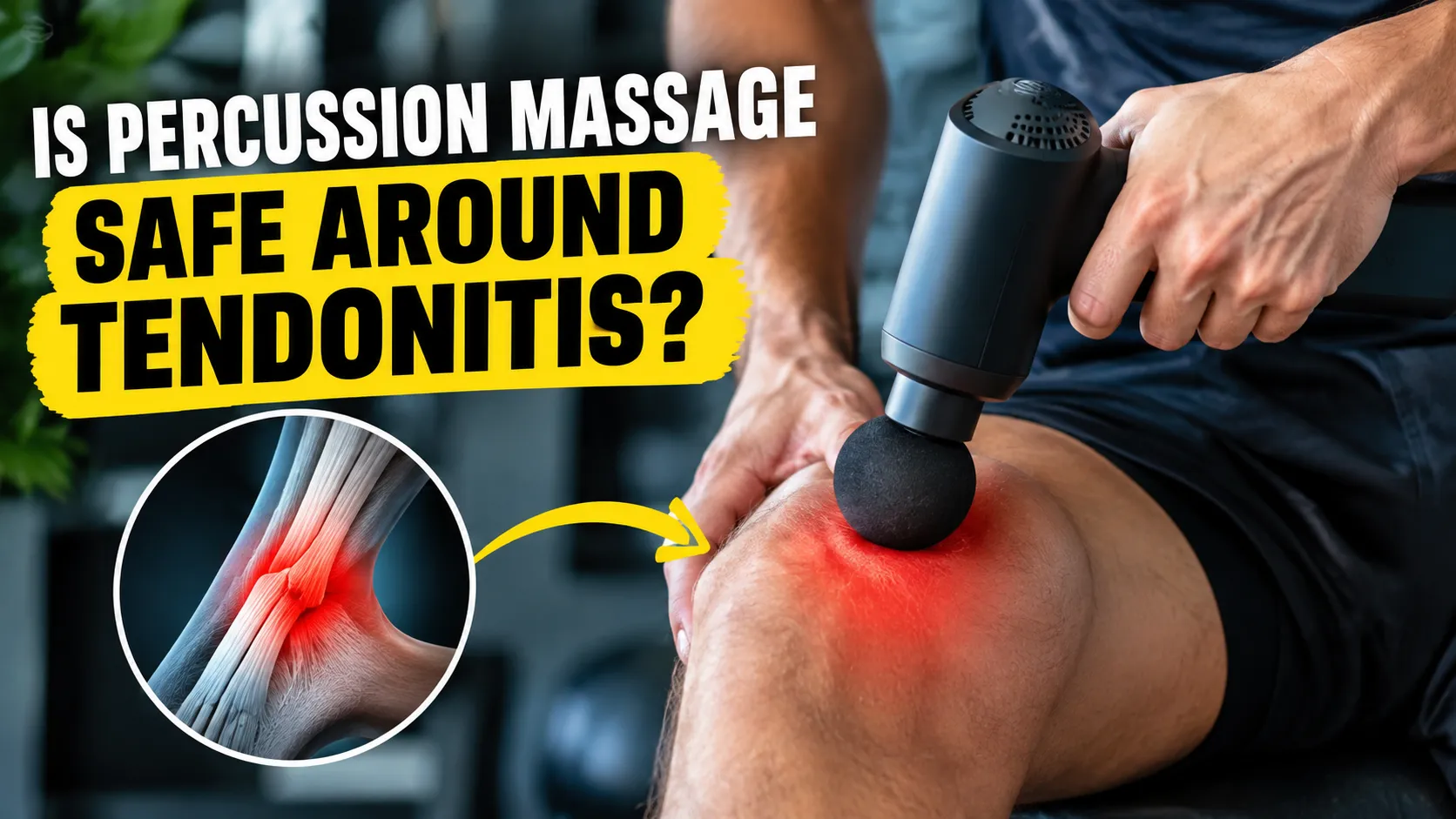
The main concern is repeated mechanical pressure over a tissue that may already be sensitive. Aggressive percussion could increase pain, aggravate irritation, or delay appropriate assessment.
People with suspected tendonitis should avoid direct percussion over the affected tendon unless a qualified clinician specifically recommends it. Using a massage gun on nearby healthy muscle is a separate decision and should not automatically be considered safe.
Who should be especially cautious?
Some symptoms and medical circumstances call for professional guidance rather than experimenting with massage equipment.
Swipe left/right to see the full table →
| Situation | Main concern | Safer decision |
|---|---|---|
| Acute injury | Possible tissue damage | Avoid massage; seek assessment |
| Swelling or warmth | Active irritation or another condition | Avoid direct pressure |
| Numbness or weakness | Possible nerve involvement | Obtain medical evaluation |
| Blood-clot risk or bleeding disorder | Potential serious complications | Ask a clinician first |
A practical safety decision path
Before considering percussion massage, identify whether you have unexplained tendon pain or an established recovery plan.
↓
Directly over a painful tendon
Avoid percussion. Arrange an assessment if symptoms persist or interfere with activity.
Nearby muscle tightness
Ask your clinician whether gentle muscle massage is appropriate for your condition.
↓
Stop using the device and seek professional advice.
This decision path is a practical screening guide, not a way to diagnose tendonitis. Unexplained symptoms should be evaluated before applying repeated pressure.
Important distinctionEvidence about massage guns and general muscle soreness cannot automatically be applied to tendonitis. Studies specifically examining percussion massage for tendon recovery remain limited.
Warning Signs That Should Not Be Massaged
Not every painful tendon is simply irritated. Sudden injuries, infections, and other conditions can sometimes produce similar symptoms.
Red-flag checklist
Use this checklist to recognize situations where massage is inappropriate and medical assessment matters more.
Sudden severe pain
Especially after an injury or an unexpected popping sensation.
Major movement difficulty
Inability to walk normally, bear weight, or use the affected limb.
Unusual swelling
Increasing swelling, redness, warmth, or associated fever.
Neurological symptoms
New numbness, tingling, or unexplained muscle weakness.
Seek urgent medical care for sudden severe symptoms or suspected tendon rupture. Chest pain, breathing difficulty, or sudden unexplained limb swelling also warrant urgent evaluation.
Warning: Pain relief can be misleadingTemporary comfort after massage does not confirm that a tendon is ready for demanding activity. Avoid using reduced pain as permission to return immediately to heavy lifting, running, or jumping.
Safer Alternatives for Managing Tendon Discomfort
When asking whether a percussion massager is good for tendonitis, it helps to compare massage with approaches that address activity-related tendon stress.
The appropriate strategy depends on the affected tendon, symptom severity, and whether the problem is recent or persistent. A physical therapist can help develop a plan that fits these factors.
Recovery options and their limitations
These options serve different purposes. None should be considered a guaranteed treatment for every tendon condition.
Swipe left/right to see the full table →
| Approach | Potential role | Limitation |
|---|---|---|
| Activity modification | Reduces aggravating loads | Complete inactivity may be unhelpful |
| Guided exercise | Supports gradual loading | Requires individual guidance |
| Cold application | Temporary pain relief | Does not repair tendon tissue |
| Percussion massage | Possible nearby muscle comfort | Avoid direct tendon application |
Four practical recovery priorities
Recovery generally involves managing symptoms while gradually restoring tolerance for everyday activities.
01 — Identify aggravating activities
Notice which movements repeatedly increase discomfort.
02 — Adjust your workload
Reduce painful demands without assuming complete rest is necessary.
03 — Follow a suitable exercise plan
Use professional guidance for progressive tendon loading.
04 — Monitor your response
Watch for worsening symptoms during activity and afterward.
The key is matching activity to the tendon’s current tolerance. A clinician can adjust the plan when progress stalls or symptoms become more severe.
Practical tipKeep a simple record of activities that increase discomfort and how symptoms feel the following day. This information can help your healthcare professional make more useful adjustments to your recovery plan.
Can You Use a Massage Gun on Nearby Muscles?
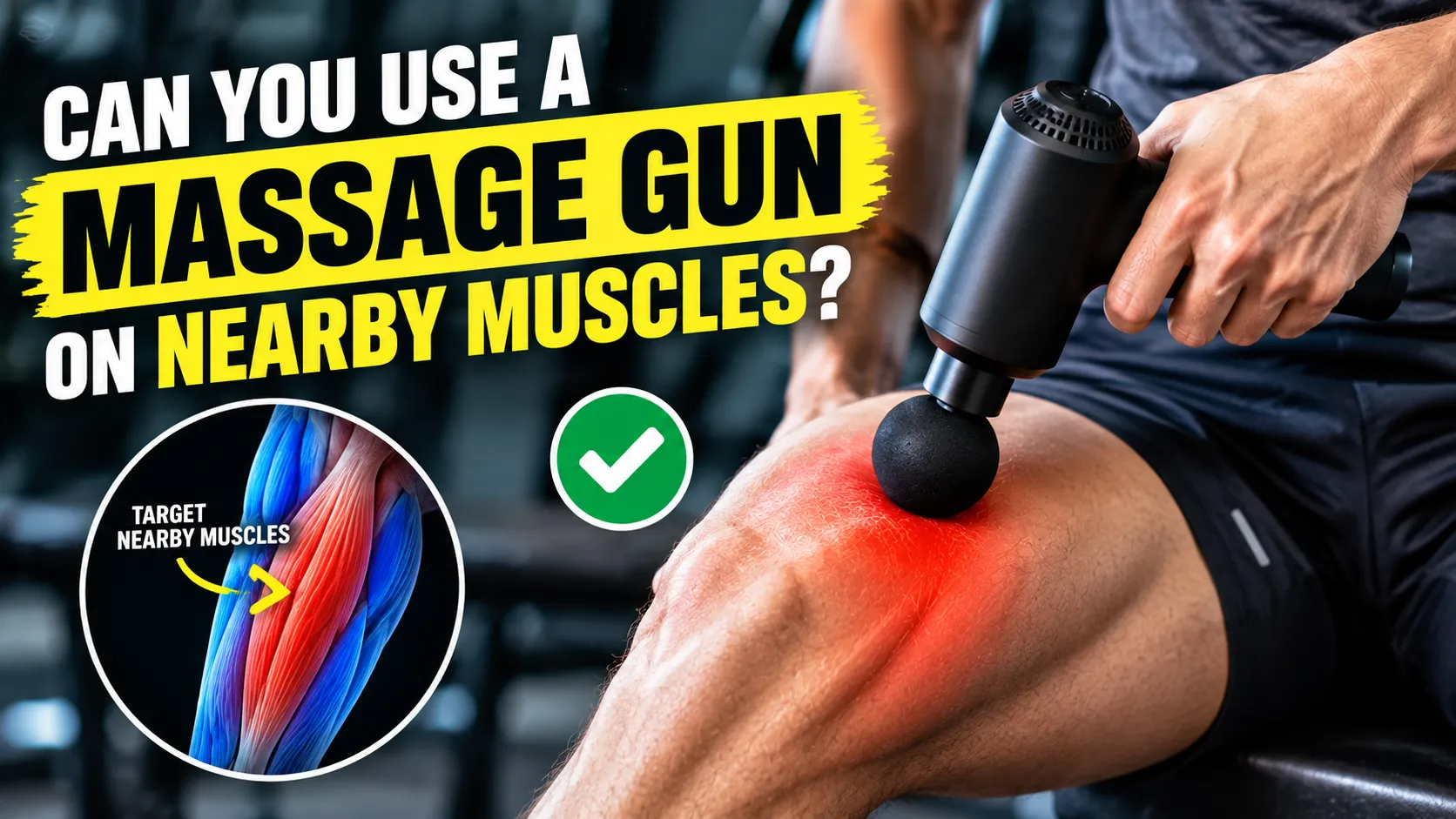
Sometimes, a clinician may allow gentle percussion on healthy muscles surrounding an affected tendon. This is intended for temporary muscle comfort rather than direct tendon treatment.
For example, calf muscle tightness may accompany Achilles tendon discomfort. However, that does not mean percussion over the Achilles tendon itself is appropriate.
Avoid applying the device over bones, joints, bruises, swollen areas, or sites of unexplained pain. Never force an attachment into sensitive tissue or continue when discomfort increases.
Common mistakes and better choices
Several seemingly harmless habits can make self-massage less appropriate when a tendon is irritated.
Swipe left/right to see the full table →
| Common mistake | Better choice |
|---|---|
| Massaging directly over tendon pain | Avoid the affected tendon |
| Increasing pressure to overcome pain | Stop if symptoms increase |
| Ignoring recurring discomfort | Request professional evaluation |
| Replacing rehabilitation with massage | Follow an individualized recovery plan |
What if discomfort increases afterward?
Pay attention to your response rather than assuming that soreness means the massage is working.
No new symptoms
Continue monitoring. Comfort alone does not prove tendon recovery.
Increasing soreness
Stop percussion and avoid further irritation.
Persistent pain
Arrange an assessment rather than repeatedly massaging the area.
Severe new symptoms
Seek urgent medical evaluation when appropriate.
There is no universal massage duration or intensity proven safe for every tendon condition. Individual medical advice and the manufacturer’s instructions should guide any approved use.
When to Contact a Healthcare Professional
Recurring tendon pain deserves attention, especially when it limits walking, exercise, work, or ordinary daily activities. Continuing to massage an unexplained problem may postpone a more suitable recovery plan.
When to contact a professionalConsult a qualified healthcare professional if pain persists, worsens, returns repeatedly, or interferes with movement. Seek urgent assessment after a significant injury, sudden loss of function, or severe unexplained symptoms. A physical therapist may recommend appropriate activity changes and progressive rehabilitation after evaluation.
For general information about tendon disorders, visit MedlinePlus: Tendinitis.
Frequently Asked Questions
Is a percussion massager good for tendonitis?
It may temporarily relieve nearby muscle tightness, but there is insufficient evidence that it heals tendonitis. Avoid direct percussion over irritated tendons.
Can a massage gun make tendonitis worse?
Yes. Repeated pressure over an irritated tendon may increase discomfort or aggravate symptoms.
Can I use a massage gun near my Achilles tendon?
Avoid direct percussion over a painful Achilles tendon. Ask a healthcare professional whether gentle massage of nearby calf muscles is appropriate.
Does percussion massage speed up tendon healing?
There is insufficient evidence that percussion massage speeds tendon healing. Appropriate activity management and professionally guided rehabilitation may be more relevant.
Should I use heat or cold for tendon discomfort?
Cold may provide temporary relief after activity, while warmth may help some people with surrounding muscle stiffness. Ask a clinician which option suits your symptoms.
When should I stop using a percussion massager?
Stop if you experience new pain, increasing soreness, swelling, numbness, or unusual discomfort. Seek medical advice if symptoms persist or worsen.
Final Thoughts
So, is a percussion massager good for tendonitis? It may provide temporary comfort to nearby muscles, but it should not be used directly over an irritated tendon or treated as a substitute for rehabilitation. Prioritize appropriate activity management and seek professional help for severe, worsening, unusual, persistent, or unexplained symptoms.
Author
-

I’m Alex Turner, a massage product reviewer and wellness writer at RemedyTip. I specialize in researching, evaluating, and comparing massage and recovery products to help readers make informed purchasing decisions. My focus is on practical, evidence-informed product guidance covering muscle recovery, relaxation, everyday comfort, and wellness.
I take a research-driven approach to every product I review. I examine product specifications, features, materials, performance claims, user feedback, durability, comfort, ease of use, and overall value. When appropriate, I also consult trusted industry and health-related sources to verify important information and provide readers with a more complete and balanced view.
I cover a wide range of products, including massage guns, handheld massagers, neck and shoulder massagers, foot massagers, massage chairs, foam rollers, and other recovery tools. Rather than focusing only on marketing claims, I look at how products compare in real-world use and who they are actually suitable for. I also consider different budgets, use cases, and user needs when making recommendations.
At RemedyTip, I’m committed to accuracy, transparency, and unbiased product information. I clearly distinguish between manufacturer claims, available evidence, and my own product analysis so readers can understand the basis of each recommendation. I continuously research new products, technologies, and developments in the massage and recovery space to keep my content current and useful.
My goal is simple: to provide trustworthy, easy-to-understand information that helps readers choose massage and recovery products with greater confidence.