Written by Alex Turner
Quick Answer: A percussion massager may support comfort around tight muscles, but it is not a direct treatment for sciatica. Avoid using it directly over the spine or painful nerve symptoms. Gentle, short use on nearby muscles may be reasonable when symptoms are mild and stable.
Percussion therapy and sciatic pain require a careful middle ground
A percussion massager can feel useful when muscles around the hips, buttocks, or thighs feel tight. But sciatica involves irritation or compression affecting the sciatic nerve, so pounding directly on the painful path is not a sensible shortcut.
The safest approach is to think of percussion as an optional comfort tool, not a way to “break up” or force a nerve problem away.
Muscle comfort Gentle intensity Avoid the spine Know the red flags
Safety note: This article is for general educational information only. It does not diagnose, treat, cure, or prevent any condition. It does not replace advice from a licensed healthcare professional. Readers should seek professional help for severe, worsening, unusual, or persistent symptoms.
What a percussion massager can and cannot do
A percussion massager uses repeated pulses against soft tissue. People commonly use these devices to loosen areas that feel tight, improve movement comfort, or relax after activity. Research on percussive therapy has examined flexibility, range of motion, recovery, and pain, but the evidence is mixed and much of it concerns general musculoskeletal symptoms rather than confirmed sciatica specifically. :contentReference[oaicite:0]{index=0}
That distinction matters. Sciatica is usually associated with irritation or compression of the sciatic nerve and can cause pain, tingling, numbness, or weakness that travels through the buttock and leg. :contentReference[oaicite:1]{index=1} A device that relaxes a tight muscle may make an area feel more comfortable without addressing the underlying reason for nerve symptoms.
For that reason, the useful question is not simply whether percussion “works.” A better question is whether gentle work on a particular muscle feels comfortable without increasing leg pain, tingling, numbness, or weakness.
Where it may fit
Some people may find gentle massage around surrounding soft tissues comfortable, especially when muscular tightness is also present. Clinical guidance for low back pain with or without sciatica allows soft-tissue techniques such as massage as part of a broader package that includes exercise rather than relying on passive treatment alone. :contentReference[oaicite:2]{index=2}
A percussion device should therefore be viewed as one optional part of a comfort routine. It should not replace movement advice, exercise guidance, or professional assessment when symptoms need evaluation.
Note: Feeling a tight muscle beside the painful area does not prove that the muscle is the cause of the nerve symptoms. Avoid using a massage sensation as a substitute for understanding persistent, unusual, or worsening symptoms.
Where it should not be used
Avoid placing the device directly over the spine, bony structures, or an area that produces sharp, electric, burning, or increasing pain. Cleveland Clinic guidance on massage guns also recommends avoiding direct work over bony areas such as the spine and starting with gentle pressure rather than assuming greater intensity is better. :contentReference[oaicite:3]{index=3}
Safety decision path
If yes, consider only gentle soft-tissue use. If no, pause and consider professional guidance.
If yes, continue cautiously. If no, skip the device.
If symptoms spread, intensify, or become neurological, stop and seek appropriate advice.
The practical takeaway is simple: use percussion only when it stays comfortable and controlled. If the device makes leg symptoms more noticeable, it is not a good fit for that session.
Which areas are more appropriate to target?

The safest target is generally soft tissue rather than the spine itself. Depending on your symptoms and professional guidance, that can mean nearby muscle groups rather than the exact line where pain, tingling, or numbness travels.
A simple fit guide
The table below is a practical safety filter, not a diagnosis tool.
Swipe left/right to see the full table →
| Area or sensation | Practical fit | Reason |
|---|---|---|
| Tight nearby muscle | Potentially reasonable | Gentle soft-tissue work may feel comfortable |
| Spine or bony area | Avoid | Percussion is not intended for direct bony contact |
| Numb or weak area | Avoid self-treatment | Reduced sensation can make intensity harder to judge |
| Sharp or electric pain | Stop | The sensation should not be forced through percussion |
How to use one more cautiously
If you decide to try percussion, keep the routine conservative. The goal is a comfortable soft-tissue sensation, not deep pressure or maximum intensity.
1
Choose a soft attachment and the lowest comfortable setting.
2
Keep the device on surrounding muscle rather than the spine or an area with nerve symptoms.
3
Use light pressure and keep the device moving instead of pressing hard in one spot.
4
Keep the first session short and reassess how your symptoms feel afterward.
5
Stop if pain spreads, becomes sharper, or is accompanied by increasing tingling, numbness, or weakness.
Tip: More intensity is not automatically more effective. Cleveland Clinic recommends starting gently and reducing intensity or moving to another location if percussion becomes painful. :contentReference[oaicite:4]{index=4}
Safe routine versus risky routine
Use these contrasts to keep a session focused on comfort rather than aggressive pressure.
Swipe left/right to see the full table →
| Safer approach | Riskier approach |
|---|---|
| Low intensity | Maximum intensity |
| Soft tissue | Spine or bone |
| Short session | Long, repeated pounding |
| Stop when symptoms increase | Push through worsening pain |
Timing: how often is reasonable?
There is no well-established massage-gun schedule specifically for sciatica. Research on percussive therapy has used widely different protocols, and many studies measured short-term effects rather than long-term outcomes. :contentReference[oaicite:5]{index=5}
Swipe left/right to see the full table →
| Situation | Practical approach | Reassess if |
|---|---|---|
| First try | Very short, gentle session | Leg symptoms increase |
| Symptoms remain stable | Use occasionally for comfort | Soreness persists or worsens |
| Frequent symptoms | Seek individualized guidance | Symptoms affect daily activity |
| New neurological symptoms | Do not use as self-care | Get appropriate medical advice |
Typical routine priority — practical guide
Gentle daily movement
Professional exercise guidance when needed
Comfort-focused soft-tissue work
High-intensity percussion
These percentages are not scientific measurements; they show relative routine priority for a cautious self-care approach.
The purpose of this guide is to keep percussion in perspective. Movement and an appropriate exercise plan can be more central to managing back and sciatic symptoms than repeatedly using a massage device. Current guidance and evidence do not support treating a massage gun as a stand-alone solution. :contentReference[oaicite:6]{index=6}
Common mistakes that can make a session less useful
The biggest mistake is treating pain intensity as a measure of effectiveness. A powerful device can create a strong sensation without addressing why symptoms are occurring.
Swipe left/right to see the full table →
| Common mistake | Better choice |
|---|---|
| Using maximum power | Start low and increase only if comfortable |
| Percussing the spine | Stay on suitable soft tissue |
| Chasing leg pain | Stop if nerve-like symptoms increase |
| Ignoring weakness | Get professional assessment |
Do’s and don’ts for a cautious session
Do
Use a gentle setting.
Work only on comfortable soft tissue and reassess your symptoms.
Don’t
Pound directly on the spine.
Do not try to force numbness, weakness, or sharp leg pain to disappear.
When percussion should not be your next step
A massage device deserves less attention when symptoms are changing, severe, or interfering with normal function. Sciatica can include weakness or numbness, and those symptoms warrant more caution than simple muscular tightness. :contentReference[oaicite:7]{index=7}
Red-flag checklist dashboard
Loss of bladder or bowel control.
Numbness around the genitals or anus.
Severe or worsening weakness or numbness in both legs.
Persistent, worsening, unusual, or function-limiting symptoms.
The NHS advises urgent emergency assessment for symptoms such as severe or worsening weakness or numbness in both legs, numbness around the genitals or bottom, or new loss of bladder or bowel control. :contentReference[oaicite:8]{index=8}
Self-care or professional help?
Swipe left/right to see the full table →
| Situation | Next step | Why |
|---|---|---|
| Mild, stable symptoms | Gentle self-care may be reasonable | Monitor response closely |
| Persistent or recurring symptoms | Arrange professional guidance | A tailored plan may be needed |
| Increasing weakness or numbness | Seek medical assessment | Neurological changes need attention |
| Bladder/bowel changes or saddle numbness | Seek emergency medical help | These can signal a serious spinal problem |
Warning: Do not use a percussion massager to push through severe pain, progressive weakness, increasing numbness, or other concerning neurological symptoms. A stronger sensation is not a substitute for assessment.
What the evidence means for sciatica
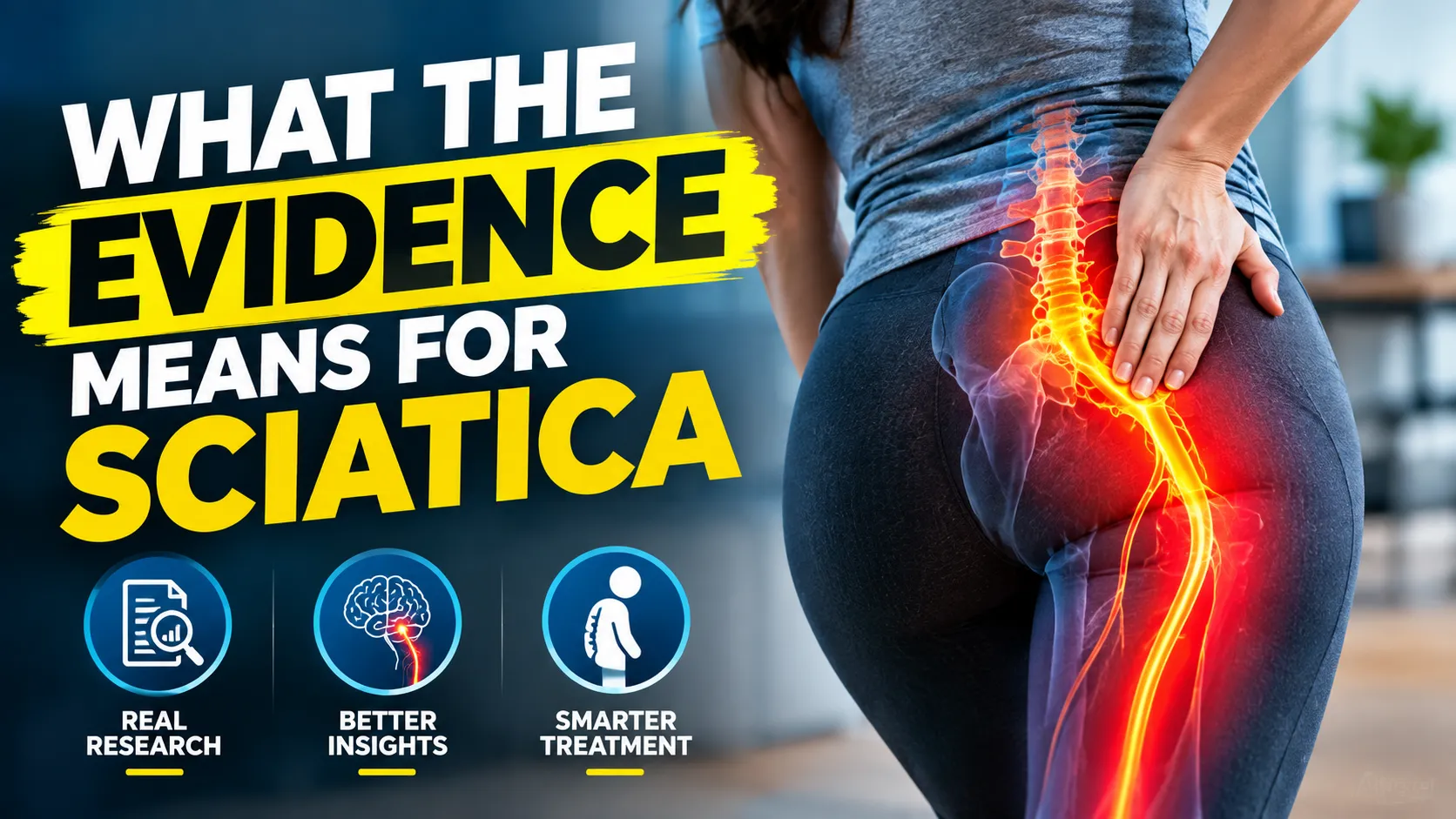
Studies of percussive therapy suggest that massage guns can influence short-term measures such as flexibility, range of motion, muscle soreness, or perceived pain in some settings. However, research protocols vary considerably, and direct evidence for using percussion specifically for sciatica is limited. :contentReference[oaicite:9]{index=9}
Research on low back pain more broadly suggests that patient education and other non-drug approaches can provide useful outcomes, while evidence for individual interventions varies. A 2025 network meta-analysis of chronic sciatica found that overall evidence for nonsurgical interventions remained very uncertain. :contentReference[oaicite:10]{index=10}
So, if you are asking whether a percussion massager is automatically a bad idea, the answer is not necessarily. If you are asking whether it should be considered a proven way to resolve sciatica, the evidence does not support that conclusion.
Practical role of percussion
For readers who want more background on symptoms and urgent warning signs, the NHS sciatica guidance provides a useful overview. For broader low back pain and sciatica management recommendations, the NICE guidance hosted by NCBI discusses exercise and manual therapy within a broader care plan.
When to contact a professional: Seek medical or physical-therapy guidance if symptoms are severe, worsening, persistent, unusual, repeatedly returning, or interfering with normal activities. Seek urgent medical help for new bladder or bowel control problems, numbness around the genitals or anus, or severe or worsening weakness or numbness in both legs. :contentReference[oaicite:11]{index=11}
Frequently asked questions
Is a percussion massager good for sciatica?
It may provide short-term comfort for tight surrounding muscles, but evidence specifically supporting percussion for sciatica is limited. It should not be treated as a direct solution for nerve-related symptoms.
Can I use a percussion massager on my lower back?
Only cautious soft-tissue use may be appropriate for some people. Avoid direct percussion over the spine, and stop if the device increases sharp, electric, tingling, numb, or otherwise concerning symptoms.
Can a massage gun make sciatica worse?
It can be uncomfortable or aggravating if used too aggressively or over a sensitive area. Stop if symptoms increase rather than trying to work through them.
Should I use a massage gun directly on the sciatic nerve?
No. Directly targeting a painful nerve-like path is not a good reason to increase percussion intensity; focus on appropriate soft tissue or skip the device.
What setting should I use for sciatica?
There is no established sciatica-specific setting. If a professional has not given you different instructions, a low, comfortable setting is a more cautious starting point.
When should I avoid a percussion massager for sciatica?
Avoid self-treatment when symptoms include increasing weakness, significant numbness, severe pain, or other unusual neurological changes. New bladder or bowel control problems or saddle-area numbness require urgent medical attention.
Is massage better than a percussion massager for sciatica?
Neither should automatically be considered a stand-alone answer. Manual soft-tissue work may be included in a broader plan for low back pain with or without sciatica, alongside exercise when appropriate.
Final Thoughts
A percussion massager may fit into a cautious comfort routine when symptoms are mild and stable, particularly when nearby muscles feel tight. Keep pressure gentle, avoid the spine and painful nerve symptoms, and stop when your symptoms worsen.
For persistent, severe, unusual, or worsening symptoms, professional assessment is more important than increasing massage intensity. Seek urgent medical help for serious neurological warning signs such as new bladder or bowel control problems or saddle-area numbness.
Author
-

I’m Alex Turner, a massage product reviewer and wellness writer at RemedyTip. I specialize in researching, evaluating, and comparing massage and recovery products to help readers make informed purchasing decisions. My focus is on practical, evidence-informed product guidance covering muscle recovery, relaxation, everyday comfort, and wellness.
I take a research-driven approach to every product I review. I examine product specifications, features, materials, performance claims, user feedback, durability, comfort, ease of use, and overall value. When appropriate, I also consult trusted industry and health-related sources to verify important information and provide readers with a more complete and balanced view.
I cover a wide range of products, including massage guns, handheld massagers, neck and shoulder massagers, foot massagers, massage chairs, foam rollers, and other recovery tools. Rather than focusing only on marketing claims, I look at how products compare in real-world use and who they are actually suitable for. I also consider different budgets, use cases, and user needs when making recommendations.
At RemedyTip, I’m committed to accuracy, transparency, and unbiased product information. I clearly distinguish between manufacturer claims, available evidence, and my own product analysis so readers can understand the basis of each recommendation. I continuously research new products, technologies, and developments in the massage and recovery space to keep my content current and useful.
My goal is simple: to provide trustworthy, easy-to-understand information that helps readers choose massage and recovery products with greater confidence.