
By Alex Turner
Many people reach for a handheld infrared massager for tight shoulders, sore feet, or a stiff lower back during pregnancy. But heat therapy and pregnancy come with extra questions, and it’s smart to pause before assuming a device is safe just because it feels good. This guide walks through what an infrared massager actually does, who needs to be more careful, and when to check with a provider first.
Pregnancy safety Heat therapy Back & foot comfort Trimester precautions
What Happens When You Use an Infrared Massager While Pregnant
An infrared massager combines gentle heat with vibration or kneading motion, aimed at easing muscle tightness. Pregnancy changes how your body handles both heat and pressure. Core body temperature matters more, joints loosen from hormonal shifts, and certain pressure points are traditionally advised against in pregnancy. This doesn’t mean every use is unsafe, but it does mean the same routine you used before pregnancy may need adjusting.
The bigger concern with using an infrared massager while pregnant isn’t the device itself — it’s where the heat is applied, how long it runs, and whether your pregnancy has any added risk factors. A short, low-heat session on tense shoulders is a different situation than prolonged heat on the lower back or abdomen.
Who Should Be Extra Cautious With an Infrared Massager While Pregnant
Swipe left/right to see the full table →
| Stage / Factor | Extra Caution Needed |
|---|---|
| First trimester | Avoid heat near the abdomen or lower back; risk of overheating is higher early on |
| Second/third trimester | Some acupressure-linked ankle and hand points are traditionally avoided |
| History of preterm labor | Check with provider before any heat or vibration therapy |
| High-risk pregnancy | Get direct clearance before using an infrared massager while pregnant |
A simple way to think through whether to use an infrared massager while pregnant:
This is a general practical guide, not medical clearance — your provider’s input always comes first.
Why People Consider an Infrared Massager During Pregnancy
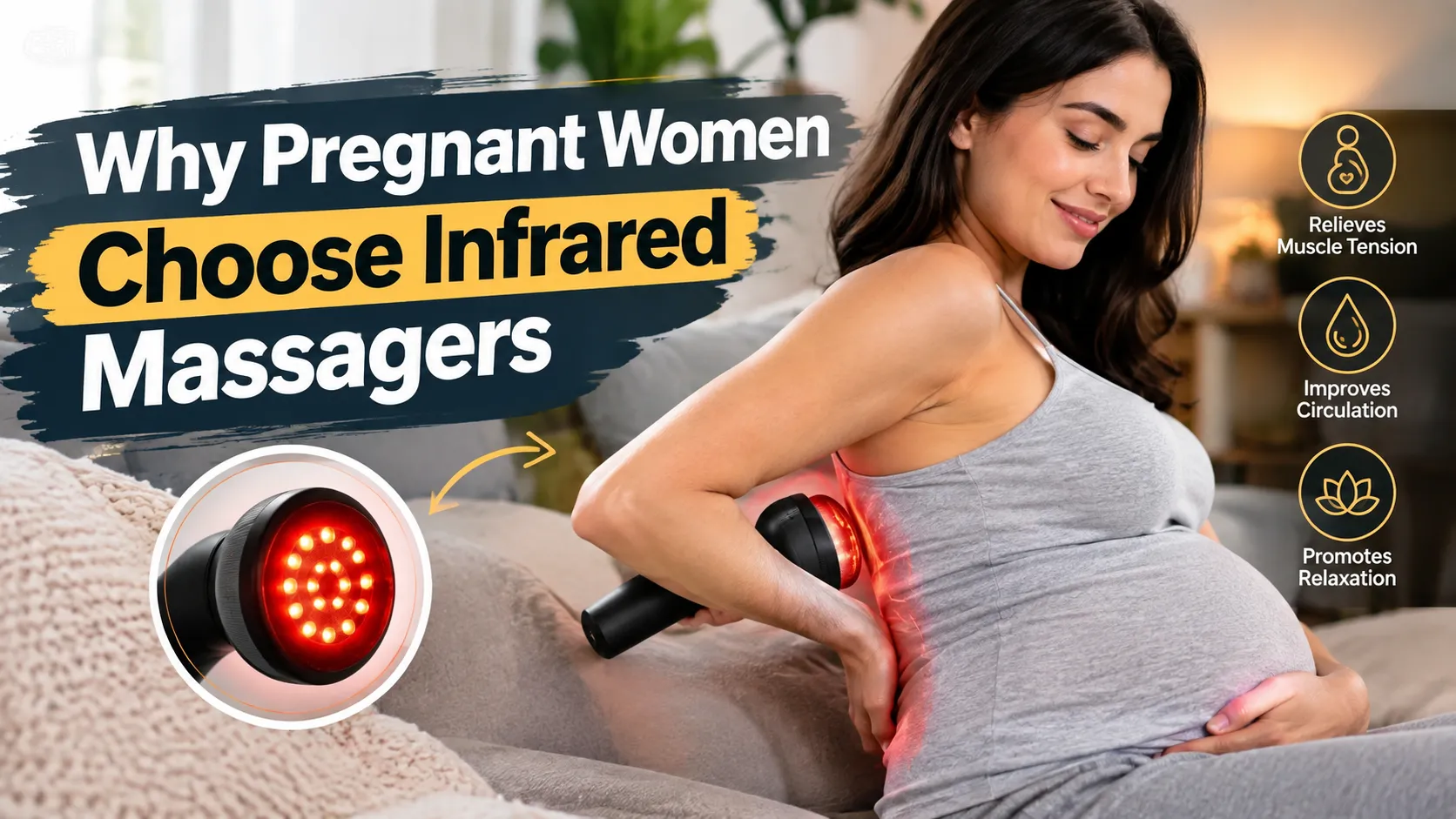
Lower back tension
Growing weight shifts posture and strains the lower back. Some look to gentle warmth for relief, though this is one of the areas requiring the most caution.
Swollen feet
Fluid retention is common later in pregnancy. Many prefer elevation and cool compresses here instead of heat-based devices.
Shoulder and neck tightness
Sitting posture and stress can build tension here. This is generally considered a lower-risk area for brief, low-heat use.
General relaxation
Some simply want a calming routine. A warm bath or prenatal-safe stretching often serves this goal with less uncertainty.
Red-flag checklist: Stop use and contact your provider if you notice any of these during or after a session.
Safer Routine vs. Riskier Routine
Swipe left/right to see the full table →
| Lower-Risk Approach | Higher-Risk Approach |
|---|---|
| Low heat, shoulders only, under 15 minutes | High heat, lower back, 30+ minutes |
| Cleared by provider beforehand | Used without asking a provider first |
| Avoiding ankles, hands, abdomen | Targeting ankle or hand pressure points |
| Stopping at first sign of discomfort | Continuing through dizziness or cramping |
Do
- Ask your provider before starting
- Keep heat low and sessions brief
- Stay hydrated and stop if uncomfortable
Don’t
- Use on the abdomen or lower back
- Fall asleep with the device running
- Ignore cramping, dizziness, or pain
How Often and How Long
Swipe left/right to see the full table →
| Question | General Guide |
|---|---|
| How long per session? | 10-15 minutes maximum, if cleared by a provider |
| How often per week? | A few short sessions rather than daily prolonged use |
| Best time of day? | Evenings, when you can rest afterward and monitor how you feel |
Common Mistakes vs. Better Choices
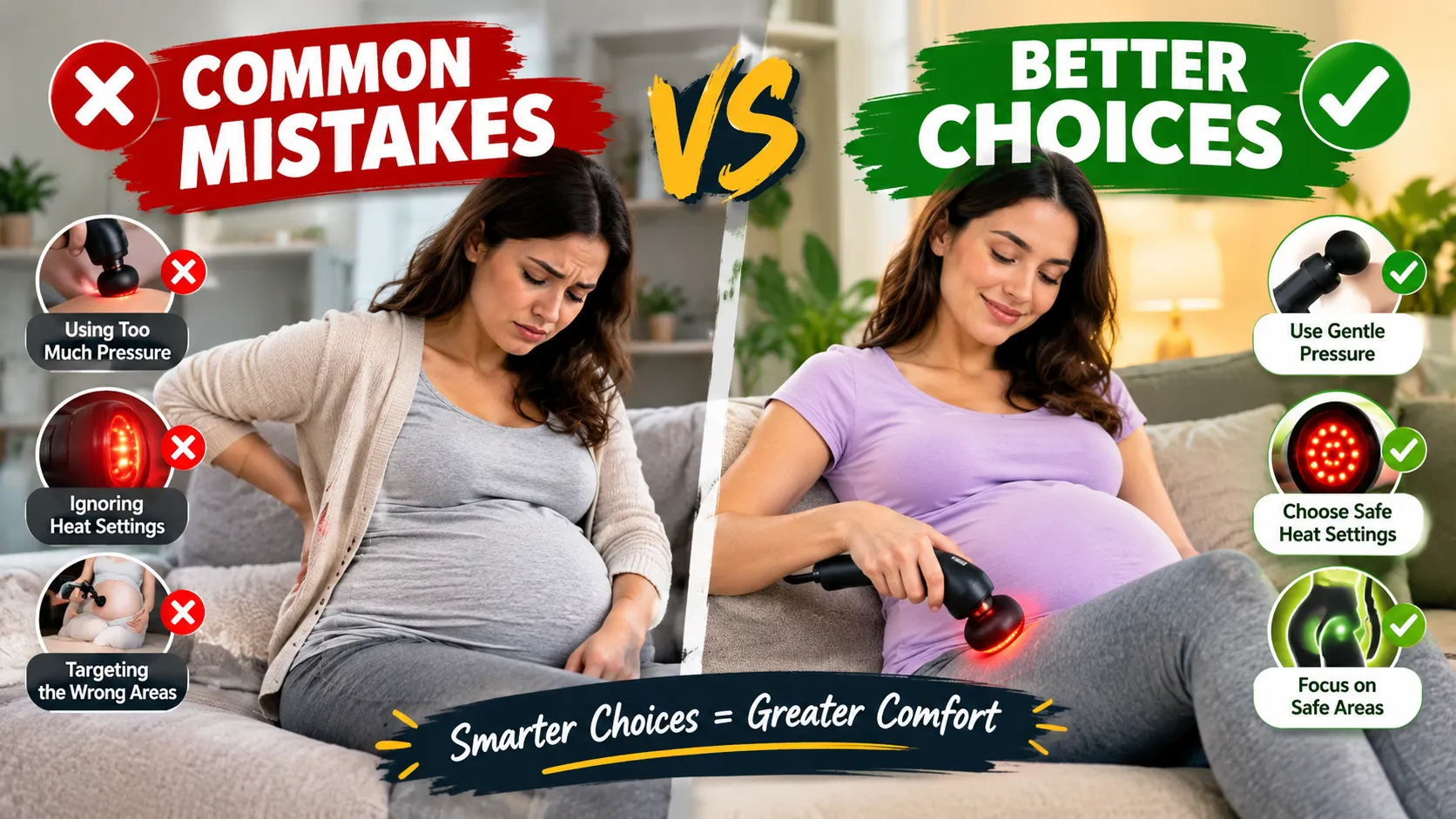
Swipe left/right to see the full table →
| Common Mistake | Better Choice |
|---|---|
| Assuming “natural” means risk-free | Treat heat therapy like any other pregnancy question — ask first |
| Using the highest heat setting | Start on the lowest setting and adjust based on comfort |
| Massaging the ankles for swelling | Elevate feet and use a cool compress instead |
General risk-level guide (practical guide only, not a medical measurement):
Shoulders/upper back, low heat, brief use — Low
Lower back, moderate heat, no clearance — Medium
Abdomen, ankles, or high-risk pregnancy — High
When to Contact a Professional
Trusted sources on pregnancy safety and heat exposure include Mayo Clinic’s guidance on heating pads during pregnancy and MedlinePlus’s overview of pregnancy health.
FAQ: Infrared Massager While Pregnant
Can I use an infrared massager while pregnant in the first trimester?
It’s best to check with your provider first. Many recommend avoiding heat near the abdomen and lower back especially early in pregnancy.
Is it safe to use an infrared massager on my lower back during pregnancy?
The lower back is one of the more cautioned areas because of proximity to the uterus. Ask your provider before targeting this area.
Can heat from an infrared massager harm my baby?
Raising core body temperature too much is a known pregnancy concern, which is why low heat, short sessions, and provider clearance matter.
What areas should I avoid with an infrared massager while pregnant?
Avoid the abdomen, lower back, and specific ankle and hand points traditionally linked to pregnancy caution.
Can I use an infrared massager while pregnant for foot swelling?
This is generally discouraged; elevation and cool compresses are the more commonly suggested approach for swelling.
How long can I safely use an infrared massager while pregnant?
If cleared by your provider, keep sessions brief, generally under 15 minutes, on low heat and away from cautioned areas.
Are there safer alternatives to an infrared massager during pregnancy?
Warm (not hot) showers, gentle stretching, supported sitting, and prenatal massage from a trained therapist are commonly suggested alternatives.
Deciding whether to use an infrared massager while pregnant comes down to where, how long, and whether your provider has given the go-ahead. Low heat, brief sessions, and avoiding the abdomen, lower back, and pressure points are the safer general pattern. If you notice cramping, dizziness, reduced fetal movement, or anything that feels off, stop and contact your provider right away rather than waiting it out.
Author
-

I’m Alex Turner, a massage product reviewer and wellness writer at RemedyTip. I specialize in researching, evaluating, and comparing massage and recovery products to help readers make informed purchasing decisions. My focus is on practical, evidence-informed product guidance covering muscle recovery, relaxation, everyday comfort, and wellness.
I take a research-driven approach to every product I review. I examine product specifications, features, materials, performance claims, user feedback, durability, comfort, ease of use, and overall value. When appropriate, I also consult trusted industry and health-related sources to verify important information and provide readers with a more complete and balanced view.
I cover a wide range of products, including massage guns, handheld massagers, neck and shoulder massagers, foot massagers, massage chairs, foam rollers, and other recovery tools. Rather than focusing only on marketing claims, I look at how products compare in real-world use and who they are actually suitable for. I also consider different budgets, use cases, and user needs when making recommendations.
At RemedyTip, I’m committed to accuracy, transparency, and unbiased product information. I clearly distinguish between manufacturer claims, available evidence, and my own product analysis so readers can understand the basis of each recommendation. I continuously research new products, technologies, and developments in the massage and recovery space to keep my content current and useful.
My goal is simple: to provide trustworthy, easy-to-understand information that helps readers choose massage and recovery products with greater confidence.

