A manual neck massager can ease muscle tension when a person uses it with gentle pressure and proper placement. A person should massage the muscles beside the spine and across the shoulders, not press directly on the neck bones or throat.
Michael Hayes of RemedyTip.com emphasizes starting slowly and stopping if pain, numbness, dizziness, or unusual symptoms occur. This guide covers hand placement, useful techniques, safe habits, cleaning, and common mistakes to avoid.
Key Takeaways
- Use gentle pressure on the neck muscles and shoulders.
- Keep sessions short and stop when discomfort occurs.
- Clean and store the massager according to its design.
Choose the Right Manual Massager
A suitable manual massager should fit the target area, allow controlled movement, and feel comfortable in the user’s hands. The design affects reach and technique, while adjustable pressure helps prevent soreness or irritation.
Compare Common Tool Designs
Manual neck massagers come in several designs, and each works best for different needs.
| Design | Best use | Key feature |
|---|---|---|
| Handheld roller | Neck and upper shoulders | Rolling pressure over larger muscles |
| Hook-shaped tool | Hard-to-reach areas | Long handles improve reach and control |
| Massage ball | Small tight spots | Focused pressure against a wall or hand |
| Thumb-shaped tool | Precise muscle work | Targets one area at a time |
A person with limited shoulder movement may find a long-handled or hook-shaped tool easier to use. A roller usually suits gentle, repeated strokes, while a ball or thumb-shaped tool requires more careful control around the upper shoulders.
Match Pressure to Your Comfort Level
The massager should create mild pressure, not sharp pain, numbness, tingling, or burning. The user should begin with light contact and slow movements for one to two minutes, then increase pressure only if the muscles remain comfortable.
Soft tissue along the sides and back of the neck can tolerate gentle work, but the front and sides of the throat should not receive direct pressure. The tool should stay on the muscles beside the spine rather than pressing directly on the bones.
Pressure should remain easy to control. A tool with broad, smooth surfaces may suit sensitive muscles, while a smaller tip can provide stronger pressure but requires shorter sessions. The user should stop if symptoms worsen, dizziness occurs, or discomfort continues after the massage.
Prepare Your Neck and Shoulders
A manual neck massager works best when the neck and shoulders are relaxed and supported. The user should first check for warning signs, then choose a stable position that allows gentle, controlled movement.
Check for Pain and Contraindications
The user should not massage an area with a recent injury, swelling, bruising, open skin, rash, or severe tenderness. They should also stop if the tool causes sharp pain, numbness, tingling, dizziness, nausea, or pain that travels into an arm.
People with a diagnosed neck condition, recent surgery, blood-clotting problems, or fragile bones should ask a health professional before using a manual massager. Anyone with unexplained or sudden neck pain should seek medical advice instead of trying to treat it with massage.
The user should test the tool on the upper shoulder muscle first. Light pressure should feel comfortable and should not leave lasting pain. The massager should stay on the muscles beside the spine, not on the spinal bones, throat, or the front of the neck.
Set Up a Comfortable Position
The user should sit in a firm chair with both feet flat on the floor. The back should remain supported, and the shoulders should rest naturally instead of lifting toward the ears.
Before starting, the user can apply a warm, damp towel for a few minutes if heat feels comfortable. This may help the muscles relax, but it should not be used over swelling or a fresh injury.
| Preparation step | What to do |
|---|---|
| Head position | Keep the head level and look straight ahead. |
| Shoulders | Let them drop without forcing them down. |
| Tool placement | Set it on the fleshy muscles at the upper shoulders. |
| Pressure | Begin lightly and increase only when comfortable. |
The user should keep one hand free to control the tool and should use slow movements. A mirror can help them avoid pressing directly on the spine or placing the massager near the throat.
Learn Safe Hand Placement
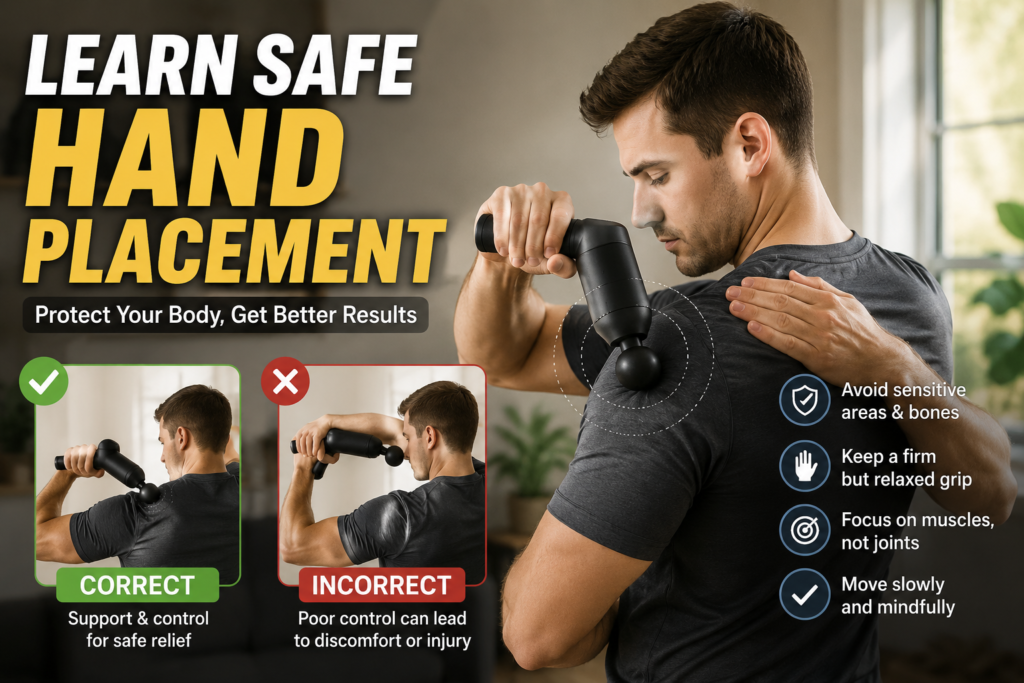
A manual neck massager works best on broad muscle areas, not on the throat or spine. Gentle pressure, steady movement, and a relaxed posture help reduce the risk of soreness or strain.
Support the Base of the Skull
The user should sit upright and keep the shoulders relaxed. They can place the massager on the thick muscles just below the base of the skull, slightly to either side of the spine. These muscles often feel tight after prolonged screen use or poor posture.
The tool should rest against the muscle rather than press directly into the skull or neck bones. The user should apply light pressure and make slow, small movements. If the massager has two handles, they should hold both evenly to control the pressure.
| Recommended action | Safe approach |
|---|---|
| Placement | Upper neck muscles below the skull |
| Pressure | Light to moderate, without pain |
| Movement | Slow strokes or small circles |
| Session length | Start with 5–10 minutes |
The user should stop if they feel sharp pain, numbness, tingling, dizziness, headache, or unusual weakness. A mild sense of pressure may be normal, but strong discomfort signals that the tool needs repositioning or less force.
Avoid the Front and Sides of the Neck
The user should not place a manual massager on the front of the neck. This area contains the throat, windpipe, thyroid gland, and major blood vessels. Direct pressure there can cause pain, coughing, trouble swallowing, or light-headedness.
They should also avoid pressing firmly into the sides of the neck, especially the area beneath the jaw and along the pulse. Instead, the massager should stay on the upper shoulder muscles and the broad muscles behind the neck.
The tool should not roll directly over the spine, bony joints, swollen areas, bruises, rashes, or open skin. If neck pain follows an injury or comes with arm weakness, severe headache, fever, or loss of balance, the user should avoid massage and seek medical advice.
Apply Effective Massage Techniques
A manual neck massager works best with slow movements, light contact, and steady control. The user should target the muscles beside the spine and across the shoulders, not the bones or the front of the throat.
Use Slow Gliding Strokes
The user should place the massager on the upper shoulder or the thick muscle beside the neck. They can then glide it slowly from the shoulder toward the base of the skull, following the muscle rather than pressing directly on the spine.
Each stroke should take about 5–10 seconds. The user can repeat the motion several times, then move to a nearby area. A small amount of lotion may reduce friction if the tool allows it, but the massager should not slip near the throat or jaw.
The user should keep the neck in a neutral position and avoid sharp, sudden movements. If the skin becomes irritated or the pain increases, they should stop and check the tool’s placement.
Work Through Shoulder Knots
Tight areas often develop in the upper trapezius, between the neck and shoulder. The user can place the massager on one tender spot and apply gentle pressure for 10–20 seconds before moving in small circles around it.
The pressure should feel firm but manageable. The user should not force the tool into a knot or hold it in one place for several minutes. Short passes around the area can relax nearby muscles without causing bruising or added soreness.
The tool should stay on soft tissue. It should not press on the spine, shoulder blade, collarbone, or any visible swelling. The user can work one side at a time and compare how each side feels.
Adjust Pressure and Pace
The user should begin with light pressure and a slow pace, especially during the first session. They can increase pressure slightly only when the muscles feel comfortable and the tool moves smoothly.
| Sensation | Adjustment |
|---|---|
| Mild, steady pressure | Continue at the same level |
| Sharp or shooting pain | Stop immediately |
| Numbness or tingling | Remove the tool and stop |
| Increased soreness | Use less pressure or end the session |
| Skin redness that lasts | Stop and allow the skin to recover |
A session of about 5–10 minutes is usually enough for one area. The user should avoid aggressive pressure, rapid rubbing, and repeated treatment over painful tissue. Persistent pain, weakness, numbness, or pain after an injury requires medical assessment.
Build a Consistent Routine
A regular schedule helps users control pressure, prevent skin irritation, and notice which techniques provide relief. Short sessions used at suitable times work better than pressing hard or massaging for too long.
Set an Appropriate Session Length
A manual neck massager usually needs only 5 to 10 minutes per session. Beginners should start with about 3 to 5 minutes and use light pressure. If the skin and muscles feel comfortable, the user can slowly extend later sessions.
The massager should move over the soft muscles beside the spine, including the upper shoulders and trapezius muscles. It should not press directly on the front of the neck, throat, spine, or areas with swelling, bruising, or numbness.
A simple routine may look like this:
- Use light pressure for the first 1–2 minutes.
- Spend another 3–5 minutes on tense muscle areas.
- Stop if pain, tingling, dizziness, or unusual weakness develops.
- Leave at least several hours between sessions if the area feels tender.
The user should check the skin after each session. Persistent soreness means the pressure or duration needs to decrease.
Use It Before or After Daily Activities
Using the massager after long periods of sitting can help release muscle tension caused by poor posture or limited movement. A short session after computer work, driving, or desk tasks may fit well into the daily schedule.
Before exercise or other physical activity, the user should focus on gentle movements rather than deep pressure. A brief massage may help the muscles feel less stiff, but it does not replace warming up. Light neck turns, shoulder rolls, and arm movements can prepare the body more safely.
After activity, the user can massage the upper shoulders and back of the neck for 5 to 10 minutes. The massager should not be used over a fresh strain, swelling, open wound, or painful injury. People with a neck condition, recent surgery, blood-clotting problems, or unexplained symptoms should ask a health professional before using one.
Avoid Common Mistakes
A manual neck massager works best with light, controlled pressure and careful placement. The user should avoid the front and sides of the neck, watch for warning signs, and follow the device instructions.
Do Not Press on Sensitive Areas
The user should avoid pressing directly on the throat, windpipe, jaw joint, spine, or the bony areas behind the ears. These places contain sensitive tissue, blood vessels, nerves, and joints that can become irritated. The massager should stay on the soft muscles at the back and sides of the neck, away from the center line.
The user should begin with gentle pressure for one or two minutes. A massager should never cause sharp pain, numbness, tingling, dizziness, bruising, or a headache. If the skin feels sore or looks red after use, the user should reduce the pressure and shorten the next session.
The device should not be used over a rash, open wound, swelling, recent injury, or area with reduced sensation. People with blood-clotting conditions, neck injuries, or serious medical concerns should ask a health professional before using one.
Stop When Symptoms Worsen
The user should stop immediately if neck pain increases during or after massage. Other warning signs include pain spreading into the arm, new weakness, numbness, tingling, blurred vision, nausea, or dizziness. These symptoms may need medical assessment rather than more pressure.
A mild feeling of muscle warmth or temporary tenderness can occur, but severe or lasting soreness signals that the session was too intense. The user should rest, avoid repeating the massage, and seek medical advice if symptoms do not improve.
Manual massage should not replace care for sudden severe pain, pain after an accident, fever, or persistent headaches. A health professional can identify the cause and recommend safe treatment.
Clean and Store the Device
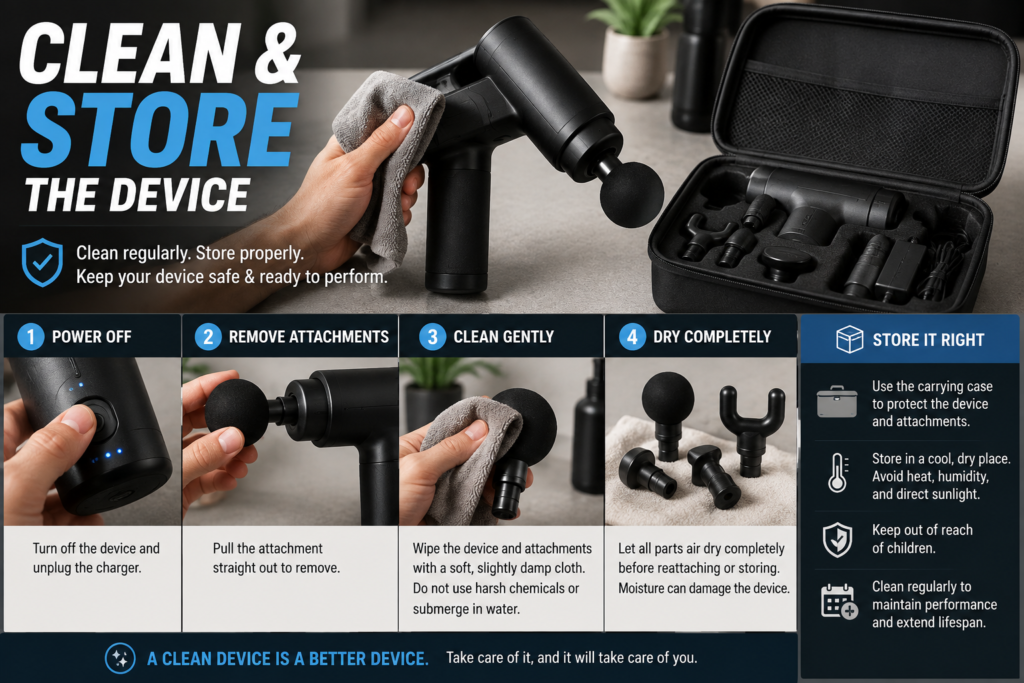
A manual neck massager needs regular cleaning to remove skin oil, sweat, and dust. The user should match the cleaning method to the device’s materials and check it for damage before each use.
Follow Material-Specific Care
The user should wipe plastic, wood, or metal parts with a soft cloth that is slightly damp. A small amount of mild soap can remove residue, but the surface should not become soaked. The user should dry the device fully before storing it.
If the massager has fabric, foam, or padded covers, the user should follow the care label. Removable covers can usually be washed as directed, while fixed padding should only receive gentle spot cleaning. Harsh cleaners, bleach, alcohol, and abrasive scrubbers may damage the finish or material.
The user should not submerge the massager unless its manual clearly states that it is waterproof. Water can weaken wood, cause metal to rust, and damage joints or internal parts. After cleaning, the device should air-dry in a cool place away from direct heat and sunlight.
Inspect for Wear and Damage
Before storing the massager, the user should inspect the handles, rollers, joints, straps, and padding. They should look for cracks, loose parts, sharp edges, peeling material, rust, or unusual stiffness. A manual massager should move smoothly without grinding, catching, or making new noises.
The user should stop using the device if a part breaks or becomes loose. Tape, glue, or other temporary repairs may change how pressure reaches the neck and could cause injury. Replacement parts should come from the manufacturer when available.
The massager should be stored in a clean, dry place away from moisture, direct sunlight, and heavy objects. A storage bag or covered container can help prevent dust buildup, but the device should be completely dry before it is enclosed.
FAQs
How often can someone use a manual neck massager?
Most people can use it for 5–10 minutes at a time, once or twice daily. The user should follow the product instructions and stop if soreness, bruising, numbness, or increased pain develops.
Where should it be used?
The massager should target the muscles along the sides and back of the neck, shoulders, and upper back. It should not press directly on the throat, the front of the neck, the spine, or areas with swelling or broken skin.
How much pressure is safe?
The user should apply light to moderate pressure that feels comfortable. A manual massager should not cause sharp pain, tingling, dizziness, or a headache.
Can someone use it for neck pain?
It may ease muscle tightness, but it does not treat every cause of neck pain. Anyone with severe, lasting, or unexplained pain should seek medical advice instead of relying on massage.
Who should avoid using one?
People with a recent neck injury, nerve symptoms, blood-clotting problems, or serious medical conditions should ask a health professional first. Pregnant users and people recovering from surgery should also seek medical guidance.
How should it be cleaned?
The user should wipe the tool with a soft, damp cloth and let it dry fully. It should not be submerged in water or cleaned with harsh chemicals.
Conclusion
A manual neck massager can help loosen tight muscles when a person uses it gently and correctly. The user should apply light pressure, move slowly, and avoid pressing directly on the spine, throat, or injured areas.
Short sessions often work better than forceful or lengthy massage. The user should stop if the device causes sharp pain, numbness, tingling, dizziness, or increased discomfort.
A person with ongoing neck pain, weakness, fever, pain spreading into the arm, or worsening headaches should seek medical advice. A manual massager supports comfort but does not replace professional care.