To strengthen weak knees, focus on gentle mobility, leg and hip strengthening, better daily movement, and smart recovery. Simple exercises like straight leg raises, mini squats, step-ups, and glute bridges can help build support around the knee, while massage, stretching, and compression may reduce stiffness and soreness.
Weak knees can make everyday life frustrating. Stairs feel harder. Long walks feel less stable. Even getting up from a chair can feel shaky.
I’m Ethan Carter, and I’ve spent years testing massage tools, recovery products, and pain relief methods. I focus on simple, practical advice that helps people feel better and recover faster at home. In this guide, I’ll show you how to strengthen weak knees safely, what often causes the problem, and which tools may help support recovery.
Why Weak Knees Happen and Why It Matters
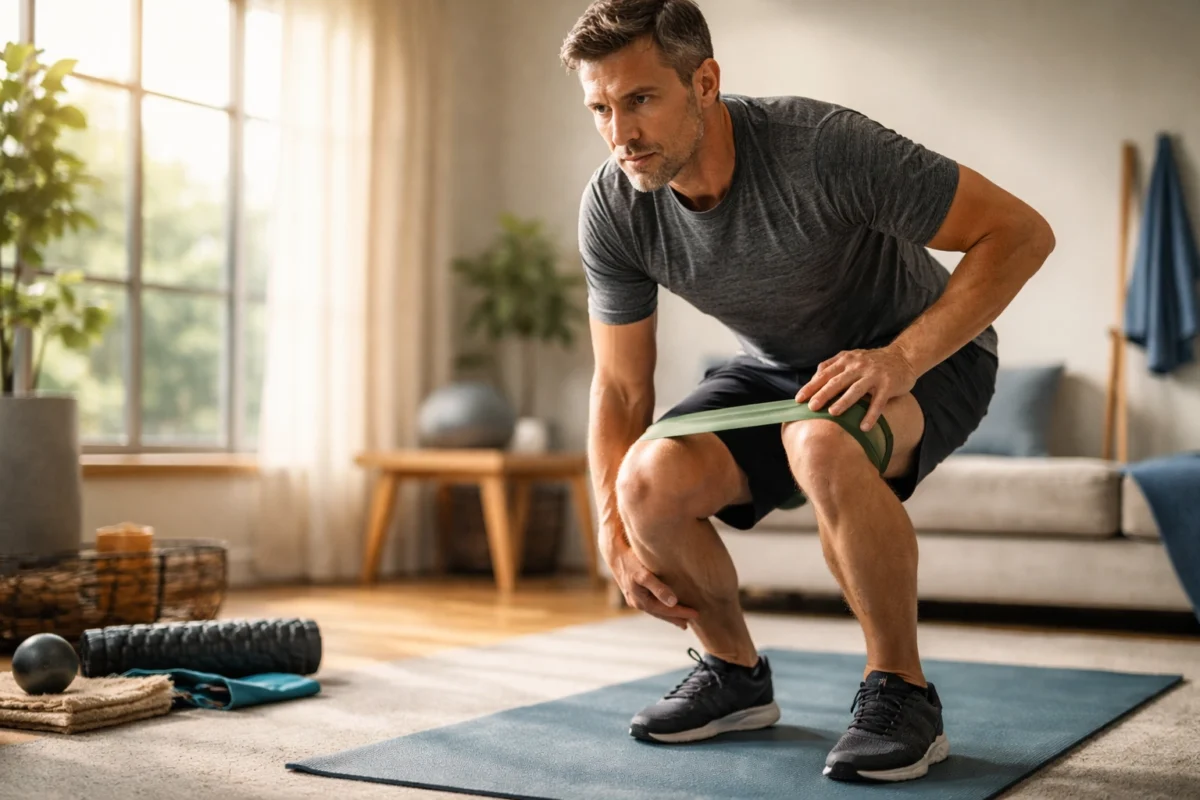
Weak knees do not always mean the knee joint itself is the only problem. In many cases, the muscles and soft tissues around the knee are not doing enough to support it well.
What weak knees usually feel like
Many people describe weak knees as:
- Shakiness when walking downstairs
- Stiffness after sitting for long periods
- Soreness after exercise
- A feeling that the knee may give out
- Reduced confidence during movement
Common causes of weak knees
Weak knees can show up for several reasons, including:
- Weak quads, hamstrings, or glutes
- Tight muscles that limit knee motion
- Poor posture and movement habits
- Too much sitting during the day
- Overuse strain from workouts or sports
- Recovery delays after activity
- Age-related loss of strength and mobility
Why the muscles around the knee matter
Your knees rely on the muscles above and below them. When your quads, hamstrings, glutes, and calves work together well, they help reduce stress on the joint. When they are weak or tight, the knee often has to handle more strain than it should.
How Knee Strength Works
Getting stronger knees is not just about doing random leg exercises. It helps to understand what the body is trying to do.
The role of the quads, hamstrings, glutes, and calves
Your quads help straighten the knee. Your hamstrings support the back of the leg and help control bending. Your glutes stabilize the hips, which affects knee alignment. Your calves support walking, balance, and push-off strength.
If one of these areas is weak, the knee can feel unstable during daily movement.
How mobility, circulation, and soft tissue tension affect the knees
Tight quads, tight calves, and stiff hips can change how the knee tracks during movement. That can lead to soreness, stiffness, or a limited range of motion. Improving blood flow and easing muscle tension through light massage, stretching, and mobility work may help the area feel better and move better.
Why posture and daily movement habits can make weakness worse
If you sit most of the day, your hips may get tight and your glutes may switch off. That often leads to stiff knees when you stand up or start walking. Poor posture, shallow movement patterns, and weak hip support can all add up over time.
For a general overview of knee conditioning and safe exercise ideas, the Cleveland Clinic and Mayo Clinic both offer useful background on joint-friendly movement and exercise basics.
How to Strengthen Weak Knees Step by Step
This is the simple approach I recommend for most people at home.
Step 1: Start with gentle mobility work
Begin with 3 to 5 minutes of easy movement. This can include slow knee bends, heel slides, ankle pumps, and a short walk. The goal is to loosen stiffness without irritating the area.
Step 2: Wake up the muscles that support the knee
Use low-stress exercises like quad sets, straight leg raises, glute bridges, and clamshells. These help activate the muscles that often go weak with too much sitting or after a break from exercise.
Step 3: Build strength with low-impact exercises
Once your knee feels warmed up, add simple strength moves like mini squats, step-ups, and seated knee extensions. Keep the range comfortable. You do not need deep bends to get good results.
Step 4: Add balance and stability work
Balance matters because weak knees often feel worse when your body struggles to control movement. Try standing on one leg near a wall or counter for support. Even 20 to 30 seconds per side can help.
Step 5: Recover with stretching, massage, and rest
Finish with light stretching for the quads, calves, and hamstrings. You can also use a foam roller or massage gun on the muscles around the knee, not directly on the kneecap. Recovery work often helps reduce soreness and stiffness.
Best Exercises for Weak Knees at Home
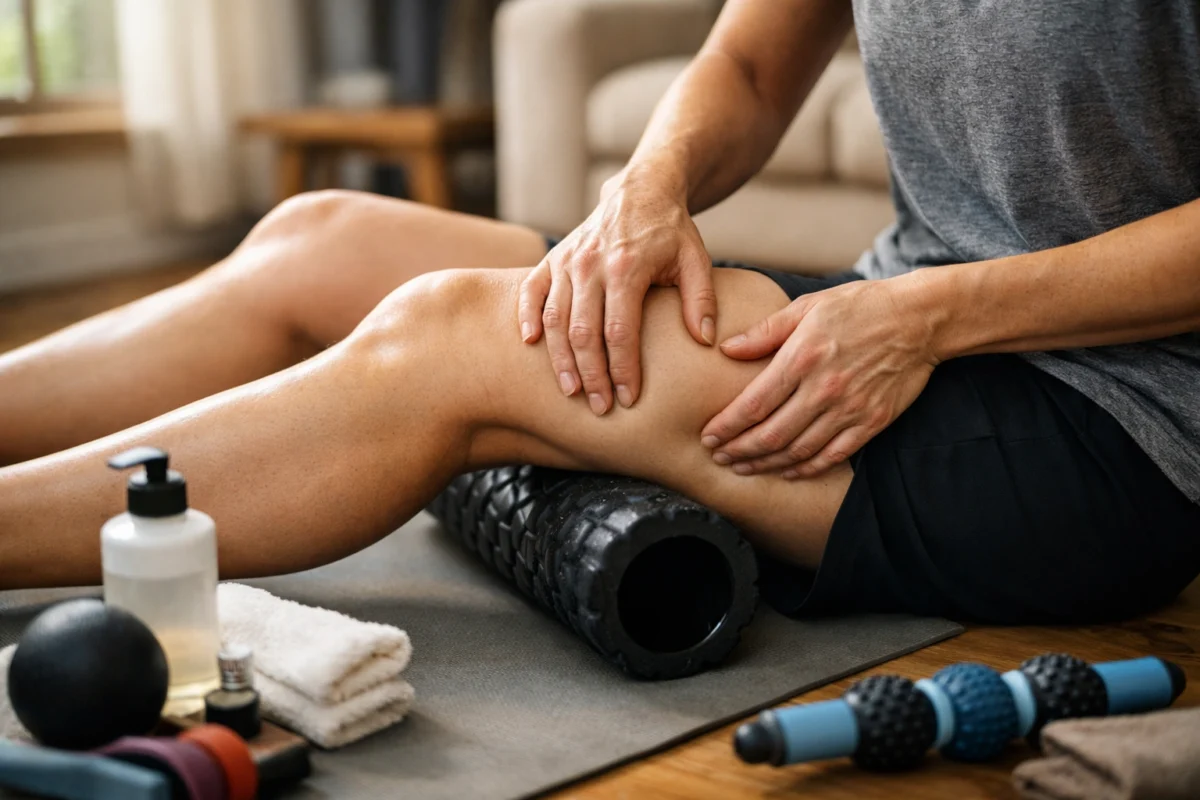
These are the home exercises I come back to most often because they are simple, practical, and beginner-friendly.
Straight leg raises
Lie on your back with one leg bent and one leg straight. Tighten the thigh of the straight leg and slowly lift it. Lower with control.
- Reps: 8 to 12 per side
- Best for: Quad strength without deep knee bending
Seated knee extensions
Sit in a chair and slowly straighten one leg out in front of you, then lower it back down.
- Reps: 10 to 15 per side
- Best for: Gentle knee strengthening during desk breaks
Glute bridges
Lie on your back with knees bent. Press through your feet and lift your hips. Pause, then lower slowly.
- Reps: 10 to 15
- Best for: Glute strength and better knee support
Mini squats
Stand with feet hip-width apart. Bend slightly at the knees and hips, then stand back up. Keep the movement small and controlled.
- Reps: 8 to 12
- Best for: Building daily movement strength
Step-ups
Use a low step. Step up slowly, then step down with control. Hold onto a rail or wall if needed.
- Reps: 8 to 10 per side
- Best for: Stairs, walking, and functional leg strength
Calf raises
Stand tall and lift your heels off the floor, then lower slowly.
- Reps: 12 to 15
- Best for: Lower-leg support, circulation, and walking strength
Clamshells and side leg lifts
These target the outer hips and glutes, which are easy to ignore but important for knee stability.
- Reps: 10 to 15 per side
- Best for: Hip support and knee alignment
Best Stretches and Self-Massage Techniques for Tight Muscles Around the Knee
Sometimes the knee feels weak because the muscles around it are stiff, overworked, or full of tension. That is where stretching and self massage can be useful.
Quad stretch
Stand tall and gently pull one foot toward your glutes. Keep the knees close together. Hold for 20 to 30 seconds.
Hamstring stretch
Place one heel on a low step or stool and hinge forward slightly from the hips. Keep the spine long. Hold for 20 to 30 seconds.
Calf stretch
Place your hands on a wall and step one leg back. Press the heel into the floor. Hold for 20 to 30 seconds.
Tennis ball or foam roller work for quads and glutes
If your quads and glutes are tight, they can pull on the knee during movement. Light foam rolling on the front of the thighs, outer hips, and glutes may help reduce tension. A tennis ball can also work well for targeted trigger point release around the hips and upper legs.
When massage may help stiff, overworked knees
Massage often works best when the muscles around the knee feel tight after long days, workouts, travel, or standing. I usually suggest using massage on the quads, calves, hamstrings, and glutes instead of pressing directly on the knee joint itself.
For more on knee pain basics and exercise-friendly recovery, Healthline’s knee pain guide is a useful starting point.
Benefits and Best Uses
A good knee strengthening routine can do more than improve workouts. It can support everyday comfort too.
| Use Case | How Strengthening May Help |
|---|---|
| Office workers | Can reduce stiffness from sitting and improve movement confidence |
| Active adults | May support better control during workouts, stairs, and daily walking |
| Seniors | Can help maintain balance, mobility, and leg strength with gentle exercise |
| Post-workout recovery | May reduce soreness and improve muscle support around the knee |
| Travel or long standing days | Can ease tightness, swelling, and poor circulation from inactivity |
For office workers
If you sit most of the day, short mobility breaks and seated knee extensions can make a real difference. This is one of the easiest ways to deal with desk-job stiffness before it turns into a bigger problem.
For active adults and athletes
Weak knees often show up when one area is overworked and another is undertrained. Adding glute and hip work can support better movement during running, lifting, and sports.
For seniors needing gentle support
Gentle strengthening, balance work, and compression support may help older adults feel more stable during walking and daily tasks.
For post-workout recovery
If your knees feel tired after exercise, low-impact movement, calf raises, foam rolling, and recovery massage may help the area feel less stiff the next day.
Common Problems and Fixes
| Problem | Common Cause | Simple Fix |
|---|---|---|
| Weak knees on stairs | Quad and glute weakness | Step-ups, glute bridges, mini squats |
| Stiff knees after sitting | Poor circulation and tight hips | Short walks, heel slides, calf stretches |
| Shaky legs during exercise | Low muscle endurance | Reduce reps, slow down, build gradually |
| Soreness after workouts | Overuse strain and tight soft tissue | Recovery day, foam rolling, light stretching |
| Tightness around the knee | Quad, calf, or hamstring tension | Massage, mobility, and gentle stretching |
Weak knees when going downstairs
This usually points to weak quads or poor control. Focus on step-ups, slow lowering drills, and glute work.
Knees feel shaky during exercise
That can happen when muscles fatigue quickly. Shorten the workout, reduce range of motion, and increase strength over time instead of pushing through bad form.
Stiff knees after sitting
This is common with desk work, travel, and long movie nights. Stand up every hour, walk for a minute or two, and add calf raises or heel slides to get blood flow moving again.
Soreness after starting a strengthening plan
Mild muscle soreness can be normal when you begin. But sharp pain, swelling, or worsening discomfort is a sign to back off and simplify the routine.
Common Mistakes to Avoid
Doing too much too soon
One of the biggest mistakes is jumping into deep squats, long workouts, or high-impact training before the muscles are ready.
Ignoring hip and glute strength
People often focus only on the knee, but hip weakness is a major reason knees feel unstable during movement.
Using poor form
Fast reps, inward knee collapse, and rushed movement patterns can make weak knees feel worse instead of better.
Skipping recovery work
Mobility, stretching, and massage are not optional extras for many people. If you are stiff and sore all the time, recovery work may be the missing piece.
Safety Tips and Best Practices
How to know when to slow down
If an exercise causes sharp pain, more swelling, or pain that keeps getting worse, stop and reassess. A little muscle effort is fine. Joint pain that builds fast is not.
When to use heat, ice, or compression
Heat often feels better for stiffness and tight muscles. Ice may feel better after a hard session or when the area feels irritated. Compression sleeves can be useful for daily support, especially during walking, standing, or travel.
Who should be careful with certain exercises or massage tools
If your knee feels unstable, recently got hurt, or swells a lot after activity, go gently and stay with basic movements first. Massage guns and deep pressure tools should be used on the surrounding muscles, not directly over a painful joint or bony areas.
Tools and Products That May Help Support Weak Knees
Tools will not replace exercise, but they can make the process easier and more comfortable.
| Tool | Best For | What It Does |
|---|---|---|
| Compression sleeve | Daily support | Provides light support and may improve comfort during walking or standing |
| Foam roller | Muscle tightness | Helps release tension in quads, calves, and glutes |
| Massage gun | Recovery support | May help reduce soreness and improve blood flow in surrounding muscles |
| Resistance bands | Strength training | Adds gentle resistance for hip and leg strengthening |
Compression sleeves
A good compression sleeve can be a practical choice for people who want gentle support without feeling bulky. I like them most for walking, long standing shifts, travel days, and older adults who want a little extra confidence.
Foam rollers
Foam rollers are one of the best budget-friendly recovery tools for weak knees because they target the muscle tightness that often adds stress to the joint.
Massage guns
Massage guns can be useful for post-workout recovery and stiff muscles around the knee. I usually recommend low to moderate pressure levels and short sessions on the quads, calves, and glutes.
Resistance bands
These are simple, travel-friendly, and great for home use. Bands work especially well for glute exercises, side steps, and light knee strengthening drills.
Massage Gun vs Foam Roller vs Compression Sleeve
These tools do different jobs, so the best choice depends on what you need most.
| Tool | Best For | Pros | Limitations |
|---|---|---|---|
| Massage gun | Recovery and muscle soreness | Fast, targeted, easy after workouts | Higher cost, should be used carefully |
| Foam roller | Mobility and muscle tension | Affordable, great for self massage routines | Takes more effort and body positioning |
| Compression sleeve | Daily support and comfort | Easy to wear, helpful during walking or standing | Does not build strength by itself |
If your main issue is stiffness, start with a foam roller. If soreness after workouts is the bigger issue, a massage gun may be worth it. If you want simple day-to-day support, a compression sleeve is usually the easiest option.
Best Product Picks for Home Knee Support
TheraBand Resistance Bands Set
A simple, beginner-friendly tool for building hip and leg strength at home.
TriggerPoint GRID Foam Roller
Great for quads, calves, and glutes when tight muscles are adding stress around the knees.
FIT KING Knee Compression Sleeve
A solid option for gentle daily support during walking, errands, and long standing sessions.
Frequently Asked Questions
Can you strengthen weak knees at home?
Yes. Many people can improve weak knees at home with gentle exercises, stretching, and better recovery habits. The key is to build gradually and stay consistent.
Is walking good for weak knees?
Walking is often a good low-impact option if it feels comfortable. Start with short walks and avoid pushing through sharp pain.
How long does it take to make knees stronger?
Many people notice better control and less stiffness within a few weeks, but strength gains usually take longer. Consistency matters more than intensity.
Should I use heat or ice on weak knees?
Heat often helps stiffness and tight muscles. Ice may be more helpful after activity if the area feels irritated or sore.
Do massage guns help weak knees?
They may help the surrounding muscles feel less tight and sore. Use them on the quads, calves, hamstrings, and glutes, not directly on the kneecap.
What exercises should I avoid with weak knees?
Avoid deep or high-impact exercises that cause pain right away. Start with controlled, low-impact movements and build up slowly.
Should I wear a knee brace or compression sleeve?
A compression sleeve can be useful for light support and comfort during daily activity. It works best as support, not a replacement for strengthening.
Conclusion
Strengthening weak knees usually comes down to a few basics done well: improve mobility, build the muscles around the knee, move with better control, and recover smart. You do not need an extreme routine. A simple plan done consistently often works best.
If you want to make the process easier, a resistance band, foam roller, or compression sleeve can be a helpful addition to your home recovery setup.