By Andrew Collins | Updated August 17, 2026
Quick Answer: Rest from the activity that caused it, drink water, and move gently. Use ice for fresh soreness or mild swelling, or heat for tight, stiff muscles. Light stretching helps loosen things up. Avoid anything that causes sharp pain, and see a doctor if you notice severe pain, swelling, redness, numbness, or chest symptoms.

Sore legs can show up after a workout, a long shift, a travel day, yard work, or even sitting too long at a desk. Most mild soreness improves with simple self-care, but not all leg pain should be treated casually. I’ll walk you through safe, practical steps and the red flags worth taking seriously.
Muscle soreness Safe home care Leg pain warning signs
[IMAGE SUGGESTION: Featured image — alt=”adult learning how to get rid of sore legs with safe stretching and recovery tools”]
Quick Beginner Explanation
When people ask how to get rid of sore legs, they usually mean one of three things: tired muscles, tightness after activity, or a dull ache after standing, walking, lifting, or sitting too long. In many adults, mild soreness comes from overuse, small muscle strain, dehydration, or delayed onset muscle soreness after exercise.
That said, “sore legs” is a broad phrase. A calf that feels tight after a gym session is different from one swollen, hot, red leg. A dull ache after standing in the kitchen all day is different from pain with shortness of breath. The goal is not to panic. The goal is to match the response to the symptom.
For general background on leg pain causes and self-care, MedlinePlus gives useful patient guidance on rest, elevation, ice, stretching, massage, and when home care may be appropriate: MedlinePlus leg pain guide.

Why Sore Legs Happen
In practice, sore legs often happen when your muscles do more work than they are used to. Maybe you walked around a mall for hours, climbed stairs, helped someone move furniture, or started a new workout. Your muscles can feel tender as they recover from that extra load.
Soreness can also come from tight calves, poor footwear, low fluid intake, sitting with your knees bent for a long time, or sleeping in a position that leaves the hips and legs stiff. And sometimes, leg discomfort comes from joints, nerves, circulation problems, medications, or chronic conditions.
Note: Muscle soreness after activity usually feels achy, tender, or stiff. Sharp pain, major swelling, sudden weakness, numbness, or one-sided calf swelling deserves more caution.
Common Causes of Sore Legs
The safest way to choose relief is to think about what happened before the soreness started. Did you exercise harder than usual? Stand all day? Travel? Skip water? Wear unsupportive shoes? That timeline matters.
[INTERNAL LINK: “safe home remedies for muscle soreness”]
How to Get Relief Safely at Home
If your soreness is mild and clearly linked to activity, the basics work surprisingly well. Rest enough to let the irritated tissue calm down, but don’t turn one sore day into three days of complete couch rest unless walking is painful. Light movement helps many people feel less stiff.
If you’re wondering how to get rid of sore legs after a normal active day, start with water, gentle walking, and a short stretch routine. Add ice if the soreness feels fresh or mildly swollen. Add heat if the muscles feel tight, cramped, or stiff without swelling.
Tip: A slow 10-minute walk after sitting for hours can help loosen tight legs. Keep it easy. This is not the time to “test” your pain with a hard workout.
Use Gentle Movement, Not Force
Try ankle circles, slow calf raises, easy hamstring stretches, or a relaxed walk around the house. Stretch until you feel mild tension, not pain. Bouncing or forcing a stretch can make irritated muscle tissue feel worse.
Hydrate and Eat Normally
Dehydration can contribute to cramps and tired muscles for some adults, especially after sweating, travel, alcohol, or a long day outside. Water is usually enough. If you sweat heavily, an electrolyte drink may help, but it is not a cure-all.
Elevate Heavy Legs
After standing jobs, cooking, shopping, or caregiving, try lying down with your legs raised on pillows for 15–20 minutes. This may reduce that heavy, tired feeling. If swelling is new, one-sided, painful, or worsening, treat that as a medical safety issue.
Quick Symptom Decision Guide

Use this simple guide before choosing a remedy.
Mild ache after activity
Try rest, hydration, light walking, and gentle stretching.
Tight, stiff muscles
Use gentle heat, slow stretching, and a warm shower.
Recent strain or swelling
Use cold packs early and avoid intense activity.
Sharp or worsening pain
Stop pushing through it. Contact a healthcare provider.
9-Step Self-Care Guide
Here’s my practical approach for how to get rid of sore legs when symptoms are mild, familiar, and not linked to a serious warning sign.
Pause the trigger. If stairs, running, lifting, or standing made it worse, reduce that activity for a day or two.
Hydrate. Drink water steadily, especially after sweating, travel, or a long workday.
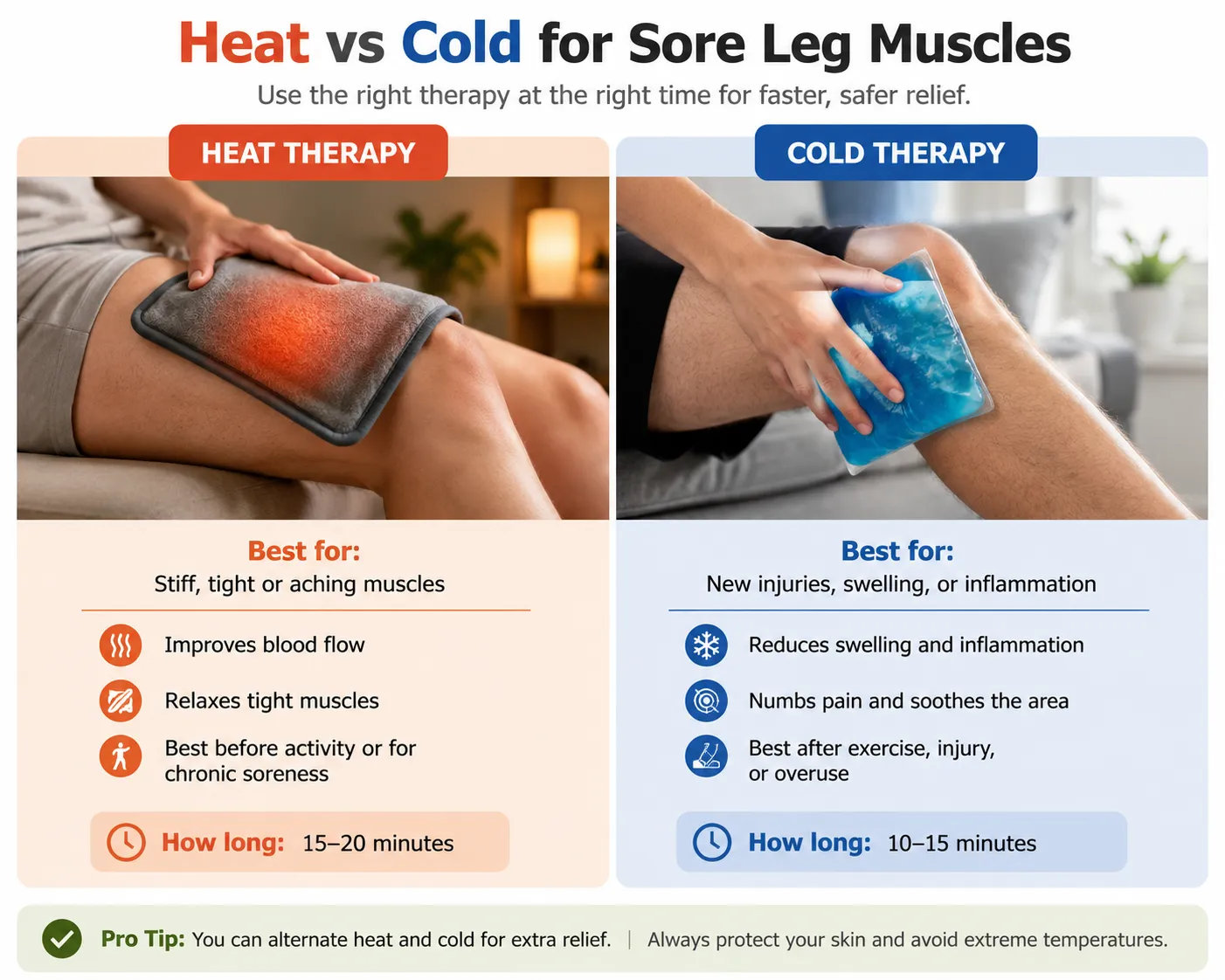
Use cold for fresh soreness. Apply a wrapped cold pack for 10–15 minutes if the area feels irritated or mildly swollen.
Use heat for stiffness. Try a warm shower or heating pad if the soreness feels tight rather than swollen.
Stretch gently. Hold easy stretches for 15–30 seconds. No bouncing.
Massage lightly. Use your hands, a massage ball, or a foam roller with mild pressure only.
Elevate your legs. This can feel good after standing or walking more than usual.
Consider OTC pain relief carefully. Read labels, avoid doubling up products, and ask a provider if you have health risks.
Track improvement. Mild soreness should trend better. If it worsens, changes, or lingers, get medical advice.
Heat, Cold, Stretching, Rest, and Movement
People often ask whether heat or ice is better. Honestly, it depends on the pattern. Ice is usually a better first choice after a recent strain or swelling. Heat is often more comfortable for tight, stiff muscles after a long day or during cold weather.
Use this as a simple comfort guide, not a diagnosis.
Over-the-Counter Options and Safety
Some adults use acetaminophen or nonsteroidal anti-inflammatory drugs, often called NSAIDs, for short-term pain relief. NSAIDs include ibuprofen and naproxen. These medicines can help some people, but they are not safe for everyone.
The FDA notes that NSAIDs are available over the counter and by prescription, but they can carry risks, especially for people with heart disease, kidney disease, stomach bleeding risk, certain medications, or pregnancy-related concerns. Read the label and ask a pharmacist or healthcare provider if you’re unsure: FDA NSAID safety information.
Warning: Do not combine multiple pain relievers without checking labels. Many cold, flu, sleep, and pain products contain overlapping ingredients.
Symptom → Possible Cause → Safe Next Step
After walking more than usual, choose hydration, light stretching, and an easier day.
After sitting too long, use warmth, gentle movement, and posture breaks.
After sweating or travel, replace fluids and stretch calmly.
One-sided swelling, redness, warmth, or severe calf pain needs medical advice promptly.
Common Mistakes That Can Make Soreness Worse
When people search how to get rid of sore legs fast, they may try to rush recovery. I get it. You want to feel normal again before work, family plans, or the next workout. But aggressive fixes can backfire.
When Sore Legs May Be Serious
Most everyday soreness is not an emergency. But some symptoms should not be handled with home remedies. Mayo Clinic recommends urgent medical attention for certain leg pain patterns, including severe symptoms after injury, signs of infection, or a cold/pale leg, and advises making an appointment if pain worsens or does not improve after home care: Mayo Clinic leg pain guidance.
Medical Safety: Seek urgent care if leg pain comes with chest pain, shortness of breath, fainting, sudden severe swelling, inability to walk, signs of infection, or a leg that is cold, pale, blue, or numb.
[INTERNAL LINK: “when leg pain may need medical care”]
Prevention Tips for Tired, Achy Legs
Once you know how to get rid of sore legs, the next goal is keeping them from coming back every week. Prevention is not fancy. Small habits matter more than one expensive recovery gadget.
Stand, walk, or stretch briefly every hour when possible.
Increase workouts, walking distance, or stair climbing gradually.
Poor support can add stress to calves, knees, hips, and feet.
MedlinePlus recommends warming up and cooling down around exercise: MedlinePlus muscle aches guide.
Recommended Personal Care Products
Products can support comfort, but they should not replace medical care when symptoms are unusual or severe. I prefer simple tools that help with temperature therapy, gentle movement, or everyday support.
Reusable Cold Pack
Useful for fresh soreness, mild swelling, or post-activity discomfort. Wrap it in a towel before applying.
Safety note: Avoid direct ice contact with skin.
Adjustable Heating Pad
Helpful for stiff muscles after sitting, cold weather, or a long day on your feet.
Safety note: Do not sleep with a heating pad on, and avoid heat on swollen or infected-looking skin.
Foam Roller or Massage Ball
May help with gentle self-massage for tight calves, thighs, or glutes.
Safety note: Use light pressure. Avoid rolling over sharp pain, bruises, or swollen areas.
[IMAGE SUGGESTION: In-body image — alt=”safe recovery setup with water towel foam roller and stretching mat for sore legs”]
Infographic-Style Summary
Gentle walking, hydration, light stretching, rest, and elevation for mild soreness.
OTC medicine, deep massage, compression socks, and intense stretching may not fit everyone.
Severe, one-sided, swollen, red, hot, numb, or worsening leg pain needs medical guidance.
[INTERNAL LINK: “best self-care tips for tired legs”]
FAQ
What is the fastest safe way to ease sore legs?
The fastest safe approach is usually rest, hydration, gentle movement, and either cold or heat depending on the symptom. Use cold for fresh soreness or mild swelling. Use heat for tight, stiff muscles without swelling.
Should I use heat or ice for sore legs?
Use ice for recent soreness, mild swelling, or a fresh strain. Use heat for tight, stiff muscles after sitting, standing, or cold weather. Avoid heat on red, hot, swollen, or infected-looking skin.
Can dehydration cause sore legs?
Dehydration can contribute to leg cramps, fatigue, and muscle tightness for some adults, especially after sweating, travel, alcohol, or heat exposure. Water helps, but severe or repeated cramps should be discussed with a healthcare provider.
How long should sore legs last after exercise?
Mild exercise soreness often improves within a few days. It should gradually get better, not worse. If pain is severe, sharp, swollen, or does not improve after several days of home care, contact a healthcare provider.
When should I worry about sore legs?
Worry more if soreness is one-sided with swelling, redness, warmth, severe calf pain, numbness, weakness, fever, chest pain, or shortness of breath. These symptoms may need prompt medical care.
What should I avoid when my legs are sore?
Avoid intense workouts, hard stretching, deep pressure massage, heat on swelling, and taking multiple pain medicines without checking labels. Do not ignore pain that is worsening or feels unusual for you.
Author Bio
Andrew Collins writes practical health and personal care guides for adults who want clear, evidence-aware self-care advice. For this guide on how to get rid of sore legs, Andrew reviewed trusted medical resources and focused on safe relief steps, common causes, OTC cautions, and signs that should not be ignored.
Final Thoughts
For mild leg soreness after exercise, long periods of standing, travel, or a busy day, simple care is usually enough. Ease off the activity that triggered it, drink enough water, and keep your legs moving gently. Light stretching helps loosen tight muscles, and heat or cold can add comfort depending on the cause.
The pattern of pain matters too. Severe pain, one-sided swelling, redness, warmth, or numbness shouldn’t be ignored, and pain that keeps getting worse needs medical attention.
Home care works well for mild, familiar soreness — but it isn’t a substitute for medical care when symptoms are unusual, severe, or getting worse.
Medical Disclaimer
This article is for informational purposes only. Always consult a licensed healthcare provider before making any health decisions.