If you've been asking how many points are used in shiatsu massage, the honest answer depends on which school of shiatsu you're talking about. Classical practitioners work with the 361 tsubo mapped across the traditional meridian system, while the Namikoshi school used in modern Japanese clinical practice maps closer to 660 pressure points. Most sessions actually press only 30 to 80 of those during a single treatment.
As of 2026, the World Health Organization's standardised acupuncture point locations still anchor the 361-point classical figure, and Japan's Ministry of Health, Labour and Welfare continues to license shiatsu separately from acupuncture under that framework. The exact number a practitioner uses depends on lineage, your symptoms, and what your hara reveals on the table. Here's where the confusion starts.
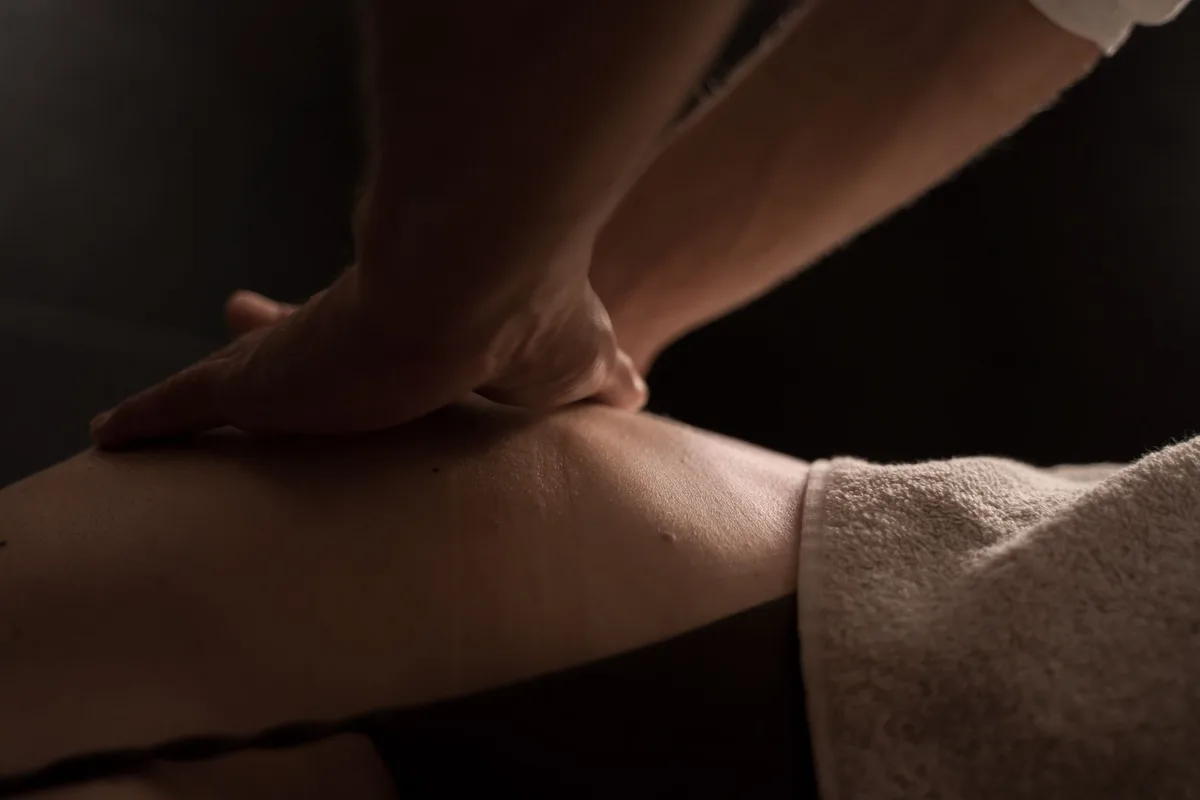
Image source: Pexels / Ron Lach (Pexels License)
Why the Point Count in Shiatsu Confuses Almost Everyone
Ask three shiatsu schools how many points they use, and you'll get three different numbers. That isn't sloppy teaching. It reflects the fact that shiatsu absorbed older systems and then evolved its own.
Four things drive the confusion:
- Classical Chinese acupuncture, which shiatsu inherited, lists 361 standardised points across 14 channels.
- Namikoshi shiatsu, developed in Japan in the 1920s, set aside the meridian map and built its own 660-point anatomical system.
- Zen Shiatsu (Masunaga) kept the classical tsubo but added 12 extended meridian pathways with new locations.
- Most articles online quote one figure as if it's the only one, which is why patient-facing content rarely matches what a licensed practitioner says.
The real answer is a range. The map you're being pressed on depends entirely on who trained your therapist.
The Two Main Shiatsu Systems and Their Point Counts
Modern shiatsu splits into two dominant lineages, and they don't share the same map. Understanding the split is the cleanest way to answer the point-count question without oversimplifying.
Namikoshi Shiatsu: The 660-Point System
Tokujiro Namikoshi founded the Japan Shiatsu College in Tokyo in 1940 and built a system grounded in Western anatomy and physiology rather than meridian theory. His map identifies roughly 660 pressure points distributed across muscles, joints, and nerve clusters. This is the version Japan's Ministry of Health, Labour and Welfare formally recognises for licensed shiatsu practice.
Sessions in this style focus on perpendicular thumb and palm pressure along anatomical landmarks. Treatment plans are clinical and reproducible, which is why Namikoshi remains the dominant form taught in Japanese vocational schools.
Zen Shiatsu and the Classical 361 Tsubo
Shizuto Masunaga, a Namikoshi graduate, broke away in the 1970s to create Zen Shiatsu, which puts the classical 12 meridians plus the Du and Ren extraordinary vessels back at the centre of practice. The point map covers the standard 361 tsubo, though Masunaga added extended meridian branches that don't appear in classical Chinese texts.
Zen Shiatsu sessions lean on hara diagnosis, Kyo and Jitsu energetic reading, and meridian work rather than a fixed point sequence. Five Element Shiatsu and other TCM-influenced styles sit closer to this lineage.
What a Tsubo Actually Is (And Why It's Not Just an Acupuncture Point)
A tsubo is the Japanese word for a pressure point, and the literal translation is "vase" or "jar", a small vessel where ki collects and can be accessed from the surface of the body. In classical theory, a tsubo sits at the same anatomical location as an acupuncture acupoint, but the way you engage it is completely different.
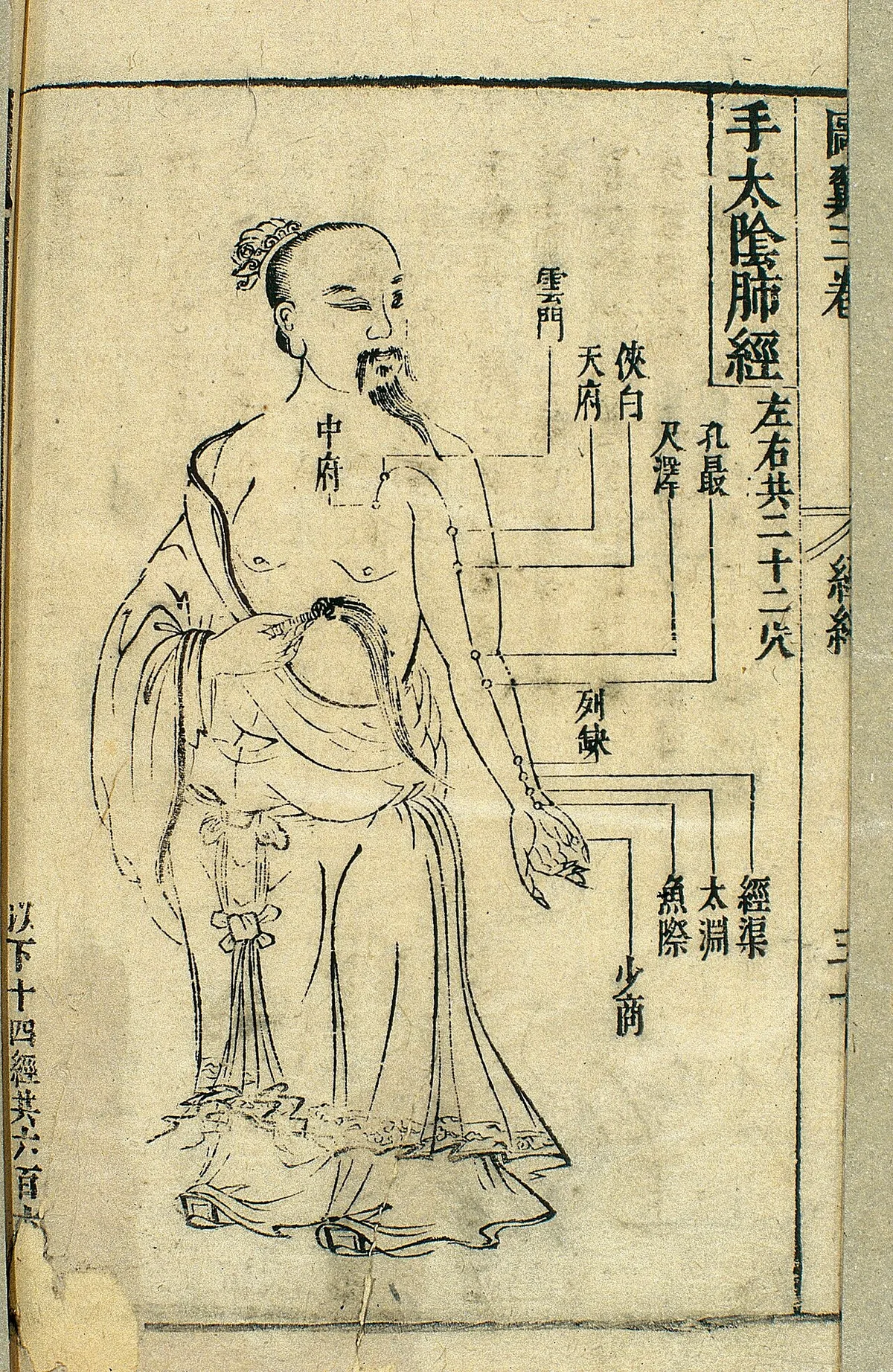
Image source: Wikimedia Commons / Wikimedia Commons contributor (CC BY)
Three distinctions matter:
- Acupuncturists insert a thin needle into the point. Shiatsu practitioners apply sustained perpendicular pressure with thumbs, palms, elbows, knees, or feet.
- The classical 361 acupoints have fixed, measurable locations standardised by WHO in 2008. Tsubo in Zen Shiatsu can drift along the meridian depending on what the practitioner feels under their hands.
- A tsubo isn't always "active". Practitioners describe points as Jitsu (full, reactive, often tender) or Kyo (empty, hollow, often unresponsive). The same anatomical spot can read differently from one session to the next.
This is why two qualified shiatsu therapists can press different points on the same client and both be working correctly. They're reading a living map, not ticking boxes on a chart.
The 12 Main Meridians and 2 Extraordinary Vessels Behind Every Session
Classical and Zen Shiatsu both run on a network of 14 energy channels that carry ki through the body. The 12 main meridians correspond to organ systems, and the 2 extraordinary vessels run up the front and back midline. Together they hold the 361 standardised tsubo published by the World Health Organization.
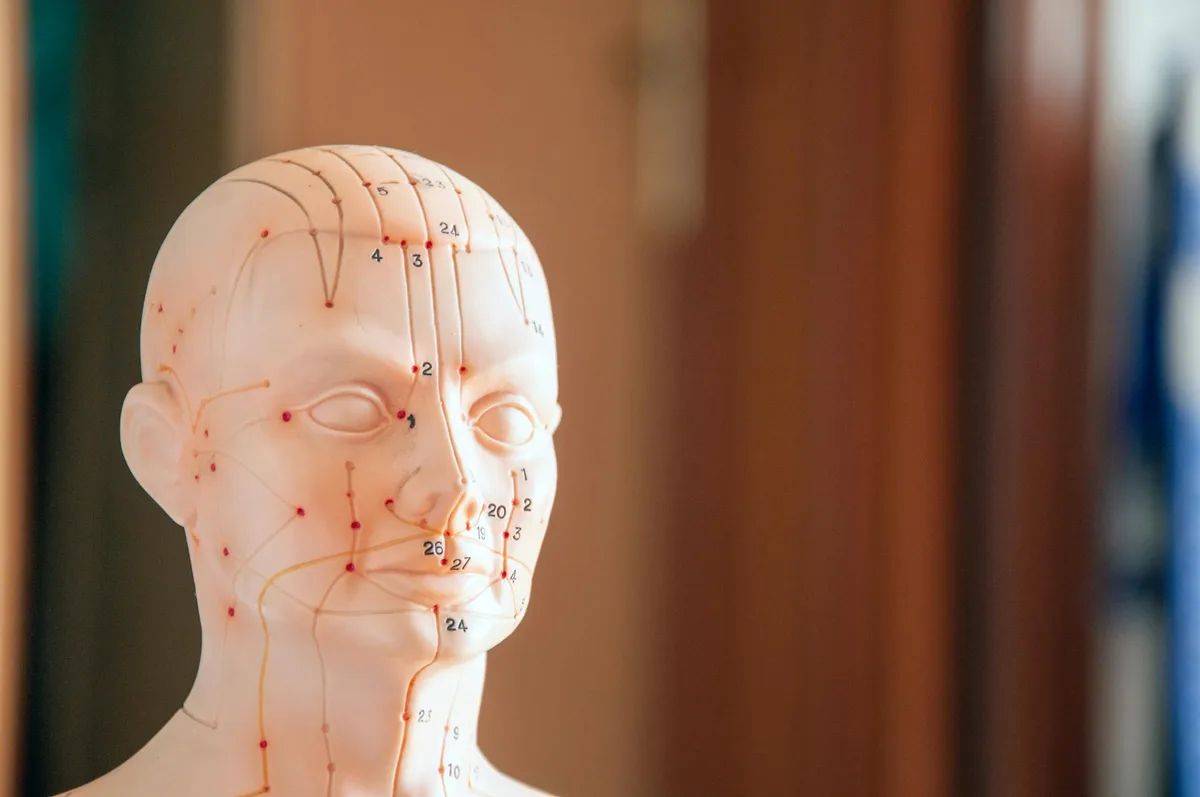
Image source: Pexels / Juan Antonio García-Filoso Rodríguez (Pexels License)
| Channel | Element / Function | Approx. point count |
|---|---|---|
| Lung (LU) | Metal, respiration | 11 |
| Large Intestine (LI) | Metal, elimination | 20 |
| Stomach (ST) | Earth, digestion | 45 |
| Spleen (SP) | Earth, transformation | 21 |
| Heart (HT) | Fire, circulation | 9 |
| Small Intestine (SI) | Fire, assimilation | 19 |
| Bladder (BL) | Water, storage | 67 |
| Kidney (KI) | Water, vitality | 27 |
| Pericardium (PC) | Fire, protection | 9 |
| Triple Heater (TH) | Fire, thermoregulation | 23 |
| Gallbladder (GB) | Wood, decision | 44 |
| Liver (LR) | Wood, flow | 14 |
| Du / Governor Vessel (GV) | Yang midline | 28 |
| Ren / Conception Vessel (CV) | Yin midline | 24 |
Add those up and you land at 361, the figure cited by the WHO and the basis for most clinical shiatsu charts taught outside the Namikoshi system. The 8 extraordinary meridians sit on top of this in classical theory, but only the Du and Ren carry their own dedicated points.
How Many Points a Practitioner Actually Uses in One Session
A typical 60-minute shiatsu session touches roughly 30 to 80 distinct points, not 361 and not 660. Even the most thorough full-body treatment doesn't try to cover every tsubo on the map.
Three factors determine the actual count:
- Session length. A 30-minute focused treatment on neck and shoulders might use 12 to 20 points. A 90-minute full-body session can stretch past 100.
- Style. Namikoshi practitioners tend to work through longer sequences along anatomical lines. Zen practitioners often hold fewer points but for longer, sometimes returning to the same tsubo two or three times.
- Goal. Stress reduction sessions cover broad strokes. Targeted work for a specific complaint such as sciatica, frozen shoulder, or insomnia drills into a smaller cluster of named points such as BL23, GB30, or HT7.
Per Shiatsu Society UK guidance, sustained pressure on each tsubo usually runs 3 to 7 seconds, though some schools hold for 30 seconds or longer on key points. The number you feel is always smaller than the number on the chart, and that's by design.
How Shiatsu Therapists Choose Which Points to Press
A trained shiatsu practitioner doesn't walk in with a fixed list of points. The session is built on what the body tells them in the first ten minutes, and the point selection changes from one visit to the next even for the same client.
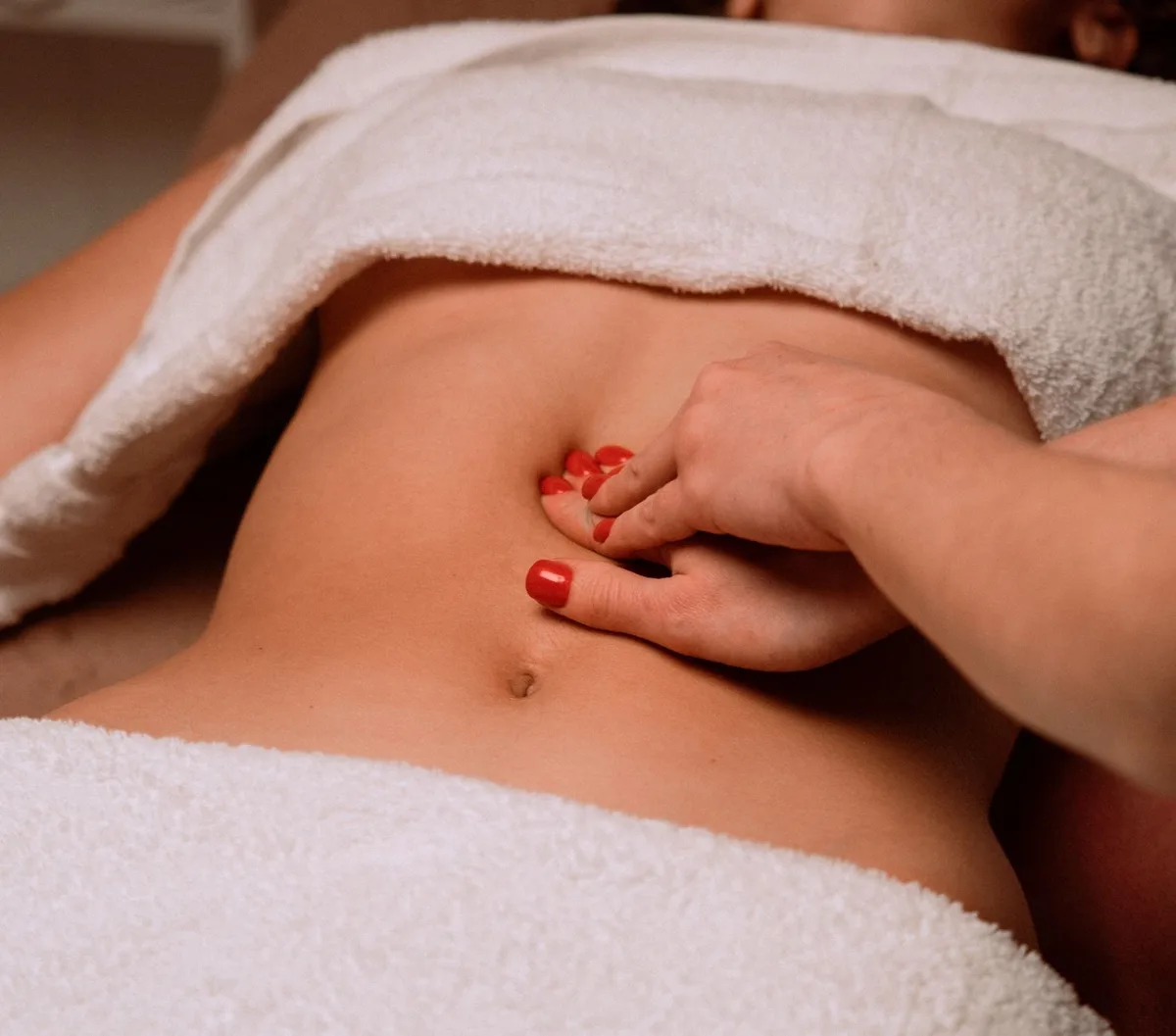
Image source: Pexels / Dasha (Pexels License)
Hara Diagnosis and Meridian Assessment
The hara is the abdominal region between the ribs and the pelvis, and it functions as the primary diagnostic map in Zen Shiatsu. Practitioners palpate specific zones that correspond to each of the 12 meridians, feeling for areas that read as full, tight, hollow, or cold. The findings dictate which meridians get worked and in what order.
Namikoshi practitioners run a different assessment, focusing on muscle tone, joint range, and reactive tender points along anatomical sequences. Either approach narrows the 361 or 660 theoretical points down to a working subset of 40 to 70 for the session.
Jitsu vs. Kyo: Reading Energy States
Every tsubo a practitioner touches is read as either Jitsu (full, excess, often tender and warm) or Kyo (empty, deficient, often cool and hollow). The goal isn't to press every point with the same force. Jitsu points get dispersing pressure, while Kyo points are held longer with gentler, more receptive contact.
This is why a beginner asking how many points should be pressed misses the real question. The answer is always: as many as the body needs that day, no more.
Key Points You'll Feel in Almost Every Shiatsu Session
A handful of tsubo show up so often in clinical practice that you'll likely feel them pressed in nearly any session, regardless of style. These are the workhorses, points with broad effect, easy access, and strong research support behind their use in tension and pain protocols.
Common points across most shiatsu treatments:
- GB21 (Jianjing): top of the shoulder, classic for neck and shoulder tension.
- GB20 (Fengchi): base of the skull, used for headaches and eye strain.
- BL23 (Shenshu): lower back beside L2, supports kidney function and lumbar tension.
- BL10 (Tianzhu): upper neck beside the cervical spine, calms the nervous system.
- LI4 (Hegu): between thumb and index finger, used for facial tension and headache.
- SP6 (Sanyinjiao): inner ankle, digestive and reproductive support.
- ST36 (Zusanli): below the knee, immune and digestive tonic.
- HT7 (Shenmen): inner wrist crease, sleep and anxiety regulation.
- LV3 (Taichong): top of the foot, releases stuck Liver qi and tension headaches.
A full-body session will normally cover the entire Bladder meridian along the back, which alone accounts for 67 of the 361 classical points. That's why so much of a shiatsu treatment happens face-down.
Shiatsu Points vs. Acupuncture, Acupressure, and Tui Na
These four traditions share a common ancestor in classical Chinese medicine, but the way they use points and the totals they reference differ in meaningful ways. The table makes the distinction quick to scan.
| Modality | Origin | Point system | How points are engaged |
|---|---|---|---|
| Shiatsu (Zen) | Japan, 20th c. | 361 classical tsubo + extended meridians | Thumb, palm, elbow pressure; sustained holding |
| Shiatsu (Namikoshi) | Japan, 1940 | 660 anatomical pressure points | Perpendicular thumb/palm pressure on muscle and nerve clusters |
| Acupuncture | China, classical | 361 standardised WHO acupoints | Filiform needle insertion |
| Acupressure | China, classical | Same 361 acupoints | Fingertip or knuckle pressure, often self-applied |
| Tui Na | China, classical | 361 acupoints plus muscle zones | Rolling, kneading, pressing, dynamic strokes |
Acupressure and shiatsu are the closest cousins. The big difference is training depth and assessment: a licensed shiatsu practitioner runs a full meridian or anatomical assessment before deciding which points to work, while acupressure as practiced at home usually targets a handful of named points for a specific symptom.
Tui Na sits closer to a Chinese sports massage and incorporates joint manipulation. Acupuncture, despite sharing the 361-point map with Zen Shiatsu, delivers the stimulus through a needle rather than sustained body weight.
Pregnancy and Other Points to Avoid
This is where the question of how many points turns into a safety question. Several tsubo are contraindicated during pregnancy because they're classically associated with descending energy, uterine stimulation, or labour induction.
Points routinely avoided during pregnancy:
- SP6 (Sanyinjiao): linked to uterine contraction.
- LI4 (Hegu): associated with descending energy.
- BL60 (Kunlun): traditional labour-induction point.
- BL67 (Zhiyin): used clinically to encourage breech turning, so avoided outside that specific intervention.
- GB21 (Jianjing): descending action, often skipped in the first trimester.
- Lower abdomen and sacrum: avoided as a region, not just individual points.
Other situations that change the point map:
- Open wounds, burns, or recent surgical sites: never pressed directly.
- Varicose veins: avoided to prevent vessel damage.
- Active cancer or untreated blood clotting disorders: require medical clearance before any shiatsu work, per AOBTA scope-of-practice guidance.
- Acute fever or infection: full-body sessions are deferred.
A qualified practitioner will screen for these before the first treatment. If yours doesn't ask, that's a red flag.
Common Mistakes People Make About Shiatsu Points
Most of the misinformation online comes down to four predictable errors. Knowing them helps you read the next article on shiatsu with a sharper eye.
- Quoting 361 as "the" shiatsu point count. It's the classical figure, but Namikoshi (Japan's licensed standard) uses 660. Both answers are correct in context.
- Treating shiatsu as identical to acupressure. They share points, but the assessment, training requirement, and treatment depth are different.
- Believing every point on the chart gets pressed. A real session uses 30 to 80 points selected by hara or anatomical reading, not the full map.
- Assuming pressure point work is universally safe. The pregnancy contraindications alone disprove that, and untrained self-pressure on points like LI4 or SP6 has been linked to unintended effects.
The cleanest mental model is this: shiatsu is built on a large point map, but the practitioner's skill lies in choosing the right small subset for you on the day. Counting the chart isn't the point. Reading the body is.
What the Research and Governing Bodies Actually Say
The 361 classical point map isn't folklore. The World Health Organization's 2008 publication "Standard Acupuncture Point Locations in the Western Pacific Region" formally documented coordinates for all 361 points across the 14 channels, and this remains the reference text shiatsu schools cite for tsubo location as of 2026.
Japan treats shiatsu as a distinct licensed profession. The Ministry of Health, Labour and Welfare regulates practice through the Anma, Massage, Shiatsu, Acupuncture and Moxibustion Practitioners Act (Act No. 217 of 1947), and only the Namikoshi-system curriculum qualifies graduates for the national licensing exam.
In the UK, the Shiatsu Society maintains a professional register and requires a minimum of three years of accredited training before a practitioner can list. In the US, regulation runs state by state through massage boards, with credentialing bodies like the AOBTA (American Organization for Bodywork Therapies of Asia) and the NCBTMB recognising shiatsu as a specialty within Asian bodywork therapy.
Clinical research on specific points (notably PC6 for nausea and BL23 for low back pain) appears in PubMed-indexed trials, though large-scale shiatsu-specific RCTs remain limited compared with acupuncture.
When to See a Licensed Shiatsu Practitioner
Self-pressure on a few well-known points is fine for everyday tension. Anything beyond that calls for trained hands, both for safety and for results.
Book a licensed practitioner when:
- You have a specific complaint (chronic neck pain, sciatica, insomnia, digestive issues) that hasn't shifted with general stretching or massage.
- You're pregnant or trying to conceive and want bodywork that respects the contraindicated points.
- You've had surgery, an injury, or a flare-up of a chronic condition and need someone who can adapt the session.
- You're managing stress-related symptoms and want a sustained protocol rather than one-off relief.
Verify credentials before booking. In the UK, check the Shiatsu Society register. In the US, look for AOBTA certification or state massage licensure with documented shiatsu training. In Japan, only licensed Anma-Massage-Shiatsu practitioners can legally call their work shiatsu.
FAQs About Shiatsu Pressure Points
Are there really 361 points in shiatsu?
There are 361 points in the classical meridian system used by Zen Shiatsu and Five Element Shiatsu. Namikoshi shiatsu uses a separate 660-point anatomical map. Both totals are correct, just from different schools.
How long is each point pressed during a session?
Most tsubo are held for 3 to 7 seconds with sustained perpendicular pressure. Key points worked on Kyo (deficient) energy may be held for 30 seconds or longer to allow the meridian to respond.
Can I press shiatsu points on myself?
Yes, do-in (self-shiatsu) is taught for exactly this purpose. Stick to safe everyday points like GB20, HT7, and LV3, and avoid LI4, SP6, BL60, and BL67 during pregnancy.
Is shiatsu the same as acupressure?
No. They share the 361 classical points, but shiatsu involves longer training, full-body assessment via hara or anatomical reading, and a wider technical vocabulary including palm, elbow, knee, and foot pressure.
How many points does a 60-minute session typically use?
Aggregate practitioner reports suggest 30 to 80 distinct points per hour. The exact number depends on style (Namikoshi sessions tend toward higher counts, Zen sessions toward fewer points held longer) and the client's presenting issues.
The Bottom Line on Shiatsu Point Counts
The clean answer is this: 361 classical tsubo in Zen and Five Element lineages, 660 anatomical points in the Namikoshi system, and 30 to 80 actually pressed in any given session. Anyone quoting a single figure is leaving out the rest of the story.
What matters for you as a client isn't the total on the chart. It's whether your practitioner can read your hara, identify the right meridians, and choose the small subset of points that your body needs that day. The map is the same one taught since the 20th century. The skill is in the reading.